I Designed and Built My Own Function Generator
cushychicken.github.io
70 points · by stedaniels · 6y ago · 44 comments
Personally as a product I'd be likely to buy it struggles without amplitude control
What easier ways do you suggest for kind of a grid frequency display other than a multi-meter in Hz mode?
People have built mains frequency counters: https://fowkc.wordpress.com/2013/12/10/mains-frequency-displ... (via https://hackaday.com/2013/12/12/mains-frequency-display/ )
The core problem is getting an accurate enough reference. That project uses an RTC IC; you might want to try building something that uses a PLL on a GPS pulse-per-second output.
The second problem is cleanly spotting where the zero-crossing is. You can take a mains feed from a current transformer or a regular transformer and low-pass filter it appropriately. It is then easy enough to use an op-amp to spot the zero-crossing.
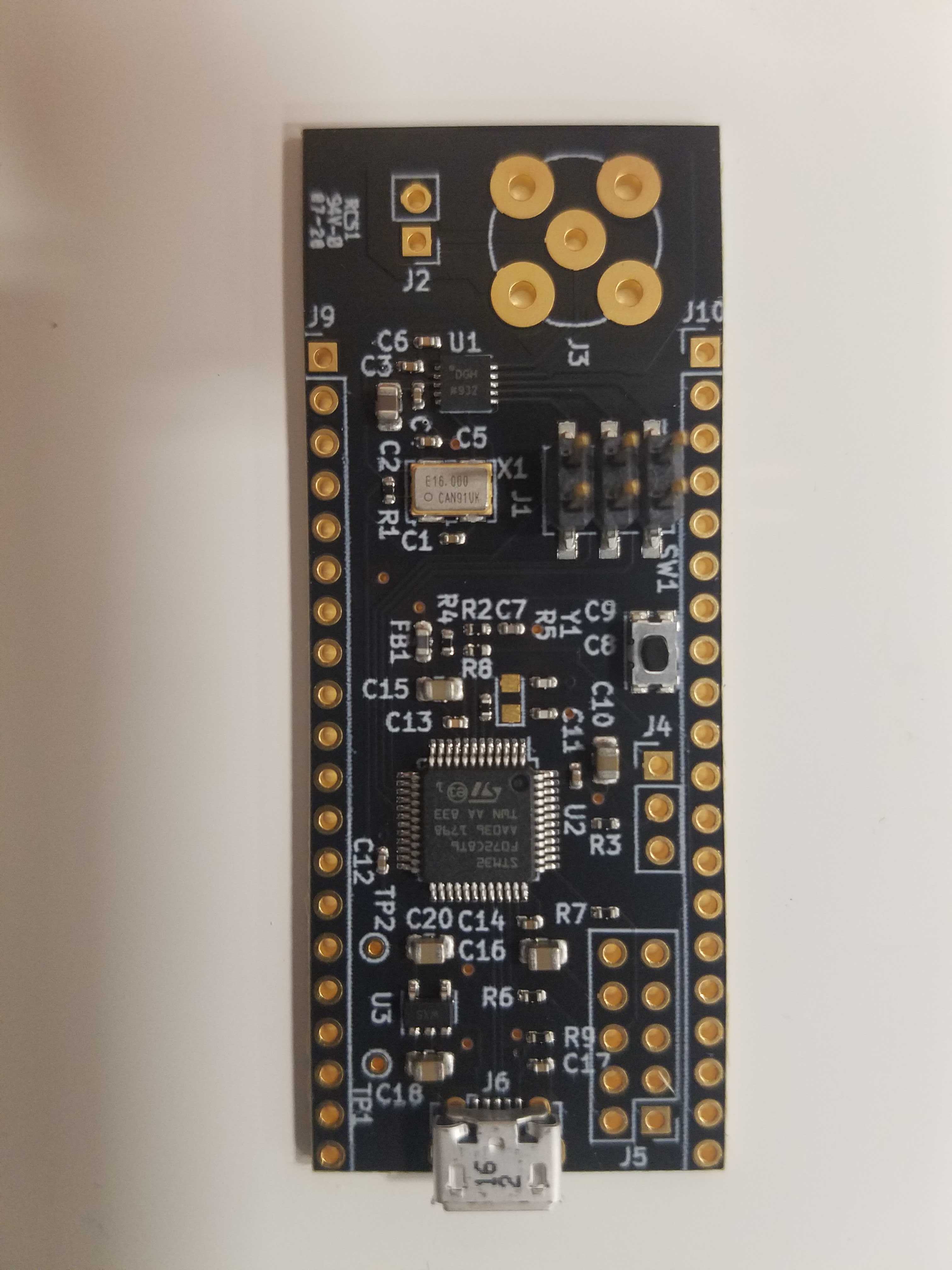
I've been reading about this on and off for 30-40 minutes now and it sounds cool. But I really just want to know what it looks like!
Edit: Finally browsing this on an actual computer, and of course there's a big honking image of the board right there on the first page. Did not see that on mobile (Android, Chrome).
Edit: also wanted to mention the python-rtmidi library, which can construct virtual midi interfaces. It synergizes nicely when used as a control interface.
I learned this when I tried to combine the output of multiple sources generating a sawtooth wave from the same file - any two sources would sweep at around 1-2Hz.
It's still usable, just not in scenarios where you have many of them.
Also I didn't have a second one to confirm that both have a good, steady sample rate.
It's a fun project, but it's not really a business, unless you can make something unique and clearly express what it is. As a visitor to your web page, I can't tell that.
That's not a reason to stop -- we all had failed businesses at some point and you learn a lot -- but you do need to clearly articulate the value and what you're going for.
http://cushychicken.github.io/bfunc-design-doc/
I'm just starting to get to work on the second version of this board, and I'm planning on addressing all of these in that design.
At this level you can add a couple of simple components and get 95% of the functionality and accuracy of the commercial one for a couple of bucks. Go higher than that and you might as well shell out the money for an army surplus one, but that does not get you what he wanted: an opportunity to tinker and learn.
Op amp needs a dual-rail power supply, so it needs some auxiliary power, then power electronics to get both rails. Stuff starts to get complicated, and now that $1500 Keysight box starts to looks worth its price...
Here's one kit:
https://www.amazon.com/HiLetgo-AD9850-Generator-0-40MHz-Equi...
Adding some might help with goal nr 5. :-)
A very stupid oversight of mine. Will be fixed once I spend some time getting a wordpress page set up this weekend.
It’s a first step in a learning project, not a product. They say as much in the article.
You are correct! I'm a professional EE by trade during the day.
I've had a lot of fun on this first pass learning about direct digital synthesis, STM32 microcontrollers, and serial consoles. The next revision, which I'm just beginning to work on, will feature a whole nother batch of electronic concepts I'm interested in. Small sampling of what I expect to learn about next inlcudes: chebyshev filters, error budgets, and multistaged opamp design.
I also have no idea what the specs are; bandwidth, drive, interface, etc., so I am not really sure whether I'd be interested. I would suggest adding a brief summary of the device's capabilities to the top.
edit: just realized that you're suggesting people e-mail you to express interest at the end, but I'm probably not going to go to the trouble of writing an e-mail for the faint prospect of maybe getting a board.
Yeah, I borked that one. Shoot me an email at the blog contact link if you want one. I plan on making a little wordpress page to migrate specs and sales info onto this weekend.
I also have no idea what the specs are; bandwidth, drive, interface, etc., so I am not really sure whether I'd be interested. I would suggest adding a brief summary of the device's capabilities to the top.
Believe it or not - when it comes to specs, neither do I at this point. I've mostly been focused on implementing the serial console and UI features. I've got a vision for the next rev that I hope to complete in the next month or two.