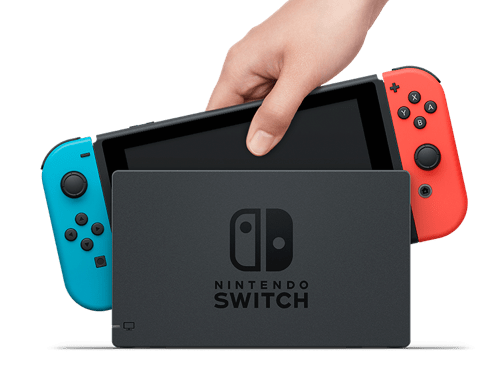
How the Nintendo Switch prevents downgrades by irreparably blowing its own fuses | JonLuca
How the Nintendo Switch uses irreversible hardware fuses to prevent firmware downgrades.
JonLuca
136 points · by jonluca · 6y ago · 107 comments
If you're careful you can keep a backup trail going all the way back to your original device firmware and restore/downgrade it using the Hekate system tool. It has already been pointed out that there isn't much reason to do this, AFAIK the main reason people either held out on older firmwares or kept up a backup trail to them was in order to take advantage of possible firmware-version-specific exploits, the gold standard being a coldboot exploit.
[0]: https://www.reddit.com/r/SwitchHacks/comments/7rq0cu/jamais_...
Does it surprise you that the product of this culture also has relaxed security characteristics?
[0] https://www.nvidia.com/en-us/about-nvidia/culture-at-nvidia/
Edit: I see what you were referring to, I was unspecific in my comment, updated it!
This is the reason for threat models. Don't waste your time worrying about theoretical but redundant attacks.
I don't think it's quite as cut-and-dry as this.
- The draw of a "hack free" platform varies by genre. For competitive multiplayer games, it's a big draw. For single-player and creative games, you might find a larger market in less restrictive, more moddable, platforms (eg, if you were making a Minecraft clone, would you target Switch or PC?).
- If the platform is popular enough, the level of lockdown may not affect the calculus that much.
- And, of course, it depends on how successful these measures are at preventing hacks. There's a big difference in draw between 50%, 90%, and 100% hack prevention, because of how the knowledge of cheaters affects player perception. Eg, in a competitive game, knowing cheats exist can taint the experience of being outplayed, as you wonder whether your opponent was cheating.
Overall, I'm not saying that GP's viewpoint is an invalid one, just that the tradeoffs are a little more nuanced than "more lockdown more games".
Another way of looking at it is that it’s a platform to which they have licensed you access ... of course under those terms it should be lease rather than outright purchase (eg like a proprietary set top box) but I guess the market hasn’t quite wised up to that yet ...
Does buying music online come with unlimited redownloads yet? Or do you still have to make a backup yourself, which is tied to a device and you'll lose anyway?
In the grand scheme of things, this is a very niche opinion.
How specifically would your use of the Switch change if Nintendo didn’t prevent downgrades in this way?
If someone buys it expecting something different that's really on them.
The iPhone bothers me much more because it's a general-purpose computer.
Android is another path, but perhaps just as capitalistic as Apple, but by different mechanisms.
You are always free to buy raw hardware and build your own phone from scratch, and write all the software for it.
Life is a series of compromises. Choose wisely.
For example increasing the price is always anti-consumer, but it might be part of the deal.
So I don't like to look at products from the perspective of 1 party, since it is always a negotiation between 2 parties where both end up with a win.
Sony[1] with the PSP claimed that:
> There's a number of titles from American publishers that will be there, but are we getting full-line support? No. I'm not going to bullshit you on that.
> A lot of the stuff that will be announced at E3 we're very excited about, because they are huge titles. And we also believe that there's a way that you will be able to, not stop, but slow down the piracy in the first 30 to 60 days from a tech perspective. [...] That's been the biggest problem, no question about it. It's become a very difficult proposition to be profitable, given the piracy right now.
Of course they're incentivised to portray piracy as damaging to the platform even if it isn't changing publisher decision making to any significant extent, but it's an argument that makes sense, and I find it difficult to believe that it wasn't dampening publisher enthusiasm to at least some extent.
In some ways, I'd like to see a phased path to openness, where say ten years down the line or when official support is dropped, some of the barriers are taken away (most platforms get there anyway due to third party efforts, and as Sony allude to above, _slowing_ piracy can be sufficient), even if only to aid game preservation and avoid games being forever tied to a particular physical hardware platform.
[1] Specifically, Sony Computer Entertainment America's then senior vice president of publisher relations, Rob Dyer - https://www.gamasutra.com/view/feature/133097/the_sony_situa...
If the device depends on write-once ROM that was written in the factory, is that also anti-consumer?
That depends on the intent.
consumers "caring" about something is not the definition of Anti-Consumer at all, there are all manner of business practices that have been made illegal because they were anti-consumer that the majority of consumers did not care about (and still do not). For example the Warranty if Removed Stickers on electronics. Most consumers do not care if the manufacturers place them on devices however this practice is very much Anti-Consumer and is illegal in the US
>> This is something that target precisely people who doesn’t want to be consumer: those that want to get and play games for free.
Ahh yes, If I want complete control over my device, what to use my device in a non-standard way, or some other reason I do not want a manufacturer to permanently alter my device with a firmware change it must mean I only oppose it because I want free games...
I also oppose the war on drugs, do i only do that because I want to get high as well? or is it a fundamental ethical reason around property ownership and the role of manufacturers as SELLERS not leasing agents of a device
Now the ironical thing is I didn’t even disagree with you rant. Actually I’m all for more open devices. What I’m saying is that it’s not possible right now, so buying a Switch with the expectation that it will run third party code is living in a parallel universe.
I'd call THAT anti consumer.
Correct me if i'm wrong, but that's the impression I got from reading here and there and the reason I don't own Nintendo products.
Moving to new hardware is more complicated than it needs to be but is not restrictive.
So are you absolutely sure that I can buy Nintendo stuff today and get games from anywhere in the world? Because my local selection is laughably small and crappy, and combined with region locks it meant it's not worth the trouble.
Can someone explain how the author gets from the numbers 256 and 8 to the count of 32 fuses?
When the article says:
> The boot loader verifies a specific fuse, FUSE_RESERVED_ODM7, to prevent downgrading. Each software version expects a different number of fuses to be blown [...]
Does this mean FUSE_RESERVED_ODM7 actually contains multiple fuses?
FUSE_RESERVED_ODM7 is 32 bits wide, hence contains "32 fuses". The system has many fuses, but 256 bits (RESERVED_ODM0-RESERVED_ODM7) are for the device manufacturers to use for their own purpose, which is what Nintendo is doing here.
Modern high performance CPUs/SoCs do not contain flash, ever (the processes are incompatible). When we talk about SoC fuses, we mean real fuses (or antifuses), not the Flash "fuses" of some microcontrollers (which can be erased with UV light).
Actual technologies vary. It could be fuses (metal, polysilicon, or other) or antifuses (e.g. gate oxide breakdown, "blown" means it conducts), but they're all irreversible.
No, they're not like the fuses in your house. These can be blown by software to irrevocably change something which can then be verified later, or in other cases to prevent reprogramming of a microcontroller (which can be programmed only if the programming fuse is still intact.
>Does this mean FUSE_RESERVED_ODM7 actually contains multiple fuses?
No, that's the name of one fuse. Once you upgrade the device next time, the upgrade tool would, for example, blow FUSE_RESERVED_ODM8; older software would verify that this fuse (and the higher-numbered ones) are NOT blown, and refuse to boot otherwise.
No, it's a 32-bit segment belonging to the 256-bit odm_reserved segment. FUSE_RESERVED_ODM7 is specifically the last 32-bit segment.
Some fuse information can be read here: https://docs.nvidia.com/jetson/archives/l4t-archived/l4t-323....
https://www.semanticscholar.org/paper/IBM-System-z9-eFUSE-ap...
1. What was the intended use case behind the Tegra having 32 blowable fuses? Did Nvidia intend for those fuses to be used in this manner?
2. What is a non-retail switch?
Tegra's main purpose of the fuses is to handle holding cryptographic keys, boot parameters, and to disable the debug port. But since they have a fuse unit already, they provide a few words for the end-user to use as they please.
I too am curious what "non-retail" means in this context.
Maybe dev kits? AFAIK Switch has at least two dev kits (SDEV/EDEV) for different purposes so it kinda makes sense to call them non-retail.
It's not in the same situation as iOS updates that were effectively slowing down the devices or Windows Update that don't seem to the user to bring anything.
You must be joking. The meme about "stability intensifies" with Switch updates isn't just a joke. Most of their updates are minor bugfixes and "increasing stability" (fixing exploits). They're far more interested in fixing exploits than they ever were in improving the OS in any meaningful way for the user. It's been 3 years and the only major QOL change I see on that list is making the all software page not useless.
https://en.wikipedia.org/wiki/Nintendo_Switch_system_softwar...
Anyway, I still remember the first year that the switch came out when everyone thought “maybe this next update will add bluetooth audio”.
Seriously. Other Tegra X1 devices have bluetooth audio. Why can I not use my wireless earbuds on a portable device with all of the technical capability to use them? Is it really such a big ask to enable this most basic of feature?
Otherwise heavy Splatoon players might be hit more than others, but the stability improvements seemed real. At some point the Switch had to be rebooted every other day, nowadays it's something not needed in weeks perhaps.
For QOL the last big update allowing to remap buttons was a big deal. I haven't tried moving data between to the SD card but it would also be a big deal for people with more than 10 ~ 20 games, as space becomes scarce pretty fast.