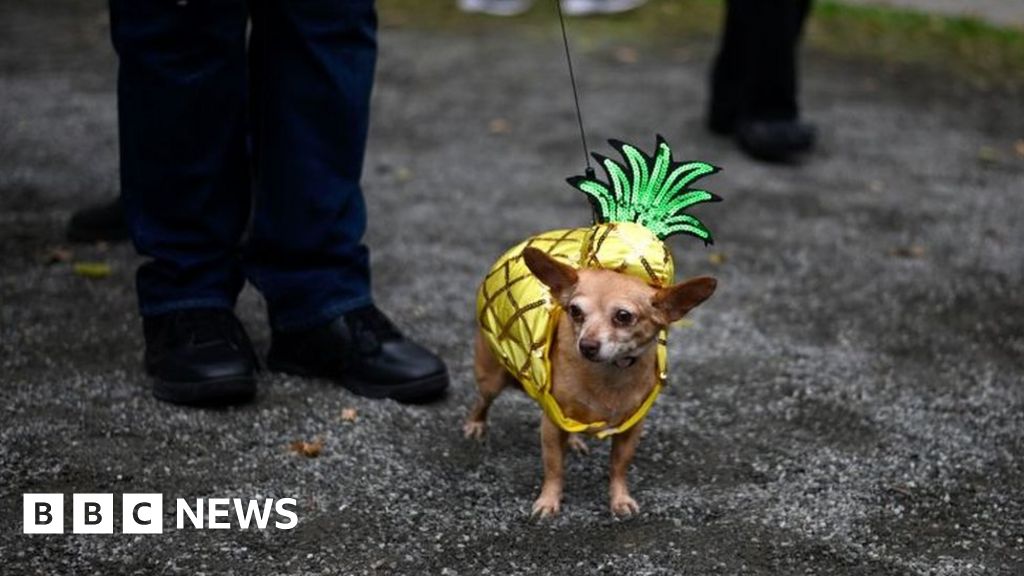
The rise, fall, and rise of the status pineapple
For a couple of centuries, the British were in an unlikely frenzy for the exotic fruit.
bbc.com
185 points · by bdz · 6y ago · 130 comments
Modern tiers are faced with a choice now that the birds that were rare then have become even rarer (or extinct): Tie with something else, or find a source of authentic feathers.
The segment was an interview with the author of The Feather Thief[0], who investigated the lengths one "enterprising" tier went to to acquire authentic feathers, destroying the historical scientific record for whole species in the process.
It seems insane that a fad of rich men from a long time ago becomes the obsession of a subculture of the larger fly tying community and that the result of that is a hole in the scientific record. It's enough to make you wish that folks would get obsessed with growing rare pineapples instead.
[0] https://www.goodreads.com/book/show/44153387-the-feather-thi...
The larger body of work here is called 'signaling theory' and you can see it apply equally between animal and human domains. Pineapples first started as honest signals because only the wealthy could afford them. But once people started renting pineapples they became a dishonest signal, until the economics finally made it crash into either a costly signal (you should know they're no longer in vogue) or a lack of information at all (today).
Not to discount your point, but there are a lot of very, very wealthy sneakerheads. It isn't low-income Americans that pick up 10k worth of limited designer run sneakers on launch day.
(Said as a fly fisherman)
Then I realised that just for one week a year!
Also, the statistics they provided suggest that each fish you caught would cost about the same as a cheap car.
You get folks who just do it as a hobby (because it's not that expensive), die hard folks who live it (but aren't that wealthy), plus ultra-wealthy folks (who are generally jealous of the former!). I think it's the peace and tranquillity that attracts.
Add to that, that at least in the US, Trout Unlimited is without a doubt the most politically-connected pure sportsperson lobbying organization.
What's the most efficient method of catching fish?
Explosives, hands down, by a wide margin. Most people aren't optimizing for pure efficiency though.
I do both: I trot bait when the river I fish is unsuitable for the fly.
Currently? Very large industrial fishing nets.
I’m not sure this is limited to wealthy people. I see plenty of non-wealthy people taking 5-year car loans that they can’t afford in order to purchase a luxury car.
Pineapple as status symbol; car as status symbol.
It might just be a human trait not dependent on wealth, like ostentatious male peacocks showing off their plumage.
Have you heard of "luxury beliefs"? [1]
[1]: https://nypost.com/2019/08/17/luxury-beliefs-are-the-latest-...
Wealthy people who want to signal wealth display conspicuously expensive things, which pineapples once were. That’s obvious enough. Luxury beliefs are about expressing class, which is distinct from wealth though somewhat correlated.
In fact, signaling wealth, or signaling it crudely enough, often signals lower class.
In my mind, they have yet to live down the "Headless body found in topless bar" front page article.
https://nypost.com/2015/06/09/new-york-post-editor-and-film-...
Obligatory: "But you're leaving out women's historical involvement!"
"The Women of Fly Tying
OKAY BOYS, GET OVER IT: women have made some of the most important contributions in the fine art of fly tying.
By a Thread: A Retrospective on Women and Fly Tying (The Whitefish Press), by Erin Block, is a celebration of the critical impact women have made on tying flies. Erin includes the work and stories of Dame Juliana Berners, Mary Orvis Marbury, Elizabeth Greig, Winnie Dette, Mary Dette Clark, Elsie Darbee, Helen Shaw, Megan Boyd, and Frances Stearns, along with modern tiers Sharon E. Wright (Sharon is a regular contributor to Fly Tyer magazine), Cathy Beck, and April Vokey.
Do you like a good mystery? Erin solves one by uncovering what ever happened to Sara Jane McBride, the famed fly tier who was also America’s first entomological fly angler.
Erin’s flies have appeared in Fly Tyer magazine, and we will have fuller coverage of her new book in a future issue of our magazine. In the meantime, congratulations to Erin for making such an important contribution to the literature on fly tying!
To buy a copy of By a Thread: A Retrospective on Women and Fly Tying, go to www.whitefishpress.com."
[0]https://www.economist.com/middle-east-and-africa/2020/07/18/...
It's not a jab at the parent comment, I am simply interested if it's some kind of cargo cult, or I may be missing something here.
Edit: In my head what I was trying to say was obvious. In hindsight it's not.
The practice started because text interspersed with long urls is difficult to read. It's a good solution, so everyone started doing it all the time. It's done in situations like this where it isn't strictly necessary probably because most of us are programmers and don't like making exceptions to a rule for specific circumstances. That's the theory I'm going with anyway.
As for the footnote vs inline style I find ugly urls a distraction while reading and it's easy enough to match up footnote numbers.
It's similar to the way markdown allows for text decoration via asterisks (strong) and underscores (emphasis): people used such plaintext decorations long before any expectation that it could lead to more typical presentations such as bold and italic (italic and underline are grammatically interchangeable, and underscores approximate an underline).
But seriously, footnotes keep the text cleaner.
Long links in the middle of sentences or paragraphs are annoying. Since HN doesn't allow hyperlinking, having a list of links at the bottom is the least disruptive option.
Trust me, there was many a laugh at ourselves about that one.
Edit: This is what happens when you don’t consider alcohol essential: https://allafrica.com/stories/202006020490.html
> Margaret Thatcher (left) and a pineapple
https://en.wikipedia.org/w/index.php?title=Scottish_National...
"Piper Gilbert Kerr (right) alongside a penguin, March 1904"
https://en.wikipedia.org/w/index.php?title=Scottish_National...
"Piper Gilbert Kerr (with pipes) alongside a penguin, March 1904"
Much as I disapprove of wiki vandals, I think this is a harmless injection of light humour into yet another dreary badly mangled wikipedia article (not the topic itself, just the way that wikipedians slowly squeeze the life out the written word revision by revision).
This is only because of modern refrigeration. In centuries past a pineapple, or any other tropical fruit was ripe by the time a pineapple made it to NYC or London.
In architecture, pineapple figures became decorative elements symbolizing hospitality.
https://www.curbed.com/2017/3/9/14868658/historic-colonial-n...
Try it next time you're visiting a historic place :)
It's consistent with the fact that no worthwhile crop grew in the dry tropical portion of Brazil until the 20th century. But it is really unsettling to think that pineapples are not natively tropical.
(But on a second thought, even today they do have the best pineapples there.)
https://en.wikipedia.org/wiki/Dunmore_Pineapple
"the most bizarre building in Scotland"
Surely that award should go to the Scottish Parliament Building?
Two, this article doesn’t address the crazy urban rumor I heard years ago that people who place pineapple flags outside their homes, at least in the suburbs, are signaling that they are swingers.
Also, we have similar signals today. For example, a handmade Swiss watch signals for which you pay for months of a skilled artisan's work, all for something whose ultimate function you could replicate with a $20 watch.
Expensive wines/liquors never stopped being a flex of wealth/status.
Luxury consumption has become much more diverse, so there isn't something as universal as the pineapple anymore. But if you spend time around it, you can feel it in the air.
(founded in 1766, so they may have overlapped a bit with the pine apple...)
I can't wait for the Tesla Roaster 2.0 to be delivered in volume (idem for its motorbike equivalent), so I can finally sleep with open windows.
Cars, watches been the typical examples.
All of them have cheaper, equally functional equivalents, but people very conspicuously overpay for more than they need with all of them.
https://www.mylondon.news/news/zone-1-news/st-pauls-gold-pin...
"No, they didn't. Dr O'Hagan says the truly wealthy then set their caps at another luxury and difficult-to-grow food. Celery."
Does anyone have a good link to the story about how celery became a luxury item? The obsession with pineapple as an exotic luxury makes at least some sense to me. But...celery??
https://www.tastecooking.com/celery-was-the-avocado-toast-of... better article