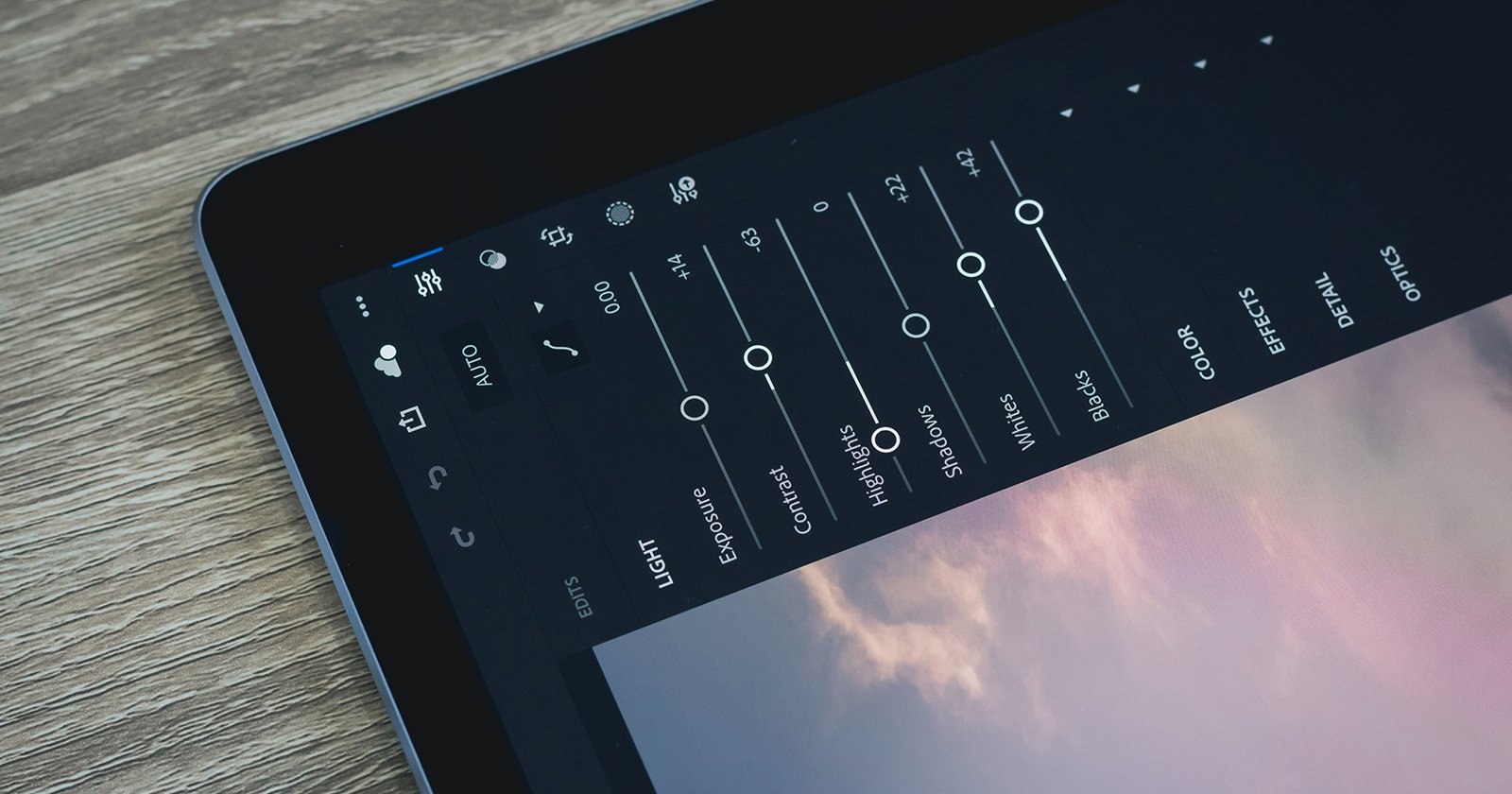
Lightroom App Update Wipes Users' Photos and Presets, Adobe Says they are 'Not Recoverable'
This morning, multiple readers wrote in to alert us to a major Adobe gaffe. It seems the latest update to the Lightroom app for iPhone and iPad
PetaPixel
701 points · by fraXis · 6y ago · 429 comments
While trying to cancel my subscription, I realize I can only do that after paying for the remaining 11 months (rough calculation).
With no other option, I paid my penalty and left Adobe for good. I have deleted my 15+ year old Adobe account.
Alternatives and to serve nostalgic attachments, I bought the whole suite of Affinity[1] Products. I've also bought Darkroom[2] for photo editing on iPad.
1. https://affinity.serif.com/en-us/
P.S. (edit/addition) I ended a 25+ year relationship with Adobe. I paid myself through my school and college with PageMaker, and other softwares (both open source, free, and paid).
I understand that the odds of repercussions are small and that there are no damages on Adobe's side since you haven't physically taken their goods so it would probably have to be taken up by the public prosecutor rather than become a civil case... but still, I'd not be happy having my name on a "doesn't pay their bills" list, nor is it quite honest.
Or am I misunderstanding the situation and did they advertised with monthly cancelable? (False advertising) Nobody mentioned that in the thread though, and from this comment it sounds like it was very clear that you were agreeing into a year-long subscription: https://news.ycombinator.com/item?id=24232282
All conversations could only be done in English, something my wife would already be pretty uncomfortable with.
Adobe is very unclear about what you’re actually agreeing to up until the point you’re cancelling.
I just blocked transactions and never heard from them again (except for some emails).
If they want to fight it, good luck winning it in Dutch courts when the conditions are unclear.
Disclaimer: IANAL (But I helped as software developer at a factoring company: which buys unpaid invoices from freelancers for a fee or a percentage of the invoice-amount)
Free trial, etc. I give my phone number (something like "for legal reasons"). Then it asks for my CC. I already hate it because it's highly dubious they need my CC number for a free trial since it's not needed to deliver the product. Fine, I give it. Then the process is declined because they don't like my rechargeable CC.
I am a happy AWS freeloader and potential customer now (well, for one year at least).
In the USA, it would be civil issue not a criminal one anyway. They can sue me if they like.
As far as the morality portion of things is concerned, I don't consider what they are doing moral anyway and I sleep fine at night.
For anyone not doing professional video editing work I can definitely recommend DaVinci Resolve. The basic version is completely free and is extremely powerful.
Pro tip: Do go through the slight additional hassle of setting up a local postgresql server with their installer and use that instead of the "local database" (=SQLite). Saving projects with a lot of internal data (e.g. many clips using correctors with trackers) is much quicker (>10x) with pg.
I always thought DaVinci was extremely powerful and overkill. I need something which can handle HDR and is a bit better than iMovie, but, both FCPX and Premiere were too much work for me to learn.
Seriously, fuck that company.
edit: seems I have a fancy for run on sentences. sorry
You can also buy prepaid debit cards at supermarkets, post offices, etc (at least in Australia) which allow you to do the same thing.
Similarly, doing this to a Steam account or iTunes account cuts off your access to all your previously "purchased" content.
It would be good if cards had a white or black list option.
"With third parties, within the United States and in other countries, who may access data about you to perform functions on our behalf"
Here it would be nice to get a clear picture of what these functions are. If they are only for the processing of payments then this is fine (they actually mention this case in the second bullet point so my example does not hold). If these functions are to data mine my data for reselling to a third party advertisment network that would not be alright.
clearly they cannot. they are based in the US.
it's like VPNs. or DOH. it's not a matter of absolute privacy, it's a matter of privacy wrt a certain party.
if privacy.com really were private, you'd fund an account with bitcoin. which afaict you cannot. so you need another level of abstraction/privacy to keep your details from privacy.com.
I did this for the free month of linkedn gold or whatever its called.
Lately I have been using RawTheRapee [1] for most of my photo editing needs. It's simpler and less flexible than Darktable, but I get better results in less time unless I need some very specific editing. Also RawTheRapee's noise reduction and sharpening are better than Darktable's.
I then discovered that you can only cancel that 12 month subscription within a short window at the very end of the 12 months.
In the end Adobe retired one of the products from Creative Suite and I used consumer protection law to cancel the subscription on the basis that the service had been materially changed.
Is that legal?
When I was going to college I took advantage of the student discount for the full Creative Cloud suite. After a few years, the discount was no longer available and Adobe started charging me the full $60 a month. I didn't have the $720 needed to cancel my subscription and I just lost my job. I ended up downgrading to the Photoshop + Lightroom subscription since it was $20 a month instead of $60 and I didn't want to cancel my credit card. I found out after reading the subscription confirmation email that in their system it treats a subscription change the same as if I was signing up for a new subscription and I could cancel it and get my money back.
I really don’t like PayPal as a company but from a consumer standpoint they’re useful to me because I am able to terminate billing on the PayPal side of things. Also i have not been burned by PayPal in the few disputes I have had to go through.
I wish there was a less shitty option than PayPal with the same level of insulation and dispute resolution. Lots of small businesses/creators have gotten fucked over by PayPal freezing funds for months and not allowing appeals or really any communication is terrible and I hate supporting it.
wrt dispute resolution, paypal is pretty awful compared to the traditional credit card, at least the major (top tier) bank issuers. the lower tiers like Capital One I imagine are more difficult. I'm in a paypal dispute right now. I have to wait 2 weeks for something to happen (don't know what exactly) before i can progress to the next stage, whatever that is. really? my amex reverses the charge immediately when i call them, and as far as my side of things, i'm done with it at that point. my WF visa is similar, and they call me when a further action is required.
paypal is google-level horrible. nearly indispensable service, immensely useful in some ways, the worst anti-user behavior in other ways. even the website to manage your account is full of dark patterns.
if you hate supporting it, stop supporting it.
Nowadays I use Raw Therapee and I'm quite happy with it. Free software, has all the features I need. No corporate overlords.
A bridge too far? Learn to deal with the world as it is mate.
Monthly pricing is great, people can justify doing a small project with expensive software without breaking the bank and simply resume the subscription if relevant work picks up. Especially great for freelancers.
But intentionally making it appear that it's a monthly subscription when it's actually an annual subscription is beyond the pale.
Yeah it really sucks that Apple takes 30% of all revenue, but the developers have painted themselves into a corner with behavior like this.
I have been “trialing” many apps that I wouldn’t normally bother with because of the high start-up cost. I say “trialing” because usually the 7 day or whatever trial period isn’t enough for me to decide if I want to keep the app or not, so I just typically sign up for a month after that as well.
For example, I think OmniFocus is like $100+. I heard lots of great things about it and tried it out, but as it is a task manager the 7 or 14 day trial wasn’t enough. Without being able to pay for a single month, knowing that I can cancel it immediately after I sign up and not worry about the subscription again, I would have never given it another look. But I was able to pay $10 for a month. And that month gave me enough time to try out all the features. Unfortunately for them I decided this was not the right software for me, but that’s how it goes.
Someone else in this thread wrote that Lightroom doesn’t have monthly subscriptions. Again, via Apple, it seems like I can subscribe for a month at $2, $5, or $10 depending on my storage needs. Though after this story I wouldn’t trust them for storage and would just take the $2 plan of I needed to use the software.
For Adobe, could you not have issued a chargeback or in some other way dispute the cancellation?
SumatraPDF for Windows is terrific.
Yep! They have a thing called “yearly contract, billed monthly “. It took me a few minutes to understand what it meant. The first time I came across such a contract in the software world.
Then they went full Cloud and did me the "favour" of giving me a discount on this suite of $59.99 to $39.99 (IIRC). Every. Damn. Month.
The thing is I wasn't really using any of it much anymore, so I cancelled, but every now and then I need to whip up a logo/graphic or retouch some image and I don't have the little [Ps] or [Il] in my Dock anymore and I'm not gonna sign up again and pay monthly. That was the point of buying this software in the first, it's there for me when I need it, it's mine.
Nowadays Sketch gets me where I need to go most of the time, gonna have to get Affinity soon.
https://www.adobe.com/au/creativecloud/plans.html
(I'd definitely recommend going with Affinity Photo instead if it suits your needs.)
Darktable is awesome.
It's a bit more pricey (at least more pricey than the Photographer CC sub), but feels so much more polished.
It's even better at handling LR catalogues than LR. Last time I checked migrating my those files took minutes vs hours (CO vs. the new LR).
I've been using LR for years (10+?, and other products for almost 20) and the only reason I haven't completely switched yet is laziness.
Annual, Paid Monthly Annual, Paid Once Monthly, no Contract (which is priced higher than the other two)
This seems more like user error not understanding what they're signing up for.
Edit: I've only had to chargeback once, in a situation that I tried to work out with a vendor. Other times, I've had to threaten a chargeback to vendors who didn't deliver promised goods.
I think there’s something just sort of staggeringly impressive about the amount of detail and complexity in even one of the Creative Suite applications compared to the price of the whole collection.
Like paying $60 a month or so, which even if you get stuck is well under a thousand bucks a year, for all the development work that goes into dozens of specialized media editing solutions, which they keep super updated, seems kind of fair.
I’m comparing it, for example, to the misery of having to pay $10k+ a year for the steaming pile of garbage user experience of Salesforce, for example. Or $30 a month for like a hot new email client like Superhuman.
Adobe pricing has always struck me as profoundly fair in this context. That’s a seriously impressive software achievement.
I've heard earlier that such agencies work for Microsoft, Adobe in India but that was the first time I've heard in-person from someone working for them. Adobe has every right to stop piracy of its products, but I wonder the legality of harassing the pirate instead of making a legal complaint. I presume it doesn't happen in US?
One is the envelope distort mesh, allowing you to modify on a 3d grid (3d transform, things further away are smaller). Example here[0].
The other is blending between two shapes, as seen here[1]
I guess that is the good thing about not letting third party payments on the App Store…
I had exactly the same experience; adobe can burn in a fire after that and the iPad photoshop disaster as far as I’m concerned.
It's fairly logical: the customer agreed on 12 months. An additional fixed term requires a new contract/agreement. In practice companies now try to keep customers. Plus need to actually be ok instead of relying on people not overcoming the fake effort that is required to leave.
When it comes to subscriptions I have mixed feelings. Like if you agree to pay for a year (for example) then (IMHO) you should do that.
On the flipside, much like the model for gym memberships, companies can make it incredibly difficult to cancel a subscription. They deserve to be punished for this. Newspapers and magazines do this too. I realize a certain percentage of people will keep paying and not use the service (which is the ideal customer for a gym) but, for me, it means there are many things I will never buy because I don't want to deal with this (eg subscriptions to The Atlantic or the New Yorker).
Other comments here allude to Adobe's bad behaviour beyond the initial year (eg not allowing you go to month-to-month). I have no sympathy for Adobe here, particularly when they seem to be in breach of local laws by doing so.
To me the gold standard for subscription services is Jetbrains. The cost per year goes down over time and when you cancel you retain a version forever.
I personally prefer the subscription model for software compared to the previous large sticker prices for Adobe Photoshop. Outright purchases create bad incentives for companies (eg shortening the lifecycle such that bugfixes and minor features are only available via a paid upgrade to the next version). Subscriptions have a cheaper initial outlay (making them much more accessible) and they mean your software gets continually updated without version fragmentation.
Unfortunately companies also decide that a "reasonable" price for a subscription is the retail price in one year. It's not.
So anyway in your case, you are technically in breach of your purchase agreement and Adobe would be well within its rights to chase you for the full amount via disputing a chargeback, through your bank or CC provider or even through small claims court.
I still remember when the general advice was "do not upgrade/change what works, unless you need something in a later version", which then changed to "updates are recommended", followed by "updates are strongly recommended", and more recently, "updates are mandatory".
Adobe isn't alone, Microsoft had done worse not long ago --- with a forced update too:
https://news.ycombinator.com/item?id=18148376
https://news.ycombinator.com/item?id=18189139
(On the flip side, at least you're able to run file recovery programs on a PC.)
But the change to "mandatory updates" came after numerous incidents of "millions of users running unpatched software fell victim to the latest exploit". This kind of bad publicity started the trend of software makers forcing updates on users.
Separating security patches from feature updates is better but doesn't 100% guarantee there are no data-losing bugs.
It's a nice thought to separate "security" and "feature" updates, but I'm not sure if its realistically achievable.
----
Looking at the bigger picture, I think the issue is that once developers/managers got into the habit of forcing updates on users, it became an excuse for skimping on QA/QC. "If there's any bugs, we can just fix them in the next release". But there's a huge difference between internally finding a bug, analyzing its potential impact, then deciding it isn't a blocker and expecting your users to find bugs for you.
This is 5 years old, today we are doing:
Updates happen in background automatically without user knowing and sometimes when autoupdated software is being used at the time, it crashes when new action is performed and all not saved user data is lost.
Move fast, break things!
This is exactly why power users dislike SNAP.
Give us the ability to choose if/how/when to install updates. Period.
There's a quote from George Sanger that goes something like "the difference between an appliance and a computer is that a computer breaks down more often". He was speaking about audio production. There's a photo in his book of a computer with a sign taped to it saying, in explicit words, to NOT upgrade the computer, because it is running GigaSampler and he would very much like to keep running GigaSampler.
Audio production software is notoriously conservative when it comes to updates.
Related to TFA's subject, I'm a user of Lightroom and Photoshop, but the computer-based, "classic" ones. I still manage my photos "the old way", with folders on my drive that I back up regularly to two locations.
However, I also tried Lightroom on my iPhone. Right now, if I were asked, I would not know how to go about backing up those pictures, aside from doing a full phone backup. Also, the marketing speak for adobe's cloud (and indeed, for every similar offering out there) is "keep your data secure / safe". So as a regular user, how would I know that's actually "not secure enough" and that "synced to the cloud" is not actually backed up?
The actual language on the latest Lightroom iPhone app is "Synced and backed up". But given Canon lost their customer's photos the other day, how much can you actually count on those backups being actual backups? My point is that we should indeed try to educate users and not blame them for this kind of problem happening, but maybe we should actively blame companies for the deceiving language they use while at the same time rendering user's data harder and harder to manage.
You can not count at it at all. The only legit option glacier honestly.
For an iPhone or iPad, the device getting lost or broken is probably the most common issue. Avoiding updates won't be of any help if that happens. Keeping backups will help for more risks.
This is 100% intentional to drive users to subscriptions.
The computer fraud and abuse act could also be applied for criminal charges -- Adobe misused and misappropriated their access to customer data and systems. Arguing that it was a "mistake" and "we are sorry" does not correct the damage done. If Adobe makes such a fuss over protecting their IP, then they should not be surprised when their customers do so also. There is a potential for a class action here as well. And Adobe is very profitable -- some legal team representing this case, even if pro bono, will be/become quite rich.
Moreover, telling people that they should have X, and Y, and Z, to protect themselves from the mistakes of rogue actors/apps, is simply a displacement of responsibility tactic.
Just because something illegal/damaging was "done with a computer" does not mean it was "ok" and "an apology is enough" -- now pay us for our services you miserable worm/user!
Especially if a third party, not a party to the EULA, owned the photo. If, for example, a news photographer for a newspaper had a photo lost, and the photographer, but not the employer, had agreed to the EULA, the newspaper might sue.
This is an important point. If a third party who is not bound by the EULA suffers damages, they can sue for negligence. The EULA binds only those who have agreed to it.
[1] https://shawnetuma.com/cyber-law-resources/what-does-cfaa-me...
And honestly, it's good this way. If you want to secure your photos, make backups yourself or sign a contract with some company that will guarantee something. But once they are liable and can be sued, the service will be astronomically expensive.
"Adobe this week began sending some users of its Lightroom Classic, Photoshop, Premiere, Animate, and Media Director programs a letter warning them that they were no longer legally authorized to use the software they may have thought they owned."
https://www.vice.com/en_us/article/a3xk3p/adobe-tells-users-...
There are some tech companies I don't have a particularly positive view of and try to avoid, such as Facebook. Only Adobe, however, do I consider such an execrable blight on the industry that I have a firm, no-exceptions, "never again" policy.
Most of the time, piracy is used because it's just more convenient then properly paying [0]. Those who still pirate, despite there existing a more convenient option to pay usually can't afford it, and will pay when they can.
In the meantime, the name of your program becomes a verb and an industry standard, and everyone has to deal with it.
[0] https://www.ign.com/articles/2011/11/25/gabe-says-piracy-isn...
As an example, Big Sur will drop support for Mac Minis from before the Haswell 2014 models.
If Apple don't care about customers with purchases that are more than 6 years old, is it fair to expect Adobe to?
(That's ignoring Catalina's estimated support date likely to be 2022, as that's presumably not the sort of macOS update to which you refer.)
I split up my catalogs aggressively, so I don’t really know how many images I have saved. But it’s in the hundreds of thousands.
New Lightroom might be OK for the casual photographer. But for the pro or even advanced amateur, the new Lightroom is completely useless.
His reasoning, when I asked about "NAS" or so, was: it's cheap, it lasts, and it is cold storage. Paying for storage of that amount that is fire-, flood and software-error-proof is so much more expensive that it really was no choice. -his words-.
I’m pretty bad at storage discipline. And I admit that most of what I store is generally useless. But there’s diminishing returns on deciding what to store, vs. storing everything.
I have a little hard drive toaster that I keep a revolving 5tb spinning disc drive in. It’s my “storage” drive, and once it fills up I replace it with new ones. I don’t shoot “professionally” as in for clients, but I shoot some fairly large scale images, that result in lots and lots of data. And my working files can get up to 10gb in size. So I vigorously backup my working files, and I’m only halfassedly storing all the captures in case I need to go back and review, or dig up BTS. Lastly I have a pretty cheap and crappy SSD that I use as a sort of scratch disc. If I shoot teatherd, I’ll capture to it, or if I’m working on an image I’ll work off the SSD until the image is complete, and then move it to me of the spinning disc drives.
I currently have 3 filled 5tb drives with captures, and a drobo that I keep my working files on (tiffs, psd’s, psb’s).
If none of what I’m saying adds up, take a look at my images, and hopefully it will make it slightly more clear: http://agroism.com
Moving to Capture One or something else seems worthwhile. Tried Darktable but wasn’t a big fan.
Lightroom -> Capture One was an upgrade. Even when the learning curve is taken into account, I found C1 to be superior piece of software. It's faster, its color editing is better, and the default look it gives me was just better, at least for my camera.
Photoshop -> Affinity Photo was painful. I'd estimate the pain to be "moderate". It misses some features I want (color calibration targets support, some layer blending modes) and some others are not as great (no smart sharpening). Affinity UX of working with layers is surprisingly painful and the attention to detail in the UI is poor. But since 90% of my time is spent in C1 anyway, I found it tolerable.
It also has 'sessions' which are aimed at individual shoots or projects. I suspect most pros use them instead of catalogues. It's essentially a self-contained directory structure that C1 understands,
For example, Lightroom does not allow custom colour spaces for the output, they're restricted to a fixed list of baked-in ICC profiles. The only option is to export in the large ProPhoto space and then externally convert to the target space as a second step.
Lightroom has no support for true HDR, the type that requires HDR10 or Dolby Vision displays. If you want to edit a 14-bit RAW photo for, say, the background image in a HDR computer game or a YouTube video, Lightroom can't help you.
Even in SDR mode, the colour grading in Lightroom is much more primitive than Resolve. There's no vector scope, for example, something that would be trivial to implement for them.
Adobe talks a lot about their "AI" features, but they're very basic. They've left a lot of low hanging fruit on the tree. For example, it would be great feature that when flicking through a bunch of shots of a face while zoomed in, the eyes should be automatically aligned between each shot to make it easy to compare shots. Similarly, they could train an AI to recognise in-focus and out-of-focus faces, and automatically "score" a shot based on things like: "Are both eyes in focus, or just one?"
These days, this stuff is trivial to implement in software, yet Adobe is still firmly rooted in the 1900s era of "It's just like your darkroom! All the terminology of the black and white film era is unchanged! You can dodge! You can burn! Just... with a computer!"
Reminds me of AutoCAD 20+ years ago: it was a digital blueprint software. More computer-native CAD with proper 3D modelling capabilities such as SolidWorks ate their lunch...
Perpetual licensing means that software vendors are essentially competing with the previous versions of their own products and have to provide compelling improvements to their customers for them to upgrade. Ongoing revenue, and with it, vendor survival, depends on continual improvements.
In contrast, subscription models combined with cloud-based vendor lock-in allow software vendors to extract economic rents from their victims indefinitely. There are no previous versions to compete against and victims must pay in perpetuity to access their own data. Vendors get paid without needing to do work, so they do no work, make no improvements, and reap disproportionate profits.
Software subscriptions are a perfect example of rent seeking, with all that implies about the relationship between vendor and victim and the prospects for ongoing product improvements.
That's really the motive for a lot of things going cloud.
I've tried Affinity Photo, Pixelmator, no dice. Tried Capture One but it's like a slug dragging a ball-and-chain and the cataloguing workflow turns me upside-down. Image manipulation is blindingly good, however.
But the UX is not great. I actually got a lightroom trial a few months ago and edited more photos in that week than I did in Darktable for a year. I hope it continues to grow and succeed but it’s UI and flow really need some work :)
I used Lightroom (Classic) all of last decade and its time to move on
Crazy to think I used “newfangled non destructive non layer based editing” longer than I used photoshop the decade before
Yeah time for something new
Here is the SOOC JPG for the same image : http://s000.tinyupload.com/?file_id=88911356095628235668
Google Chrome might warn you of the risk for malware, but it seems to do for every good, free filehost :/
For reference, here is the screenshot : https://imgur.com/a/6RkiGyH
It doesn't do this for every photo either, which is even more baffling.
I hope you'll excuse the poor composition, but I didn't want to publish a photo I might put on an account with my name on it :)
- Is fast
- Is capable of leaving photos where they are ("import-in-place").
- imports photos from card to NAS, organized by time ( year/month/day)
- allows me to make selections & export e.g. to Google Photos (exporting to a different local folder is good enough, I can setup google photos to sync, it's only slightly inconvenient).
- Ideally has good features for finding image duplicates, and maybe for searching.
- Keeps my photos locally/ doesn't insist on a cloud location.
It’s fast
Leaves it in place
I think it can make collection, but not sure on this point
Not sure
It keeps files locally
Also it is open source ;)
I don't think it can find duplicates, I typically I use a file duplicates tool for that type of thing.
Adobe's Bridge product also does some of this, but I haven't used that in a few years.
...
You could do so much good with relatively little! :) Thanks everyone who considers donating!
For a long time, I’ve been thinking that for all the value that Adobe provides in some of its products, it’s still quite a bad deal for the users. The single point of failure for people who use Adobe is Adobe. Those who have realized this sooner (around the time it went full-on into subscriptions) and made changes to take more control over their workflow would be better off without being controlled and swayed in every which direction because the company just wants to make more money.
While I feel pained at the loss that the Lightroom app users are going through (any kind of data loss is quite painful), I hope that for their own sake, many more users start looking at alternatives that aren’t premised on holding them hostage.
https://www.howtogeek.com/125521/htg-explains-why-deleted-fi...
Open-source, plain-text profile format, works everywhere. Like Lightroom, it handles DNGs natively, but allows more control as you create your image from raw scene-referred data.
Its GUI is somewhat laggier, but if you do a lot of batch processing you may be able to more than offset that by writing a simple script that delegates processing to your own cloud compute (it has a CLI tool, something Lightroom is unlikely to offer). Profile once, apply without having to launch the GUI.
Then to top it off they lose your data. Fantastic.
Something like, "N cloudfails the last 3 years" for us cloud software users. Kept in a nice table so you can sort by least-bad records.
I'm still looking for a replacement for After Effects and Illustrator though.
I've heard Affinity Publisher is a great InDesign replacement although I've never used it.
InspirationTuts has a nice comparison of Blender, After FX and Nuke which you might find interesting: https://www.youtube.com/watch?v=m3jArcnGr3E
As a replacement for InDesign I used Scribus a lot. It has some unpolished edges but gets the job done. It includes industry standard PDF exports.
In school I'd often see people edit their projects in AE (because they were too lazy to learn Premere or another proper editor). It's not a great idea to use AE for editing, but its possible. If you tried to do that in Nuke you'd throw your computer out the window.
1. It runs on all platforms
2. It is not cloud based
3. It does not delete your photos
Am I missing something here, what's going on?!
“We need to increase our margins and we know our users aren’t going to abandon us. Where will they even go to since we have them held hostage all these years?“ evil snide laughter
They call it A/B testing, but we all know it's just testing...
Bridge 2020 is more or less totally broken on Catalina, and has been since release almost a year ago. CC 2019 version works perfectly (but only with PS 2019). It's mind-boggling that a company with this much revenue can just wreck one of their products, keep shipping it and collecting money and not give a shit.
Bundle subscriptions are corporatized communism for apps.
From each, according to our quarterly reporting needs; to each, whatever the fuck we deign to give them.
Back up your stuff! You never know when something unexpected will cause you to lose it!
My sympathies lie with all the unlucky souls who are statistically all but guaranteed to experience data loss because it is so hard to do the right thing. Reminders which shunt people towards backup best practice are fine, but they are not a substitute for systems engineered to prevent data loss in the first place.
1) Your primary computer 2) An external hard drive you keep at home 3) The cloud (Dropbox, google drive, etc)
This protects you from device failures, cloud failures/lapse of service, theft, and accidents at home (fires, floods). I personally keep the physical hard drive disconnected from the computer and in a safe, which should protect from power surges and weird edge cases like solar storms. And then I have a recurring calendar reminder set to back up my phone and computer to it every month. If my livelihood depended on that data (or if the stuff I most cared about like photos weren’t also on my phone) I’d do it more frequently.
For most other types of data, you're in Apple's walled garden. iCloud is an option, as long as you don't care about privacy and security of course. You can also use iTunes on a Mac laptop, as long as you're willing to buy more expensive Apple gear with more Apple software shenanigans just to get to your files.
Otherwise, your best bet is probably to pay for one of the third-party applications that will help you to get your own data off your own device without relying on Apple's methods. Sadly, that was not a joke. But such software does exist, and some of it seems to have a good reputation.
It is hard to overstate how much this matters, and is overlooked.
I am constantly grateful that I live in a time where I have all these magical creative tools.
At the same time, tech companies have a tendency to internalize ignorance about what artists and musicians actually need, and what is nurturing or destructive to creativity.
I think the best example of this is the YouTube algorithms that favor frequent uploads for discovery. Probably nothing could be more hostile to human creativity, and I’m not sure it’s purely profit seeking. I think it is actually just ignorance.
—edit—
Apple has not made it obvious how to back up all the content from your apps, nor has Adobe, nor has either of them made it easy to do it in a non-proprietary fashion. This is anti-artistic. It makes me not have true control over my creations, and this is discouraging and damaging to creativity.
—edit2–
I believe almost any artist would say: “having control of the durability of my art is extremely important, the latest Lightroom feature is largely insignificant.”
“Not already synced to the cloud”. Whatever you think about Lightroom, this headline makes it sound much worse. Photos on the device that haven’t previously synced are lost, not all your photos in your library.
- An item in A is not present in B before uploading it to B. - An item in A is present in B and has changed on A before updating it on B. - An item in A is present in B and has changed on B before updating it on A. - An item in B was present on A but it's no longer there before deleting it from B. - An item in A was present on B but it's no longer there before deleting it from A.
Seriously, this is the ABC of cloud sync. Many free products also got it right. There's no excuse for the engineers at Adobe not to get it right in their overpriced products.
Beyond this major disaster, I updated my phone about a month ago. Ever since Chrome just randomly freezes now. I have to switch apps, and switch back to get it flowing again.
If nothing else, you do want to get the security updates that are released.
In general: Update but if possible, don’t be the first one to update to a new version, wait for a day or two
That’s not far off the subscription price. Something about the subscription model feels so arrogant though, on Adobe’s part, that I just can’t stomach it. Is it because it feels like rent?
May Lightroom 6, and the hours and hours of face and location tagging I’ve sunk into it, last forever.
Each year I revaluate the alternatives, but so far they always come up short.
uh oh yeah thats a concern, but I will take that risk over shit like this where personal files are just getting wiped. Most users dont need bleeding edge software. You can run months behind and be fine in most cases.
I read release notes. When an update comes out, unless some big feature that I need is introduced, I skip it.
Also, App Store Review didn't protect users from this.
The biggest improvement is performance, due to C1's use of Sessions, which are basically folders where you store your RAW files, edits/history, trash, and exports per shoot.
While C1 does support the antiquated method of using a Library, there's more safety and manageability in using Sessions, and most professional photographers use this for good reason.
And regarding presets, C1 stores all (incl. user) presets in a standard directory in your home folder, so it's trivial to keep them automatically backed up.
It would be very cool of Apple or Google device backups supported a point-in-time restore. (Ideally a per-app point-in-time restore).
If they're just talking about Lightroom data, then although that's pretty crappy, it's what I expect out of apps. I remember the Apple Pages used to do this too. If you deleted or upgraded, the data was erased. That's all changed since they enabled cloud, but still was a horrible design.
Whole thread is about repeated tropes of why they hate subscription/Adobe/MS etc. All these comments on alternative s/w for Desktops are funny and typical HN as the issue is with mobile apps and none of the comments showed any pattern with Adobe of poor QA. Assuming, none of the alternatives will ever have a catastrophic bug is also ¯\_(ツ)_/¯ .
I'm not going to trust this corporation.