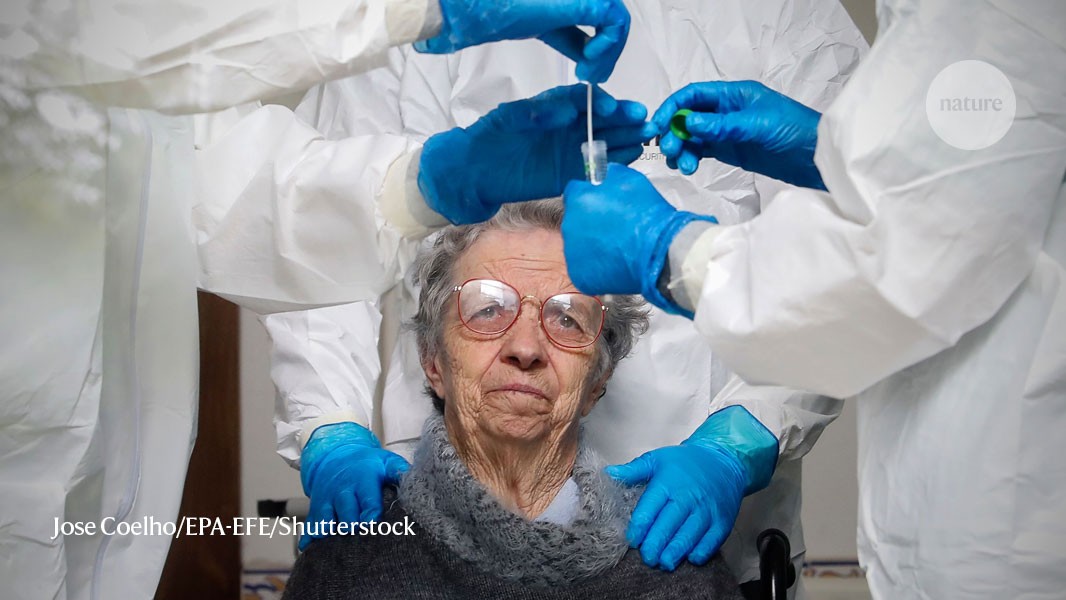
The coronavirus is most deadly if you are older and male — new data reveal the risks
A slew of detailed studies has now quantified the increased risk the virus poses to older people, men, and other groups.
nature.com
115 points · by sohkamyung · 6y ago · 139 comments
https://austingwalters.com/u-s-covid19-less-tests-more-death...
I think that's a better metric because it puts it in perspective. If you're 30, a 50% increased risk of death is still very very low. But if you're 80+ that risk is pretty substantial.
Note: this is basically extrapolating the New York and New Jersey numbers, which is assumed had the highest COVID19 penetration in the U.S.
That’s a poor measure for a number of reasons. Not least of which is we’re getting a lot better at treating Covid medically.
Very few peer reviewed treatments have been socialized. Most evidence is that things “show promise” then end up being less effective after actual analysis.
It's obviously not exact, so it's hard to tell whether this is just a case of coincidence and squinting to find a pattern in the noise. But still, I think there's potentially something deep going on that may tell us more about what mediates Covid lethality.
It’s interesting that you see it this way. Personally if someone said to me I have a 50% increased chance of death, I’d really struggle to make a proper risk assessment. Maybe it’s just hard to talk probabilities about ones own mortality
It's a classic tabloid shock headline to write "XXX will increase your risk of cancer by 10 times!" (when your base risk of cancer is low).
So whenever I see a statistic phrased like you did, I assume it's bullshit.
I think it would be closer to doubling everyone's mortality risk only in the zero mitigation scenario.
E.g., a pitcher for the Boston Red Sox is out for the season due to a heart condition brought on by COVID-19, prognosis unknown. [1]
You don't get any healthier than a professional athlete for a top major sport, and although this guy likely will not die, he is off the field in in danger of losing his career.
And yes, I know several 80, and even 100-year olds that are a lot more sharp and physically active than many 40 year olds. Age is not the mere number you think it is. Genetics and decades of healthy/unhealthy choices create massive variations in healthspan and lifespan - you simply do not know that your "typical" 80-year-old has a near expiration date - (s)he could have decades of healthy, happy life ahead.
[1] https://www.si.com/mlb/2020/08/01/eduardo-rodriguez-red-sox-...
Sure, plenty of hale and healthy 80 year olds. Also, a majority of 80 year old Covid patients survive. Are they likely to be the same cohort? That's what I would bet on.
QALY stands for Quality-Adjusted Life Years. That includes long-term impairment of life function, in the definition.
And you're spot-on, we don't even have preliminary data on that, yet. If it were a really big and obvious effect, like 20% of all patients suffer a 20% downward adjustment that will never get better, I wager we'd have a preprint to that effect.
It's a terrible thing for those affected, of course it is. But how many? How badly? We just don't know yet.
But the initial reports of both serious effects to blood, circulatory, lung, organ, and peripheral & central nervous system are real cause for concern, as are teh sufficient numbers of extended illnesses, enough that it already has a name - "Covid long haulers", and support forums.
[1] https://www.thelancet.com/journals/langlo/article/PIIS2214-1... [2] https://data.unicef.org/topic/child-poverty/covid-19/#:~:tex....
The second (and further) years would support or disprove that assumption. My guess is disprove.
So I don't think anyone can determine their risk from this article. It is much higher or lower depending on whether or not you have co-morbidities.
I had Asthma as a kid but COVID has triggered it back on again. I'm now a lot more sensitive to pollution.
https://news.harvard.edu/gazette/story/2007/07/obesity-is-co...
"Male" not so much.
As was the weird underrepresentation of smokers among the infected. Which persisted through at least New York, there were several papers about it, but I haven't seen anything on the subject since.
Age-specific mortality and immunity patterns of SARS-CoV-2 infection in 45 countries
https://doi.org/10.1101/2020.08.24.20180851
Infection fatality rate is <0.1% below age 50 and then trends up rapidly from from there.
> Although fatality estimates are important for understanding the risk of viral spread to people in different age groups, they don’t tell the full story of the toll COVID-19 takes, says Kilpatrick. “There is a fascination with death, but COVID-19 appears to cause a substantial amount of long-term illness,” he adds.
I've been very surprised by how little attention the media gives to the damage that covid does to people, but here's a few articles:
https://www.theguardian.com/science/2020/jul/13/heart-scans-...
https://www.smh.com.au/national/seizures-and-battered-heart-...
https://www.forbes.com/sites/robertglatter/2020/08/17/covid-...
It makes me wonder what's going to happen in a few years from now in the countries that haven't controlled covid well. Will there be a huge demand for new types of medical treatments to help covid survivors?
For example, here's a paper going over heart inflamation and the flu, going over data gathered in the last 100 years [0].
> During the Sheffield, England influenza epidemic from 1972 to 1973, the cases of 50 consecutive patients who were initially diagnosed as mild cases and were treated on an outpatient basis were followed. Transient electrocardiogram (ECG) changes were seen in 18 patients, and long-lasting changes were seen in 5 patients.
[0] http://citeseerx.ist.psu.edu/viewdoc/download?doi=10.1.1.685...
Correct, this has been my observation too. I see people attributing even a loss of smell to Covid, which is actually quite common to all respiratory illnesses.
Sure, flu and COVID-19 can both have long-term effects on the body. But that's true of many disparate diseases. What matters for long-term care are the details that are specific to each disease.
At this point bringing up the flu in discussions of COVID-19 is basically a form of "what-aboutism".
Taking into consideration of that which has gone before is the basis of progress and research.
> The way this novel coronavirus infects the body is different from influenza, and the symptoms of COVID-19 are different.
Everything is different from everything else.
> We really need to stop comparing it to the flu.
In other words, everybody needs to stop thinking in ways that don't support your viewpoint. People that try to solve this problem by looking at related problems should stop because 'reasons'.
Human society operates just fine with the risk of flu despite the high annual death toll. How much worse does another virus have to be in order to justify a qualitatively different approach? Is there a specific numeric threshold in terms of fatality rate or QALYs lost or severity of long-term effects?
You missed the entire point of their post - you shouldn’t believe something without evidence and there is no evidence COVID is special wrt long term complications.
I disagree, for two reasons:
1) Covid seems to be stronger and deadlier than any other influenza
2) Covid is spreading in the world IN ADDITION to any other influenza or cold or disease that we already had.
Therefore, there's a case to be made for many health care systems in hard-hit countries to be under heavy stress for several years to come.
"any other influenza" includes the 1918 pandemic. Which had a higher CFR, and that's before trying to account for QALYs: Covid is especially deadly to the old, in a nonlinear way, and Spanish Flu rather notoriously killed those in the prime of life.
Bird flu has an almost 50% CFR. We're lucky that, to date, strains aren't very infectious in humans.
"It's just a flu" is a really bad measure of how bad a disease is. Influenza is terrifying.
2) is almost tautologically true, but it's worth noting that the quarantine measures have been very effective at stopping the spread of other respiratory illnesses.
The excess mortality of Covid is visible, without trying to track deaths from it separately. The average victim is old enough that I wonder if it will remain visible if smoothed out over a five-year period.
We'll know eventually. "Heavy stress for years to come" from post-Covid syndrome is certainly possible; it's not the square upon which I'd lay my chips.
It wasn't too bad but it lasted three weeks and I still have periodic shortness of breath and fatigue and my doctor has no clue what to do. I hope it's not permanent.
Death is definitely not the only bad outcome.
I'm 44 now and one thing I've learned the hard way is that injuries DO NOT reverse themselves. You recover 90% but the remaining 10% is just lost forever.
human body: i can produce a fully functioning human being in 9 months, complete with a skeleton, brain, digestive track, the whole 9 yards!
person: great, when will my ankle start feeling better?
human body: a full year and it will never be the same
I was able to get a nasal swab test done in June when community wide testing finally opened up in my area, but it came out negative. The whole thing has been so frustrating to deal with because I don't know and may not ever know if this was for sure Covid related.
Also get a pulse oximeter and ask your doctor for one of those lung function devices aka an incentive spirometer (you breathe into them). Get a normal pulse ox when you feel ok and when you have shortness of breath, take your pulse ox again.
There is also evidence of chronic fatigue syndrome caused by covid.
Are these long term covid cases showing objective complaints? Are the lungs still damaged when imaged? Or are we relying on subjective complaints? I know there have been a few documented cases of myocarditis which is clearly objective in nature, but that’s all I have seen.
But I can feel a distinct difference and the shortness of breath always comes with the fatigue. It's too early to have any proper long term studies, but I think SARS gave lung damage to quite a few of the patients that lasted a long time [1].
One of my mutuals on Twitter is a highly active young woman, who does things like spend time in Thailand to train Muay Thai. She's been doing what she can to recover, but it's been slow going.
Covid long-haulers are a real thing, that much I'm convinced of. How prevalent it is, is an open question.
I went into the hospital for a week for severe asthma, has coughing spells for a year and my lungs haven’t been right since. It’s not as bad and I can do some level of resistance exercise, but I never fully recovered.
I’m paranoid about getting Covid. I know how terrifying it is not to be able to breathe and how irritating it is not to be able to do slight strenuous day to day activities without giving out of breathe for a couple of years afterward.
I was exposed twice to high mold spore environment; it was an enclosed space on a neglected boat. I still feel it two years later.
Could do it just for curiosity perhaps :)
In Seattle, at least, you can just go get a free test in a drive thru with almost 0 hassle and no cost. This is the way it should be -- as accessible as possible and free. Otherwise you'll have infected folks skipping testing.
The study this references turned out to be based on bogus data and bad statistics. The original authors since amended their data and don't back down from their conclusions, but they seem a bit unjustified (IMO, and the opinion of their critics).
Here's the tweetstorm (sorry) from the professor that initially called this out [1], the acknowledgement of the errors [2], and the tweetstorm (again, sorry) from that professor again pointing out that the corrected data shows "Covid survivors DO have thingies in their T1. But it is JUST AS COMMON in people with similar risk factors who have NOT had Covid. In other words, yes there are those funny thingies in the scan, but it is NOTHING TO DO WITH HAVING HAD COVID. It is because of the background risk factors" [3].
Here's a news article summing this all up nicely, if you prefer [4].
[1] https://twitter.com/ProfDFrancis/status/1288246926392070145?...
[2] https://jamanetwork.com/journals/jamacardiology/fullarticle/...
[3] https://twitter.com/ProfDFrancis/status/1298524305945436161
[4] https://www.tctmd.com/news/message-unchanged-say-researchers...
> The researchers, who performed MRI scan of their hearts an average of 2 months after they first were diagnosed with Covid-19, uncovered some concerning findings: 78% of patients had ongoing heart abnormalities and 60 percent had myocarditis, inflammation of the heart muscle. Even more concerning was that the extent of myocarditis was not related to the severity of the initial illness or overall course of the illness.
This is so important. I'm so sick of people on either "side" faking data to prove their presuppositions on this.
I don’t think this research is carried out with ulterior motives. Scientists make mistakes, and are prone to biases whenever they have a hypothesis. The progression of repeated studies is the final arbiter of truth. Saying that long-term heart abnormalities would be faked to push an agenda is suggesting the existence of a conspiracy. Beyond the usual “publish or perish” drive, nobody stands to benefit from reporting results either way.
One of the quirks of this disease is that it does damage to the lungs and reduces oxygenation without any obvious external signs (see the reports from doctors of people texting when their blood oxygen levels were otherwise extraordinarily low) and there are now reports of people having lung damage when they otherwise did not present as sick.
So yes, it appears that it is possible to have long term damage even if it didn't seem that you were sick at first.
-- most cases are asymptomatic.
-- some asymptomatic cases have e.g. detectable heart and lung problems.
-- some people have long term consequences.
...these points are not mutually exclusive.
25-50% of people in certain areas have gotten covid. A comparison to baseline is required. Having covid one day and developing seizures the next does not determine causation, as your prior is baseline.
I'm not sure what omissions you're talking about, or where you're looking for this stuff and not finding it. I recommend listening to the podcast This Week In Virology which is run by infectious disease experts (including some dual PhD MDs) and covers the bleeding edge of the research. A lot of people are out there doing their best to gather and synthesize the limited data we have right now.
If there were serious effects of Covid we’d have heard about it with multiple articles from the science community. All there is now is conjecture, opinion and anecdotes.
I'm equally worried about the long term mental health issues people will suffer due to loss of jobs, and the domino effects that come from it (divorce, default on their debts, etc). Suicide rates will go through the roof. I think the secondary effects will in size be a lot larger than the reported number of people who have died + those who suffer from long term health-damage. Then there are those who missed cancer treatments, or who don't want to risk going in for chemo because they're equally worried about infecting themselves by leaving the house.
Specifically because the data doesn’t exist yet so they have a coping mechanism shunning all discussion of possibilities
The media coverage and social media narrative is very doom laden and fearful, so there are no shortage of places to discuss that.
Whilst the people highlighting the 99.9% survival rate unless you are very old or sick and questioning whether nuking your economy is worth it have a very socially unacceptable view.
It’s been a strange and isolating experience for me to hold a minority socially unacceptable view throughout this whole thing. I feel for minority groups much more nowadays having experienced it.
are you referring to these as the same thing? like "minority group opinions" as literary synonyms
or
are you empathizing with power/race minority because you once held a less popular view?
its not really clear here.
That's how data is collected to have a data-driven conclusion.
https://www.theatlantic.com/health/archive/2020/08/long-haul...
https://www.theatlantic.com/health/archive/2020/06/covid-19-...
Not exactly shocking news. The risk of dying from most diseases increases significantly with age.