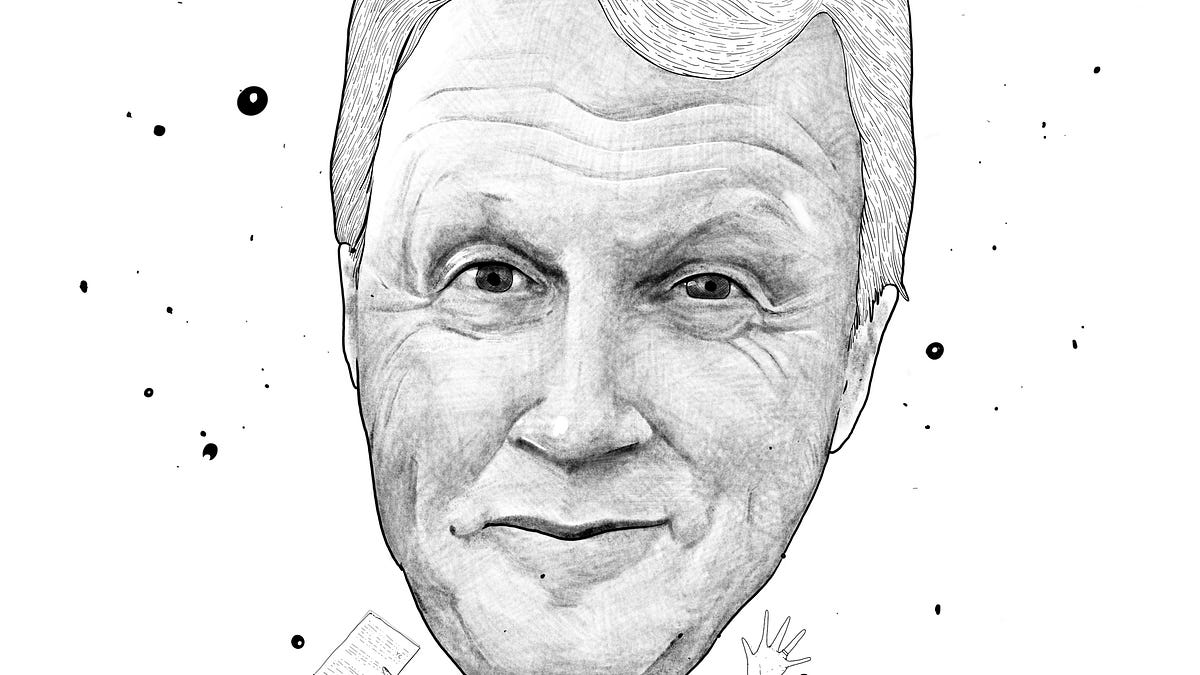
PR interviews Paul Graham
The fixed point of Y Combinator
pullrequest.substack.com
159 points · by sprague · 6y ago · 168 comments
YC folks, startups & the people yc startup school attracts that I've personally spoken to in the past few years are more imitator-types.
YC folks & startups of 2009 were more authentic & original types.
Though I suppose it's tough to avoid this deterioration in culture following $-influx & 'success', in any domain.
Jim Morrison.
I always thought that song was prescient, considering the the "waves" of rock and roll in the following decades. Ideas emerged, often from the underground. Some were true, and they upended old, stale ideas that had descended into hack mimicry packaged and sold to the unwashed masses.
Novelty is a quality and it only lasts so long. Johnny Rotten's antics would be trite cliches by the 1980s, just as he himself had been disgusted by the trite homages to Jim Morrison of the last 70s. Authenticity, originality and rebellion don't generally follow clearly signposted roads.
Movements have cycles. In retrospect, Mike Oldfield didn't really suck... but Johnny was right at the time.
I was happy to be around, if not involved. Startup School afterparty at Anybots was a dream. Trevor even pinched me with his new robot (at my request).
There were posers even back then, though. I remember one guy getting very drunk, saying “Ok, this is it,” and walking up to pg to pitch his startup. I’m not sure who I felt worse for, him or pg.
Fun times for a 22 year old nerd on his first trip to USA. I grew a thick skin fast.
The fact that a random kid from Europe could even get a chance to show up and speak to all those amazing people ... priceless. Just wish I had had the chops to do more with the opportunity.
> You’re an idiot
That seems awfully rude of them. They don't sound like very pleasant people.
So melancholy, a lot of the responses seem to gravity around a general accidentalism. I feel that’s true for a lot of people who have had great success, never really understanding how each of the pieces fit together to make their success and thus never feeling like they’ve owned it.
What I find intriguing is that Peter Thiel has yet to appear on the Joe Rogan podcast while he clearly bankrolled that operation.
The second one is pretty obvious, Three former PayPal employees—Chad Hurley, Steve Chen, and Jawed Karim—created the service in February 2005.
With what we know of Peter Thiel I think the burden of proof is on you that he doesn't make use of the knowledge he has on specific network work effects of youtube.
Just like he installed Donald Trump with Facebook in the White House.
Out of curiosity: any guesses what this company might be?
I fear this prediction won't come true.
There's a great risk that 'health theatre' will join security theatre as a durable if not permanent part of our existence. That years from now, we'll be getting temperatures checked, schools will be shutting down for worse-than-usual influenzas, and so on.
I still can't bring an ordinary-sized yogurt on a plane, and have to remove my belt and shoes. Something made our society irrationally risk-averse, and I glumly suspect that COVID won't be the turning point in that trend.
COVID fear isn't being perpetuated by any government agencies at the national level. If anything, the federal government desperately wants us to forget that COVID exists. Once the actual risks are gone, we're going to go right back to normal, though hopefully we will have learned a lot of lessons about pandemic preparedness.
Occasionally your shoes will be scanned. That's it, at least from my (quite frequent within-EU flying experience) perspective.
So yes, I also tend to agree that many people will continue supporting the health theater and fears for the foreseeable future.
Fearing polls, Biden has run away from his position (made multiple times on record) of a national mask requirement. The other day he lied and said he never said it in the first place, claimed he's a constitutionalist and wouldn't seek a mask requirement because of that. This was all on video. So who knows what to believe from these clowns.
"You and your children will die soon and there's almost no way to stop it" is the dominating message on the front page of many media organizations.
EDIT to add: with a link or screenshot.
Our brains are finely tuned to detect danger. If there isn't any danger, danger will be exaggerated or simply invented. Our society has been very successful at eliminating all sorts of dangers, hence the irrational view of the remaining risk today.
https://www.pewresearch.org/fact-tank/2016/11/16/voters-perc...
Interestingly, in an immunology class I just took, the instructor suggested that allergies come from our immune system doing the same thing. If the environment is too sterile, it will come up with things to worry about even if the danger isn't really there.
Citation needed
It’s essentially a law enforcement problem. I agree liquid rules are ludicrous but the current situation didn’t happen overnight, and also it’s not that similar to an infectious disease threat.
That said, this "hyper sterilization" mindset is not appropriate if we're not in a pandemic. Copious hand sanitizer, social distancing, masks when not sick, limiting crowds, etc. are not needed when we're not in a pandemic and they have huge downsides for society.
There's a large group of people who've become extremely scared as a result of what's going on at the moment. Most of them haven't actually evaluated what the risk for them personally is, yet they've made significant changes to their behaviours in the name of the health theatre.
On the other hand, you've got people who either are in life situations where that isn't an option or people who have actually done risk analysis. These people have not changed their behaviours much (beyond sticking to the random new legal requirements).
Now for the thought: I think that many of these behavioural changes (or lack thereof) will stay, essentially meaning that we've got a group of people who will act as before and a group that will act (and overreact) irrationally from now on. I think this is going to give the people in the first group an advantage for getting things done, which can have interesting long-term implications.
I do believe that the risk is fairly low right now. So low that if I'm only thinking of myself, there's not sufficient justification to change my behaviors.
However, I also believe that if no one changed their behaviors, the risk would be high enough I'd have to (as is the nature of an exponentially spreading thing).
As such, I behave how I need everyone else to: I change my behaviors in the hope everyone behaves similarly to me.
For a very similar analogy, there's no need individually to get vaccinated risk wise. Developed countries have such a high level of vaccination that there's a vanishingly small probability you're exposed in your entire life to the things you're vaccinated against. There's a higher risk of side-effects from being vaccinated.
However, if no one got vaccinated, the math doesn't work out anymore, and it's back to vaccination making sense for you as an individual. As such, most people get vaccinated since it's the socially conscious thing to do, it's what we ourselves need most other people to also do for our own health.
Anyway, I think he's enjoying his well-earned money, life, and wonderful family (which is great), but as far as practical real-life startup advice? Paul Graham isn't that guy anymore.
Then I saw his recent tweets and especially the essay about wealth tax, I was a bit disappointed. But as you said, his position is well earned. But I don’t see any useful real life advice from him anymore.
Why? He points out [the non obvious to many fact] that wealth tax kills compounding.
And this is something to seriously consider.
His analysis was deeply flawed to the point of being disingenuous. For one, it assumed that your wealth never grows once you get it. And for two, it completely forgot that there is a baseline on the wealth tax (the current proposal is at $50M).
So no, it doesn't kill compounding, it just shrinks it a bit.
Yes, let's just assume this is true. Please!
Perhaps he likes to talk and think about other things these days, but I'm sure he's still an expert in that area. Certainly he knows more about startups than just about any HN commenter.
It's kind of true.
Basically when PG was writing about stuff they considered part of their in-group then it was great and wonderful.
When he writes about stuff that's no longer aligns with their existing political in-group's beliefs (his arguments against the wealth tax [0], his essay about conformism [1], his essay about economic inequality [2]) - suddenly he's 'disconnected' and they're 'disappointed' in the essays.
I thought those essays were great and the points were interesting/well argued. I liked his old essays too.
I find the tribal responses to them (and the comments here) to be lame.
[0]: http://paulgraham.com/wtax.html
Before YC, there was no real playbook about how to start a startup. Now there is one (startup school). That's one reason why sama switched gears towards openAI. Starting up is now kind of a solved problem, conceptually
But on top of that playbook, there is tons of advice available from countless people in any kind of niche imaginable, state of the art, updated almost every week. SaaS, e-commerce, platforms, engineering, marketing, you name it.
But this very differentiated professionalism was a direct result of the success of YC, among a bunch of other players. Starting up in your early 20s in your doorm was a niche itself before YC, now it's very much mainstream (thanks as well to cloud and mobile).
PG never was a 'startup expert' it seems to me. He always has been and still is a hacker that enjoys building things that are interesting. It just so happened that between 1995-ish and 2015-ish that very niche-y hobby turned out to be extremely valuable for (more or less accidentally) building the foundation of one of the most lucrative global commercial and societal transformations in history.
The period between 2000 and 2010 laid the foundation. But not because it was intended, but because in hindsight, the right people with the right mindset turned out to build the right tool set that paved the way.
And once this way was paved, the 'army' marched in with trillions of dollars and a global flocking of talent and ambition.
Job done, it seems.
That's why he lives in England now, writes, codes and checks out interesting stuff built at Demo Day. Like it has always been, but in a completely different world, in which building tech became the most valuable thing.
That doesn’t take away from any of his success, which has been immense (anybody who has made over a billion is obviously amazing and had the ultimate life) but he has become too much of a cult figure in comparison to others in that stratosphere
Unpopular would be the better word. We were nerds. Revenge of the Nerds was about people like us: https://www.imdb.com/title/tt0088000/
I know that when I came across an article where Wil Wheaton was complaining about CUPS and how bad printer drivers were in linux I was tickled pink.
Over time, as society became more aware of the value this industry brings, it's brought it more mainstream and also brought a lot more people into it (different types of people). But at the time I think the other posters assessment was spot on.
Like you, I never cared either, but I also think what they said is true.
I didn't know who PG was until recently. I knew he was well respected on HN but I've never found that much value in his blog posts either. Maybe people like his writings in the light of his achievements, rather than for their intrinsic values.
What they, and you, fail to realize, is that after the copycats have come in, the pioneer looks outdated. But they are the ones standing on his shoulders, even if, with the benefit of hindsight, they've found more effective ways to spread the same message.
This sort of interesting writing seems to have stopped in general. Spolsky and Yegge are other positive examples from that era, which of course is just 10 years ago.
But I’ve learnt a lot more from others, who are not nearly as successful.
This was a liberal-arts school and the professor had no particular technology or business background; I’m still not sure how she came across them.
I don't place any blame on him personally, it's just that his day-to-day is so removed from anything close to ours that his musings are... irrelevant for the vast majority.
[0] I guess? Is there an Absurdly Lucky DotCom Success Bias?
I’ve heard great things about On Lisp, so will read it when I get to a more advanced level. But honestly I feel like I could write a better ANSI Common Lisp book, it has so many convoluted parts. That said, it was written in the mid 90s so it isn’t correct to judge a book after 20+ years.
I do recommend On Lisp for people who want to understand and get a feel for lispy ways to solve problems... but, fair warning: I did already have a very solid grasp of programming in general via C, C++, Python, O'Caml, a little bit of Haskell (at the time) when I read it. So... YMMV.
If you want a good book on paradigms in general, I'd recommend something else.
As another comment pointed out, concerning his writing about the wealth tax, I think he's lost sight of the fact that's there's more wealth to be created that's outside the scope of what the wealth advisors for the uber-wealthy are familiar with.
His objection wasn't about taxation as a concept, it was about a wealth tax on stock assets, which definitionally requires founders to give up control of their company as they liquidate shares to pay taxes.
Not really sure how you extrapolate "there's more wealth to be created that's outside the scope of what the wealth advisors..." from that. His opinion is that it would sabatoge the wealth-creation mechanism he knows and has built.
I'm new to HN and was interested to read PG's answer, because I like the civility and on-pointedness of HN, which I think is a result of its rules of engagement. So, first I looked at Substack, which I hadn't heard of before.
PG's answer suggests he values journalism, but I was surprised that Substack doesn't address the main problem of journalism, which is not a lack of "individual domain experts" - it's a lack of a viable business model to support people who practice journalism.
Advertising is what used to pay for journalism when journalism was published on newsprint. Since advertising went to online, journalism has been decoupled from the business model. Now less than half the number of journalists are employed in USA and Australia than at the peak, less than 20 years ago.
Can anyone point me towards attempts to find a new business model to sustain journalism?
It... does, though? Substack is a way for writers to offer subscriptions for their content. Two friends of mine are benefiting from this, one has managed to pay her bills this way and the other is well on his way.
I don't consider it a magic bullet, but it's clearly a step in the right direction.
I'm looking for ways to repopulate newsrooms that send journalists out into the field to cover breaking news. That's a different set of logistics, scale, and costs.