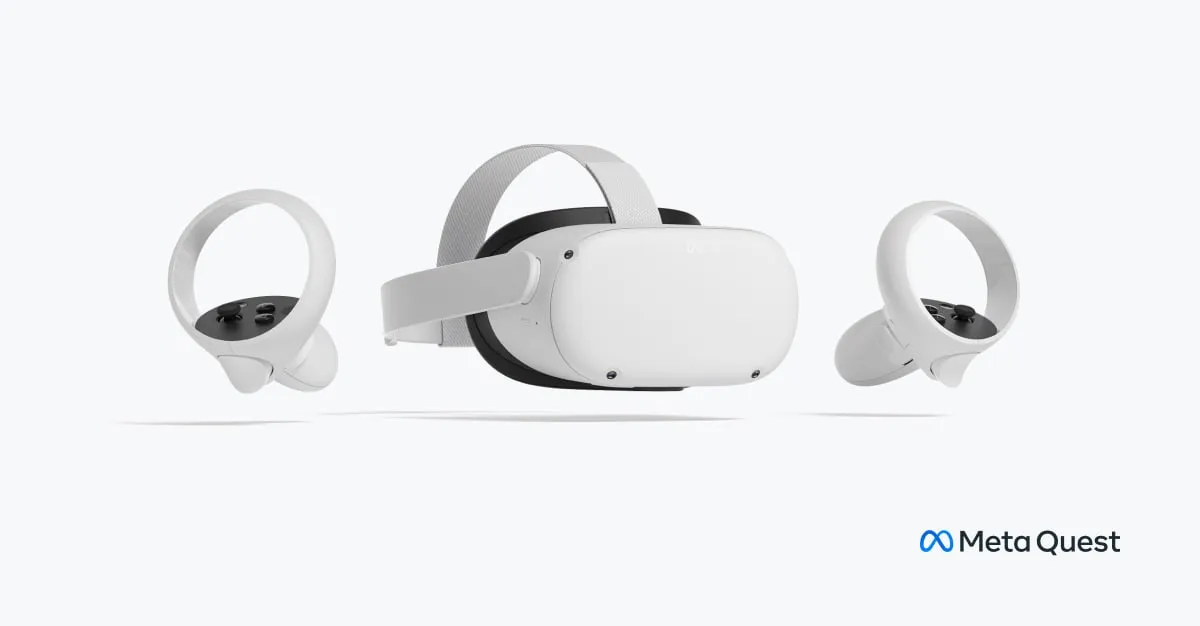
Meta Quest 2: Immersive All-In-One VR Headset
Shop the Meta Quest 2 all-in-one VR headset and immerse yourself within new virtual worlds. Explore everything that our second gen VR device has to offer.
Meta
351 points · by sidhanthp · 6y ago · 578 comments
I do not want to see this become the Oasis.
The original Oculus Quest is already really good, and was constantly sold out for almost its entire lifetime, and now Facebook are selling a near-4K resolution headset with a top-of-the-line Snapdragon XR2 for $299.
I have been considering starting an open firmware project for the Oculus Quest 2 (Snapdragon XR2), and too a lesser extent, the Oculus Quest (Snapdragon 835) and Oculus Go (Snapdragon 821).
All 3 headsets are Android-based devices. Clearly, most of Facebook's innovations have been deep in the stack. The sensor fusion involved in 6DOF tracking and the approach taken for Oculus Link PC tethering are non-trivial problems that have taken entire teams of people years of work.
It would be many man-years of work to reverse engineer and re-implement Facebook's work to the quality level seen in the Quest.
But it can be done, and it would mean liberating the best value VR headset hardware on the market.
A hardware platform that is poised to dominate over at least the next decade.
This is Hacker News. Is anyone else interested?
Eh, it doesn't look clear at all to me. It looks like its main advantage is slightly higher resolution than Valve Index and wirelessness. On the other hand from what I read Quest 2 only now will finally get 90Hz - this is what even old Vive provided. And Index goes beyond that - up to 120 and 144Hz. Also I wonder how Quest's screen quality compares to Index, besides resolution and refresh rate - couldn't find any information about Quest's field of view, pixel persistence or fill factor. And with Facebook behind Quest, I consider Index to be cheaper - I'll take $999 any day over $299 + my data.
I'd say it's hardly a clear "win".
All that really means is you have enough disposable income that it's actually a decision worth even considering. For most people it's aimed at that's not the case.
This isn't Gmail for free vs some paid service for $5/mo, this is more than three times the cost for something that already costs multiple hundreds of dollars.
And comparing a 1000 dollar headset which requires a 1200 dollar computer to drive it, to a 300 dollar all in one unit.
It's akin to suggesting that Toyota haven't done well in the car market because they don't make Bugattis.
Facebook absolutely have won this generation in terms of market adoption. They've strategically withdrawn from competing at the higher end of the market. Which, at least today is a relatively tiny luxury segment.
As someone already pointed out, that's a nice problem to have! For me, I considered the Index but the cost of upgrading my PC + the Rift S still came out a couple hundred £ cheaper plus I don't have to dedicate space to it.
Honestly, I feel like you could position such a project as "Deconstructing Facebook's business models one step at a time: The corporation" and hire a lot of anarcho-hacker types while positioning the company as a social-good venture. I personally would love to get paid to gradually undercut and destroy facebook.
I worry that 2 things would happen:
1. The company would become what it set out to destroy (evil)
2. Anarchist hackers are passionate but you'd have a hard time getting funding from any of the big reputable players.
Still, that would be an awesome company.
I think now is different. I think crowd-funding has changed the economics of such projects from a few passionate hackers working in their spare time to now being able to fund people working on such a project full-time.
There's probably tens of thousands of users willing to pledge $100 into escrow on a Kickstarter-like service, paying out when somebody to creates an open Oculus Quest firmware capable of 6 degrees of freedom using inside-out tracking.
This funding model and skillsets are suprisingly close to what's required to provide Android security updates to older phones and tablets, so there's a broader business to be built.
Many of those users are probably willing to pay a few dollars a month so such software gets continued to be developed.
My go-to response is always "put Facebook out of business".
I've been thinking about it for probably 10 years, I still have no idea what that means, but your post here got me a little stoked it could be possible
How much of the accuracy of the sensor fusion algorithm comes from the inherent accuracy/calibration of the underlying sensors?
Has anyone tried bringing up a stock android distribution on the Quest 2?
He has often spoken about deeply optimizing virtual reality by peeling back all the software layers. From his annoyance at the Android's process scheduling on the GearVR to writing custom microcode for the Qualcomm chip's Digital Signal Processor to try and optimize playing PC games (over Oculus Link streaming) by encoding and transmitting video per scan line (instead of per frame).
He said that up until a few months before the original Quest launched they weren't even sure whether they could get inside-out optical tracking working to sufficient quality, but that they just continued to iterate on the algorithms until it worked well.
It's clear that most of Oculus' innovation are deep in the stack, seemingly pushed forward by the legendary John Carmack. Now that Carmack is merely the "consulting CTO" rather than working on these problems full-time there's real questions about whether Oculus' deep stack innovations will continue.
Oculus Quest is effectively a smartphone in many key ways, but it has several monochrome wide-angle cameras for tracking. Also unlike smartphones it has active cooling fans for improved thermals. It seems there's a million little things than come together to make Oculus Quest standalone VR way better than any phone-holder based virtual reality platform that I've used.
As far as an open-source custom firmware for Oculus Quest goes, I am unaware of any project that has yet cracked the bootloader to run unsigned code and then booted stock Android.
I accidentally bought one until I realized the mistake and bought a rift S a day after that. Want to buy it? It is as good as new.
Thought about selling it on ebay but got a bad conscience to sell it to some kid, even for a good price.
Jokes aside I think not needing to connect a PC has to be the future, but I would expect the device to be able to run a conventional OS. Currently I think it will stay a dream however.
Otherwise VR devices have amazing capabilities already. A few more pixels would be good, but you will quickly need a lot of processing power.
Why, given the opposite has proven true in the mobile space?
I wish they did, but consumers clearly do not value this.
I've thought a little on this as well, from time to time. Hardware-wise, I don't see how the Quest 1/Lenovo Mirage Solo/Vive Focus were anything much more than Qualcomm's reference design headset (https://developer.qualcomm.com/hardware/snapdragon-835-vr-de...). Different strap designs, minor variations on display modules, removing ancillary stuff like the cellular radio and GPS, but otherwise the same CPU, same GPU, largely the same cameras.
With the Quest 2 running the Snapdragon XR2, a lot of the basic features of 6-DOF VR, with controllers/passthrough/voice control/etc, could be running straight on chip. (https://www.thundercomm.com/app_en/product/1584417287281447)
Qualcomm provides an SDK for VR on their hardware that touts all the things Facebook has always claimed were their own big innovations, like asynchronous time warp and lens corrections (https://developer.qualcomm.com/software/snapdragon-vr-sdk)
I can't find the link right now, but Qualcomm/Thundercomm are also providing a base Android image specifically for use in VR. Which is probably why you can build and install regular ol' Android APKs on all of these headsets and they map the controller to mouse actions.
My point is, I am starting to doubt Facebook has all that much "special sauce". I think it's mostly just marketing. I think Qualcomm has done the hard work here and is happy to let other companies take the credit because Qualcomm is about chip licenses, not consumer electronics. Other than tuning parameters for camera positions, there should be no reason why the OS image for any one of these headsets to run on any other one.
I think it's doable. I think you could probably root the firmware and get an open source OS running on any one of these headsets. And it'd also breath new life into systems whose creators basically got bored with not making a billion dollars overnight.
It would just negate a reputation that he has worked his ass off his entire life to build if he hasn't done valuable targeted work on the visuals of the device.
There is a lot of foundational hacking to be done around the Oculus standalone headsets. I don't believe the headsets have yet been cracked to unlock the bootloader to launch unsigned firmware.
It's probably worth moving discussion over to a forum and Wiki dedicated to such reverse engineering efforts (such as XDA developers) [1]
I do think that now is the time for such a project, and that crowdfunding has changed the economics to make this possible in a way that it never has been before.
I’d rather miss out on VR entirely than create a FB account and give that despicable company any data.
Clearly FB is planning to extract value from this, and is why they can price this at just $299. They're betting customers will give up some data/privacy for that low price.
I would be willing to pay $400-$500 for a Quest 2 if it didn’t have the Facebook integration.
More importantly, I’d like to see Facebook FORCED to provide a monthly dollar value that they think my data is worth.
Price aside, tethered is a different market. I like powering VR with a gaming PC, but a standalone headset with inside-out tracking like the Quest is where the mass market / oasis will be.
Valve is kicking ass, leading massive technical charged doing great & fantastic work with none of the typical Service-as-a-Software-Substitute slimeware that everyone else keeps falling to. Great novel hardware with very high bandwidth & compelling input, best if not only useful end user drivers out there as we see with projects like Monado XR that are practically unimaginable elsewhere.
You're damned right they don't have a killer business instinct. They have a nurture protect & help instinct.
They aren't on inside-out tracking, not yet, they are building far more reliable open systems for outside-in, & that makes them more costly. But you know what you are getting & you know the raw data right out of the sensor is going to be great.
They've now announced some kind of developer accounts for businesses that won't be tied to personal FB accounts.
EDIT: i guess you’re right. They are that draconian: https://www.roadtovr.com/fake-facebook-account-oculus-headse...
It’s no wonder they were banned in China. They’d rival the Party in big brother power.
Seems like this is also the end of the road for Rift, the Quest 2 is lower cost, more pixels, and they mentioned 90 hz screens for PCVR games over Link.
EDIT - review units went out in advance, so 3rd party reviews are already up. Here's one from Tested: https://www.youtube.com/watch?v=_x6lux6f_6g
But you can plug the Quest into a PC and use it as a PCVR headset. Oculus sells a 16 ft fiber optic cable for $80, but it works well over any good quality USB 3 cable (and even works over USB 2 now).
The downside of this is that it's more front heavy than a PC headset without all the standalone guts, and I'm sure there's non-zero latency for running the video stream over a USB connection rather than a standard video cable. It works pretty well though, I think the trade-offs are absolutely worth the benefits of having a standalone headset.
The version on the Oculus Store doesn't do SteamVR streaming though, you have to buy it and then sideload an alternate version (which still checks for a license from the store).
There's supposed to be some sort of easier sideloading system coming (currently you need to sign up for a developer account and enable developer mode), but no new info since that was announced a few months ago.
Also, there is a good amount of compression involved so the graphical fidelity takes a massive hit.
They claim that they are going to be improving both of these issues, but given that they still exist in largely the same state as they did with the Oculus Link Beta with the V1 Quest, people should be skeptical about how much improvement they are going to be able to accomplish. Carmack talked about some ideas on how it can be made better, but I don't know if he's still assisting them with anything at all.
I'm very happy with my v1 Quest, but its PC support has some significant drawbacks.
So now you're tethered, your tether is more fragile, and you have significant extra latency.
>We’re going to focus on standalone VR headsets moving forward. We’ll no longer pursue PC-only hardware, with sales of Rift S ending in 2021. That said, the Rift Platform isn’t going anywhere. In fact, we've seen significant growth in PC VR via Oculus Link, and the Rift Platform will continue to grow while offering high-end PC VR experiences.
So, yeah. End of the road for the Rift. Oculus Link makes it redundant.
https://www.oculus.com/blog/play-rift-content-on-quest-with-...
Tethering just feels like an bootstrapping niche. Appealing to those who already find gaming PCs appealing, obviously dovetailing with highly engaged gamers. But, tethering is never going to "win." Tethering for power makes current battery life OK, even the quest 1 is good enough.
Mass adoption, almost certainly, means an affordable all-in-one unit. We have enough history at this point (with home gaming) to know what the price range is. Oculus have been playing within that range.
Graphics/power is already (Quest1) good enough for a lot of games. An interesting part of the history of home gaming is that both "more is never enough" and "good enough is good enough" seem to be true. Lots of the most popular gaming products (games, consoles.. eg minecraft) did not push boundaries at all. OTOH, bleeding edge has always been highly relevant, especially for blockbuster games.
On balance, I don't think graphics is a (commercially) limiting factor for VR anymore. This makes a rift/tethered device kind of questionable. If it doesn't get mass adoption, and I don't think it can), it can't support the high end games that really need these graphics. The oculus product line strategy (whether accidentally or deliberately) seems clever. The rift is what you develop new games for. They will (hopefully) be portable to the next gen Quest.
Overall, I think the current game is all about weight/comfort and content. The current devices are heavy & sweaty. This one weighs just 10% less. Every gram counts, but I don't think this is a breakthrough. Content is the other factor. IMO, exercise apps still need to breakthrough. I'm surprised ankle controllers and heart rate monitors aren't a thing yet. I really think the right game & controllers with the current gen quest could become a breakthrough workout thing. A lot of current games are pretty physical, but I suspect you can get to a point where a 6 week game addiction makes you look visibly fitter... on par with a daily gym routine.
It’s clearly dead and as someone who owned one it’s been clear FB hasn’t cared about it for some time.
I worked on VR over 30 years ago. I am so happy to finally see great consumer VR gear.
Most of my games are bought on Steam, not on the Oculus store.
You could think of Oculus as an effort to increase the amount of user attention inventory Facebook has in supply to rent out to advertisers. Also, they are positioning themselves as an intermediary for transactions in the future VR economy by being platform owner (a la Apple owning the App Store). My guess is the long-term plan is to make money here by displaying ads in VR and by getting a cut of goods and services sold though VR (see: Ready Player One).
First it measures your fitness level. Those devices have high quality acceleration and gyroscope sensors. They could know your visual and acoustic acuity.
They measure what games you play, for how long, at what time.
With these data and processing done by AI created by engineers they can extract and know more about yourself than you do.
We know from Snowden that places like the NSA collect and save data expecting technological changes in 5-10 years in the future for processing that data. The technology for processing does not need to be ready yet.
This is extremely useful for Advertisers and secret services. This is not what you say you are, this is what you are.
all the games we've bought produce accurate and targeted profile that allow facebook to recommend new games with a high degree of accuracy.
But I do agree that it seems like a killer value - I'll probably preorder one!
Even excluding the hard requirement on a Facebook account it seems there were a lot of compromises made to get the price down.
If it’s a lower refresh rate and Beat Saber plays worse, that’s a big deal. As you say it’s a subjective analysis so I’ll be looking for others to corroborate or clarify that point.
Yikes
China's social credit system will need to keep pace or be horribly left behind.
Here I thought Google was the most ridiculous: if you post too many emojis on a YouTube livestream, you'll lose access to GMail, Google Drive, and all other services that are quite likely running your digital life and are important for your livelihood.
This is incredibly fitting for r/ABoringDystopia.
There's a TON to love about this headset. And the price point is simply amazing.
Feels to me like the author had an axe to grind.
Like what? Genuinely asking - I've not tried it. I read that review though and while it certainly came across as negative he brought up a LOT of huge negatives (enough that I would never consider it) - but I'm still happy to hear what you like about it!
edit: and the 90Hz refresh rate upgrade from the first Quest’s 72Hz is nothing to sneeze at. Very perceptible immersion upgrade for many.
Rather we can infer that Occulus understands the issues with the hardline on Facebook login, and wish to avoid more backlash.
>Quest 2 requires your Facebook account to log in, making it easy to meet up with friends in VR and discover communities around the world. You can explore as yourself or choose a new name by creating a unique VR profile.
For PC-based training sims, we'll probably get the HTC Vive. And the Pico for the quest equivalent.
Do you have any experience with the Pico? It'd be great to have a non-creepy (and hopefully a bit more open) alternative to the Quest.
I haven't seen anything about this. Only battery news I've seen is they have a new strap system with a battery pack in it.
EDIT: here's a video with examples: https://www.youtube.com/watch?v=TVgxk0ytTyI&feature=emb_titl...
1. Sure, nothing beats it for visual quality and performance, but it is expensive. Minimum $999 AND you need a beefy PC with an equally beefy Nvidia GPU so the real minimum is really around $2499 with PC vs $299 for a Quest 2. That's a $2200 difference.
2. It is a pain to setup. You either have to deal wires and wire control on the ceiling, or if you have a Vive Pro, then you can spend another $299 to install a wireless option bringing the total cost to $2798. Let's not forget the base stations. While nothing beats them for tracking accuracy and the fact that they're the only option for full body tracking, it's yet another pain to set up. You might either drill holes in your walls, or you might buy camera tripods as a pricier alternative $25-$79 each on sale. Of course, once you set it up it's a dream, but the initial hill to climb is high.
What Oculus and PSVR are doing is expanding the market for VR and democratizing it so that it's no longer a niche hobby for a select few techies. Also, it is 'Apple'ing' VR. You just plug and play. You don't have to go through a convoluted setup that even some techies will balk at. i.e. I can buy this for my mom as a fitness machine.
Facebook and crossplay will also fix the problem of empty multiplayer games.
On a side note, I believe Onward devs are working to revert the PC VR Steam graphics. It's also good to note that it's just one game.
I will definitely be buying an Oculus Quest 2.
It's good to see that more consumers will come onboard with this insanely good price. I don't know if it is needed to propel VR forward, but at least more people can experience it.
I had that pain with base station 1.0 with the Vive Pro. Why?
1. As I've already mentioned, not everyone wants to drill into their walls. Some people who live in certain types of apartments can't even if they wanted to. Now you need to figure out how to best setup camera tripods
2. The base stations need line of site to each other. You can't just focus on getting the perfect view of the play area.
3. If you can't get line of site depending on your room configuration and furniture, then you need to buy a 100 ft or longer cord to connect them, or you have to deal with your headset or controllers not being tracked. ie. not working
Base Station 2.0?
1. If two base stations isn't enough for your play area due to room configuration or furniture layout, then you may need to buy more base stations which cost $200 (each?).
Sure, set up could be as easy as you remember it, but it could easily get complicated, and it's a hassle. I don't enjoy hanging picture frames.
(You can prove this by putting a song on lower speed and no fail, and turning your head to watch the blocks as they go past. They look like they're rotating to face you.)
Most PC games nowadays offer a free "DLC" for extra-high graphics you can download, which means they maintain compatibility but for those who have beefy machines it also can provide super high fidelity. Why didn't they do it that way?
Then, developers can apply to those tricks on better hardware and get even more out of it, and this pattern could just continue as everything improves and adoption grows.
That's a strange barrier to entry. I haven't had a FB in years, and have zero interest in going back, not even for some great hardware.
EDIT: Having read more comments below, I'm concerned that Facebook may eventually flag my throwaway account as "inauthentic" and revoke my access to all purchased Oculus software. The day that happens is the day I drop Facebook VR forever. No way am I linking my real-life identity to a platform full of angry gamers, some of whom may try to doxx and SWAT an opponent after a bad in-game experience.
I have always enjoyed writing game software more than playing games. The Quest changed that, I use it every day. (I worked on VR at SAIC, games for Nintendo, and VR for Disney.)
I think FB priced this for huge adoption. I have totally loved the Star Wars Vader Immortal trilogy so I can’t wait for the Star Wars game. Other favorites are ping pong, racket ball, and some of the 3D art people post.
And originally, Oculus was behind the curve on hadware implementations. The Lenovo Mirage Solo was the first 6-DOF headset, a year prior to the Quest, also running the 835. The Vive Focus was in the middle of the two. So, if the XR2 is doing the heavy lifting, it would suggest a big roadblock for competitor devices has been lifted.
So how much of the Quest 2 is above and beyond the Qualcomm XR2 VR headset reference design minus Facebook's services integrations?
https://arstechnica.com/gaming/2020/09/review-we-do-not-reco...
- Reduce or re-distributed weight (neck/upper back ache remains an issue)
Instead, what we got in the Q2 is the same weight but a head-strap that's a substantial downgrade. That decision just compounds the Q1's most glaring weakness.
Then throw in the mandatory Facebook account, downgraded eye adjustments, side-grade screen, downgrade battery life, and a bunch of cost-cutting all over: You just killed Quest.
I've gone from recommending Quest to outright recommending against Quest. They should have taken some weight out of the headset and put it in a box that goes in your pocket, not kept the weight and made a bad head-strap even worse.
Even with the $50 headstrap "upgrade" it is still worse than the HTC Vive Deluxe Audio Strap which many Q1 owners including myself own (via 3D printed adapter).
The only serious downgrade here IMO is the IPD adjustment, but for the vast majority of people it's not an issue. In other ways it's a clear improvement. I won't be getting one as I have an Index, but this is going to sell more than any other headset. The tech and the price are both incredible.
[1] https://www.youtube.com/watch?v=_x6lux6f_6g Tested's review is the one to trust. Norm knows his stuff.
Edit: Ah I see about the weight, you must have been talking about the weight combined with the upgraded headstrap, which does indeed make it heavier than Quest 1, by about 7%. I'll reserve judgement on comfort until I try it. Quest 1 wasn't exactly comfortable for me but it's about more than just the weight number.
I also think Facebook is kind of admitting they messed up the headstrap, if they have to sell a proper one separately.
The Quest 2 itself is the same weight as the Quest 1. The "10%" you're quoting is entirely from the headstrap changes, if you put a Q1 headstrap on the Q2 they'd weight the same.
They made no improvements, and because of the downgraded headstrap it is actually in worse shape out of the box.
> If you want a better head strap then you can get the official upgraded one
And lose the 10% weight savings, and portability in a portable VR console.
> Tested also says the controller tracking is not worse
Wasn't a claim I made.
> all things considered the screen is a significant improvement
One screen instead of two, and downgrade from OLED to LED. If by "significant improvement" you mean cheaper and worse, but higher FPS then yes, otherwise no
Sony is launching the PS5 in November this year, and there hasn't been any word on a new VR headset to go with it, but I imagine they're developing something new.
But these days you can buy the adapter on etsy for under $5 ($20 full kit), which will keep your stuff from needing to get tape residue on it.
https://www.theverge.com/21437674/oculus-quest-2-review-feat...
That kills this product for me. If I can't mod BeatSaber it's useless.
Quest 2 requires a Facebook account to function; without one, you cannot run the system's built-in fork of Android, nor can you toggle the system's "developer" mode and sideload VR-optimized Android apps of your choosing.
"But Facebook's policies make that "standalone VR" magic harder to recommend this time around. As we've previously reported, Quest 2 requires a Facebook account to function; without one, you cannot run the system's built-in fork of Android, nor can you toggle the system's "developer" mode and sideload VR-optimized Android apps of your choosing. (Speaking of: New rules coming to the Facebook VR developer portal will soon force anyone who wants to sideload apps to either supply a working phone number or a credit card. Yes, that is separate from the FB account requirement.)"
> Update, 3:30 p.m. ET: Since this article went live, we've seen infrared camera footage from Tested confirming an identical number of LED bulbs in both generations of Quest controllers
I was eying the HP Reverb G2 for high resolution, and for its Microsoft Flight Simulator support.
EDIT: ah I just found this: https://www.reddit.com/r/HPReverb/comments/it5jvj/hp_reverb_...
Will all of these have access to the same software titles, or are they built on closed or incompatible software ecosystems?
e: TIL, WMR as platform do have support for SteamVR headsets https://store.steampowered.com/app/719950/Windows_Mixed_Real...
The facebook requirement is a hard sell for many people though. The lack of IPD adjustment may be a be killer for a lot of people, but I'm pretty sure that's one of the major things that brought down the price to $299
I refuse to financially support a company that is doing so much to hurt democracy worldwide.
what makes you think that facebook hurts democracy? Weren't democracy hurt way before facebook due to TV, radio, newspaper, and whatever was the communication mean of the day? I think a lot of people are over reacting here. If anything, FB helps against wannabe dictators, see how critical everybody is of Trump? Without social networks I think it'll have been much easier for Trump to make the US a dictatorship.
I advise a few companies doing enterprise VR and they are all OEM'ing the HP Reverb at half your list price with 4K per eye and high quality 6DoF.
Are you going to try to integrate SteamVR, cut the price by a thousand dollars and try to sell a privacy conscious headset?
It's depressing though how far apart the price point is from what Facebook can pitch it at. I am interested in use cases that would fit out an entire team with headsets but it's a non-starter at $1k+ and completely viable at $300 per headset. Made worse, sadly, by COVID where sharing equipment b/w team members is now pretty unlikely to be viable so we really need 2x the hardware.
I don't trust Facebook and at this point I simply cannot imagine any possible action they could take to restore that trust.
It's a real disappointment. I admire the product and appreciate the contributions of the engineering team to advancing the state-of-the-art.
They've shown to be bad actors in the past with harvesting as much data as possible, even on people who don't have accounts.
Is that a completely legal firearm/sword in the background? Is that a MAGA hat on the desk? Care to explain that Antifa flag on the wall? Maybe you supported that politician that lost the last election?
Could you have a Falun Gong book on your shelf, or a poster with Tiananmen Square's "tank man"? Maybe an image mocking a country's leader as a cartoon character?
What if SpyCam2 sees/hears something "islamophobic"? This is merely illegal in some countries, but a ticket to a death penalty in others. What then? Should the authorities be notified? Will Facebook turn over recordings if asked or demanded by a court or pre-emptively send them?
All reasonable questions in my mind.
Let's go just a bit further. Are you prepared to adjust your surroundings and life to be completely PC, a sterile pokerface world devoid of any Anti-whatever-that-isn't-politically-correct items which might offend? That's the world that the East Germans suffered under, while the Stazi collected every available fact, trying to ferret out "traitors" among the populace. at least they were safe in their own homes, for the most part (although some important conversations took place in the rest room, with the water running, to hide from microphones).
So should you fail to hide your unpopular thinking, at the least you'll face a 30-day ban from the hardware+software you paid for. If you're not so lucky, they might just have to call the authorities, or the religious police, you know, "for your protection."
Now add monitoring/recording/cataloging of your speech... are you comfortable knowing everything you've said is TOS-approved? Will it remain so, forever? doubtful.
Think this is absurd? It's not. Oculus just became part of Facebook's platform. Try any of the behaviours above on facebook and see what happens. (hint: enjoy your ban)
That's not entertainment. That's Dystopia: Big Brother invited into your home, re-imagined as a face-hugger with cloth straps.
They'll also know what gets your attention, what doesn't… unless you can control your saccades, that'll leak a lot of information about your mind-state while viewing Facebook-controlled media. They could, if they wanted to, blackbox reverse-engineer bits of you via controlled-input attacks.
VR headsets are basically the most creepy thing they could be tracking my behaviour with – perhaps second to the smartphone, since at least I can take off the VR headset.
And as soon it does I stop using it.
As for reverse engineering my preferences I'm not sure I care honestly - if it means ads I get are more relevant it might even be a good thing.
I don't know I just don't feel there's a lot of value in profiling me specifically and it probably only helps them in aggregate anyway.
I'm not against dats privacy, but if it gets me superior hardware at a better price point I don't see the downside.
I'm much more bothered by wall garden platform like Apple imposing Apple tax and will slowly roll off Apple devices.
EDIT: never mind. I won't be getting the Quest 2.
"All future unreleased Oculus devices will require a Facebook account, even if you already have an Oculus account."
https://www.oculus.com/blog/a-single-way-to-log-into-oculus-...
If the only way to avoid Facebook is to not play, I'm not playing. It's just that simple.
I hope Valve can produce a competitor. Index is doing just fine but the target markets are different.
A) An algorithm flags your newly-created account as "inauthentic" and now you have to submit a copy of your driver's license to Facebook just to use a piece of consumer electronics you bought.
B) A different algorithm puts the pieces together and deduces that your burner account is the same identity as the real Facebook account you stopped using years ago or perhaps even "deleted." Nothing escapes the big-data inferences of The Graph.
Maybe I'm slipping through their net because my accounts are old?
On a side note, it's strange that Steam doesn't have a fitness category yet.
Curious - why? Are there restrictive rules or too much hassle and overhead for small shops?
With all that and the fact that my game probably breaks all common sense safety recommendations (jumping, burpess, sprinting in place) that an executive could use to decide if something is fit for their store I did not think I could make that work.
There I'd rather poor the little time I have in adding features that users will find useful than to chase some arbitrary design goals hat make it attractive to an audience that will never use it anyway (it's a workout first and a game second)
...or so I am reliably informed.
I don't know the games he's referring to.
Doesn't the mandatory Facebook account already involve sharing a phone number?
And you’ll soon HAVE to use your FB account with it.
Interesting they’ve killed the Rift S. So they’re all in on the Quest.
But the question is, why does that "social" component have to be Facebook? With all the negative baggage a FB account carries with it, maybe the easier option would've been to let Oculus build its own social model, à la Play Station Network-style?
At this point I just want more of my friends to get a Quest so that I can hang out with them in VR. I already communicate with these friends via facebook so for me it's natural that this would work out perfectly.
Cynically, I think they just want even more datapoints on what everyone is doing. If people start to use VR the way they use the internet even a little (accessing content provided for free with ads), then data from a person's VR headset will have valuable information about how to target ads to that person.
But why does it have to be mandatory? It doesn't make sense. They paint it as something to facilitate social, well yes, let people login with their FB account if they want to, but don't make it a requirement.
If Instagram and Whatsapp don't require a FB account to work there is zero reason Oculus would.
This artificial and completely unnecessary tying is very disappointing.
I had the DK2 when Mac was still supported, and even my old MacBook Air could drive it well enough to enable some pretty enjoyable experiences from third parties writing for it. The solar system tour in particular was a favorite of mine.
Granted, it's not a hardcore gamer-friendly setup, but there was still a lot to enjoy, and even develop for.
As a fellow Mac user, I highly doubt it's the case anymore unless you're going to limit yourself to Beat Saber.
1. Most games are not optimized for the Mac to put it lightly.
2. Mobile GPUs just don't cut it when you're running VR and displaying on 2-3 screens at once
You really don't have a choice but to either go with Facebook or Steam PC for VR, for now at least. Who knows when Apple will risk it with another potential paradigm shift, but if they're still going with the 'just glasses' Jony Ive route, it will be years.
The Oculus Quest has been doing VR acceptably on mobile _phone_ GPUs for 15 months.
A recent Mac laptop's GPU should be able to handle at least as good an experience as the Quest.
Most of Apple leadership just doesn't care enough about games. Sure they care a lot more now, but imo still not enough at the detriment of the Mac line. imo Jony Ive placed too much of an emphasis on form instead of function for AR / VR. If Mike Rockwell won the internal politics at Apple for his separate VR hub, maybe we'd have well supported VR for Mac by now... but nope.
It does show that if Apple switches to arm, the value proposition will be significantly reduced since I will have to have a separate PC for gaming and testing things on windows.
The downgraded controllers and the awkward IPD adjustment system are the deal breakers for me.
From the review:
The takeaway: Bullet points for this review A better screen, both in pixel resolution and refresh rate.
90Hz, but when? Facebook isn't clear about higher frame rate support.
More powerful wireless-VR hardware, which powers nifty under-the-hood tricks.
Less battery life. You'll barely exceed two hours of gaming on a single charge.
A cheaper, flimsier headstrap. You can pay more for a nicer one.
A baffling change to the "IPD" slider. Only certain skulls need apply.
The controllers are the same... but worse. I'm a bit shocked by this one.
The F-word. Yeah, we'll get into that.
> But Facebook's policies make that "standalone VR" magic harder to recommend this time around. As we've previously reported, Quest 2 requires a Facebook account to function; without one, you cannot run the system's built-in fork of Android, nor can you toggle the system's "developer" mode and sideload VR-optimized Android apps of your choosing. (Speaking of: New rules coming to the Facebook VR developer portal will soon force anyone who wants to sideload apps to either supply a working phone number or a credit card. Yes, that is separate from the FB account requirement.)
> Quite frankly, I had designs on testing Oculus Quest 2 with a burner Facebook account. I'd set one up years ago with a spam email address, and Facebook's reps asked me for my Facebook account address before they shipped me the review unit. I gave them my burner profile URL, then went to reset the password. By wrongly typing my new password one time, I was locked out. "Please send us proof of your identity," the site sternly warned me.
This is just the start of a long long section of the article on how Facebook will, at the drop of a hat, ban you, remove access to all your purchased software, & how invisible moderators haunt all your VR spaces.
All-in on evil, cruddy, awful policies. An affront to general-purpose computing as the world had known & enjoyed it.
This is not true btw, their review is wrong on that
They say virtual reality, but they sell virtual binoculars...
I can't imagine there's any tech that'd let an actual LCD move around at the speed your eyes do. But maybe the foveal display could be from ultra-low-power short-throw laser DLP, bounced right into your eyeballs? It could even use the glass surface of the peripheral LCD display as a DSLR-alike mirror, so that it can reach your pupil from a straight-on angle.
What I'm describing does seem to exist (a https://en.wikipedia.org/wiki/Virtual_retinal_display) — but it doesn't seem that anybody has tried combining them with traditional LCD tech yet.
I feel like such a hybrid device would have a number of obvious operational advantages, e.g. much lower bandwidth/render-power requirements (each frame, your GPU would only have to render a high-resolution image of a little square, along with a very low-res image of the rest of the scene.)
Foveated rendering provides these benefits without needing a mechanical mechanism. (Though it does still require full-field high resolution displays and apparently the eye-tracking requirements haven't been fully solved yet -- which would also preclude your suggestion of a hybrid device.)
Isn't that what Varjo is doing? They do have headsets out, but they are strictly targeting enterprises at this point (cheapest headsets start at 5k + mandatory support for 800).
[edit] actually no, I remember them discussing that approach, but apparently they went with some kind of semi-transparent mirror to combine the images. https://varjo.com/blog/introducing-bionic-display-how-varjo-... & https://gfycat.com/perkywastefulhorsechestnutleafminer
However having that narrower FOV in VR is actually a good thing, as it makes for a smaller arc subtend for each pixel. If you were to give the wearer a 60 degree FOV in VR, they'd see very crisp and detailed things. But the more you stretch it out, the worse the effective visual quality becomes.
I'm looking forward to an actual "retina display"-like option (60+ PPD) with higher FOV in another 5-10 years, but I'd assume that'll be 8K minimum per eye, maybe more like 10-12K.
[0] https://arstechnica.com/gaming/2020/09/review-we-do-not-reco...
I preordered the 64gb and got the extended battery (going to try coding on immersedvr.com), although it looks like you may be better off with an external battery pack and just the elite strap.
Having extra power built in is more convenient but it is $80 more than the base elite headset. I could probably power it all day with my Omnicharge pack.
I get it Facebook, you want me to buy one for each of my kids. That's not going to happen, so all you're doing is annoying me. :/
VR tech is still a few years away from being 'seamless'. Historically, such moonshot ideas have only worked when they develop as expensive hobbies for years, until the tech catches up and they can be offered at a reasonable price.
Facebook seems to want to skip that step. Give people a half-baked product before it is ready for the market.
It is a real shame, because all the tech needed for great VR getting better at a rapid pace in consumer products. Mobile processing, Tiny/curved displays, high refresh rate accommodations, low latency throughout the stack, battery efficiency are all getting better FAST.
With a few killer games and apps for VR, we could have had a killer consumer VR headset in 2-3 years. I worry that the Quest 2's half-bakedness will forever ruin the reputation of VR in the eyes of your average person.
Not sure where you're getting the impression that the Quest and especially the Quest 2 is 'half baked'
Have you tried it? I have a Quest and it is the future, not a half-baked product at all.
It is not terrible, but I don't expect any non-tech savvy person to use it a ton any time soon.
Sony already did that. Playstation VR has outsold Oculus by a very large margin. Its tracking is terrible, but "good enough" for basic stuff and the price point was great when it was released. The Quest is competitive now, but the PSVR grabbed a bunch of the low end market (5 million units worth) by being there first and having an established brand name attached.
"Forever" is a long time. I bet you're wrong about your claim of perpetual ruin unless there's another world war that wipes us out.
The next one I'm buying is the HP Reverb G2. The resolution is phenomenal: https://www.youtube.com/watch?v=QZvPnd_xTBs Consider it when you're deciding on a headset.
Yet with Oculus they're being so hard and forcing it into the FB infrastructure at the most critical point in it's lifespan. Most tech critics of it are all perfectly happy using Instagram, I just don't understand why Oculus accounts couldn't have just remained the same as that other than some executive being judged by some poorly thought out metrics and using this to meet them.
It would be great if there was a central VR game hub that kept track of fitness. I know YUR exists, but adoption isn't widespread because it's not built into the platform.
https://www.oculus.com/blog/oculus-quest-platform-updates-oc...
If you have glasses, I'd recommend getting some lens protectors for the headset. They're usually around $10 and take a minute to apply.
Of course, that's not for the model being shown here, I'm not sure if it's still an option.
There is a special retainer that keeps the headest a bit farther away from your head.
Same. When "Half-Life: Alyx" was released, I started the motions of setting up my Oculus with the sensor towers, remembered how tedious it was, and promptly put it back. Sounds like the Quest 2 solves all of that.
G2 next for me I think.
Oculus is indeed "getting out of PCVR" in a sense that they won't have a device that does only PCVR in the future, yeah. But both Quest and Quest 2 support PCVR functionality that works the exact same way Rift does, natively and very smoothly. With that in mind, it just doesn't make sense for Oculus to release a PCVR-only device, if their standalone-capable devices can support PCVR just as fine.
Pentile is not bad when the pixels are so small you can't see them. Under a magnifying glass which a VR headset basically is, not so much.
My opinions are: It gets uncomfortable fairly quickly, I didn't want to use it more than an hour. The DPI is much lower than my 2K desktop monitor. It gets hot under the VR headset. In most conditions I prefer a Desktop or even a laptop. I think one place where it might be cool is the airplane since even laptops are uncomfortable.
On the negative side, the look of the device is still pretty "uncool". I think some lessons there could be learned from the PS4 VR.
Well, actually it is isn't it?
The Rift S was a huge mistake, ironically I only bought it because when I asked my friend working at Oculus which one to get he said to get the Rift S (I suspected then they didn't care about it).
They should never have shipped it.
Wrong on 2 accounts.
1. A lot of games support cross-buy between Rift and Quest versions.
2. For those that don't support cross-buy (or games that only have a Rift version), and you already own them for Rift, you can play them on Quest just fine by connecting it to your desktop either wirelessly (using software like VRDesktop) or using a cable. Just like you were previously able to with Rift (minus the wireless option, iirc it wasn't a thing for Rift).
Tl;dr: Quest is a superset of Rift's functionality. You can do everything with Quest that you could do with Rift. Officially supported, without any hacks or workarounds. If you had a game you purchased for Rift, you can play it on Quest just as if you were playing it on Rift without paying anything extra.
Will probably end up selling mine and getting another brand.
Much better resolution for just $300 including the controllers. That's the price of a large monitor.
I have to admit, I would prefer more FoV instead of higher resolution.
Now, having a CPU is considered AI?
I can wait for their competitors to catch up :)
There's no way to sugarcoat it, hand-wave about business units, make puppy dog eyes about such smart well meaning people...
The culture and company behavior is fundamentally compromised, irredeemable to all appearances, and is the bedrock of the contemporary severing of a significant number of people not only from the political mainstream, but from consensus reality.
It's a shame they bought Oculus. That renders it a non-option.
Wireless VR is a big problem right now, it's expensive, doesn't work well, and for it's price you might as well get better hardware.
Oculus should ship quest with a cheap little 5Ghz USB broadcaster that you can put into your gaming PC and the oculus software can then stream through. Everyone wants to be able to have no cords and tuck their PC into a corner, not drag it with them.
As a quest user in vrchat you're significantly limited on your experience because your hardare cannot handle anything more than the bare minimum of avatars. We don't consider it a real VR experience.
This is of course very understandable if you know hardware benchmarks. VR is taxing on even the most expensive of PC hardware. Trying to put an Android phone in the same category as an RTX 2070 just isn't possible.
VR titles as in Skyrim VR, Half Life: Alyx, Counter Strike, basically anything that's a VR title for PC.
You can do this with the Oculus Link cable. It makes the Quest essentially into a Rift.
There’s an app for the Quest called Virtual Desktop that allows streaming SteamVR over WiFi, which on a good network is almost indistinguishable from wired VR. Playing Half-Life: Alyx without being tethered to your computer is a pretty awesome experience.
And I am saying that as someone who is fairly sensitive to this kind of stuff, like, I can easily see the difference between 60hz and 144hz refresh rate on monitors, for example (yes, i am aware that refresh rate and input delay are different things, this was just an example).