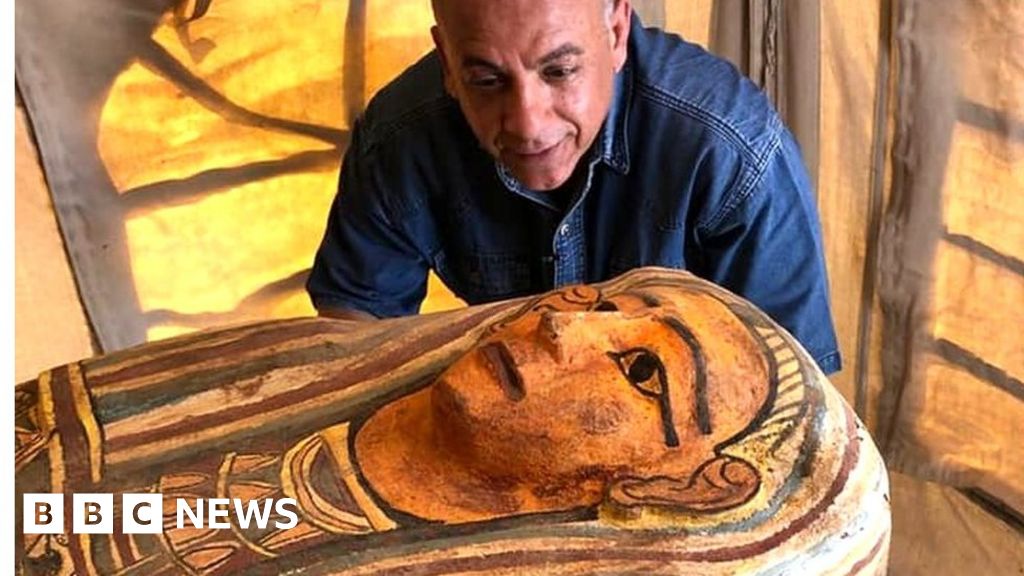
Egypt tomb: Sarcophagi buried for 2,500 years unearthed in Saqqara
The 27 wooden coffins are said to have lain undisturbed inside a well at an ancient necropolis.
bbc.com
115 points · by stevekemp · 6y ago · 60 comments
They are able and incentivized to use proper scientific methods and slow exhuming to preserve as much information about an ancient human culture as possible.
Considering how much political and societal turmoil has been and still is in the surrounding regions, all of these finds could have easily been pilfered and lost as they had been through Egypt's earlier history.
It would be a different world altogether perhaps, had the Hanging Gardens of Babylon or the Roman infrastructure in the Levant were preserved well. Ironically, one of the major proponents of reviving interest in Babylonian culture in the recent past was Saddam Hussein, who engaged in rebuilding most of the city of Babylon.
As for that little tidbit, it's like how the British education system focuses on how they built railways in India when teaching colonialism, while willfully ignoring the likes of Cecil Rhodes and General Dyer.
Egypt is a top-of-the-bucket-list destination for me, and I'd spend plenty of money there at that museum and many of the tourist sites (after COVID obviously), if I actually felt safe going there. It still seems a little bit iffy from my american point of view. I haven't researched it in a few years but last time I did it seemed not advisable for Americans to go there.
Just a little bit less continuous organization over the years and no one would care or everything would be pillaged
I don't know enough about the subject to have a strong opinion but would like to understand what is gained from not allowing more exploration of the tunnels and rooms under the Sphinx, etc.
Are we so much better nowadays that we can allow us to alter the state of the tomb without significantly destroying it?
Archeology eventually invented itself and practitioners got more careful as time went on, but then seeing photos embedded into the article of opening coffins on site ...
Perhaps. It didn't take long.
A king of Babylon in the 6th century BC was already sponsoring archaeological research into his legendary predecessor Sargon the Great.
Basic physical security should not be an unreasonable cost burden when there is so much national economic and social interest in preserving Egyptian history.
Maybe it lacks dignity in that it's not what the ancient Egyptians would've preferred for us to do with their remains - but I think it's fair to set some statute of limitations on that kind of thing.
The story I learned while doing deep background for my own trip to Egypt is that "in antiquity" means roughly the next period, usually between dynasties, when religious respect for the centralized royalty passed through lows. So for Egypt, that could be even 4000 years ago.
I found this astounding at the time. Egypt has a way of expanding a person's sense of time. I am learning China is sort of the same thing.
A curious position. I use provocative words, not to antagonise but in a probably vain attempt to inspire:
Why does the dust your body becomes deserve any special treatment? Was the dust that became the food that some day became you as precious?
It is not the dust that gives your life meaning but the glances, the words and the hope you will have given; to people, to ideas, and even to yourself.
The wonder of existence is not in the constituent; it is in the arrangement.
500 years ago they would have been looted by whoever found them. At least now it follows some kind of process.
We’re still not perfect of course, but modern archaeology is extraordinarily careful and meticulous. If we wait for perfect procedures we may be waiting forever.
I don't trust modern society to store these artifacts for more than a few hundred years without losing them to war, theft, modification, infrastructure issues, or whatever. The modern world is relatively unpredictable and chaotic compared to the past, in my mortal opinion.
That said, it's nice to have some of these out of the ground, for us still living. But pulling up everything we find feels like science-sponsored grave robbing to stock our treasury of knowledge, which is valuable but not holy.
You can see many other sites that specifically allocate the majority of dig work to the future on the premise that our future technology will better be able to process and preserve our findings.
I suspect that tombs in particular are large tourism draws, or can yield attractive museum exhibits.
Imagine you're in the year 4000 and you goto a museum.
"Here in the 2000s museum we have the head of Walt Disney, he was a famous warlord who destroyed his enemies and demanded caricatures of animals like the extinct Mouse and Dog to be drawn. He had many castles built around the old world in places like Florida, France and China"
https://www.goodreads.com/book/show/108831.Motel_of_the_Myst...
So 50/50?