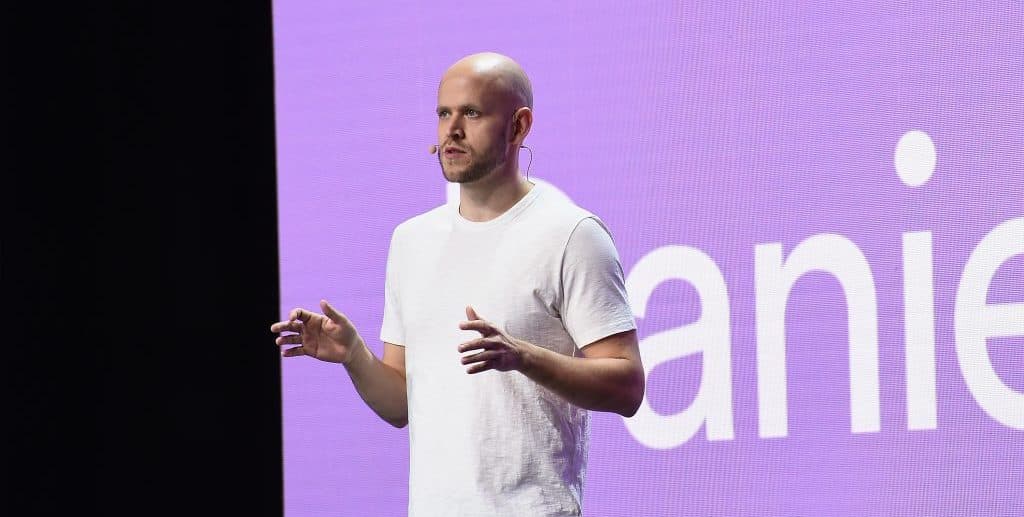
Daniel Ek commits to investing €1bn in European ”moonshots”
The founder of Spotify Daniel Ek will invest €1bn in deep tech startups in Europe. This he said in a fireside chat at Node by Slush.
Sifted
155 points · by daenney · 6y ago · 180 comments
https://europa.eu/youreurope/business/finance-funding/gettin...
https://europa.eu/youreurope/business/finance-funding/gettin...
https://ec.europa.eu/regional_policy/en/funding/erdf/
https://ec.europa.eu/regional_policy/en/funding/cohesion-fun...
https://ec.europa.eu/regional_policy/en/funding/social-fund/
Most recent unicorns will simply not thrive in this environment, it's more catered to the professional grant seekers or already successful companies, that can absorb a financing round of 500k-2.5 mil €
It's clear that there has to be some bureaucracy. If anything because you might want to do some auditing in the future.
PG and friends mostly spend their own money and they're free to do as they please, follow instinct or whatever.
You can't do that (thank god) with public money.
Grants are bureaucracy, sure, but if you understand how you navigate it - and every entrepreneurial person shoud - then it's really free money with a bit of strings attached. But it's primarily used for seed purposes (vs. series A, B...) in new companies or as a suplement in existing companies.
EU also does investment matching (one of our VCs had half of his fund matched by the EU). Based on my experience, this is an even better model, since it derisks investmens for local VCs - the biggest problem in investing here is not the lack of funds, but insane risk aversion. It really feels like everybody is looking for stable and good performing businesses and not for investment opportunities that would be moon shots.
From the 1st link there is https://ec.europa.eu/easme/en/news/deep-tech-europe-report-k... which claims that companies that received EIC funding have attracted 5Bi in private funding (the program is new so this is apparently a couple of years, maybe more)
By comparison: Total money raised by all YC companies: >$7 billion https://blog.ycombinator.com/yc-stats/
I think companies would apply for EIC later than on YC hence it might be apples to oranges but it's an interesting metric nonetheless
Deadline every 2 months, next one in four days. Support for improving existing FOSS projects as well as endeavoring new ones. Past recipients worked on Wireguard, Jitsi, NextCloud, LibreOffice, EteSync, Guix and many more: https://nlnet.nl/project/
Besides these EU projects there are also national projects within EU member states. Like for example the NIC-SE foundation that manage the .se ccTLD tend to grant money to small startups.
You have the horizon 2020 and horizon Europe programs for example. It's not perfect of course but it works.
https://en.m.wikipedia.org/wiki/Framework_Programmes_for_Res...
Best example is that big blue brain project in Switzerland that got billions even when the science was not there.
Universities are currently filled with bureaucrats that know how to win grants and produce no results.
I'm not qualified to speak of the science behind the HBP but I know that a few labs in China and in the US (like the Allen institute) see some value in it. It's a big engineering project and maybe the end goal and result isn't what's important here. Pretty much like CERN.
It's the Human Brain Project, and it's 1 billion over 10 years. It is currently in year 7, and at the end, it will provide the AWS of neuroscience in Europe.
It's most pronounced in new EU countries that get flooded with these funds.
That's wrong. There are four real reasons:
1) our pension systems are mostly government run and on a rolling scheme (i.e. payments from current workers fund current pensioners, in exchange for future-redeemable points). That means that there is a lot less of "dumb cash" lying around in pension funds that screams to be invested for decades... historically that cash used to be put into "safe bets" such as government bonds but their returns are at below-inflation rates, and the only thing that is "profitable" is spreading out the cash over either the big tech companies or small startups.
2) networking. Just look who's in the "angel investor" rounds: people, both founders and early employees who got lots of money in the dotcom era or in the IPOs of the last years - they are all concentrated in the SV area, and enjoy the benefits of close personal contact, and then of course there is YC and a couple of less known clones which come in later. We simply do not have such networks in Europe.
3) risk aversity. Europeans do not like risk, the most obvious example being us Germans who are notorious for being risk averse, so risk averse that our car companies, 12 years after Tesla hit the market, still believe they can make "clean ICE" cars (by investing in synth-fuel tech). A side effect of that is the infamous Wirecard scandal - they were hyped so hard by everyone including our Chancellor who went lobbying in China simply because they were the only company other than dinosaur SAP who were German, were in digital business, and had (on the paper...) good business numbers.
4) "rags to riches" mentality: us Europeans have generally decent social security networks, stable government funded education - basically, you don't have that mentality, starting with young people, to "always hustle" to survive. We live mostly generally comfortable lives, but we're not driven to exploit whatever and wherever we can, simply because we don't need to.
The end result: we don't have venture capital simply because there has been no need for it for decades, it's only a recent trend here.
I don’t know where you’re located, but at least here in The Netherlands we seem to have a fairly healthy startup ecosystem, where grants seem to be more of an afterthought because there’s a fair amount of VC money or bootstrapped startups.
So I'd wonder how many funds are truly private. And for those that aren't I'd like to see if any bureaucracy gets pushed onto to the startups they fund.
Say EU-funded VCs, due to the special obligations they're under will often make startups comply with many of the same stuff. So even though a startup might not be a grant recipient themselves they will ultimately have to submit to that regime too.
https://venturebeat.com/2014/02/11/gameon-teams-with-dutch-g...
https://business.gov.nl/financing-your-business/funding-and-....
https://business.gov.nl/starting-your-business/launching-an-...
Potato potato. Most "startups" in the US are nothing but VC money chasers and often lose billions of infinite investor money (looking at you, Uber) for indefinite periods of time. How is this different from grants other than it's "free" government money in one case and "free" VC money in the other?
When you get a grant you're subject to many rules. You usually have to submit a budget and money will only get disbursed in accordance with that plan. And there may be many limitations as to what the budget can contain in the first place. Say only X percent can go towards Y class of spending.
Your startup is doing poorly and you want to downsize? Well you can't because you budgeted for X people. Want to cut or increase salaries? You can't. I mean you could fire these people but you'd be forfeiting the funds. So people don't.
Then there's pressure. [Private] VC is an honor system. There are very few legal obligations but you're expected to perform. Your continued access to funds will mostly depend on how you're perceived by the VCs.
With grants you only need to follow legal requirements. No pressure to perform. The agencies only care about you following the rules. When applying for more money, again, you need to fulfill a bunch of requirements. There's not much of a reputation system. If you get denied but meet all the formal requirements you can often sue and win.
And since there's no dilution there's no limit to how many different grants you can take.
It's really a common thing.
As far as innovation in the EU goes, the governments (yes, plural, another problem) need to get out of the way. I'm usually positive when it comes to the functioning of European governments, but this is one of the major exceptions.
I argue for European federalism, but also realize that's unrealistic. One possible step in the right direction would be to have an EU wide company structure with a single set of rules that makes investment between different European countries less complicated for companies and investors. I've also thought that a high profile EU investor could force some change by making it a requrement for their portfolio companies to immediately invert ownership to a Delaware Corp. That would open them up to US capital while simultaneously pissing of a lot of the innovation people in the government.
Also many new innovations on the way. Like "green graphene" composite, made from biomass, by Brightday Graphene in Sweden.
Also I noticed there is too much focus on agile, scrum, DDD, etc.
And the pay is too low compared to living expenses. There are a lot of software engineering jobs that pay higher even in India.
Only good thing is you get to live in Europe and travel.
People are also much more risk averse in terms of business model. For instance, the idea of loss-leading to gain market-share will play much better in the US than Germany, where it seems people would rather settle for modest revenue but stay in the black the whole time.
Another factor is the concept of work and work-life balance. In Germany holidays are sacred, and you won't generally find people putting in tons of overtime to get a product off the ground. That's great when you're a worker, but it does mean a slower pace than I saw in the US.
In Germany at least it’s conservatism and a failure of imagination.
The average German Engineering student doesn’t dream of flying to Mars, he dreams of buying an expensive BMW.
The German economy doesn't run on individuals going to Mars, it runs on process innovation, optimisation, and decentralised development between research facilities, a good university system, and companies.
On average the German worker productivity is very high. That's a measure of good allocation of resources, not software unicorns or Mars rockets. If German engineers would just be dreaming about holidays and luxury watches that wouldn't be the case.
If you look at the increase in total factor productivity (comparing how much aggregate outputs you get out of aggregate inputs, basically measuring technological efficiency), the last decade has been anaemic. SV venture capital software culture is good at capturing markets and shifting economic rent from markets towards centralised platforms, it's not driving innovation and we don't really need to emulate it.
Expensive BMWs are equally silly. The company generally produces nice vehicles, but they also make hideous atrocities like the X4 and X6. What's worse is that Daimler followed suit and that every car company is producing SUVs now, that aren't any good off road and have lots of aerodynamic drag on road.
German Engineering students work on interesting projects like swarm drones playing team games. I suspect these are quite obviously projects with military applications or space exploration.
Hmh. That’s only 10% slower if you assume Americans never take holidays (which is probably not true at all).
I don’t really believe startupers work as much as they claim to however, because you are usually useless at 16 hours a day for a month.
How much did it take Elon Musk to go callig people pedos of working heavy hours and sleeping in the office?
Don't get me wrong, I think the German way of working is way healthier and more sustainable, but everything has a trade-off, and the leave-it-all-on-the-table mentality of American startups seems more conducive to getting an innovative project with difficult technical problems off the ground in my experience.
He described French risk aversion as such “In Europe, if you took investor money and your idea failed, you would be seen as a failure. It’s amazing that in the US you could raise $1M, lose it all and then go out and raise money again for another idea.”
US laws leave a lot less to the imagination, they are hyper-constrained in general, and there's a large body of work on how to bypass them. Like, Romania may use GDPR to hunt down journalists and company bosses but you know California won't use CCPA that way, so you're cool.
As always, depends on where. Sweden has (or used to, at least before) basically a website where you can create a company, and it's mostly free to start the company as an individual (at least the basic form) so you can't really complain that it's hard.
In Spain, it's also relatively easy, just have to go sign some papers (and depending on company type, invest some money into it), but it's hardly "really hard".
Not sure about the rest of Europe, but can't imagine it's a lot harder than these two examples (counter examples incoming surely).
Although, if you with "it's really hard to start a company" mean "it's really hard as a unknown startup to raise funds from VCs", then yes, European investors do way more due diligence and are more risk averse, compared to US investors. But there are more things than startups :)
It's like that. I don't know what sort of laws you guys have there but just the paperwork is going to kill me, probably. And then any time you want to do anything, the paperwork will kill you, the regulators will be on your case, and all that. And that's the way Europeans like it. It's culturally normal there to be like "Oh, well why do you think you should be allowed to do that".
For instance, they would say "Maybe it isn't right that a company can just target ads to people without a comprehensive affirmative opt-in" and that would be the dominant view. "Maybe some guy in a garage shouldn't be allowed to hold a million people's personal data". There's a trade-off there: you don't get tracked but you don't get Google. And that's fair, but it means no business models that rely on things like that which count on low transaction costs can't happen, and lots of unicorns count on that.
Come on, really? It's hardly that much paperwork. Sure, it sucks, but compared to building a business, filling out paperwork doesn't come close to being the hardest thing.
Sounds like what you describe here is that it's more paperwork in the US than in the European countries I'm familiar with, so kind of goes against what you're arguing here.
> And that's the way Europeans like it. It's culturally normal there to be like "Oh, well why do you think you should be allowed to do that".
I'm not sure where you are from, but I hardly get the feeling you're "European". Throwing blanket statements like "that's the way Europeans like it" is impossible, it's a huge and diverse area, so you can't generalize like that. Plenty of people here wants things to improve/change and depending on the location, you're right or wrong. Rules in Sweden are seen as "must follow" while rules in Spain is mostly seen as "advised to follow but if you must, do what you want, as long as you don't harm others".
It isn't too hard (thankfully) to get finance for a moderately viable idea.
Thats not true. Many companies are in Europe, much more than in the US: https://www.nationmaster.com/country-info/stats/Economy/Micr...
In Europe we have more companies of all sizes instead of accumulating into few mega-companies. But that has nothing to do with risk tolerance.
It's easier in e.g. Finland, Sweden, Estonia (which actually have produced some nice startups like Spotify, Skype, etc.). IMHO given the relatively small populations, places like that are actually remarkably successful when it comes to startups and technology companies. Finland has a mere 5 million people. I mean, Nokia for whom I used to work came from that tiny country and dominated the smart phone market for a while.
However, the real issues are more related to securing investments and funding and the inevitable process of having to shut down a company in case it fails. Which with a startup is more likely to happen than not. Failing fast is hard in a legal system that is purposely designed to make this hard.
It's also risky. You take a personal risk when you start a company and when a company can't pay its bills, it's the managing directors who are on the line with their personal capital. Limited liability is not so limited in Germany and it prevents companies from taking risks. There are all sorts of tricks to prevent that from escalating of course but they all involve the use of accountants, lawyers, and other middle men that are costly. And given that it is hard to raise seed capital in Germany, very little gets off the ground here.
Berlin where I live is a bit unusual in the sense that despite all this, there are loads of startups here and a density of capital and talent that is hard to find elsewhere in Europe. I always joke that this is despite the German government rather than because of their policies. It's basically a weird side-effect of the place being pretty much bankrupt. Local government here is basically just moving paper around and tends to be very hands-off because they have no budget for basically anything; including going after pesky startups taking liberties with the rules and regulations. Everything in this country is regulated to death but Berlin seems to be reasonably relaxed and informal.
For better or worse, people just showed up here from all over the world and started doing stuff after the wall came down. Lately, big German corporations that are trying to look hip are opening startup accelerators all over Berlin. Like all of them: Bosch, Siemens, VW/Porsche, etc. all are present here. Silicon Valley also moved in: MS, Apple, Tesla, Google, etc. all have offices here. And of course Tesla is building a Giga factory.
TLDR SV pay is likely too high and unsustainable in the long term. Equity moonshots are already lottery tickets, and you can't set public policy based on lottery tickets.
I think we would move in the direction of US tech companies if we managed to create five world-class tech behemoths, but I don't see that happening. Taxation will necessarily affect things; some places have an employer tax that approaches 100%. (Half the salary to the employee and half to the state, then tax the employee's share again afterwards).
Can't think of a single country having that. This money which you count as tax goes into retirement, healthcare and stuff like that. Would you consider US packages including healthcare to be taxed ?
The seemingly only place that’s replicable is in Switzerland at a handful of companies (Google and some small other companies) and that’s not even in the EU.
You literally don't, since companies provide this. Unless of course you're accounting for the better healthcare you'd receive in the US?
> cost of living
Where most IT jobs are based in europe it isn't cheap to live at all..
The reason is that you’re competing in a much more varied market with less silly money splashing about. Cost of living in London is high, but you’re competing for jobs with competent teams in Eastern Europe. That coupled with fewer VCs funding “Uber for cats” ideas, there’s just not the appetite for paying devs US level salaries.
That’s not why the salaries are so much lower. European companies are less profitable so they don’t bid up the wages of developers as much. The more money a company makes the more a productive member of staff is worth to them, so they are more willing to pay it. That drags up the market rate because everyone has to compete with the highest payers for the best devs.
So x% has already 'come off your paycheck' before you see it, and then an extra 15% on everything that you buy. Which is also hidden.
That is offset by extra services, esp. healthcare, but in tech, healthcare is usually a benefit on top of salary anyhow.
He's made his billions on the backs of builders, the musicians who can record music all day long but will be lucky to receive pennies for a million listens. The 98.6% of artists outside of Spotify's top tier are making an average of $12 per month (https://www.rollingstone.com/pro/features/spotify-million-ar...).
Why can't Ek share his largesse with the builders who make it possible for his service to exist?
I see spotify more like as an audio-based customer acquisition channel, like the radio.
Maybe it could build in some kind of "donate" patreon-like feature into the app. I wish Soundcloud had this.
In the early 1990s I worked for Jimmy Cauty and Bill Drummond's record label, back when they were dominating the UK and European pop charts as The KLF (https://www.npr.org/sections/therecord/2017/07/20/537708922/...).
They never made a pound touring. Their success and much of their impact was tied to European club playlists, the sales of singles, album sales, and the media.
You can talk to many other artists from that era who did depend on touring and merch, but also used distribution and sales of singles and albums (and advances on record deals) to establish themselves.
While plastic media was doomed long before Spotify, this "audio-based customer acquisition channel" is, by design, set up to benefit Spotify, record labels, and top artists, in that order.
Everyone else in the 98.6% tier gets the scraps.
yeah because they're getting 1.4% of the listens.
I have created something similar with SoundRat (https://soundrat.com) that connects more with the patreon-like features and makes listening of music free but gives fans an option to donate to artists and get some perks for doing so.
Yup, so why start now, right? That would go against tradition.
> That would go against tradition.
a tradition of it being unprofitable, perhaps. It just goes against the numbers. Small artists just don't get enough listens.
Everybody complains, but you aren't entitled to success. Once you're popular, there's plenty of ways to monetize.
The only solution is basic income, because you probably aren't gonna live off your music otherwise.
Each location could have their share of top talent to perform for the region.
Ah, Spotify, famously a win-win for all its stakeholders, including the musicians who can no longer make a living by recording music.
The guys who always get paid are the majors, and the majors are the one who ensure the top artists (who are signed to thos labels) are always given the majority of the share.
I don't even agree that they deserve it. The aggregate musical output is valuable, sure, but individually it's commoditized and worthless for all but the top musicians.
Ah, you surely mean recording companies and copyright holders that take up to 70% of Spotify's revenue and pay out pennies to artists. Why don't you ask those companies where all the money is going?
> Why can't he share his largesse with the builders who make it possible for his service to exist?
Well, he is sharing it. At IPO Spotify disclosed that had paid "$9.7 billion in royalties to artists, music labels and publishers since it launched in 2006." [1] The thing is, Spotify doesn't have direct contracts with artists (and can't afford to for fear that the Big Four[2] will pull their content). So the question is: where did those billions go?
Let's read the article you're commenting on (emphasis mine):
--- start quote ---
Spotify pays the major record companies a 52% share of all net receipts attributable to streams of their artists. This was a figure the parties agreed to during negotiations in 2017, and it’s believed to have remained unchanged since.
According to Spotify’s Q2 results, the firm generated €1.89 billion ($2.05 billion) in the three months to end of June. We can therefore broadly assume that 52% of this money, or $1.07 billion, is being paid in recorded music royalties to labels and distributors, who will carry a portion of that over to their artists.
--- end quote ---
The article then continues being disingenuous pretending that 100% of the money that Spotify pays out goes to artists and that Spotify is solely responsible for that money.
So what is that "portion that labels and distributors carry over to their artists"?
Oh, look, only 12% of music revenue goes to artists [3] But obviously, it's the sole responsibility of Spotify (and Amazon, and Apple), and not of the Big Four that hold the music world hostage.
[1] https://www.cnbc.com/2018/02/28/how-spotify-licenses-and-pay...
[2] https://en.wikipedia.org/wiki/Music_industry#Consolidation
[3] https://www.techdirt.com/articles/20180819/00051140461/only-...
"Ek mentioned machine learning, biotechnology, materials sciences and energy as some of these areas."
Material science in particular has endless promise. With the new XFEL infrastructure there is lots of potential too. Some examples of what we could do is replace plastics with bulk metallic glass, save energy in transport with low density steel, and more broadly with eutectic systems.
China dominates what in the global software industry? Desktop OS? Smartphone OS? Office Suite? Database? Web server?
But I agree that we do need more competition.
You might be tempted to include WeChat and games that Tencent brought, but if we lower the bar to that then the list of EU companies would grow a lot as well, such as SoundCloud, Shazam, last.fm, Viber, King, Mojang, Rovio, Supercell, Kiloo, Dailymotion, Criteo, SAP, ASOS, Skyscanner, Wix, GoCardless, Adyen, Kaspersky Labs, Yandex, Transferwise, Badoo, etc.
Europe also produces 20% of world's research in the field [1]
The big question though is: do we measure success correctly? The vast majority of "great American companies" are either vaporware with inflated valuations, or produce zero innovations [2]
[1] https://www.sciencemag.org/news/2020/05/european-rd-review-f...
I'm a little amazed at how little the Y Combinator model has been copied in Europe.
Now, obviously any new incubator wouldn't come even close to being able to offer what YC does right now with the extensive network etc. But hell, just offering 10-15 startups €120k every six months for ten years would be worth a shot. Maybe fly those companies to Berlin or London or Stockholm. Help them out with whatever you can, but mostly let them figure it out themselves. Maybe focus on startups from the EMEA region.
The costs would consist of the fund (€36M) plus the cost of operating the program (perhaps a €1M/year). That would still amount to below €50M.
Idk. There are probably plenty of reasons why this would be a bad idea, but if I'd ever have 50 million to spend, this is what I'd try.
I seriously suggest those people to look at the society they have created, and do some soul searching.
The issues are many and they are often at odds with other things, like 'quality of life'. From lack of large centres of innovation, not quite the right immigration system and attitudes towards migrants, a lack of hyper competitive attitude towards business (easy to see how this could be corrosive from another perspective), taxation and payroll taxes / inability to let people go (i.e. France), really closed business systems all over Europe, smaller markets, lack of risk taking everywhere from buyers, to investors, lack of big, cash-flush acquirers like Oracle, MS, etc. that eat up a lot of startups, a lack of 'flexible 1->n workforce' - ie the kinds of staffers that know how to go with a growing company and help it get established (this is a big ingredient of 'secondary domain knowledge' missing everywhere outside the Valley), to more sophisticated kinds of financing, and finally even just the right cooperative kind of attitude. Despite the competitiveness, there is definitely a 'goodwill' in the Valley that doesn't exist in most parts of the world.
Elk would be much better in trying to help Europe understand and overcome structural limitations because they already have the money.
This is good news, but we need investment two orders of magnitude higher before we think about fixing this situation.
If you are an American or Australian thinking of moving to southern Europe, consider moving to a developing country somewhere else instead. The job market will be similar and life will be much cheaper.
Whether it's innovation grants or QE-driven VC, this is just supply-side bullshit making Frankenstein unprofitable hypeups.
If materially content Europeans don't wanna buy more money, that's great! Just keep on reducing working ours until it's clear what needed to be automated, and send the engineers to work on that.
FAANG envy is depressing and pathetic.