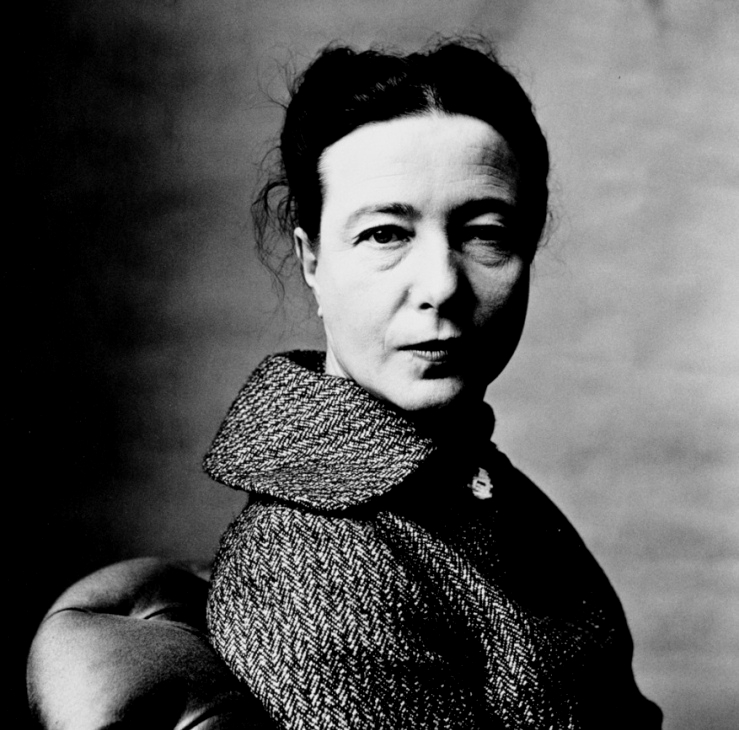
The Obligation of Self-Discovery
Simone de Beauvoir’s relationship with her readers was a mutually demanding collaboration.
Boston Review
40 points · by fremden · 6y ago · 20 comments
https://hn.algolia.com/?dateRange=all&page=0&prefix=false&qu...
Beyond the Second Sex, which has significant status in the history of feminism, her autobiographical Memoirs of a Dutiful Daughter and A Very Easy Death are beautiful reads that show her insight and self-awareness; I would recommend them.
For accessible general reading about the existentialists, including Beauvoir, I enjoyed At The Existentialist Café by Sarah Bakewell.
Philosophy doesn't get a great shake, either. HN discussion of philosophy seems to concern itself mostly with caricatures of postmodernism and logical positivism.
We could have productive discussion about ideas themselves:
* Should the government subsidize dairy?
* Should the government pay for maternity leave? Should employers?
We can talk about what works in Europe, whether money is really fungible, and how to provide welfare without distorting the market or accidentally causing hiring discrimination.
But it's less productive to discuss people:
* Is Contrapoints right?
* Is Joaquin Phoenix right?
You get sidetracked with "Remember that time she hired Buck Angel? Remember that time Joaquin starred in Joker?" That's not discussion. That's a fan-made tabloid.
And it's useless to discuss hashtags:
* Does feminism??
* Is veganism???
"Remember that blog that said hetero sex is inherently bad? Remember that time a PETA employee killed someone's pet dog?"
Now we're 2 cuils from changing minds.
I am guessing this is a problem on HN, because it's a problem everywhere.
[1] https://en.wikipedia.org/wiki/Granfalloon
Edit: Formatting trouble. I'm new here
She isn’t Gloria Steinem. She’s an academic writer who uses a technical vocabulary, and assumes familiarity with lots of mid-20th century (and earlier) writers.
One can be a committed feminist, and reject quite a bit of de Beauvoir’s thought.
HN just isn’t the correct forum for a meaningful debate on existentialism.
Also worth noting, she was in love with Jean Paul Sartre whom used cafes as his office. They were regulars at a certain cafe and would sit there for days.
Pics or it didn't happen? https://www.independent.co.uk/arts-entertainment/books/featu...
Okay that's all I had.
I assumed all the french writers hung together, but my favourite of these times after Camus is Raymond Queneau, who wrote "zazie dans le metro" and he was an almost exact contemporary of De Beauvoir, in time. They just seem to have led parallel, unrelated lives. Both communist, but no strong linkages.
here's a pinterest: https://www.pinterest.com.au/pin/381891243372004539/
thats about it. Amazing to plug two contemporary French modernist writers in the same time interval into search and come up with basically, only friend-of-a-friend.
Sartre and Camus were friends for some time, but that changed when Camus published "L'homme révolté" in 1951, and they became bitter enemies.
But in a sense all the existentialists did hang out, because this whole époque is linked to the "rive gauche" (left bank), an area of Paris.
https://www.theguardian.com/books/2018/jul/11/left-bank-agne...
And mind you, Simone and Jean-Paul were married, but I guess you knew that.
[1] https://en.wikipedia.org/wiki/French_petition_against_age_of...
"Gender and sexuality"
"Simone de Beauvoir’s relationship with her readers was a mutually demanding collaboration."
I do love talking about gender and sexuality. I just don't know who Simone de Beauvoir is. The headline is about Simone, not about gender or feminism.
It's like if there was a biography of Steve Klabnik. He's got something to do with Rust. I'd love to talk about Rust. I don't have any useful opinion on Steve himself.
Would you consider than any part of your interest has anything to do with your lived experience as a gendered human?
If not, then I can understand the analogy you enjoin when you draw a line between Rust and Steve Klabnik. Nobody has to know anything about Steve Klabnik to be able to parse Rust or a syntax guide to Rust.
Feminism is different when you consider that each of us experiences the world through a gender lens, particularly when you consider that many of us are unaware that the lens exists and occludes our vision as well as forms it.
How do people of a gender you don't share experience the world? I'm not sure how you'd know until you listened to them describe their lived experience.
In the case of Beauvoir, you are fortunate. Her life bridges a gap between pre-feminism and post-feminist worlds. If you love talking about gender and sexuality, Beauvoir's life is fertile grounds for many interesting conversations you may enjoy with other people of all genders for the rest of your life.