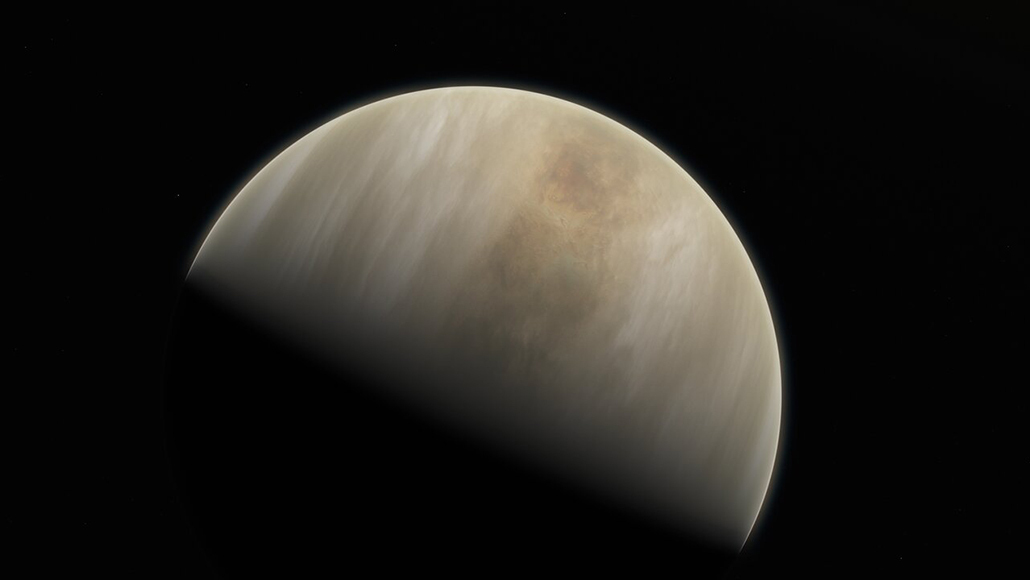
Doubts over a ‘possible sign of life’ on Venus show how science works
Detecting phosphine in Venus’ atmosphere made headlines, but reanalyses and new searches call into question the original discovery of the molecule.
Science News
177 points · by pseudolus · 6y ago · 129 comments
Numerous comments about the promoter's non-scientific background, the sensationalism of the original announcement and skepticism over the findings. Please note that the scientists themselves weren't sensationalizing their findings, but others were.
As this article points out: it was a "big, if true" story that had numerous red flags from the start.
It also means just about no one read the real paper...a twelfth-order polynomial would certainly be a red flag for me.
Interesting moral here for interpreting science: surprising results don't usually have interesting explanations. It's usually a bug.
I made a comment in that thread, but I didn't notice the 12 degree polynomial.
Perhaps I'm too optimistic, but I expect someone to read the paper and make a comment about that in HN.
Yeah right.
They were saying things like "please prove us wrong" while doing interview rounds, and (I'm sure) celebrating, loving and looking forward to more and more limelight, so strictly speaking they were not "sensationalizing their findings".
In a related story, OJ and Casey Anthony did not kill anyone.
Hah. Wish that had been more emphasized in the original popular reports.
Sinclair: https://en.wikipedia.org/wiki/Sinclair_Coefficients
Wilks: https://en.wikipedia.org/wiki/Wilks_Coefficient
discontinuities for men in Wolfram Alpha https://www.wolframalpha.com/input/?i=discontinuities+in+y%3...
discontinuities for women https://www.wolframalpha.com/input/?i=discontinuities+in+y%3...
https://fermatslibrary.com/s/drawing-an-elephant-with-four-c...
A simple calculation of number of parameters in the human brain divided by seconds of lifetime yields: 10^14 synapses / (72.6 * 365 * 24 * 3600 seconds) =~ 43000 synapses/second, not all of them related to language and reasoning.
So we use tens of thousands of synapses for each second of our life, which is quite a contrast to the 100 bits of information per second which is estimated for conscious processing.
One reason people stall investigations is they know the press will forget after a few months.
I googled for some evidence:
Our climate data was wrong, which shows how science works: https://scripps.ucsd.edu/news/research-highlight-pointing-ou...
Re the replication crisis: "Negative opinions about psychology as a science already exist. We have the opportunity to show how science works by directly investigating and addressing the problems." https://www.psychologicalscience.org/observer/champions-of-p...
I didn't find any others, but if you doubt my thesis, that's just the magic of science at work!
You say this as if it's a small feat. The willingness to rollback a claim you made, ambitious or mundane, is surprisingly difficult for people to do. Most of science is about making claims based on the best evidence that you have with some level of confidence.
Where we run into problems, just look in the news, is when claims become invariant, regardless of new data, methods, theories.
And it's hard to argue that the social structure of contemporary scientific discovery doesn't incentives this sort of sloppiness.
There is a difference, but since both kinds of errors are widespread among humans, and science addresses both problems with a common solution, and nonscientific methods of generating systems of belief about the material world are prone to error due to their failures to correct both problems, I don't think there's really that material of a difference unless you mean “you” in the narrow individual sense of the specific actor making the initial error, in which case—and only in which case—is the difference at all significant.
This is such a non statement. Climate always changes. The correct statement is "the earth is definitely warming".
The term "climate change" almost always refers to the current rapid changes over a century as opposed to natural rates of change; if someone misunderstands that I suspect that it is because they have decided to misunderstand it.
Don't telescopes have some lens coatings that could dampen certain wavelengths? Or some form of giant sun glasses?
I don't understand how you would approach removing noise basically. A 12th order polynomical can fit many, many curves with really good detail already. But what signal were they trying to interpolate?
which turned out to be so completely wrong it's ridiculous:
https://www.nature.com/news/arsenic-life-bacterium-prefers-p...
Coupled with NASA's constant touting of crappy life science aboard ISS, I've more or less just tuned them out (with a prior probability of 0.01).
What happened though was that they went public early with too little information, because they were worried about being scooped in the media. When they got asked questions that they didn’t have answers to, the result started to look like it was on shaky grounds. The opinion was formed that it was a bad result. After that it was pretty hard to get anyone to pay attention after that. Follow-on results pretty much confirmed the original result though.
(Astrobiology was my field ~10 years ago.)
However, touting very surprising, very unsure results using the megaphone of media, is not science. It is clickbait. It is BS. And it is intensely damaging to science.
What happens is there is a selection effect. The most surprising findings are the ones that are most likely to be touted by the media. However, the most surprising results are the most likely to be wrong. So over time, you end up with the result that much of the "science" touted by the mainstream media ends up being wrong.
And we cannot just blame this phenomenon on the media. Many times it is the institutions that are supporting the research that are contacting the media and putting out press releases and getting on twitter with very clickbaity summaries of the research.
It is great for the scientist. It makes them famous for a day. And as with most stories, the original story gets a lot more play than the correction.
However, it is very damaging to our society. The regular person sees science as a stream of exciting results that are later proven wrong. All the while people are shouting, "This is fine, because this is how science works." And it damages trust.
Imagine if you went to your doctor for a routine blood test and the doctor came back and said, "You have an elevated white blood cell count. This could mean you have cancer." Then a couple of days later, you got called back in to be told, "Well actually, the count was increased because you likely had a cold. But this is how medicine works. One test can suggest something, but different tests can give a different explanation."
If this scenario happened on a regular basis, your confidence in medicine would really be messed up.
If we present science as this ever changing, always being proven wrong entity, then how can we ask people to depend on "science" and make potentially very expensive and inconvenient adjustments to their lives such as with COVID or climate change?
People often ask what HN was like in the good old days. I don't remember drivel like this in the first 5 years.
I think the underlying reason for these types of threads is that HNers want to virtue signal that they're interested in science, but too lazy to do the actual study and work to understand and contribute. Pro tip: just follow the Twitter NASA channel. You'll get pretty pictures, with no real effort.
An analogy is when the Linux kernel team started a kernel newbie project, and got nothing but white space patches. So the project had to be abandoned because of low quality and the burden of wasting time for, you know, actual kernel contributors.
Science is science when an author can be removed from a study and the experiment can be repeated. A 12 year old or science hater should be able to reproduce the results if it's science.
Things that aren't science-
>Authority- A PhD/medical doctor/a scientist, these are human opinions, not science. They can cite studies to be scientific.
>Art
>Tradition
There's value in non scientific disciplines, but they have their own burdens to be aware of.
As a side note, I'd push back against the idea that replicability is the key ingredient of science: it's neither necessary nor sufficient to discover scientifically "true" knowledge, though it's definitely a nice to have. Plenty of important measurements have been made confirming theories we see as true today (or true enough) that turn out to have been irreproducible, plagued by experimenter bias, or even outright fraudulent. But it's a particular research programme, embedded in a social context, that generates knowledge, not a single reproducible experiment.
- we want to be able to understand and predict things
- we can come up with various explanations that might be able to do this
- if our explanation fails to predict an observation, it is wrong and we need to update or replace it
If you're doing that, you're doing science.
" Guess -> Compute Consequences -> Compare to Nature / Experiment / Experience / Observation
If it disagrees with experiment, it's wrong. In that simple statement is the key to science."
Somewhat disagree. That particular research programme must still have reproducible experiment as a unit. A million irreproducible experiments will generate exactly zero knowledge.
science has told us so far that masks might help at the margins, but hasn’t proven it, which indicates it probably shouldn’t be counted on as a primary mitigative measure, but the public signaling value is just too irresistible for the believers (transmission principally happens in private where social norms oppose mitigative measures).
Can you give an example of something that isn't reproducible but was still true?
Of course there is an epistemological distinction here between a thing that cannot be reproduced by its nature vs. one that cannot be reproduced by societal norms.
Well, that's going to be pretty limiting. A 12yo isn't going to have the budget to build their own LHC -- reproducibility is certainly an important goal, but "a 12yo or science hater" is an unreasonable place to set the bar.
And if you knew what needs to be put in, you would not need the simulation in the first place.
Note that a simulation is not the same as a model. A model is tested and refined based on real world data, until the model returns the same results.
But we can educate others that we are the sign of life and we are the life. Take a breath, and cherish that.
At one point, it wouldn't matter if there is life outside our galaxy or life outside our solar system or outside our planet or outside us.
Only thing that will matter is there is life within us and our focus will shift there.
I guarantee you that scientists are as smart and capable as the best of the non-scientist HN population, and were the story roles reversed, that scientists on the whole would be more humble about the limits of their knowledge about programming practice and design, etc. They would not revel in the "idiocy" of your bugs, security lapses, or petty spy-based mobile apps. Well maybe the last.
Have some humility. Stop building up fragile egos by tearing others down, pretending that you wouldn't make similar "mistakes" or produce designs with similar weaknesses or limits. Edit 1:Yes I'll defend my tribe. Each down-vote is a badge.
I believe you are wrong in saying that scientists aren't idiots: they make colossal errors, obvious ones, all the time! Frankly, I think most successful (in terms of adulation and $$$) scientists are ones who learned how to play the games scientists play, and publish known incorrect work, or unknowingly publish overly strong estimates of their confidence, because they've mastered the incentive system, not because they're not idiots.
I see very little true humility amongst scientists- nearly every successful one I've met was aggresively egotistical.
That said, after another 10-15 years of being a SWE, I've come to the conclusion most SWEs are idiots, too- too focused on clever algorithms and microoptimizations.
As an extreme, let us suppose that we know that there are 6 sources of noise spread out over the x-axis, and that the power of the noise will decrease x units away from each source. In that case, you might suspect that noise function needs a 12th order polynomial to fit the undulation pattern, just to get the necessary number of humps.
The general population are idiots. The amount of scientists studying is huge compared to 40 years ago. It has to be full of idiots.
We are not talking mistakes. We are talking fundamental structural flaws. The fact people in the scientific community defend themselves with rhetoric show they are idiots.
If scientists weren't such idiots they would attack the tech community and how useless it is. But it's scientists who support the AI lies for instance. They are a big part of the problem in tech.