464 points · by VieEnCode · 5y ago · 261 comments
This block was clad as part of the "warm safe and dry" initiative. This was funding provided by central government to make sure that council housing was energy efficient, resistant to both criminal and antisocial damage.
Also fixing roofs. You'd be surprised how many time roofs fail on council houses.
> The national government voted against banning this cladding
This isn't really true. They voted against a specific amendment that demanded that rented accommodation be fit for purpose. (Local councils have had the power to condemn accommodation, but they then have to re-house the tenants. its really complex.)
The scandal here is in three parts:
1) The people that inspect building regulations are paid for by the developers, and not by councils. So there is lots of "optionality" in an otherwise good set of rules
2) The fire ratings of materials appears to not be independently vetted. I'm not sure how they are vetted, but this is a massive failure in the entire system.
3) The firebrigade having shit kit, also failed to learn from larkenhall.
> ignored serious safety complaints from the residents
Local residents always complain about everything. I know because I used to be the vice chair of the Tenants and residents association. 25% of the time they are correct.
Grenfell has some interesting features:
1) it wasn't being managed by the local council. It was owned and run by a "TMO" this is quite common.
2) they appear to have added new flats, which subsidised the works, again quite common.
3) leaseholders were not billed for the repairs. This is very unusual. Normally they'd be liable for a pro-rated proportion of the total bill (ie if the building has 100 flats of the same size and 10million pounds spent, they would be liable for 100k) I was stung for 50 grand, others in my estate had bills of 70k+
This is not the first time that a block of flats has killed people because of shoddy work. What is unusual in this case is that according to the paper work, the work was done to the correct standard.
I felt this tragedy closely. As a fellow council resident, I know how easily it could have happened to me. Fortunately for us, we chose our house specifically with fire in mind (larkenhall fire having happened months before) I was lucky because I had a choice. If I had been a tenant, I'd have little choice.
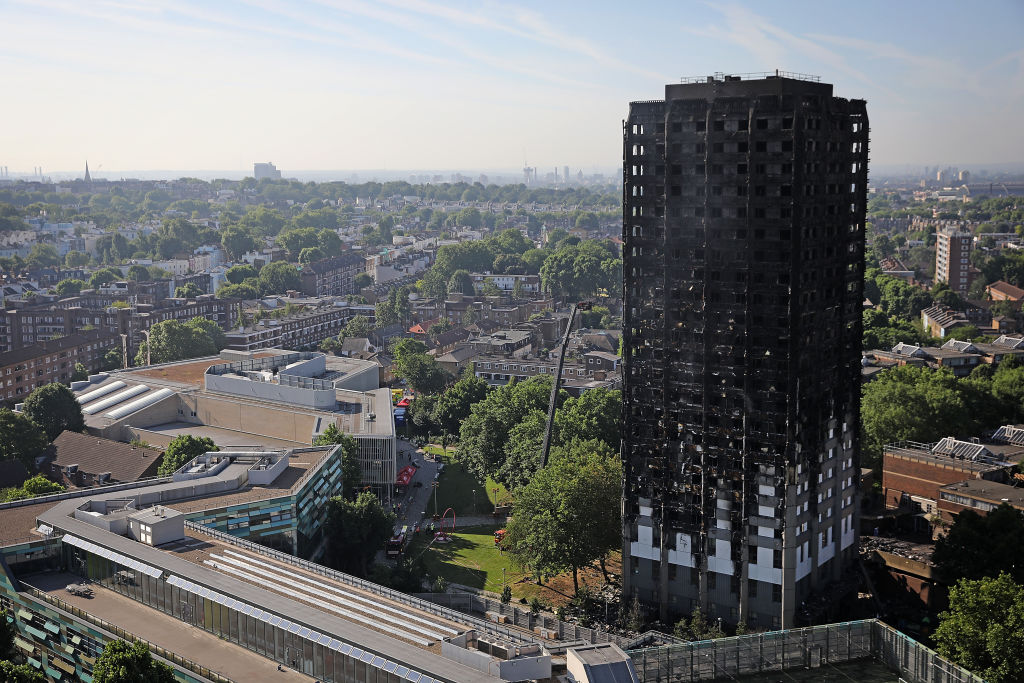
In this case there had been a previous fire that revealed that the cladding was dangerous.
The residents were complaining not about the same kind of abstract risk that we deal with in IT, like "what if Microsoft Azure ceases to exist overnight", but a real risk of death with a recurring proximal cause.
The flat members had spent serious time and effort trying to bring attention to their plight, and they were ignored.
It's not such an exaggeration to say that corporate manslaughter was legalized here.
No, I agree. I should have been more nuanced in my point. during renovations the sheer number of complaints are enormous.
They range from (and this is based on personal history):
o We don't want a flat roof, they leak
o the scaffolding is allowing people to climb into my bedroom
o the builders are swearing
o the builders are dropping rubble on the walk way
o we are being charged to much for item x, look here's a quote from supplier z
o I don't like that the builders are speaking language y
o they are using flammable hole filler
I was lucky that on my estate we had a number of people who both had the ability to get the council to do things, and run multi-million pound public procurement contracts. we had the expertise to tackle both the council , the Quantity surveyor, the main contractor, the sub contractors and the site team.
our estate was just under a thousand homes. Grenfell was < 200. Whats more there were less people in grenfell that had grown up with the council house system. We were lucky that we had a number of residents that moved into the place originally, so knew all the tricks.
Again, I'm trying to get across that its not as clear cut in hindsight.(apart from the corruption, that is clear cut.) The residents would be complaining about safety because thats often the _only_ way to get people to listen.
This should not however lessen the tragedy, and more importantly the motive to change. None of this is acceptable. Residents should be listened to. Standards should never be corrupted.
Please let's say this part quietly. Somehow we haven't started doing this in USA yet.
In my (British) conception of America, that way trumps privatisation/corporate empowerment.
'An Englishman's home is his castle.'
As an American, this is wild to me. I’m not sure how it works for our public houses, but as a private citizen I actually have to pay the local city to bring a government inspector out and double check any electrical, plumbing, etc. work that I do. The people that built my home decades ago likewise had to pay a percentage of the home’s value to the city for inspection.
The idea that a developer anywhere can decide who gets to inspect their building seems like an obviously bad idea.
Why would people make major repairs to be resistant to 'criminal' damage? And what is 'anti-social' damage?
I think there is some lingo lost in the transatlantic here.
Only true because the UK has a horribly regressive stance on renters rights.
To my knowledge - as a one-time lettings paralegal - we have some of the best tenancy rights in the world.
I would assume that most, if not all, of the Grenfell residents were renting. I don't think they'd be liable for repairs?
In theory reserve funds etc should prevent surprise bills, but that isn’t always a guarantee.
For those not familiar with how flat purchases work in the U.K. We have a crazy system where people purchase “long-leases” for their flats, you don’t own the flat, your just renting it for a long period of time (normally 99 or 999 years depending on your landlord). When you sell your flat, you’re just selling the remaining period on your lease (the 99 years doesn’t reset). And yes this does mean that once the lease expires you no longer own your flat anymore, there are ways of purchasing extensions etc but it’s a bit much to put into a HN comment.
14 flats were "privately owned" which is code for "right to buy" leaseholds (normally 125 years)
You are correct the renters are not liable for the cost of repair directly. The council pays on their behalf. Through a huge bureaucratic process the council then gets a settlement from the government.
Council Tenants rent the flats/houses with basic furnishings (ie kitchen with cooker and bathroom) all of which can be (but not always) repaired by the council.
Council Residents have a long term leasehold, and only have the right to windows, doors and the walls. Everything else they have to look after.
Cladding is used primarily for insulation and energy conservation. I think the concept of "cladding" is more of a UK and European thing though.
> There's significant political interest in finding a corporate scandal here.
There are all sorts of unethical scandals with various forms of unethical social experimentation. It's everywhere within the corporate world, and there are also open source projects with unethical experiments going on. You just have to look and pay attention. A lot of these groups play it off like they have done proper due process, when they have not. Then they have their PR flacks take the reigns using distracting and emotive language to justify their unethical projects.
Everyone who works on projects should read this article. Pay attention to Table 3 in particular. I keep it on my desk as a reminder of what is ethical vs unethical.
An Ethical Framework for Evaluating Experimental Technology: https://www.ncbi.nlm.nih.gov/pmc/articles/PMC4912576/
You’re not wrong, but emails from Kensington council made it quite clear they considered Grenfell an eyesore, and cladding was seen as a method of improving the aesthetic appeal of the building.
But the council's intention in starting the project was insulate poor people's homes free of charge, while making the area look nicer. I don't see anything wrong with the intention - it's the budget and implementation where they screwed up.
You’ll find this happening everywhere. Such Boeing self-certifying the 737 Max.
Companies were allowed to change fire tests to make their products look better. I honestly can't see how on earth this is was allowed.
It was always my understanding that you had to submit your product to a third party for testing, and that third party was vetted.
Then there is the low grade corruption endemic in construction in the UK.
The fact that large councils have Quantity surveyors on a percentage fee, rather than a fixed fee, is a big problem.
Those companies have deep pockets too, so the government may feel like they're a good target in this instance.
> When retested in 2007 as part of a different system [the insulation] failed combustion tests dramatically. Kingspan has argued this was not a consequence of its product, but the firm's own internal report warned the new insulation had performed ‘very differently’ — burning on its own and continuing after the test fire was put out.
> But the market was not told of these findings, nor that the product had changed. In fact, when the country’s largest private building control firm, the National House Building Council (NHBC) threatened to reject the product due to fears over its combustibility in the mid 2010s, Kingspan called in the lawyers and threatened it with defamation. The NHBC backed down.
This doesn’t mean that the government gets off scot-free but obviously this is a major corporate scandal that deserves to be investigated regardless of perceived political motivations.
It doesn't make much material difference, but I think it was more to do with insulation and saving energy, rather than aesthetics.
1/2/3. Insulation, Energy, Aesthetics
4. Cost
5. Material that doesn't burn up and torch people when it catches fire...
Since you're just guessing ("I think"), my guess is if the tower wasn't in the richest neighborhood of London, the council wouldn't give a shit about its insulation and energy savings. And my guess is they added these reasons to make themselves look benevolent instead of saying "We're adding cladding because the tower looks shit otherwise."
Actually, one of the reasons for the beautification is that it was quite close to some expensive real estate.
Oh, actually we're agreeing. I read your comment wrong.
This seems backward to me - why do you think a council with more financial pressure care less about their bottom line, and a council with less financial pressure care more?
The scandal being safety standards being diluted by previous governments and the use of inflammable material in the tiles. The tiles being installed to beautify the tower. So as the tower would not spoil the view of the more expensive nearby towers.
Who previously got the laws diluted to allow the use of inflammable tiles on the outsides of high-rise buildings. They got round the law, by sandwiching the inflammable material between two sheets of aluminum and then getting the sandwich certified as fire retardant.
"Grenfell cladding approved by residents was swapped for cheaper version"
https://www.theguardian.com/uk-news/2017/jun/30/grenfell-cla...
Unfortunately the same MPs who were trying to force us back to the office even though coronavirus was still spreading
https://www.bbc.com/news/uk-53942542
https://www.spectator.co.uk/article/boris-s-back-to-work-cam...
Which arguably doesn’t constitute being ‘forced’ but was followed up by the usual government outriders in the press.
Plus broken pattern-matching by people who see individual abusers as being part of some organised conspiracy and not as evidence of changing attitudes to child abuse over time.
Cyril Smith's offending was covered up by his colleagues. Jimmy Saville's offending was an open secret for years.
https://www.independent.co.uk/news/uk/home-news/westminster-...
My word, who could have predicted that twist?
It's the easiest, and most obvious, thing in the world for a regime to kill a scandal or exposure of a conspiracy by poisoning the well with outrageous and easily exposed claims by easily discredited accusers.
MP's have gone to prison for 4/5 years for stuff (the cash for questions case) that would be considered normal practice in the US
https://en.wikipedia.org/wiki/Rotherham_child_sexual_exploit...
> Arconic realised its polyethylene-cored cladding had a horrendous reaction to fire following French tests in 2005, where it burned fiercely and obtained a basement ranking of Class E. Despite this, Arconic continued to market it as the much safer Class B
> The Irish company Kingspan’s insulation passed one of these tests, which took place on a fake wall made with non-combustible cement. This test pass permitted its use on tall buildings, but only in an exact replica of the system tested. Despite this, the firm marketed its insulation as ‘suitable for use on high-rise buildings’. [...] After the test was passed in 2005, Kingspan altered the chemical composition of the insulation so that it was no longer the same product
> Celotex, a smaller firm [...] its insulation had also passed a test, also using a non-combustible cladding panel, and it too began to market its product as safe for use on high rises. But the test was not as it seemed: fire resisting boards were used around the temperature monitors that record the pass or fail, distorting the result.
> the Local Authority Building Control [...] appears to have written its certificate simply by copy and pasting an email written by Celotex's Jon Roper, even including the same typo on the certificate.
So, among Arconic, Kingspan, Celotex, LABC (or Spectator, if they're pulling a Bloomberg) - I wonder if anyone is going to jail...
> Three French and one German employee of Arconic say they might breach a law in France which prevents evidence being given to proceedings abroad.
> The law in question is known informally as the French Blocking Statute.
Maybe a French HN member can give us more info on this law.
https://www.legifrance.gouv.fr/loda/id/JORFTEXT000000501326/...
"Loi n° 68-678 du 26 juillet 1968 relative à la communication de documents et renseignements d'ordre économique, commercial, industriel, financier ou technique à des personnes physiques ou morales étrangères"
I believe in the UK refusing to give evidence might be worse, both because they have a whole different model of courts (inquisitive vs. adversarial), and because the underpinnings of US legal rights stem from a perceived short coming of the British court system.
https://www.independent.co.uk/news/uk/politics/grenfell-towe...
Architects are architects, Contractors are contractors, and neither are fire engineers. No one can be an expert on everything. This is why we have building codes, product certification, and engineering assurance process. The problem here appeared to be dishonest players. If certified independent labs were required to test products, and licensed engineers were required to approve the assembly and submit their letters of insurance for the permit, it seems like there would be a net benefit to the public (this is how it works in Canada). If there was a stronger regulatory system, the investigators would be able to look up the letters of assurance for this permit, obtain the project documentation from the responsible engineer, investigate and possible charge him with negligence if he failed to spec a certified fire assembly. It appears that in the UK, there is no clear hierarchy of responsibility. When everyone is responsible, no one is responsible.
As an aside, Fire rating generally involves more than just a single product - it requires an 'assembly'. That assembly must be recreated every time the product is used to achieve the fire rating. If the testing assembly required 1/2" non-combustible cement backing board, the installation also requires it. It sounds like the fire rated assemblies were not being followed in this case.
The fraud by Celotex and Kingspan is more literal, in this case.
The only assemblies that managed to pass the large scale fire test cheated by using a bunch of nonstandard parts, materials that weren't available on the market, and even put kiln insulation material blocking the temperature sensors on the test rig.
They then truncated any test reports sent to customers, omitting mention of the cheats. It was literally impossible for any customer to build the assembly that had passed fire testing, as they were never told about the cheats.
They then took the reports from these cheated "third party tests" and converted them into certificates from further authorities.
And their manufacturers' marketing departments "misunderstood" the test reports and put out marketing material claiming the material was of limited combustibility - which it was not.
For those interested in the engineering side of the scandal, phase 2 is amazing listening. The amount of detail the enquiry goes into is incredible. The number of failings across the construction industry with this project from architecture to fire consultants to insulation providers is shocking, but despite this you can also see why those failings occured at the time. The enquirers are knowledgeable and ask extremely probing questions, you can almost hear witnesses squirm.
Phase 1 is worth listening to part of, it's all about what happened on the night, the fire service response and failings, call center communication, broken lifts, inadequate equipment and more. However, it is very heavy and depressing listening, and quite repetitive (Phase 1 the podcast was done each day of the enquiry, phase 2 is done weekly).
One suspicion I have is that these companies may rebrand and continue to operate under different names.
What I wonder as a result is: when future evaluation processes take place, would decision-makers make the connection to formerly-operating-as company names?
I think and hope that the processes are thorough enough to uncover simple avoidance techniques like that, but I also think it's wise not to assume that the process is foolproof.
(I'd also wonder whether many web search engines currently perform this kind of second-order entity name resolution automatically)
Re rebranding I think the industry would be aware enough. Despite the tests having been frauded previously, they would need to be redone under new company names at great expense, fraudulently or not. The more likely course I suspect is companies rebranding existing products and claiming new chemical formulas. (As was already done by Celotex: https://www.bdonline.co.uk/insulation-used-on-grenfell-refur...)
https://metro.co.uk/2020/06/12/2000-buildings-still-have-gre...
Edited to add:
The UK government publishes "ACM [aluminium composite material] remediation data" every month. This is "being collected to help the Building Safety Programme make buildings safe and to make people feel safe from the risk of fire, now and in the future".
https://www.gov.uk/guidance/aluminium-composite-material-cla...
We are part of an economic system that values profits for a small number of people above safety or quality.
While it's important to punish those who behave unethically a better response would be to change the system so that ethical behavior and the pursuits of safety and quality are valued above the pursuit of wealth.
How do you propose we do that, if all currently known systems of government are insufficient?
As for your question, ideas like UBI, post-growth capitalism, etc seem to move towards relaxing the ethics vs profit dilemmas that systematically drive these disasters (as well as most of the other slow-motion disasters like climate change, biodiversity loss, etc).
In a high rise residential building it's a nightmare to evacuate, so until that becomes necessary (as it did at Grenfell and one of the other phases looked at whether emergency services were wrong to delay so long and why that happened) the preference is to compartmentalize as you would on a ship (can't evacuate those either). As a result of this approach to fire fighting it's critical that fire cannot spread between compartments. Flat #1 is on fire, a team comes out, they fight the fire, maybe Flat #1 is completely ruined, but the people in Flat #2 are just annoyed by the smell of smoke and the debris, they aren't actually in danger. At Grenfell this cladding meant the fire was able to spread outside the building defeating compartmentalization, in hindsight once that happened it would be impossible to contain it.
So the height of the building isn't just why this is news, it's also why it was a problem.
Plastic materials were a villain. A black polyurethane couch could catch the rays of a H-Bomb fireball 100 kilometers array and within 15 seconds create a fireball in the room. Details like that create a lot of uncertainty about causalities.
Closer to home your Fire Marshall could demonstrate for you why you should not smoke in bed or what happens to a car when you light the passenger seat with a Zippo.
Common natural materials have safety properties against fire. For instance, if I got too close to a fire, a wool sweater would form a char, "ablating" like the Apollo spacecraft heat shield. An acrylic sweater would melt and probably transfer more heat to my skin and make it more likely that I get burned, if it doesn't ignite itself.
If the EPS (expanded polystyrene) is covered by fiberglass insulation and/or drywall, it will last sufficiently long for you to escape from a fire.
Just looking up the product now, the brochure says "Please consult a fire engineer when specifying GreenStuf insulation ". That certainly didn't happen. Oops. But as another replyer said, it doesn't really matter for a normal house. It might burn down but you'd have escaped because of smoke alarms and just walking out the door.
The polystyrene is exposed to the outside with no covering.
You probably don't live in the same country as me so the rules are different.
No. EPS offgasses badly when heated. It also assumes that your coverage is 100% in drywall.
If you have fibreglass, then you are sunk. Rockwool/mineralwool then you are much better.
Fires won't propagate up or down a properly built skyscraper except by the flames lapping up from floor 14 starting a fire on a floor 15.
Mind you, it's a garret in a mansard roof, so before the Celotex it was just wood and bitumen, not exactly fireproof either.
They even admit this in one of the early episodes, something like "surprise! This isn't about engineering, we're really doing a personality-driven conversational play!"
Most topics are only superficially researched and even more thinly presented. Having 5-10 minutes of information in a two hour episode is usually too little for my tastes.
The first 3/4 hour is mostly history with a political bent, which although it is interesting, it is a bit waffling.
At one point they allude to the Estonia Agreement 1995 which has nothing to do with the fire but is interesting: https://www.newstatesman.com/node/195304
Since both myself and my wife are quite serious immunocompromised I objected. I told them I couldn’t let them in with all this lacking and instead to call me when they reached my apartment and we could do it via phone or video call or I could separately take videos of what they need. Now I’ve seen these guys when they do this work before (having lived here for a number of years) and they just open the door step in and then slam it behind them. They don’t knock and wait. It’s absurd. I stuck a notice on my door telling them to call or video call first when arriving. They didn’t enter but didn’t call.
Fast forward a week. They’re now giving me notice they’ll come in against my objection. They won’t answer any questions about the pandemic response plan or what vetting they did of their contractor and it seems the contractor doesn’t have one (or it’s embarrassingly bad). They said for PPE they use cloth masks, which are quite inadequate for protecting us. They said they take their temperatures but as the UK’s Chochrane review showed that is next to useless in screening infected people.
I provided thorough videos of me testing every alarm in the apartment and showing every sprinkler head in detail. I captured a video of the building alarms sounding in every room on the day of the inspection. They will not view these and tell me what is inadequate about them. They simply say they must do a physical inspection but won’t tell me who says or what regulation says it must be physical.
Now by my very napkin math these inspectors - if they’re doing inspections like this day in day out - could comfortably enter up to a thousand homes in a week. In the middle of the worst peak yet in this pandemic. Without proper protection for both protecting themselves and if they are infected from protecting the occupants. And without any testing regime in place to catch them early if they are sick. No plan in place to notify buildings or residents they have visited if an employee does get sick. None of that. They don’t even ask the residents if they have any symptoms or are sick before barging in. It seems like a high risk job and a poorly controlled vector of transmission. Entirely because the corporate landlord is lazy and doesn’t care. And the fire inspection contractor company is lazy and doesn’t care. And they can all get away with being lazy and not caring.
The right of quiet enjoyment of your home trumps any contractual provision of inspection.
Cough, cough, cough.
Does anyone know the state of liability laws in Britain? Here in the states, the companies involved would be going down in a hail of lawsuits and the industry would be scrambling to distance itself.
I wonder what the software development industry would look like under that kind of investigation.
I think this is essentially what will happen here. One of the problems is that the remediation work to correct the dangerous cladding runs in to billions of pounds and is a bill none of the individual companies involved can afford, so working out exactly who to sue (with everyone denying liability, of course) is kinda tricky.
If not, then it will be a case of bad rules allowing a bad product to have been used.
They are generally good, but they aren't immune from bias and it still pays to be critical.
They are completely right to point at these companies, and the Irish media has totally failed on this story:
https://www.irishtimes.com/business/construction/the-irish-t...
But I think there is an underlying reason why the national adjectives are sprinkled all through these articles.
There are plenty of other scandals with which I am familiar where buildings have had huge amounts of completely unjustified work done under bad advice
So, if the Government are going enforce new standards and impose the need for very costly surveys and 'forms' to show new safety standards (again, based on their own ineptitude that caused Grenfell), then they should be the ones who have to pay for any remediation. Not the Leasholders.
It seems like bullshit to me. At the first hint of fire in a building, I'll be flying down the nearest staircase that doesn't have smoke coming out of it. I'd not sit around in a burning building waiting to see if the fire gets worse, only to find out I no longer have any options for escape.
In theory flats in the U.K. are built with fire barriers between each Flat, preventing the spread of fire. If you take my flat for example, we separated by concrete walls and fire doors from our neighbours on all sides.
Part of the reason why shelter in place still exists, is because the fire exits aren’t designed to handle every flat evacuating at the same time. It would result in people getting stuck on stairs and getting trampled. Almost certainly resulting in greater loss of life, than if everyone stayed put.
Places like Grenfell failed because the central premise of fire insulted flats was broken. Not just by flammable cladding, but also by faulty fire doors that failed to prevent the spread of smoke into common areas and the build up of flammable materials in what should have been fire sterile common areas.
Once again this is an engineering disaster caused by multiple failing over a long period of time. Rather than the failure of a singular policy. Although the cladding ensured that what should have been a small fire became and an inferno that quickly overwhelmed the other, already compromised, fire safety systems.
Quite the opposite is true in the U.K.
Opening fire doors can undermine the safety of others if they don't get closed properly (or if you allow smoke or fire to start pouring into a floor.)
That said, it's been clearly demonstrated that developers are unwilling (or unable) to pay for proper fire safety, so all bets may be off.
This logic is absurd. Who came up with this "advice" is a complete idiot, second after a person approving a highrise with a single staircase, and even no external escape stairs.
Even without a flammable cladding, you can get as short as minutes for how quick a fire can structurally compromise a even a very well fire proofed, and and better engineered highrise building.
I believe, immediate evacuation was a norm in pretty much every country I lived in.
I found a local copy of the video, it was from the London Fire Brigade and links to the site knowtheplan.co.uk which is now defunct. I can't find the video still on the net, but it might be out there somewhere. Edit: found it: https://youtube.com/watch?v=Vy4L8B7KI9k
A highrise building must have at least 2 stairwells, or emergency stairs, all with emergency lighting, and some firefighting equipment.
Internal stairwells must have battery backed smoke evacuation systems.
Buildings must have an untouchable reserve of water connected to its firefighting hoses, and sprinklers.
Regularly tested sprinklers, and CO detectors should be mandatory.
The amount of furniture people have in a highrise must be regulated.
Natural gas, or PG supply must by either extremely tightly regulated, or banned all together.
Residents of highrise building must have annual evacuation drills, and fire inspections.
Apartment owners must be mandated to have at least a regularly inspected flame extinguisher, and an escape hood/respirator/air pack.
Smoke from wood and most "natural" materials - you'll usually be fine after a few days, if you manage not to suffocate.
a) the possibility of stampede is real, especially for children, the disabled, and the elderly
b) in a high rise, an evacuation stairwell might seem safe at the top but could be impassable much lower down. You would have no way of knowing ahead of time. So then evacuees have to backtrack and try to find a clear stairwell, which could be impossible if the stairs are too crowded.
In my experience with fire drills in high rises, “shelter in place” is really about staggered evacuation: first evacuate the floors surrounding the area where the fire was detected, then continue from there.
The problem comes when 1% decided that these ugly old high-rises were ruining the view from their million pound townhouse.
The council respond to these perfectly reasonable complaints by cladding the ugly building in some nice cladding, sourced from the lowest bidder, with little consideration for how it would affect the safety of these properties.
The council gets to feel good about spending money improving low cost housing; the companies producing and fitting the cladding are happy to take the money; and the only people who suffer are mostly poor immigrants. Basically a win all around.
The building may have been built to meet the requirements at the time (12 years ago) and then again it may not have. The guidelines have also obviously changed since Grenfell. But as it stands right now, all costs are to be passed onto the leaseholder i.e. the person who owns and lives in the flat i.e me. I moved in one year ago, had all the survey's done, used a solicitor and followed all procedure. Other people are in even worse positions, if they can't afford a bill of £50,000 their only option maybe bankruptcy, if they are in various legal professions or an accountant this means automatically losing their license to practice. Other people who have used the governments partial ownership scheme, where you buy 25% of a property and then rent (paying 25% less rent per month) are being asked to pay 100% of the remediation costs. For a lot of people the costs are more than the 25% stake in the property they own.
Some property developers followed the guidelines at the time so say it isn't their fault. The government says it followed the standards at the time so it isn't their fault. The building inspectors which failed to properly inspect properties (when there were actual issues outside of what has been changed retrospectively) seem to have immunity against legal action. The cladding companies who made unsafe cladding are trying to weasel their way out of responsibility by saying it is safe in the right circumstances. It feels like there are a few slices of blame to dish out. But one party who has had NO involvement in any of this is the people living in the flats.
The most sensible option I have heard suggested so far is that the government pays to clean up this entire scandal, and then puts a levy on property developers making flats so they get a percentage back on each new development to slowly recoup the money. But instead of that, the government is making various noises about wanting to protect leaseholders whilst simultaneously not doing anything concrete, even though as I write this people are already filing bankruptcy, giving up their flat which has all the money they have ever saved in, and on top of that, the remediation work in subject to VAT so the government brings in tax for all work done to fix up this mess. You can track huge sums (millions of pounds) being donated/pumped into the conservative party by property developers, and of course members of the conservative party also have shares or other stakes in property development companies.
It is a scandal of the highest order.
3rd world country corruption: the project gets started, maybe they put the first stone in a ceremony. nothing gets built and years later there's an empty lot sitting there.
Not just breaking safety regulations, but by literally swapping out concrete in structural support pillars for old oil cans.
Or just using a poor concrete mix for everything in the first place.
So... yes, American conservatives tend to dislike safety (people should be responsible for their own safety, regulation will slow down business and make everyone worse off), and they tend to support dishonest business practices (let the market handle punishment, it’s not the government’s job to decide what truth is and to make sure people are honest).
As a conservative, I can say that I am interested in safety as much as anyone. I certainly don't want to become a victim of an avoidable incident, and I don't want anyone else to become a victim either.
> American conservatives tend to dislike safety (people should be responsible for their own safety, regulation will slow down business and make everyone worse off)
People being responsible for their own well-being certainly doesn't imply a dislike of safety. It's acknowledging a reality that ultimately we are responsible for our own fates. And it certainly doesn't rubber-stamp fraud, as is the case here where companies literally lied about the leveling of their product. In addition, it does not allow the government to shirk responsibility for requiring the use of the dangerous product in this case.
> it’s not the government’s job to decide what truth is
Allowing governments free reign to determine truth has historically led to immense suffering and hundreds of millions of documented deaths.
“There’s pressures of budget, there’s pressures of schedule,” he said. “And then there’s all these people, these men and women down the chain, who get stuck and saddled with the results of those decisions.”
I can’t help but see a pattern here.
- Big Tobacco
- US opioid crisis
- Challenger disaster
- Grenfell
- Nazi Germany
To paraphrase Baldwin:
“Tragedy is not caused by wicked people; it is not necessary that people be wicked but only that they be spineless.”
The real mistake happened around 1976 when they settled on the basic design which they estimated had a 2-3% chance of blowing up on any launch.
Every other manned space vehicle has had an emergency escape for the crew. An emergency escape system could have saved the lives of the Challenger crew because they survived the external tank explosion (were killed when the crew compartment hit the ocean) -- they thought about putting one in, but then they wouldn't have had space in the hatchback for a satellite.
The thermal tiles were also "unsafe at any speed", it was known at the beginning that the tiles would get broken or fall off sometime and there was a lot of nail-biting around the first flights, but after "it" didn't happen a few times people started to relax.
Sociologist Dianne Vaughn popularized the term "Normalization of Deviance" in connection with the Challenger Disaster but it has been greatly misunderstood with the public.
Today people think it is the doctor not washing his hands and not being confronted by the nurse about it, but in the case of NASA it is a formal process where they make a list of 200 unacceptable situations about the space shuttle that they make the case they can squeak by one by one and each speaker has a few minutes to make a case and if they had bad slides and didn't make a good point they would clear the floor for the next "catastrophe".
"Normalization of Deviance" is a regular procedure with dangerous technology -- it's the paperwork that they fill out because they put the door frame in the wrong way in the break room at the nuclear powerplant or when they fly a regional jet back from a regional airport with one angle-of-attack sensor down because it can be fixed much more easily at the big airport.
This is most relevant sentence of https://en.wikipedia.org/wiki/Space_Shuttle_Columbia_disaste...
> NASA management referred to this phenomenon as "foam shedding". As with the O-ring erosion problems that ultimately doomed the Space Shuttle Challenger, NASA management became accustomed to these phenomena when no serious consequences resulted from these earlier episodes.
"How I Almost Destroyed a £50 million War Plane and The Normalisation of Deviance." https://fastjetperformance.com/blog/how-i-almost-destroyed-a...
From what I remember from this case study in university wasn't that the launch risks weren't ignored, they were evaluated and deemed acceptable. The problem was that the effect of outside (weather) temperature on the efficacy of the rubber seals in the fuel conduits wasn't factored into the risk assessments.
After-the-fact analysis of the data from previous launches showed a clear relationship between the outside temperature during launch and the amount of fuel (or oxygen, don't remember) leaked from the joints. But this relationship wasn't known before launch, because (IIRC) nobody had done such a temperature-gradient analysis on the launch data before.
The o-rings were in joints connecting sections of the solid rocket boosters (SRBs). The gas blowing past them was the superheated exhaust from the burning solid propellant. This plume of exhaust gas impinged on a strut attaching the SRB to the big orange external fuel tank (ET) (which held liquid hydrogen and oxygen for the space shuttle main engines located on the orbiter.) This soon lead to the damaged SRB detaching from the ET and colliding with it. The ET then catastrophically failed, creating a huge fireball. Some of the crew were likely still alive until their compartment hit the ocean.
Sociologist is probably the word you wanted here, sociology is a science about how societies work, how people work together, stuff like that.
It's certainly possible Dianne is also a socialist although because she's an American it's also likely she does not like that word even if it would be an appropriate label, as Dianne's sociology and educational background might give her good reason to believe that socialist policies are a good idea. But even if so it's not why she's important in this context.