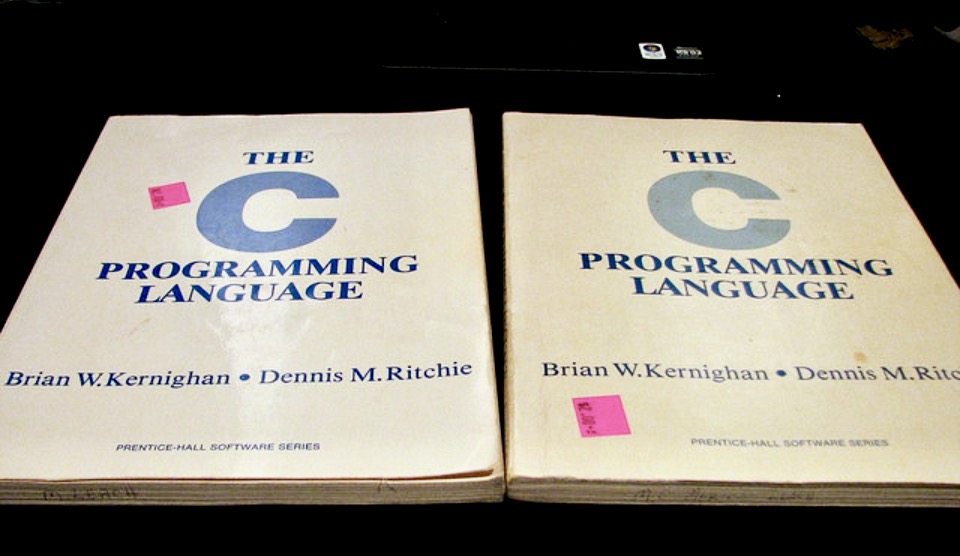
“A damn stupid thing to do”—the origins of C
Today, C may be a lingua franca among programmers. This is its (abridged) history.
Ars Technica
82 points · by etrevino · 5y ago · 20 comments
Without all that, C would be, well, Pascal. Which was quite popular for its time, but wasn't used to implement Unix, and didn't become the preferred post-ASM way to write software for microcomputers.
UNIX was written in Assembly, C only came later, as the article clearly states.
8 bits were dominated by Assembly and Basic, in 16 bits we kept using Assembly and a mix of languages, where C was one option among many others.
Why do people do this? Do they not want people to read their stuff?
That kind of thing is fine for a large heading in an Apple ad, but is actively user-hostile for long-form text. Note that Apple itself uses proper text contrast for its long-form documents.
http://thoughtmesh.net/publish/printable.php?id=367
I just put this sort of site through reader mode but it shouldn't be a requirement.
The Pascal dialects that did gain some popularity, such as Borland's Turbo Pascal, generally (I'm tempted to say "always") had non-standard ways to do "unsafe" things. Turbo Pascal, in particular, let you put raw asm right in the middle of your code.
"Safe" languages have been invented many times, but programmers always seem to gravitate to powerful, if "dangerous", languages like C and (now) JavaScript.
There's probably a lesson for language designers here.
When I was learning the code back then the problem with safe languages was you couldn't get outside the sandbox. And for anything practical you needed to. There either weren't API's for things you wanted. Or the API's that existed were insufficient. I remember in the early 80's someone showing me some code for high end medical product. It was written in Pascal and C. With shim functions to dick with the stack so you could call C functions from Pascal. Couple of years later they rewrote everything in C++.
Notable I think C# and Rust both have no seat belt modes.
Cowboy programming tends to attract certain kinds of developers, but not all.
Excellence is absolutely not obligatory to get a miracle, but failings do often help prevent one. The most interesting cases are not the miracles, which are each sui generis, but the near misses like Pascal, Ada, and Lisp.
Is anything akin to this happening today? It seems to me we are currently resigned to the idea that only corporations can successfully play that role today. Am I missing something?