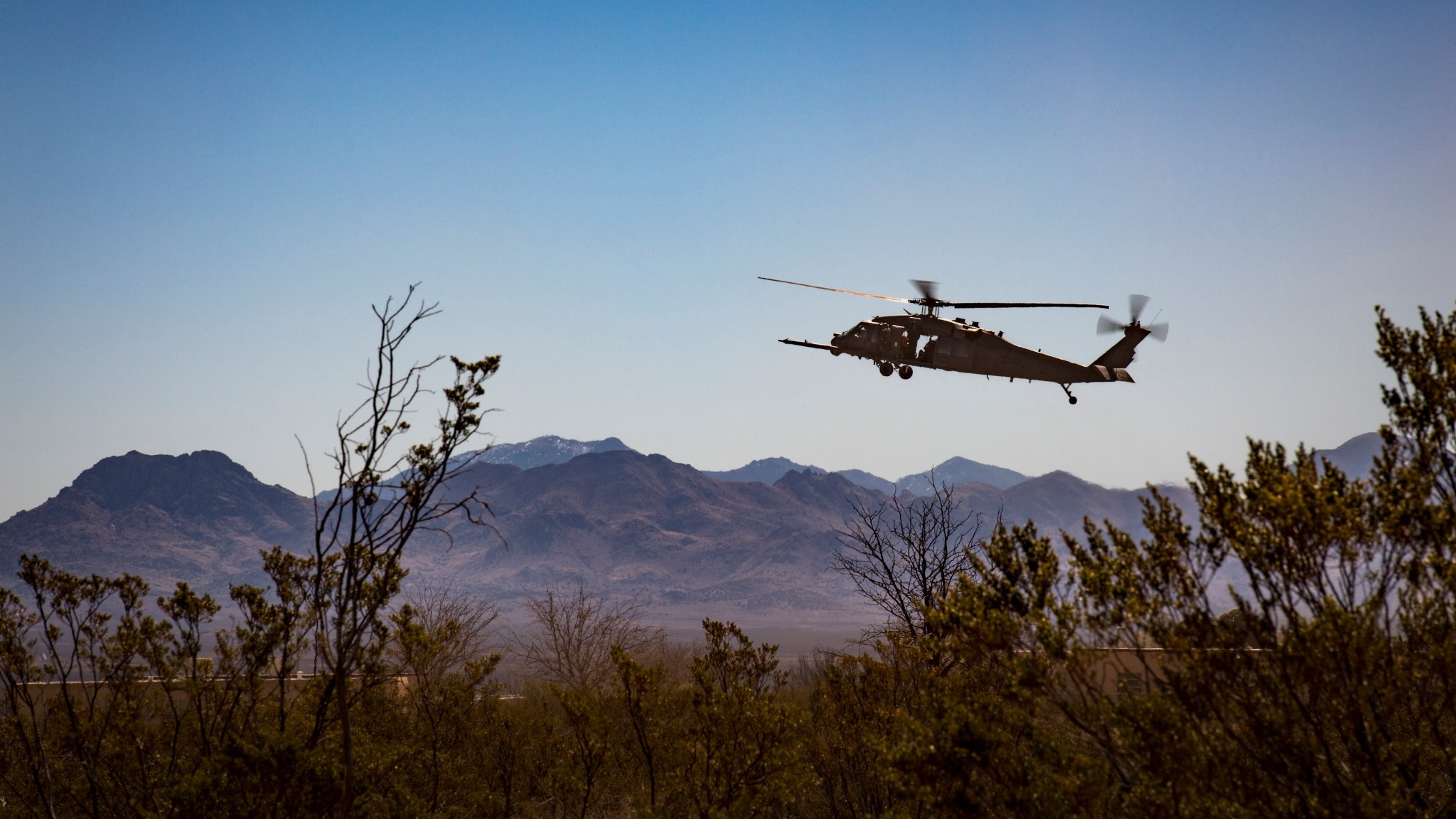
The military is scrambling to understand the aviation crash risk from a new 5G sale
More than a dozen commercial aviation groups are warning that the sale of spectrum could lead to interference and even fatalities.
Defense News
120 points · by bookofjoe · 5y ago · 104 comments
Radar altimeters use vastly more power than anyone would waste on mere communication. They also don't depend on subtle variations in the signal to communicate. It's basically just listening for a return and measuring time-of-flight. Timing measure is more complicated, but doesn't depend on subtleties of the signal that could be easily interfered with. (Full disclosure: I've worked on Herc terrain-avoidance radar, but that was forty years ago.)
Note also that commercial aviation pilots don't use terrain avoidance radar in normal flight operations. It's an emergency system. If you're low enough to need it, you're supposed to have an airport in sight. If you start getting the "Terrain. Pull Up" warning, several things have already been going wrong for a while. If you blocked the TAWS system of a commercial airline in normal flight, it's unlikely they'd even know it. You'd have to wait around for a lost or damaged aircraft that was already about to crash, which is a pretty unrewarding hobby.
To be honest, I'd be surprised if the military didn't already have a pretty good idea how to spoof terrain avoidance radar, it would be the kind of thing that might be nice to have in a special operations toolkit. But I doubt it looks like sitting on the end of a runway with a cell phone. More like humping several car batteries, a dish antenna and a Halliburton case full of electronics to the top of a ridge. (Which, another thing: terrain avoidance radar is the opposite of stealthy, you wouldn't use it for special operations, especially when you have access to GPS, satellite maps and inertial navigation systems).
Even a 5G transmission from ground to geosynchronous orbit would be columnated by a dish, so would only interfere with a moving altimeter for a fraction of a second, and those systems are designed to handle transients. I'm not saying there isn't a potential issue, I'm saying you're not going to find out if you limit yourself to interviewing bureaucrats.
When you hear "Obstacle Obstacle" announced in Sully, that's not a radio altimeter detecting the bridge, the computer has concluded that the plane's motion is uncomfortably close to the bridge tower based on GPS and a database of tall things you might fly a plane into (and thus it knows this is an "Obstacle" whereas a mountain is "Terrain").
In that movie there's not a damn thing they can do beyond avoiding the bridge itself, because they don't have any thrust - but ordinarily pilots should near instinctively try to ascend immediately for any of this group of warnings. The training is specific that this is not the time for diagnostics, if you aren't already absolutely sure why the computer thinks you're about to hit something you must assume the computer is correct and climb at best rate. This routinely saves lives when pilots become confused about where they are.
From my not-very-informed perspective US competitors don't need to catch up to Chinese equipment, the Chinese equipment makers are locked out. If anything the US equipment makers would have the OPPOSITE motivation, get the spectrum sold and get their sub-standard equipment into the networks before the position of the US government could possibly change and they face real competition. And that is kind of what is happening, right? The actual story here is the FCC (lead by carrier and equipment friendly folks) are seemingly pushing ahead despite concerns from other industries, no?
Also, not so long ago there were "reports" claiming Huawei devices were compromised and no evidence was provided. The negative marketing against China has been candid and in the open. The US is just trying to win in the court of public opinion on several fronts.
So yeah, "The military is scrambling to understand the aviation crash risk from a new 5G sale" and don't provide a technical basis for the concern: it reads propaganda all over.
Just this year Kobe Bryant died because his helicopter impacted the terrain.
If this happened after the sale, you'd have to do just as difficult of an analysis to prove that 5G frequencies did not play a role in the impact, so why not do the analysis before hand?
As to Kobe Bryant, yes his helicopter flew into terrain (unsurprisingly, 'flew into terrain' is incredibly common in aircraft accidents. Sadly, most of them are perfectly serviceable when they do so). There is no indication that the issue was a radar altimeter (if one was even installed, I don't believe they're required in that class), much less one that was being interfered with. I don't think the NTSB report is out yet, but I expect the cause will be what it commonly is: a pilot (with a famous and rich client who wanted to get somewhere quickly) taking their vehicle into marginal weather conditions beyond what they and their aircraft are competent to handle. Working on that problem will save a hell of a lot more lives than investigating 'may be a problem' that no one can even describe a mechanism for.
Existing synthetic vision systems would have easily prevented this. They're not even that expensive - built in systems can be had for a few tens of thousands of dollars, or non-certified iPad based systems for a few hundred.
That crash was likely due to disorientation in dense fog with an experienced, IFR rated pilot but who didn't experience much fog in LA. A radar altimeter would have been unlikely to help.
Also these altimetes are most useful when landing which is generally done on your side of the lines.
It's a highly asymmetric problem.
Also, bombing every cell phone within a few miles of your airport is likely to have some undesired side effects...
Edit: A commenter further down mentioned the AGM-88 HARM, which is a $280k missile. That's significantly more expensive than my estimate of a couple orders of magnitude for a 'dumb' missile from a helicopter.
Yep, pretty funny if it really would work.
For military applications, they reduce the risk to pilots and civilians from military aircraft which fly in ways civilian aircraft would never be allowed to. Military pilots are often ordered to hug the ground when deployed in order to avoid RADAR, but this raises the risk of controlled flight in to terrain. RAs are one tool which can help avoid CFIT when flying irresponsibly close to the ground.
Military aircraft would still be able to fly at higher altitudes without RAs.
"5G wavelengths have a range of about 1,000 feet, not even 2% of 4G's range. So to ensure a reliable 5G signal, there needs to be a lot of 5G cell towers and antennas everywhere. We're talking on every lamppost, traffic light, etc. because even trees can block 5G signals."
[p.s. hmm. Counter point: Disposable loitering EM-drone swarms. I guess this boils down to battery tech again.]
Again, only in US, and only mmWave.
It seems US is the only part of the world where they use mmWave and 5G interchangeably. ( I guess I could blame the Media for it. ) Most part of the world aren't even thinking of implementing mmWave.
Also, you aren't spending that money, some cartel telco is spending that money. You don't have any reason to be concerned about the amount of money they're spending. Those costs they're incurring has almost no relationship to the price you are paying...this is cartel economics 101.
I've been working on a 24VDC network for my workshop, but even across the room I'm accounting for voltage drop.
The frequencies in this article are in the 3GHz range.
What is it that WiFi can not do but 5G can? 5G’s much lower latencies allow for R/T CnC (which enables all of the above).
So, for example, your factory floor bot’s camera sees something that it’s local AI can’t categorize, so a central node with greater computational power and storage capacity can (in R/T) make decisions and send operative commands:
Do the roundtrip latency calc for below for 4G and 5G:
node -> base station -> fast network —> central controlI agree with your point, but most outdoor radio antennas have an output power of like 20-80W btw (which is still significantly lower than many television transmitters).
I do have some capacity to advise stakeholders on upcoming auctions, and my advice so far has been to stay away from C Band, but it's pretty ridiculous how little importance they place on technical aspects of certain bands...they just see spectrum and they want it. Hey, don't listen to me, I'm just the guy who is saving you from 8 digit noncompliance fines. :::rant over::
Also, as another comment points out, this 5G can use more than one broad range in the frequency spectrum, this only affects one of those, and not the street corner/short range one, which is at a much higher frequency.
>In 2007, the FCC (United States) began requiring that devices operating in the bands of 5.250–5.350 GHz and 5.470–5.725 GHz must employ dynamic frequency selection (DFS) and transmit power control (TPC) capabilities. This is to avoid interference with weather-radar and military applications
[0] https://en.wikipedia.org/wiki/List_of_WLAN_channels#United_S...
So why do they auction off "parts of the C-band", and how is it connected to 5G? I'm sure I got something wrong, just curious what it is.
Basically, it sounds like they agreed to auction 3.7 - 3.98 GHz & 4.0 GHz - 4.2 GHz. This leaves a gap in the region of 3.98 - 4.0 GHz for radar altimeters. The letter states "recent research confirms that even this spectrum gap is insufficient to ensure radio altimeters are protected from harmful RF interference by 5G networks".
I don't know enough about a radar altimeter's operation to speculate as to why it could be an issue.
> Given the neighboring aviation band (from 4.2 to 4.4 GHz) allocated exclusively for vital aeronautical radionavigation equipment
They are afraid of (a) heavy use in the 3.7 - 3.98 GHz band (fundamental emissions) and (b) "accidental" broadcasts in 4.2 to 4.4 GHz range (spurious emissions). The study [1] on p. 12 in §6.1.1 basically assumes the 5G equipment will blast an interfering signal on altimeter band at full power. I think any frequency allocation request can be shut down this way.
And I don't think 5G network will work properly if even a fraction of the assumptions in that report are true. If you look at https://en.wikipedia.org/wiki/5G_NR_frequency_bands, you will see that bandwidths are in 10s of MHz and the sub-carrier spacing [2] is as low as 15kHz. If 5G radios will be off by 15kHz (as opposed to 202000 kHz from 3.98 to 4.2 GHz as the aviation industry is implying), 5G network transmissions will not work properly.
[1] https://www.rtca.org/wp-content/uploads/2020/10/SC-239-5G-In...
But that's not really how RFI tends to work - you can be perfectly aligned to your target frequency and generating the signals you expect there, but still be generating mixing or LO spurs, image response, third-order intermodulation products and so on which can be at totally different frequencies.
1°/ transmitter unwanted emissions of 5G (i.e. how much out-of-band/spurious emissions "leak" outside of the 5G band i.e. above 3.8 GHz). This is most likely a negligible issue here even though there are still uncertainties whether the antenna pattern of AAS remains the same in-band and in spurious emissions
2°/ receiver blocking of the radio-altimeter (i.e. even if 5G emissions were perfect, the victim receiver can catch energy from other bands if it doesn't include a proper filter) : this is most likely the main issue here -> from my understanding, those airborne equipments have poor filters (the antenna limited passband probably helps a little bit which is why this blocking phenomenon did not happen previously with 4G in lower bands, but apart from that there is probably a low selectivity with regards to adjacent bands)
However, when 5g wifi first came about, many weather radars had issues and DFS was born, compulsory in some countries and is designed to make sharing bandwidth less impacting. So historically, there may be some jitter in some regions and more so for regions like the USA that would of utilised that spectrum differently and with that, the impact may well be deeper and like most change - people will always have concerns, however long they are given before that change.
[0]: https://arstechnica.com/tech-policy/2020/04/fcc-to-approve-5...
- Regular deployments anywhere between 600MHz and 3500MHz (or so), as an iteration on 4G. Actual band depends on the country, licensing and spectrum needs.
- 5G ultra wide band (UWB), which is often deployed around 30-38GHz, and is thus highly attenuated and needs to be extremely directional. This is the “street corner only” type of 5G.
(If they did, you wouldn't be allowed anywhere near an airplane -- let alone inside one in flight -- with such a "dangerous" device.)
https://www.wsj.com/articles/5g-auction-shatters-record-as-b...
Anti-radiation missiles seem fun to work on, for example the (now retired) ALARM missile will loiter at 13 km with a parachute then use a secondary rocket motor to attack a target it finds. The signal processing these things do is probably unbelievable.
You must have at least a 19" wide back then, I suspect that a good ramp generator and an amp for that kind of frequency range with sufficient power and bandwidth is going to be a rackmounted device if not multiple of those. This baby from Rohde & Schwarz https://cdn.rohde-schwarz.com/pws/application/cards/3607_446... should do nicely.
50 dBm is nothing crazy for a benchtop unit.
Been used in a few countries fine from what I know of and I live near Heathrow airport and use it to no ill effect. Though don't have the details of what bands they just opened up and how they compare with other countries and any impact.
[EDIT ADD] Whilst looking this document had a nice insight into the middle band usage globaly https://mma.prnewswire.com/media/1136543/5G_Mid_Band_Spectru...
Page 5 has current regions bandwidth assignment in that block and does seem that from that the USA is slow compared to other countries in assigning that band for consumer usage.
Page 6 has a nice visual showing the use/proposed use comparing regions - most insightful.
Here (as far as I understand) the main issue is the airborne receiver blocking (i.e. catching energy from other bands) because of poor filtering on the receiver side.
It always strikes me how some people list financial loss before loss of life.