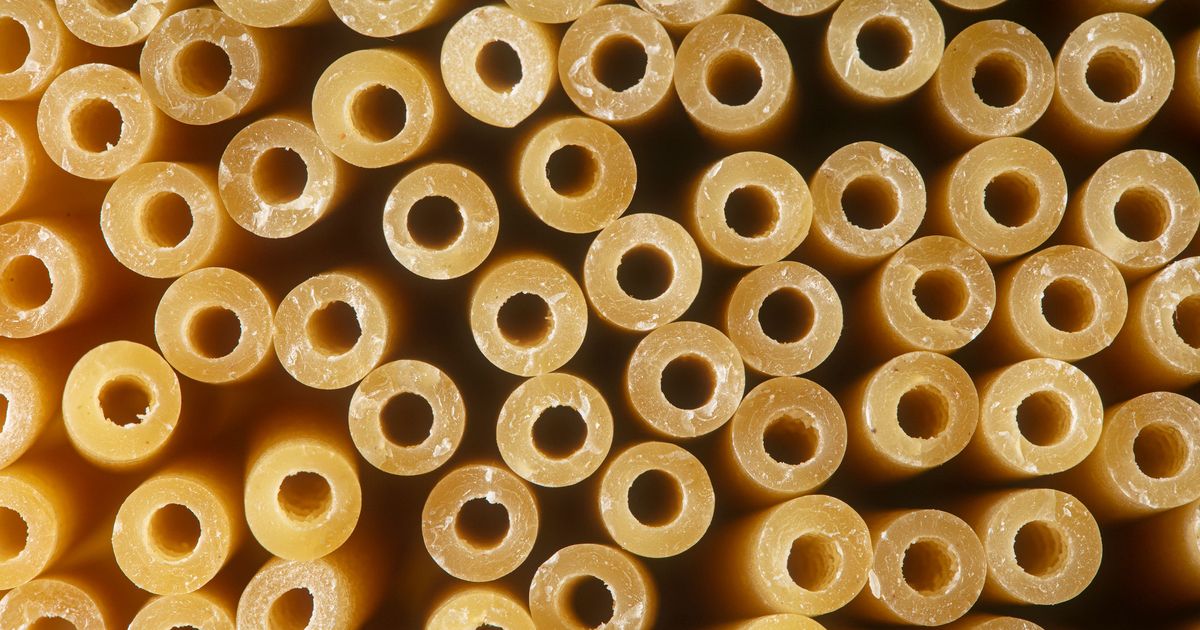
The Very Real, Totally Bizarre Bucatini Shortage of 2020
What the hole is going on?
Grub Street
844 points · by polm23 · 5y ago · 323 comments
Beyond that, the article reminds us that in every industry there are powerful actors that protect their monopoly, and will coerce the government into helping them.
I read an article about import taxes on sugar that were created to keep out competition, and as a result everything uses corn syrup. Other examples abound.
Unfortunately, the solution of government oversight of itself (such as FBI breathing down the neck of the NSA), has obvious circular drawbacks.
That's exactly what you want your elected representatives to do: listen to their constituents and act accordingly to ensure a fair outcome according to the law. Note that no laws were changed in this to favor one company over another, if anything the previous state was one in which the company in question was profiting from shipping out-of-regulation product, perhaps at decreased cost compared to in-compliance firms.
The rule itself can be debated, but in general I find that a law specifying in exact numbers what a product should contain in order to qualify for a label to be a very good law. It's exact, it's measurable, and it's achievable by all. Fair and equal enforcement should make it a good regulation.
If you say "well you don't need this law, it's over-regulation", that's a good argument -- I'm not sure I have an opinion on that. On one hand, I think Standard of Identification make a lot of sense, but I also know that drawing the lines can be a very delicate art form (what makes a pasta noodle vs. a ramen noodle? What makes champagne vs. sparkling wine? And so on)
Edit: Also, I think a lot of this could be dealt with better by an FDA that has a good communication arm. "We found this company to not be compliance with existing law and took it off the shelves" sounds a lot better than having the company get to print saying "Seems like a hold up by the FDA"
Medium sized businesses (up to $100m revenues) will find it very difficult even getting a response. Even getting their attention is a competitive advantage for large corporates.
So when you read a story and think things 'worked quite well'. It's just an example of selectively applying laws & regulations, which were only introduced to keep out competition and protect entrenched interests. That's why large corporates love regulations, it protects their entire business model and imposes significant costs on new entrants.
There is no "big pasta". There's like a handful of companies[1] that make it all. I'm sure the execs all own yachts but if you were to compare executive fleet displacement it's more of a Venezuelan navy than a French navy. They can't just call up their lobbyist who's already scheduled to golf with a congressman every other weekend and tell them to bring it up on their next trip. Only the Googles and the Exxons of the world have that kind of access.
What really happens is the some company notices that "hey, those other people are doing X and they're not supposed to, I'm losing money because of it. Then they call up the congressman in their district and say "I employ people in your district and pay taxes and I am getting screwed because morons who you have oversight over are not doing their jobs, make them do their goddamn jobs" but in nicer words and with situation specific details. And then the congressman's aid writes an email to someone that explains the situation and asks the relevant people to please take a look at it again.
The law might be stupid and the complaint might be petty but it's better than living in a world where state and federal legislators don't try and solve their constituents problems with government. For every stupid pasta beef there's a dozen more legitimate complaints that cross the desk of whichever staffer is doing constituent relations. My point is that the process of getting "access" to one's congressman is not really as nefarious as people make it out to be.
>Medium sized businesses (up to $100m revenues) will find it very difficult even getting a response. Even getting their attention is a competitive advantage for large corporate.
This hasn't been my experience but I suspect that it's going to depend a lot on the political optics of the specific industry relative to the representative.
[1] Check out this handy list and research the companies if you don't believe me. https://ilovepasta.org/membership/membership-directory/ Many are owned by larger brands but they are not particularly big businesses themselves. These are on the order of The Office sized companies.
Speaking specifically about this case though, it doesn't seem like a big business tossing its weight around, but some large multinational businesses working within existing regulatory and bureaucratic systems to ensure their competitors are not unfairly gaining by flouting the law.
It is akin to an auto company finding another company has saved money by not complying with emissions standards.
Good in theory. But it's also likely to slow down innovation or even kill it in its tracks. Maybe a producer wants to mix up the ingredients because they're making a substandard product. But maybe they discovered a way to deliver higher quality or lower price with an iteration on the original. In the long run, consumers will mostly discover the shitty products and stop buying them anyway.
For example if such a law was in place for desktop computers, it almost assuredly would have required x86-compatible CPUs. It's highly unlikely that Apple would made the investment to produce the incredible gains in the M1, if it was forced to market the MacBook Air as "not legally a laptop"
Having clear [communication of] regulations that food importers could understand, and expect to be enforced in a consistent way that didn't require a lobbying arm, would work a lot better.
Permit me indulge in a minor rant. Not against you, just generally.
A specialty pasta manufacturer in Italy (home of pasta, but what do they know?) can no longer export a specialty pasta (which they sell legally in Italy), because it's marginally under-enriched by US government standards for pasta, and so the consumers in the US, who specifically seek out their favorite food, must go without, and this is ... the system working as intended, indeed, working quite well!
> If you say "well you don't need this law, it's over-regulation", that's a good argument
Ah. The thing is it's not a specific piece of legislation, it's one of those regulations the FDA itself came up with to begin with (Code of Federal Regulations, Title 21 Chapter 1 Subchapter B Section 139.115, if I'm reading it right).
So then, aside from the fact that it's bullshit to begin with, and no one is changing the bullshit, and that everyone is expected to accept the other 114-plus sections times the 138-or-more parts of Subchapter B times all the twenty-plus other titles, and whatever minutiae they may demand... and that broadly we are all expected take this class of thing as simply as The Way Things Are, a perfectly natural consequence of doing business in our world that we dare not question, well, then -- yes, aside from all that, you're quite right, everything is working quite well!
And yet somehow I feel things are broken, and moreover, that if you say something about it, you'll find a dozen people to complain that you're nothing but an eeeevil capitalist who would poison our oceans and black out our skies just to make an extra $3.50 in pocket change, if not simply out of spite generally.
I wouldn't be one of those people, trust me. I won't go into what my line of work is, but suffice to say I may actually be one of those evil capitalists.
I DO think this is one of those cost-of-doing-business type of things when it comes to international trade. I think most consumers appreciate that when they go and buy something that labels itself "pasta", it conforms to some standard that we can agree is reasonable. Otherwise, you'll likely have someone who stuffs ramen noodles into a pasta package and sells it to some suckers. And now we all have to always know which are the "real" pasta brands and which are the fakes(yes, that might be easy enough to do, but it's the overall cognitive load of having to do that with every product that should concern us). That's just an example, but that's why the regulations exist.
And you can't just say "well they sell this in Italy, and that's the home of pasta, so c'mon man this can't be right", because Italy I'm sure has like 3x more regulations around pasta selling (a cursory google search shows this is likely true), and any change they make to their regulation will keep in mind the interests of their consumers and their producers. They will not be thinking of American interests when making those regulations.
Finally, it's worth keeping in mind that this one company that was recently restricted for not being in compliance is NOT the only manufacturer of Bucatini, and in fact may not be the largest or best manufacturer either. It's just one company that returned the reporter's calls and had an answer for them.
This is not a person who is taking themselves seriously:
> I felt more determined than ever to solve this mystery, not just for myself but for the cast of Saturday Night Live and also the rest of the people of the United States of America, who had been through too much for too long to then have insult added to injury via the spontaneous and inexplicable disappearance of the best noodle.
I agree that the writing is well done, though the story didn’t hold my attention. I bailed at about the halfway point.
Wow, I hope you reserved some of your outrage for pasta from other cuisines. Or do they not count lol
But hey, other people like it so who am I too judge ;-)
If this were just a matter-of-fact reportage on a particular type of pasta shortage I doubt it'd hold much interest for anyone. The whole enjoyment for me was the gonzo reporting style of someone going off the rails about the shortage of a particular type of noodle.
Sugar imports are taxed so that US producers (cane in FL & LA, sugar beets in the upper midwest and upper great plains states) do not have to compete with cane sugar from Brazil and Mexico. It is as simple as that.
So foreign sugar sources, like any major staple, are heavily tariffed.
https://www.bloomberg.com/opinion/articles/2018-12-18/u-s-su...
It’s very amusing to me that the US subsidized domestic sugar production, and then also pays for diabetes and it’s related healthcare costs.
I’m confident that the future will look back and determine sugar to be one of the most costly habits of people.
It criticizes that there are broad staple food import tariffs, but does not discuss the purpose of these policies, which is national food security.
The US has not experienced a food shortage, despite the normal incidence of crop failures in over a hundred years.
The fact that Americans suffer from food oversupply is absolutely a first world problem.
Subsidizing domestic sugar production by spiking the price of sugar... means less sugar consumption. What's the joke?
https://en.wikipedia.org/wiki/Sugar_industry_of_the_United_S...
https://en.wikipedia.org/wiki/High-fructose_corn_syrup#Unite...
Per https://www.ers.usda.gov/webdocs/outlooks/100085/sss-m-388.p... the recovery rate varies from 9 to 14 percent.
Cane sugar production runs about 4 million short tons, which is about 8 billion pounds. Beets add a similar, somewhat larger amount.
HFCS production is also on a similar scale, billions of pounds a year. But then 80% of corn goes to animal feed and ethanol production, so HFCS isn't the major end use.
Sugarcane most definitely grows in North America. Florida alone produces hundreds of thousands of tons of raw sugar annually.
Differing regulations and standards between countries usually makes no sense and just harms the consumer.
How is a Volvo made for the Swedish market unsafe on Canadian roads? EU and Canada recently signed a trade agreement so that they won't tariff eachothers' cars, but consumers still can't buy a car from a European dealer and have it shipped over.
Or vaccines. Why isn't there a global approval system?
Yeah yeah, everyone can point to an example where their regulatory agency's anxieties/delays/negligence prevented some issue, but fail to consider the impacts of all of their other delays/rejections.
America has a longstanding tradition of food fortification. Niacin is also used to supplement US diets featuring a corn staple -- corn's niacin is not bioavailable without additional processing traditional to Mesoamerican cultures. Probably more recognized today is iodized salt, which is responsible for perhaps a decade's worth of the Flynn effect in the US.
In the case of flour, Europe is lagging behind: https://www.ffinetwork.org/europe. Apparently Denmark went the extra step of banning enriched / fortified foods. You could probably argue that regional diets will naturally vary and that something like iodine supplements aren't required for Italians when they have ready access to seafood that Oklahomans don't. But since I'm pretty sure these enrichments aren't harmful to those who do have access, I imagine some of the divide is simply protectionism -- protecting your local markets and local manufacturers from cheaper American brands.
Niacin Toxicity
Symptoms of toxicity include: Flushing of the skin, primarily on the face, arms, and chest *This side effect may occur at doses as low as 30 mg/day. Itching. Nausea. Vomiting.
In some cases these arguments are made in good faith.
In even rarer cases these arguments are true.
But initially it's wise to take them with a grain of salt.
Which is why we probably won't see much progress in harmonizing bigger regulations. Whose regulation gets to win? This has been a five-year fight over the color of a piece of plastic. Everyone even wants to agree - the automotive industry would love a worldwide standard to reduce specialized part count, rulemakers would love to agree in order to increase the shared market size (so everyone gets the same cars), but the actual standard to be put into place calls into conflict the exact safety versus cost thresholds each government has set. Imagine if there's actual conflict.
It isn't even about the colour (which is trivial to control with software and 8 extra cents in LEDs), but about the colour of the plastic.
That's the dumb thing that proves it's about protectionism. Same with DRL: it's controllable in software.
Meanwhile, Canada lets you import any >17 year old hunk of junk from anywhere and that's somehow safe and okay (because it doesn't harm new car sales so directly, yet still much more fatal to occupants).
In the EU the turn signals is mandated to be amber. In the US/CA, the turn signal can be either amber or red, but must be of a certain area. Other jurisdictions do not have an area regulation.
So OEMs simply make brake lights double as turn signals when they import vehicles.
If the non-US OEMs 'just' made bigger turn signals they wouldn't have to do this.
If your car does not have those weak daytime lights (small lamps that basically dont do anything) then you are supposed to use the low/dipped beam. And most drivers use low beam all the time.
Both USA and UK markets take steps to avoid salmonella. The method the USA requires the eggs to be refrigerated, the method the UK uses effectively requires that they are not (at least not until you get them home, once you start you can’t stop).
https://www.npr.org/sections/thesalt/2014/09/11/336330502/wh...
Regulatory harmonisation is controversial though, especially here in UK. No matter that its usually boring stuff like agreeing fire retardant coatings on soft furnishings, the newspapers insisted this was a breach of sovereignty. Expect a new British safety standard (identical but with a different logo) to join the pack.
Rather, it is (or was, originally) about protecting the brand of pasta noodles vs. ramen noodles, at a time when the difference was not as readily apparently to consumers.
It's the type of regulation that determines what is a "HD" tv, for example.
"Iron deficiency isn't an issue, probably because there's lots of enriched foods, so let's stop enriching food!"
I think regulatory analysis requires a little more thought than that.
For example, Katsuobushi is the core part of Japanese food but it seems that exporting to Europe is difficult due to EU regulation. Another example in Japan would be K-car.
As a Japanese, I never want to give up Katuobushi for improving health. I suspect that maybe oppositely, European people also has food or culture that banned from other country .
I don’t care for this, but I understand it. Rarely do we hear about the lives that were saved thanks to the regulatory body doing its job.
We don't need to wonder! They explain it right in the article: protectionism. It's not really that surprising that a lot of regulations have nothing to do with protecting the consumer and are all about protecting the parties that really matter to governments: big domestic industries.
> Around World War II, Carl explained, the established noodle industry (henceforth referred to as Big Pasta) was “upset” by the introduction of Nissin’s ramen noodles into the country, which were “completely out of spec” with what the United States then recognized as noodles — specifically because the ramen was being sold for a lower price and with what Carl called “lower standards” of nutrition. “They were really pressed,” said Carl. That’s when the “standards of identity” were created: Big Pasta made sure that all noodles had to meet certain specifications to be considered “enriched macaroni products” and sold in the United States.
In this case, the pasta industry did not want their product confused with the new noodles coming from Nissin; this was back in the days when many Americans may not have readily known the difference between pasta noodles and ramen noodles, and wondered why they were paying more for pasta than they could for ramen.
Now those rules might be perverted to suit protectionist goals, but that’s the whole art of effective hopefully minimalist regulation: it’s very hard to do.
Alternatively, it might be the fact that the pasta company in question was selling buccatini at a lower price, a competitor did an analysis, and they found that this company was saving money by skirting regulation that everyone else is complying with. And they did the right thing by forcing the FDA to apply the rules evenly to all companies.
It's true that they don't make much sense and that they often harm the consumer, but I vote in my regional politicians and in theory can vote them out if they impose standards I don't like.
One of the problems with Europe was the perceived lack of democratic control coupled with the dishonesty from anti_EU campaigners about things like straight bananas.
Can we trust states with major pharmaceutical industries to regulate pharmaceuticals? Major car production centres to regulate emissions? Major chemicals companies to regulate chemicals?
I'd be a little suspicious, living next to such a country, if they insist on my adopting the regulations they wrote, which of course their industries all successfully meet to the letter.
You get objections to GMO food in Europe while in the US this doesn't even have to be labelled.
Chocolate standards that mean most US chocolate cannot legally be called chocolate in Europe as it doesn't contain enough cocoa.
Chicken has to be chlorine washed in the US before sale, a practice that is prohibited in Europe.
Eggs in the US are washed before sale which makes it necessary to keep them in the fridge afterwards while in Europe eggs are nornally sold unwashed (in some countries (all EU?) It's even prohibited to wash them).
Let's not even talk standards for wine and raw milk cheese, use of corn syrup, regional denominations, slaughter and animal welfare rules, ...
Not easy to find a simple resolution to such strong differences in some sectors. Opposition to trade deals among Europeans usually stem from (1) fears of lower food standards (incl. animal welfare), (2) worries about slavery and labour exploitation and (3) worries about low environmental standars. I'm sure the US has similar recurring themes popping up.
Even ignoring protectionism there are a billion different ways to make reasonable regulations and many of them will be incompatible in some ways.
Countries working together on regulations is a thing, but it also does slow down things and takes a lot of effort.
>Or vaccines. Why isn't there a global approval system?
I don't see any way how that could work out any better than the current situation.
Global systems are inherently more fragile, no? More eyes on something is always a good thing, less likely to be corrupted by corporate interests, etc...
The article also mentions trade groups pressuring the FDA to set arbitrary standards on pasta to keep out imports of Asian noodles.
The article fails to mention what the FDA calls Asian noodle products.
It calls them "alimentary paste."
That must be the lamest way of defining pasta I've ever heard. Whoever named it like that doesn't deserve italian pasta (/s)
That's how foreign languages work. In Polish "rower" means "a bicycle" because british company Rover sold them here first :) In Russian and Ukrainian vogzal means "train station" because there was a famous train station in Vauxhal :)
Citation?
The article doesn't mention "alimentary paste" anywhere, so your remark comes off as assertive, yet I couldn't find traceability to this term in what I believe to be the applicable federal statute[1].
[1] https://www.ecfr.gov/cgi-bin/text-idx?node=pt21.2.139&rgn=di...
https://en.wiktionary.org/wiki/alimentary
"Of, or relating to food, nutrition or digestion."
"Nourishing; nutritious."
(At least the first part; "extruded alimentary paste" would be a more precise description of noodles.)
The point is that calling any food product "alimentary paste" is hilariously unappetizing.
> make six or eight ounces of paste as No. 319, roll it to the thickness of a quarter of an inch, or a little more, put pudding-cloth in a basin, sprinkle some flour over it, lay in your paste, and then the meat, together with a few pieces of fat; when full put in three wineglasses of water; turn the paste over the meat, so as not to form a lump, but well closed; then tie the cloth
And who could resist paste pudding [2]?
It must be made from wheat, but can be with or without eggs, and with or without dairy product. But it must be formed/extruded and dried.
TIL
Which is more likely:
Error 404: Bucatini not found.
MySQL Error: cannot get connection to deliver Bucatini.
/me shows self out
307 Temporary Redirect of Bucatini Deliveries
I'll have to check Hannaford and Shoprite instead.
Bucatini has good sauce absorption but imho its claim to fame is its thickness, mouthfeel, and rigidity, which the author hilariously and accurately refers to as "sentient". It has a mind of its own.
There are two similar noodle shapes, pici and Strozzapreti (literally "priest stranglers") but they are even harder to find.
Big Pasta is as bad as any other big industry.
Edit: as the comment below says, there were other factors at play around same time (reduced demand from Russia and interest rates spike) contributing.
The story is still more complex than this. Basically Malma had a few credits already, then Pekao proposed a unifying credit + to help with the IPO as a way to get funds for expansion, but the IPO never happened.
Perhaps the timing of all those things was bad and company was too ambitious with expansion plans. But there are a few details about the bank behavior that feel off. If the company was in hopeless situation, why the bank offered the credit at all? I guess we'll never know all the accurate details.
European chiming in here. If you are serious about bucatini, shoot me a DM and we can discuss importing that precious golden Ambrosia into the US of A, maybe declared as 'alimentary paste', drinking straw - or even use 'the Mexican route' to import it, if you know what I mean.
I have to go now, my pasta is ready.
It's a true problem that requires nuance, or lacking that, constant vigilance to make sure the system works for everyone. I'm realizing more and more that there will never be a political promised land, a polity will always have to perform the maintenance of their system, and every generation will have to actively work to bend their systems toward justice.
> Probably though, the solution is to not _completely_ demolish any standard of pasta and let the market solely decide, because we've seen what happens in a variety of other unregulated industries.
A few relevant anecdotes on this topic:
About a decade ago, a Dutch TV-show about food standards discovered that store-bought "guacamole" contains just 1% avocado powder. Presumably the legal standard for guacamole is that it contains avocado, without further specification. So obviously supermarkets, knowing that most Dutch people there haven't a clue what guacamole is, created the cheapest sauce imaginable.
Another story: the process of standardizing chocolate at the EU level was a long one because each country had different national standards. The biggest talking point, IIRC, was whether or not it was acceptable to use non-cocoa fat (keep in mind that adding fat from other sources would often be cheaper). Note that whichever option would be picked, the chocolate industries of the nations with the "opposing" regulation felt like they would lose:
- if added fat was allowed, the chocolate from countries where this wasn't allowed nationally would be more expensive and have trouble competing
- if added fat wasn't allowed, the chocolate from countries where this was the norm could not be exported
Subway bread cannot be technically called “bread” in Ireland because there is too much added sugar in it. Ruled by their supreme court:
I bought the last box at Kroger somewhat intrigued. It took a bit longer than spaghetti to cook, and honestly I didn’t find it particularly interesting. Just a fat noodle that wasn’t particularly good at holding on to the sauce.
During the height of the first pandemic wave in Canada, I literally couldn't find Bucatini anywhere, specifically De Cecco which IMO is superior to some other brands where I live. I went to dozens of supermarkets and they had every variant of pasta except Bucatini and I really couldn't understand what the heck was going on.
https://ca.camelcamelcamel.com/product/B07N21XB55
but like 5x the price on .com
https://www.amazon.com/Molisana-Italian-Bucatini-oz-Pkgs/dp/...
1. https://www.target.com/p/signature-bucatini-16oz-good-38-gat...
I largely prefer not enriched food, including salt. It just tastes better, IMHO.
Or the enrichment material supplier that the pasta-maker cut back on. Or pasta-maker switched flour suppliers to a cheaper under-enriched source.
But seriously, they do inspect a lot of drug manufacturing facilities, even overseas.
As a Canadian, I trust their approvals more than Health Canada's. I suspect Health Canda just copies whatever the FDA does a few weeks later.
Dunno why either haven't banned addictive substances (cigarettes) and let the non-addictive but fun ones get a free ride. But ya know.
This journalist needs a journalist friend to help cover his story.
The point of the article is in the writing more than the actual subject matter.
That's around €3.60/kg, which is considered in Italy a quick way to get street riots. Go over €4/kg and you'll get a full blown revolution, complete with a fully functional guillotine.
In my local supermarket 500g of bucatini De Cecco come for €.99, which is around $1.22. I understand that pasta in considered a specialty on the other side of the pond, but it is still basically just (semolina) flour and water, and no matter how fancy it could be, it's outrageous to pay that much for something mass produced.
There were many better prices available, but I was just sanity checking the author who wrote lots and lots making it sound like her favorite pasta was unavailable. So I want trying to find an optimal prices just trying to see if it’s actually unavailable (it isn’t).
At my local market pasta is usually $.7-1/pound. And if I go to specialty markets or Whole Foods the price can get 2-5x higher.
This could be the hottest Netflix drama of 2021.
contact link in description!
sincerely, anonymous dealer seeking revenge for all those "badabibuppi" Family Guy and Soprano memes.
Important: as shared by other HN users, remember to put the pasta out of hot water a couple of minutes before the cooking time and stir it on a hot pan with the sauce for the last 2 minutes. Make sure to add also a few tablespoons of the hot (salted) water you used to cook the pasta, this helps to make the cream effect.
Guanciale is pretty much impossible to find outside of Italy, at least in regular supermarkets. I reckon it’s because nobody can pronounce it
Basically take the pasta out of the water a few minutes early, put it in a pan with the sauce and some of the pasta cooking water, and finish cooking it there.
One takeaway: Barilla, which was once vilified for a perceived anti-gay stance (based on one offhand comment) has completely embraced human rights and now gets a perfect score from important institutions on LGBTQ issues. I'll buy their pasta again.
Similarly I quit going to Chick Fil A. At first I'd just ask the clerk "Is this a hateful message day? I don't want to be seen as endorsing your company's hateful message." But the poor clerk didn't know how to answer, so I just walk to another shop (next door) instead. Again, no effort.
The Rule of Unintended Consequences rears its ugly head.
But when gemelli disappeared for several months I was distraught. Nothing is better in mac'n'cheese.
I make it in a cake pan, less than an inch deep, with sourdough cubes and grated cheese on top, toasted to a crisp. The mac really is just there to hold up the cheese toast. But that doesn't stop me from putting in chopped chili peppers (not too much, 2 oz is plenty!), nutmeg, and a hint of cayenne.
Strozzapreti can substitute for gemelli, but it is even harder to find any of.
I was quite perplexed, since I have never heard of Bucatini before, but know some sorts of pasta - at least the most popular ones. Turns out, that in Germany, these are called "Makkaroni"! (We call macaroni "Makkaroni" too)
The point is just to get really thick spaghetti.
If you were to attempt this without a hole, when the outside was ready to eat, the inside would still be unpleasantly crunchy. Or, if you cooked further to get to the point where the inside was properly al dente, the outside would be an overcooked mess.
The only way to produce a thick, properly-cooked piece of spaghetti of consistent, uh, consistency is to remove the part in the center.
COVID had really highlighted how unhealthy our diet is...
This, I believe, is a fax machine answering your call.
I have been able to purchase the store brand of bucatini at my local Harris Teeter without interrupt this past year. The brand is Private Selection. I don't know who makes it for them but it is imported from Italy. Harris Teeter is owned by Kroger and my understanding is the brand is available across all the Kroger owned grocery chains.
I don't know of any other examples of it being mixed quite like this, but I do see pressures given in "mm Hg" sometimes.
Cooking Bucatini was proving too hard for me, and it doesn't drain well.
Pasta was my staple, but has become sometimes-food now, its too easy to put on weight.
De Niro is said to have wolfed down linguine to pork himself up for the La Motta role in "Raging Bull"
Is cappellini not commonly available in the states?
I have some bucatinis left, should I put them for auction?
While I understand the writing was aimed more at humor I did succumb to consumerism and went to Amazon and now my curiosity and ignorance both will be corrected
What’s the problem with specialised goods coming from a country that specializes in making such goods...?
Author contacts lots of people, gets caught up in a potential bucatini conspiracy. Maybe too many millennials used it as straws. Maybe competitors pushed De Cecco out of the country using the FDA guidelines, for reasons to be determined.
Most likely, pasta makers cut production of specialty pasta (bucatini being one) in favour of ramping up production of your run of the mill macaronis, spaghettis, etc. due to COVID and pasta hoarding.
Wait a bit, they'll come back.
If you're interested in reading, I reckon it's safe to read his books in chronolgical order. You can see how his style and preoccupations develop over the years.
The first story I read was "on meeting the 100% perfect girl one April morning" out of a short story collection called "the elephant vanishes" which is not his first book. I was in a bookshop in early 2003 and just randomly looking for the shortest thing I could possibly read and this story got me hooked on Murakami. and then I think after reading that short story book the next thing I read was "hear the wind sing", his original short novel. And then "pinball 1973" and then I think "Norwegian Wood."
I like his sort of loose universe how similar characters and types of characters and tropes kind of return but the the recurrence is not necessarily central to any of the particular stories they're just kind of like motifs.
Is there a TL;DR;BCOMGWTF?
People are using bucatini as eco-friendly straws, but uncooked pasta isn’t safe so the FDA temporarily blocked it or something.
Since thr author tries to make a story of what is basic journalism he even invents a (racist?) name for his source just to make the article longer. Luigi? Seriously?
Also standards are standards and the mocking tone of article does not help. We dont learn if that iron level is important or not. Author probably didnt bother to contact any nutritionist / doctor.
Also promotion of a brand sounds a bit like a sponsored article.