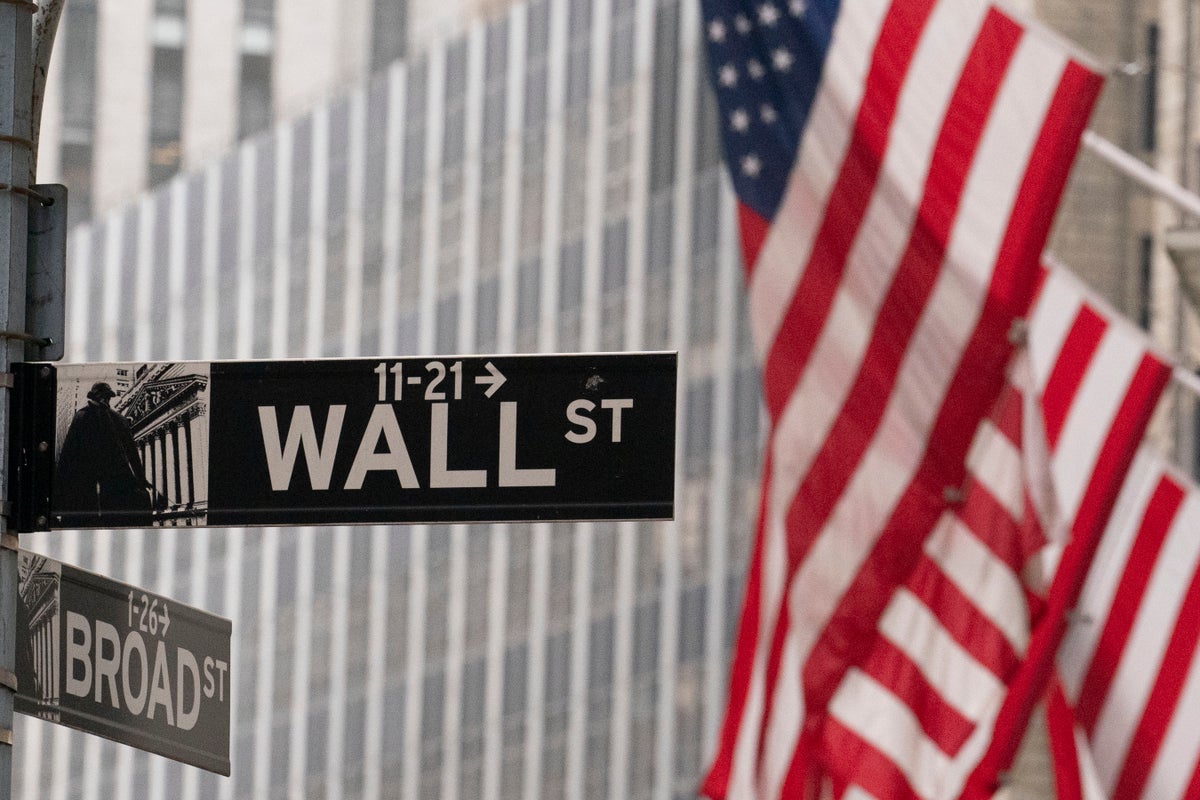
US passes ‘historic’ anti-corruption law that effectively bans anonymous shell companies
The new law prevents criminals from hiding money in US banks
The Independent
554 points · by gscott · 5y ago · 305 comments
So it seems that the cost of money laundering has gone from a few thousands dollars for a Delaware C-Corp to running a fake business that employs 20 people and has an office. The minimum to launder under this scheme is $5m per year.
This seems like the government stumping on small money launderers while giving the big guys a tax: employ some people, and rent some real-estate.
I did work on this bill (my Congresswoman is its author). Let me defend the thresholds.
The point of this bill is to require beneficial ownership disclosure for shell companies. Legal ownership of an entity is one thing. The beneficial owner is the human who ultimately owns and controls the entity [1].
Tracing the beneficial owners of economically-active entities (i.e. not shell companies [2]) is expensive. Imagine doing this for Apple. You would need to look through every ETF that holds it to its mutual fund owners to their pension fund owners to their holding companies to their pensioners. That is a multimillion dollar exercise, largely useless and reasonably opposed. This expense in its extreme stopped similar legislation in the past. As a result, someone from Russia could create a BVI company that opens a Delaware LLC and gain near-total transactional anonymity.
This bill tries to exempt economically active entities. The thresholds are easy to identify, reducing paperwork, while low with respect to most companies. (Small businesses have simple ownership structures and a small number of beneficial owners.) The bill is not a general anti-money laundering bill. If you have employees and revenues, you are engaging in sophisticated money laundering. If you have a thousand shell entities, you are doing something else (and more common).
I'm reminded of the Patriot Act, and the ways the data collected were used (beneficially), and abused (for personal reasons) by people trusted with high-level clearance. How is access being limited and audited to the data collected by this new bill?
I feel the same way about the government grant system relying on the DUNS system (run by a private company) for business registration. I also feel this way about credit agencies like Experian and Equifax being the trusted source of truth on creditworthiness for Fannie Mae loans, and collecting records on essentially all Americans (no consumer choice and limited opt-out) which inevitably gets leaked. The liability of Experian and Equifax should have been their entire businesses, not a few slaps on the wrist and the offer of credit monitoring for just a year.
With all that in mind, I want to know--when this bill is implemented, how is this not inevitably going to result in abuses or harmful massive leaks? Or do you just assume that entities below a certain threshold of activity don't deserve privacy or some level of property obscurity to help people avoid criminal attention?
The kind of info this bill is collecting could be easily be used by identity thieves. Sharing this info with foreign entities makes the problem worse.
Civil forfeiture started off with good intentions, but in many places has a serious lack of recourse and oversight. There have been some reports that it's abused as a quick way for police departments to pad their budgets. Those doing the seizing don't even need to prove guilt of a person, since civil forfeiture is a dispute between police and property, not police and a suspected person. Sure, these policies let police cripple the more clever criminals that they had trouble bringing to justice, but it also gets used all the time in ways against people (I guess against property) that would reasonably argue innocence.
There probably will be abuses and leaks—-I don’t think anyone should trust the government with population-wide data that is catastrophic if compromised. But on the ladder of OPM data and IRS tax records to e.g. potato registries, beneficial ownership data isn’t that sensitive. Many countries make it a matter of public record with few ill effects. (Counterpoint: Sweden makes tax records public record. The IRS being compromised would be a big deal.)
The church, charity and non-profit exemption is the hole of the bulldozer path that had to be left to protect private civic discourse. This will be abused by the wealthy and powerful. But as a result, there will be no comprehensive database of e.g. donors to prison reform or LGBT causes.
Why should it be? There's no sensible reason why ownership of a company should have to be kept secret, AFAICS. If your company does shit so shady you're ashamed to stand up and admit to it, that shit is probably so shady it already is — or should be — illegal anyway.
I feel like this bill doesn't actually change anything. Look at your example: "Someone from Russia could create a BVI company that opens a Delaware LLC and gain near-total transactional anonymity."
Your bill exempts every nominee or person paid to form the business. That is completely common practice, and also benefits the exact people you made this bill for?
Let me be absolutely clear, when I think about MY user experience, nothing has changed? If my registered agent formed the business with one of their employees names, or if my lawyer did that, in both circumstances there would never be a report to the Treasury for them, and there would never be a report for me.
I don't actually want a burdensome regulation, but I also don't feel Congress actually cares about this since this was just a rider into an actually politically charged bill, so I don't mind talking to you about it:
How does this bill accomplish anything if it exempts everything that real people actually do, let alone anyone trying to mask ownership and control.
Yes, we already know who the legal owners of entities are.
Under this bill, if you pay a registered agent to form an LLC you control, your name is recorded. That is not presently done. It’s been pushed back on, particularly by the real estate industry, for decades.
Edit: the Washington Post article on this says “ The general public won’t have access to the ownership data, a disappointment to anti-corruption campaigners, who say public scrutiny would help combat criminal activity.”
https://www.washingtonpost.com/us-policy/2020/12/11/anonymou...
The is the problem with "anti-corruption" efforts, is that always hurts people that have legitimate reasons or simply desire to live anonymous lives
>If you have employees and revenues, you are engaging in sophisticated money laundering. If you have a thousand shell entities, you are doing something else (and more common).
Isn't it easier (and more effective to the goal) to query the attorney of record, Articles of Organization filer, registered agent (etc from the Secretary of State), and have a more stringent eye on what they do, rather than taking personal identities to the Treasury?
The fault is not the individual, it's the supporting system that allows for thousands of anonymous LLCs to be coordinated - that only can happen through a support structure - that should be easy to identify through the current data.
Edit: also, yes, as another comment mentioned, thank you for chiming in. Very rarely do people get to speak to decision makers and advisors in these positions - this is real democracy at work.
Formation documents and registered agents track legal ownership. An attorney may have a line to the beneficial owner. Or it may be to another attorney. Either way, that is protected by attorney-client privilege.
There is nobody logging beneficial ownership. The closest are banks, which started requiring beneficial ownership information only last year. Unbanked entities are dark.
Put another way, this bill is putting that “more stringent eye” on the system.
So, this legislation feels like a break from that consciousness.
Instead of playing cat and mouse with these entities - which the above quote illustrates as the American legislative way - we are going for the jugular of this issue.
As someone who went through the BO pain, I think it only added more paperwork load to small business/guys like me.
Note that American compliance is de-centralised. A $5+ million entity attracts a different level of scrutiny from banks, corporate registers and brokers than a no-revenue entity with an overseas signatory.
[1] https://knowledgehub.transparency.org/assets/uploads/helpdes...
[2] https://open.cmi.no/cmi-xmlui/bitstream/handle/11250/2475354...
This is already happening and had been for years.
Source; I know people who laundered money for years in the Caribbean. One of the Patsy's is paying a lot of tax debt for the shell that was in his name.
Someone has to file the paperwork. If you willingly misfile it, then you are an accomplice. The various offices that manage these papers also try to do minimal checks. Also if the filer is a professional agent/attorney they have strict requirements to keep various details about their clients. (Which are protected by attorney-client privilege, but if there's sufficient evidence then a judge can issue a warrant, so the investigation can try to follow the trail. So either the attorney was duped or it was complicit.)
Also, attaching a bunch of non related stuff to huge bills like defense appropriation is really an annoying to me, but I guess that is how the sausage gets made.
An inspiration for this bill was mitigating circumvention of the Magnitsky Act. Americans using shell companies may evade taxes. Foreign entities using shell companies may evade our counterintelligence.
What benefit does anonymity provide ? Its not like your phone/address has to be made public. Just a name/id. This transparent system is working here without any issues, why cant it work with you guys?
Further, in what manner is 'jancsika' authenticated, to anyone, and why do you consider that negative ?
If you are wrong and later discover unexpected side-effects, what is the mechanism and cost of fixing or removing this regulation?
https://www.gov.uk/guidance/people-with-significant-control-...
I am a director of a small and mostly inactive company. We had to fill in a form when these rules came in. We have to fill in a form when we change directors or shareholders, which happens every few years. We have to fill in an annual confirmation that the information is up to date. All of this takes a matter of minutes. The cost is negligible.
So, sophisticated money laundering is explicitly legally allowed?
A company with 5 emplyees is not active?
You are penalized if you are small, complicated, and anonymous. You aren't penalized _just_ for being small, or complicated, or anonymous.
Complexity comes into play on the cost calculation. Wealthy people with complicated structures doing little revenue with few or no employees may find this law onerous. Most people, including the wealthy, will be done listing themselves, their spouse and a few outside investors.
And btw, this will make no difference for most foreigners doing evil things (the ever-present "Russian"). Russia doesn't participate in information-sharing, money laundering today is largely a problem of govts choosing not to participate in information-sharing (and I think the implication is that this is anti-corruption, this globalist approach to corruption does nothing, it will help no-one).
It doesn't matter if the information isn't supposed to be made public, if you hand it over it's easily social engineered out, and if you hand it over it gets sold to data brokers. The only way to be secure is to not actually share the data, and this law-- a rider which bypassed democratic review by being tacked onto a budget bill-- makes doing so a crime.
:(
I think that no law should be passed that requires the collection of personal information without including penalties for abuse of the information at least as severe as the penalties for not providing the information.
It is a little different. Using your numbers, previously $5 million got a big player ~1,000 shell companies, now it gets them 1. The law would make a legal manoeuvrer several orders of magnitude more costly. That is more powerful than a $5 million per business tax.
After this, he has only one choice: Run the fake business.
There might be some good actors that get caught in this too and have to go out of business. If there is such thing as a good shell company???
You cant catch every drug dealer so you either focus on the big offenders and make them pay or you make drugs legal. I think its better for society if we do the former. Drugs are unhealthy.
There’s nothing about not being allowed to have an anonymous shell company that inflates the costs of legitimate business...
It's inherently obvious you didn't read the article at all. None of what you state is true. Just do yourself a favor and read the article.
And to be fair, that last bit is simply the US tax system: If you can lawyers and accountants, you might not pay much tax. Unfortunately, change requires congressional action and folks working together.
The outrage is that it's a trap for the unwary. Billionaires don't pay it but family businesses who didn't realize they had assets in excess of the threshold do, or people who die young before doing the preparation.
If you can avoid it just by hiring an accountant then it shouldn't exist.
In practice it's just a big f you to anyone who's parents live out of state and die owning their home and didn't have the foresight to put it in trust or sign it over to the kid(s) prior to dying.
There is no justifiable purpose for this tax other than revenue. Property out of state has zero cost to the people of the state. It's a pure money grab and it's only affecting the middle class (because anyone who can justify the cost of estate planning will not be subject to this tax).
Edit: I'd be curious to see why people find this comment so disagreeable? Or is it just ideologically inconvenient to point this stuff out?
Dying is actually subsidized for people with less than that who have unrealized capital gains, unless I understand the system wrong.
?! That’s an interesting perspective, especially on a software development forum :)
Have you ever had any look at how laws actually get passed in the US and pretty much any country with some sort of democratically legitimized government?
Your demand in any of these systems would simply lead to no laws getting passed at all, most of the time, total legislative gridlock. Legislature is an incremental process by nature, and especially so in systems of government where the interests of more than one side are represented, so compromises have to be made at every step of the way.
Though, given people didn't pick up on the sarcasm, at the very least I'm glad it's at least being downvoted instead of upvoted!
From their statement:
"In these divided times, it is encouraging that a broad and politically diverse coalition came together to make these critical reforms a reality. We’d like to especially thank Chairman Crapo (R-ID), Ranking Member Brown (D-OH), Chairwoman Waters (D-CA), Ranking Member McHenry (R-NC), Congresswoman Maloney (D-NY), Congressman King (R-NY), Congressman Luetkemeyer (R-MO), and Congressman Cleaver (D-MO), as well as Senators Warner (D-VA), Cotton (R-AR), Jones (D-AL), Rounds (R-SD), Whitehouse (D-RI), Grassley (R-IA), Wyden (D-OR), and Rubio (R-FL) for their support."
Those seem like extremely non-negligible exemptions. Which is not to say that this law is useless, but it could use more teeth.
This law passed because 1. The regulator do not care about small guys; 2. They don't think small guys are moving that much money and are more trouble than profit; and 3. It looks like they are doing something. It also helps employ some people and maintain big cities real-estate by fake restaurants or shops. Ever wondered how some of these joints are able to pay rent and employees with so little customers?
I have always wondered about this. In Manhattan, for example, you fairly frequently hear about restaurants that seem to be popular and busy all the time closing because they couldn't keep up with rent increases. And yet it's also somehow full of corner stores, gift shops, laundromats, pizza places, Chinese restaurants, lunch buffets, etc. etc. that no one ever seems to go into and have 2 stars on Yelp, but are still there year after year.
I figured that in some cases it could be a family that owns the building or a sweetheart lease deal or whatever, but there are just so many that it doesn't seem to add up.
Exempting churches was a terrible, terrible mistake.
especially from a country with clear "separation of church and state" rules, except "in god we trust" on the money.
No surprise they granted the churches the exemption, and stronly agree they should NOT have gotten the exemption given their own well documented corruption.
https://www.washingtonpost.com/us-policy/2020/12/11/anonymou...
The could have done it so any one person can only have "shell" companies up to the point when x million is moved through them in any one given period.
> Tracing the beneficial owners of economically-active entities (i.e. not shell companies [2]) is expensive. Imagine doing this for Apple. You would need to look through every ETF that holds it to its mutual fund owners to their pension fund owners to their holding companies to their pensioners.
You could already sue the anonymous shell company if you wanted to.
FATCA made it impossible for an American to have a bank-account abroad [1]
PFICs made it impossible for an American to invest in non-US funds [2]
Together with world-wide taxation, punitive departure tax when renouncing the citizenship and huge estate tax when finally passing away, seems to me that Americans are becoming prisoners of their own government.
1. https://www.democratsabroad.org/what_is_fatca_what_are_its_i...
2. https://thunfinancial.com/home/american-expat-financial-advi...
As an American that lives abroad, I naturally don't support the extra taxation based on citizenship when I'm already taxed in my country of residence. There is paperwork to file to avoid double taxation, but hiring a lawyer to do it will probably cost me more than it saves at this stage in my life.
https://www.tagesanzeiger.ch/die-angst-der-spitaeler-vor-der...
They also tax their citizens worldwide [1]
[1] https://www.taxesforexpats.com/expat-tax-advice/Citizenship-...
I wonder, is the cost worth it? Was there so much laundering and hiding going on that it was worth losing even more freedoms over it?
I don't view these tools as being much different from VPNs. There are people that have legitimate uses for VPNs to hide ownership of traffic; there are people that have legitimate uses for shell companies to hide ownership of stuff. There are people that abuse VPNs; there are people that abuse shells. The vast majority of legitimate VPN users would be trivially unmasked by having a subpoena dropped on the provider. The vast majority of legitimate shell company users would be trivially unmasked by having a subpoena dropped on the registered agent. VPN users only become "anonymous" with great opsec and layering. Shell company users only become anonymous with great opsec and layering. The purpose of VPNs is to hide from every day people and to force law enforcement to put in work. The purpose of shell companies is to hide from everyday people and to force law enforcement to put in work. The fact that this community of all communities doesn't see these parallels is honestly fairly surprising to me.
Whether or not it's effective should be pretty easy to check since this is already legal in some states but not others. Or it should be much easier for abuse victims in the US compared to e.g. Nordic countries where corporate ownership information is fully public. Since I find no evidence of such a difference it would seem this is just the usual case of rich people using actually disadvantaged people as a cover for their bullshit.
(Though I feel like there's maybe a more direct solution to this aspect, maybe something with a nice slogan you can chant at marches...)
https://www.fincen.gov/foia-and-privacy-act-guidance https://www.fincen.gov/foia-exemptions-and-exclusions
Just to confirm - am I reading this correctly in that, this massive corporate secrecy legislation does not apply to the vast majority of publicly traded corporations in the US? If they had just not included those exemptions, this would have been extremely beneficial for everyone right?
Why would we want to allow anonymous corporate shell organizations which are deemed to hide funds if they are tied well known US corporations, as opposed to some shady criminals? Isn’t the crime the same either way?
why would anyone go against 'all publicly traded corporations'? do you believe they are inherently evil, and should be taxed?
this law limits the depth of shell-company layers. it's more costly to add shells with this law.
We need more succinct, germane legislation. It's no surprise that the Read The Bills act never passed. These multi-hundred/thousand page laws are bullshit, and usually filled with pork that has nothing to do with the title of the bill.
Congress shouldn't vote on bills they haven't read, period. If a bill wants to pass, it should stand on its own merits, not sneak in with one that can't fail.
[1] https://www.washingtonpost.com/news/wonk/wp/2016/04/12/how-s...
Anti corruption measures like these are exactly what the US needs.
In many cases, hiding the identity of the actors behind a shell corp was sufficient to hide the crime. e.g. a foreign government could donate to a super pac by way of a shell corp. In order to prosecute such behavior one would need.
1. The list of all donations 2. The ownership information of all donations
I can't exactly send out a mass lawsuit against all donors asking them to prove that they are in fact American.
Considering almost everyone this bill targets is a non-US citizen, this punishment doesn't seem like much of a deterrent. I'm skeptical that we'll see a string of executive extradition cases over this.
It probably does make large scale civil forfeiture easier though.
This law requires providing some accurate information when forming a company in the US. A shell company in any other country would never violate this law.
All these issues are too complicated for >99% of the population to actually understand well enough to say if it's "good" or "bad" _in the final analysis_.
Read the Wikipedia on the organization and tell me if these seem like transparent people.
The US (and indeed UK and EU) has the power to squash tax havens. The big countries are not hostage to the little ones, things are the way they are because of who it benefits.
All three of those are good things, but they also all step on each others toes.
Here's a taste: Back in the 1960s, Swiss banks held money for Nazi war criminals, but they also held money for tax dodgers and for refugees. These groups of people all sought secrecy/privacy/confidentiality (delete as applicable), meaning the evil money washed around with the naughty money, which washed around with the scared money. All three groups of people benefited from those first eurobonds, because they provided an income on money that had previously been static, but not all three were advertised equally prominently.
Swiss banks loved to claim that their bank secrecy had been designed to protect Jewish wealth from Nazi confiscation, and kept quiet about all the dictators whose money they also hoarded, or the tax dodging they facilitated. In effect, the refugees were being used to run interference for the others, and to make the Swiss banks look high-minded, rather than like the criminogenic institutions that they were.
Swiss banks insisted that the reason they didn't want to reveal the details on their clients was because that would endanger the legitimate interests of people seeking protection from rapacious governments.
Ho long before few smarties pool together and form rich enough criminal enterprise that can act on behalf and serve smaller fish for some extra fee. This law is most likely just for show.
That isn't the advantage you think it is. It's like getting all your criminals together to coordinate into a mutually assured destruction pact. Now you can't prosecute even low-level crime because the potential for it to affect the big fish makes it economical for the organization to respond to that with bribery, corruption, murder, infiltration of law enforcement agencies etc.
It's supposed to be divide and conquer, not solidarity and mutual self-interest for all the crime.
Just like Independent did when they wrote “Donald Trump had originally vetoed the $740bn defence bill containing the anti-corruption measures”... but asking for integrity when there is a chance to dig at Trump is just apparently asking too much.
Don’t you find it all so tiring? Don’t you want to be better than what you accuse “the other side” of?
Because otherwise... it’s just projecting a fault where there is no evidence of one as revenge for some hurt feelings you have, after all, any think bad directed at a bad man is a good thing right?
So what if you are making it up, it’s “always ok to punch a Nazi”, right?
Because they refer to buying real estate as a way to avoid this law, so forming a limited liability company wouldn't work.
Nothing about this act specifies that a judicial order is required for the publication of the information. AFAICT, fincen can just give or sell it to whomever they want, and there is no consequence for unauthorized disclosure.
I agree completely about the inevitable consequences.
People have been way too hyped up by TV shows. In the US there is a lot more activity conducted via companies with obscure ownership for entirely lawful asset protection, personal security, and just basic privacy then there is in money laundering.