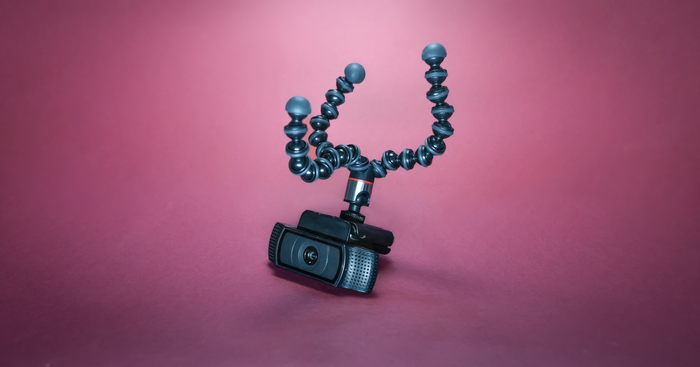
Why webcams aren’t good enough
There are no good webcams. Why? And what can we use instead? This article compares the most popular webcam options (such as the Brio, the Kiyo, and the C920) to better alternatives.
Camo
196 points · by rcarmo · 5y ago · 289 comments
Yet, the camera in my $2000 Macbook Pro? Remarkably worse than even the worse external webcam.
If they can throw an amazing camera in a phone, why can't they put a decent one in a laptop?
Everyone assumes that it's only the camera module that needs to be updated, but forgets that it's the image processing hardware circuits that make DSLRs and iOS devices produce such gorgeous images. This, in a nutshell, is why USB webcam makers can't compete: they aren't willing to raise their price by $50 to incorporate a real image processing chip that's able to handle the sensor adequately, and their software is crap because it's bargain-basement and hacked-together to avoid the hardware spend. Imagine if we could purchase Leica and Nikon and Canon webcams, with the ability to use DSLR controls to set them up, and then have them just produce gorgeous photos at any time. So far, Apple is the only webcam maker that's taken it far enough to earn praise. It's really unfortunate.
I generally disagree with your premise here. Yes, you can do some pretty amazing things with image processing in software, but you have to have a decent starting point. A good example of this is just how minimal the image processing improvements are in the M1 MacBooks compared to their Intel counterparts — marginally better, but nothing to write home about.
I’m not at all an expert in optics, but I would expect the biggest constraint is the available depth for the lens and camera sensor within the upper clamshell of a laptop vs a phone. It doesn’t seem like it would be a huge difference but an extra millimeter or so makes a huge difference in the size of the sensor that can be used.
I think that the iPhone/iPad camera package requires Apple Silicon, and that Apple simply hasn't installed it (or one like it) in their MacBook yet, so that it doesn't matter if it has Intel or Apple Silicon, it still looks terrible because it hasn't been upgrade to one that takes advantage of Apple Silicon yet.
I don't know who makes the sensor inside that package, but I have no assumptions that the sensor is the sum total of the package. Apple is all about bizarre integrations and coprocessors (such as the iOS/bridgeOS/whatever chip inside their Lightning-to-HDMI dongle) and I'm simply not willing to bet that the Apple Silicon package can operate on an Intel computer, or that it's just processing of the sensor, without a teardown showing us that they're the same in the face of a significant quality improvement.
Lots of points. Big one being that the market is bifurcated into:
1. People who just want the minimum as cheap as possible.
2. People willing to pay enough to buy a mirrorless photo camera and plug it in as a web cam when they need it.
Does it have a name in economics? Are there good ways of preventing this from happening?
My guess is the world's middle class is slowly dieing, so all you have are the poor and the rich.
Sears' niche was in the middle. Everything was good, but not great, quality. Products were durable, came with good warranties, and "We Service What We Sell". Sears sold to the middle class, with middle prices. They went bankrupt with that model.
Want a hammer? They've got exactly 3:
1) One that's good enough to get the job done (Cheap, solid for a one-off project.)
2) One that's great (The one you probably want: More expensive, but tradeoffs are balanced for most people.)
3) One that's basically best in class, with a lifetime warranty (Expensive, basically professionals, you could hand it down to your grandkids)
I still think there's a craving for this sort of thing, but online. Extensively curated products divided into 3 tiers.
https://www.businessinsider.com/how-eddie-lampert-set-sears-...
Their own decline was a whoo-corporate example of the described phenomenon, accelerated if not triggered by the execrable Eddie Lampert.
The problem is most people have very little understand of quality. And that is why Marketing matters.
In WebCam, most dont cares much about the quality because you rarely use it. It wasn't until pandemic people were forced to use it more often did they realise how crap it was.
Marketing is about educating customers why your product is better, how you should spend more on it. And Apple is an example, they are exceptionally good at it.
> usually severely overpriced
Most of the time I find that to be false. Not because of the market will bear it, but those market also requires constant innovation so profits are being funnel back into R&D. Generally speaking most "market will bear it" type of product disappear within 5 years when a competitor found they could make something better and cheaper.
Or you can get a Sony A6100 and crappier kit lens for 700$
These cameras have significant strong (e.g. aps-c sensor size) capabilities not found in anything except mirrorless and DSLR cameras. Seems not to be overpriced to me.
Overpriced is like what nvidia does to the quattro cards...
Hell, that DX 18-55 kit lens had, in some ways, better optics than the FX 24-120 that cost more than the entire D3100 kit
The webcams tested in TFA go up to $200 though, that's well into low-end smartphone.
I know a lot of people who have put tape over their webcam. In fact that is the policy of several departments where I work. Some people use their web cams, but a large number of people I work with never use theirs.
By using a cheap web cam manufactures can cover 1 without having to make a model without a webcam for those who don't want it - this would be more expensive than shipping a piece of tape to cover it just because they would need to design a second case and have a new part number.
Yeap. I feel like this is the way to go.
Reincubate Camo has been a pleasure to use over the last 3 months, and has never let me down. Having good image quality on video calls is on par with wearing a clean shirt or showering before in person meetings. You can get by without it, but you make a much better impression if you step your game up a little bit.
One big plus of Camo is that it will also patch software like Slack so that it works with virtual cameras at all.
But... (there's always a but)
1. they had a bug with Mojave which made it disconnect, especially with Zoom calls with many people (I imagine CPU issue?)
2. There's no way to control / switch off the camera from the app. The phone is still on with the app open and camera is working
3. I've got a nice holder, and used a dedicated older phone, but still it was a hassle, because you want to use the back facing camera -- to avoid seeing yourself. And then starting the app is effectively "behind" the camera. It's awkward.
4. They charge a yearly subscription fee. I can understand why, but in the long run I'm not sure it works out in their customer's favour financially.
I eventually gave up and got a Logitech Brio. So far I'm pretty happy.
In the end I ponied up for Logitech C920, I think it's worth the money rather than fussing with a phone, apps, etc..
https://twitter.com/reincubate/status/1349768570591457281?s=...
(using USB connection not wifi; there is a bit of lag but works OK)
I don't know why that is, but even Apple would seemingly rather shave 50 cents off the BOM by speccing a 720p Facetime camera in their $3000 Macbook Pros, and trying to make up the difference with software, like with the new M1 Macs that have better image quality using the same 720p webcam.
For my desktop I've taken to using an action camera, since software that supports using Android phones as webcams seemed to not be so good when I looked. It plugs in via USB, is cheap, has auto-focus and supports a wider angle of view than most webcams. Good for group calls. One can always zoom in with software.
The reason I've heard is that the macbook display assembly simply doesn't have the depth to house a decent camera. The camera bump in phones exists for a reason - and phones are already way fatter than macbook displays.
I have no idea if thats true though.
Also this doesn't answer the question of why USB webcams are so terrible. They have tons of room.
I could imagine a bump towards the front that would sink into the body when closed, but doing it in a way that looks and feels good also seems rather hard - but also harder to avoid should they want to implement things such as face id.
Also Apple: We can't give you a better camera because we gave you the thinnest laptop evar!
"We think you're gonna love it!"
A good lens is more difficult to fit in the Z-dimension but that doesn't constrain the resolution of the sensor. A small bump in the bezel and a corresponding recess in the base would allow a better design of lens.
Laptop cameras are typically used only for the occasional video chat, with so much compression on the line that the image looks like crap anyways. And before 2020, I'm quite sure most laptops didn't see their webcam used even once.
Maybe for the following years, now that people realized that their laptop webcam is not just a place to put a sticker on, manufacturers will put on something better.
Well, some people do. My kids were in the youth orchestra, and they had to issue a rule that parents are not allowed to hold an iPad up in the air for the entire duration of the concert.
Now, that's a lot of money and fiddling. Bang-for-the-buck IMO is the already-mentioned Blue Yeti, along with a wired set of headphones (anything, just wired, and not coming out of the speakers to take the load off the DSP feedback cancelling). So, prolly $150 total? Point being, if you use just a wired mic and headphones of any quality, you're loads ahead in sound quality of those using the built-in mic and speakers on their laptop (or worse, their phone).
Sadly, many manufacturers have been pushing "USB mics", which bundle the preamp and an analog->digital converter into the mic body, and they've been very successful at marketing/selling these devices.
I say sadly because these devices violate rule #1 of digital audio: there should only be 1 sample clock. The moment you start using these mics in combination with any other digital audio stream (e.g. playback via the builtin or some other audio interface), there are now at least 2 sample clocks, creating the requirement that some software layer does resampling to keep things in sync.
Much better to just get a cheap "proper" audio interface, skip the USB mic option, and use a "real" (analog) mic.
I leave the condenser/dynamic question for someone else.
But yeah, for most folks a dynamic is fine, cheaper, and more sturdy. Or a Blue Yeti USB mic. My point wasn't to drill into the details and offer a recommendation, though, other than "wire your stuff, and you'll be loads ahead". What is on the other end of those wires is a separate discussion. And I'm probably not the one to lead that discussion. (I'm a musician, not an orator.)
Half my team use speakerphones and it drives me nuts.
The problem is that, just like cameras, size matters for mics. In order to even sense the full frequency range of the human voice it helps to have a larger diaphragm size. For headsets they range from microscopic to tiny which results in the voice recorded with the headset sounding like "telephone" voice (ie it's designed to capture the most important frequency range of the human voice, the medium frequencies) however, to me that sounds bad, artificial, cheap so I wanted more. Capturing more of the frequency range allows you to sound more natural, you know, like you are actually there in the same room talking to that person.
Depending on your usecase this may or may not be a consideration.
EDIT: as for noise issues, it's always best to avoid recording it if possible but even then there are software techniques to remove it post-facto. In order to achieve the former you can get super/hyper-cardioid pattern microphones that are very sensible recording sound that comes directly in front but not from other directions. However, no pattern will save you if you use a condenser microphone in a noisy room. It may be possible to use a second mic positioned away from your mouth and use software to remove the noise by essentially computing the difference between the two (some headsets can do that). Alternatively you can go for a desktop dynamic mic, just make sure you speak loud enough, but at least you won't get noise :)
It is, because users don't have to worry about mic technique or having a studio-quality room.
Anyway, if you've got a headset you're happy with and no one complains, I'd just use that if it were me. Again, I've got the "good stuff" lying around already, so I just use that. I would not recommend anyone else go that road unless they have other uses for the gear.
Do you use some USB interface that accept a separate microphone and a separate headphones jacks? If you do, any advice on what to look for and what to avoid?
https://motu.com/en-us/products/m-series/m2/
It's overkill for online meetings, in that many of its features will go unused. It's a well-built box, though, with better build quality than the (cheaper) Presonus it replaced. If there's just one mic or input, and some headphone output, then something like this would be less expensive (and less to fiddle with):
https://www.sweetwater.com/store/detail/UM2usb--behringer-u-...
That's the first single input, inexpensive audio interface I found on Sweetwater; just an example, not a recommendation.
Add to that a cheeeeaaap dynamic mic:
https://www.sweetwater.com/store/detail/XM8500--behringer-xm...
Now, for under $100 (surely you have some wired headphone lying around) you'll sound better than 95% of everyone else in online meetings. That's why I have no recommendation or ones to avoid, because for online meetings all it has to do is what it says on the tin to be better than what you've got now, and "good enough" for online meetings. If you're into music, then we can talk about which one is better over another (and frankly, I'm not the one to ask).
The Yeti is what I have. It's a condenser microphone. Condenser microphones generally are more sensitive to quiet sounds and pick up range a bit better, but that means they also pick up _everything_ else much better. That's great if you're in a sound studio, but most of us are not.
You'll make your life easiest if you get clean audio in _before_ you start trying to do further processing to clean it up.
I already had the Yeti on hand, and it was a couple days of tweaking and tuning to get to the point where it will pick up my voice from 6-8" away clearly (so it's not directly in front of my face on camera) but not also transmitting the pitter-patter of every raindrop on the sidewalk outside.
If you're looking for a mic just for audio/video calls, I'd look towards a dynamic mic. Something like the Audio-Technica AT2005 ($80) is generally pretty well reviewed, is 2/3 the price of the Yeti, and still includes a built-in ADC so you can just plug it in via USB and call the job done (don't need to add a bunch of input boxes/etc).
If your webcam sounds as good as the Blue Snowball, either your webcam has an excellent mic, or you could improve your audio quality by either:
- speaking closer to the microphone, or
- sliding the switch on the back to position 1
I HIGHLY recommend getting a 10$ boom-arm from amazon and using that to get the microphone closer to your face. I have this setup and my coworkers say I sound like a radio host because the quality is so good.
All for 115$... single best investment I made in lockdown.
I use a SteelSeries Arctis wireless (2.4Ghz!!) headset. Makes a huge difference for group calls. Also, 2.4G headsets have a HUGE range. I can go from my office, outside for a smoke or anywhere in the house. I really like them!
I stream the video over adb myself, to make sure I don't drain the battery too much and to keep everything wired.
If you only join from your phone, you can't really see other participants (unless you use your front cam, and in that case your screen is obviously still very small) and you won't be able to screen share.
If you join on both, you will be in the meeting twice (which can look weird to other people). In my case, I want to use a dedicated microphone, not my phone's microphone that might be blocked by the arm that is holding it in place. That results in a weird AV delay since the audio is coming from a different user in the call (and it means your video is not highlighted when you speak).
In short - my current setup hides the implementation details and makes it all work transparently without bothering people I'm in a call with.
It was a fun place to work with nerf guns and rubber balls to throw at each other. You learnt to keep your computer locked the "fun" way. We always went for a team lunch on Fridays - something that I've missed ever since. I enjoyed coming into work every day because of the people.
The favourite highlight of my entire career was there, back in 2015. The whole team of engineers (~6ish) worked together to figure out how to decrypt iOS 9 beta backups as Apple had changed the encryption system. Everyone contributed in some way and I delved into using a disassembler, IDA Pro, from zero prior experience armed with a textbook. It took a whole week from the beta being released, and I believe we were the first (public) company to do it.
The values of the company, as described on the website, have changed, but what they say now still matches up with my time there.
Switching to something more relevant to this article. I was looking for a webcam a couple of months ago for quite a while before it also hit me that my iPhone camera was actually damn good. Since then I've been connecting to Zoom twice (from my phone for the video, and my computer for the audio). It's not a great experience but I never really looked into the "random" apps that could create a virtual camera. Well Reincubate is not random to me and it looks like there's a beta version of Camo for Windows, so I don't really have an excuse :)
Also, lighting. A couple of 5500 Kelvin Led lights on a clip mount, with good color rendition won't dent the budget but they will make even cheap webcams perform much better - color, frame rate, aperture. A softbox is wonderful but I don't have space for that, so I aim the light at the white wall - good enough substitute !
...compared to phone cameras, where people actually want (and are willing to pay more) for a good camera, especially for one that works better in shitty lighting conditions.
* Good auto-focus, depth of field, "natural" color, high resolution.
I think until recently enterprise IT hasn't cared about laptop camera quality because the understanding was that proper video conferencing would be done from a conference room with a $2k camera setup. The pandemic has flipped that on its head.
So I keep mine on. I think video presentation is going to become the new "dress for the job you want" over the next decade or so, so it's worth it to put a little bit of effort in. Now that remote is becoming normalized, do you want to be the person on Zoom with a video that's grainy from trying to compensate for the lack of light, or the person with lights that make them look like they just came from the spa all the time?
It shouldn't make a difference, but it does.
What real value would much better image quality bring? Most of the time you are just small box on other participant’s screen. Of courae totally different thing if you are producing video content.
In order of importance for me 1) Get sound right. Use headset if needed. 2) Try to get good light for your face (check on Youtube three point light setup videos to get the rough idea, then improvise). 3) Try to arrange boring and simple background.
I am currently running a beta and if you would like to help me test it then you can apply here:
For reference, I have had a thread up on MacRumors Forum for a few weeks:
https://forums.macrumors.com/threads/iphone-as-a-webcam-for-...
I wouldn't be surprised if the iphone cameras have had a billion dollars of development invested in them. But a large portion of this is on the software/firmware side which logitech doesn't benefit from.
That said, we all reap the benefits of this because phone camera hardware has been driven down in cost considerably since phones first got cameras. There just needs to be more open software to help out, maybe like machine learning exposure, focus, color and more. Then even low-margin webcam companies will have good performance.
Which is neither here, nor there. There are tons of dirt cheap (often cheaper) compact cameras on the market with better quality that most webcams, and have been for years. Including equally small as webcam options.
There are also tons of dirt cheap Android phones with far better camera quality in an even more constrained space (for the camera module) than a webcam.
There are also embedded laptop cameras with better quality than most $100 and plus webcams.
As a sibling comment said: "I use OBS Studio's output as virtual camera - and among the inputs I use cheap old Android tablets with DroidCam OBS over IP on Wi-Fi... They cost less than a USB webcam and deliver much better image quality."
There's absolutely no reason webcam makers couldn't build a better product using components found in 5+ year old phones...
Even if it was expensive, the problem is there's not even an expensive $300 or $500 webcam with quality compared to a years old Android or iPhone smartphone of equal price, or a compact camera.
Heck, webcams sold as $1000 and $2000 "enterprise" webcams, in bulky enclosures to sit on a desk or large TV, have some more conveniences (to fit the enterpise moniker), but same (crap) image quality.
iphones benefit from: a processor that costs more than the entire webcam. A firmware and software stack with a billion dollars behind it.
Still the camera is great alone, even without "computational photography".
And similar IQ quality can be had in competing Android phones for years -- some costing the same or less than a premium $200 or $300 webcam.
Anyway you slice it or dice it, this is not a "good cameras are expensive" issue.
There seems to be a big class divide between phone cameras and webcams.
I've seen apple billboards about ONLY the iphone camera, so apple is investing money in it.
Meanwhile for a laptop, people don't care (as much) if it takes 10 megapixel images and can see in the dark. Personally I would like a laptop without a camera (or with a hardware switch)
(and I've never seen a macbook billboard)
Most of the sample pics look absolutely fine to me for every day use, i.e., online meetings.
However, it’s significantly bothersome when people refuse to use earbuds or a headset so audio isn’t constantly clipping during conversation, or they have a massive light source behind them like a window and their face is just a shadow the whole time, or their camera is staring god knows where the whole time.
There’s a lot of low hanging fruit to up the quality of a video chat before you need to get too worried about the quality of the camera.
Obviously this is for everyday video chat. If you’re live-streaming or doing some kind of professional video presentation, then yes it’s frustrating that the market is $100 or $1,500+.
But if you've avoided the $15 Amazon's Choice webcams and purchased the absolute peak of what the webcam industry can produce, wouldn't you expect something better than the mediocrity shown?
What if you're someone who cares about their appearance, and the pallid, unhealthy look of the C920 would have you reaching for your makeup bag if you saw it in the mirror?
What if the pandemic has forced your dating life into zoom calls, for a first date you want to absolutely look your best, and you don't like how the Kiyo makes your forehead look shiny and really adds contrast to your receding hairline?
What if you're slightly into photography and presenting such a shitty image as the best you can do goes against your pride when you can see so much wrong with it?
For the exceptions you are correct, but I believe they are overall exceptions.
I think if webcams look absolutely fine to you for online meetings it's probably because you have become used to the crappiness. People don't typically show notebooks or pieces of paper in online meetings, because the cameras are crap, and they know they will create an awkward moment trying to focus on the notes and probably failing. For the same reason, people often won't use a whiteboard in an online meeting, etc. These would be totally normal things to do if we had decent webcams.
The comparison is reasonable in that it compares “the best” webcam (a Logitec c930, according to https://www.nytimes.com/wirecutter/reviews/the-best-webcams/) with an iPhone using their software.
I don't care if this is an “advertorial” or not, I'm going to test this software because my webcam sucks as well.
Overall quality of everything is very high. Does it save money? I guess I already had the camera.
Is it a good idea to broadcast myself at that level of quality? Probably not ;)
I ran across a video that showed how to create an actual direct eye to eye contact effect, using a half-silvered mirror and parts from a laptop webcam[0]. I started shopping for a used laptop webcam part, and then realized I have never seen laptops rated by their webcams, so it is almost a shot in the dark to get something good.
If you're using a Mac, this article is the best I've found, though the CamTwist Studio setup is a bit slow if you don't have a Macbook Pro with 16GB RAM or more: https://www.nicksherlock.com/2020/04/using-a-canon-dslr-as-a.... I plan on writing a more comprehensive article for Mac users in the future.
All the steps are free! No paid software or hardware needed.
I've taken to doing this, and while the setup is a bit tedious, people are always super impressed with the bokeh and all-around nice quality of my "webcam." I haven't told anyone it's really a DSLR yet.
With my camera quality, I feel like Bill Gates with his camera setup (see: https://www.youtube.com/watch?v=iyFT8qXcOrM).
Any of the Canon xxD or M series from the same era would be sufficient at a fraction of the cost.
It mentions the product just one time, in passing at the end, and is several pages of well written, well researched, general observations, plus a writeup of the results of actual testing of several cameras.
https://www.reddit.com/r/LogitechG/comments/fox6wy/logitech_...
Webcams are welcome to stagnate.
I never gave much thought to the fact that all the old phones I have sitting around have a better camera than my logitech webcam. Interesting. I have multiple Galaxy S8s/S7s around.
They don't have the greatest open source record though (ffmpeg removed integration after they were found to be violating license terms).
I ended up using a mirrorless camera that I bought in 2015 and hooked it up to my PC via mini-HDMI + this USB capture device (https://www.amazon.com/Elgato-Cam-Link-Broadcast-Camcorder/d...).
The video quality is incredible and set up is fairly simple. It also works with the Macbook Pro I use for my job, which is great since the webcam on that is also garbage.
Posts like these seems to confirm that there's a real need gap for a good quality webcam. Any of you working on solving this? or have ideas?
[1]https://needgap.com/problems/185-make-entry-level-webcam-bet... (Disclaimer: It's a problem validation platform I created).
I feel it validates the problem/needgap because this is the 4th time in <30 days I'm seeing someone complain about the lack of good quality webcam (3 on HN, 1 on needgap) plus DSLR makers (e.g.cannon) rushing to enable webcam support for their cameras using firmware/software and releasing it while still in alpha.
>I feel like logitech’s success despite their stagnation validates that most people are satisfied with acceptable quality.
Market share with stagnated technology has never stopped a new product with better technology disrupting the market before, otherwise we still probably would have been using Nokia brick phones.
Problems are the first class citizen at needgap[1] as problems are something which exists now unlike an startup idea which becomes real only when executed and a startup could be made out of it.
If you're interested in why I had to create it, I've detailed it in 'Startup ideas vs Problems'[2].
[1]https://needgap.com/problems/5-needgap-submit-problems-for-s...
Best $8 I've spent on a phone app. Works with pretty much everything (including OBS too)
All it fully tax deductible, amazing quality and even more flexibility when I have a meeting, for example ability to show my desk.
My old iMacPro has the best camera of a computer I know.
Ok, but I would be fine with a bigger webcam. Why aren't there affordable large webcams available? Say, the size of a mirrorless camera, but without the big pricetag.
This article controls for lighting, showing the results of different types of cameras in different lighting conditions, and showing that even with good lighting, all of the webcams are still poor, and most are terrible. And they’re all distinctly worse than any Apple phones from the last few years (and even the front-facing camera from an Apple phone from five years ago is better than half of them).
Personally, I've been thinking about how to sandblast the lens on my webcam to permanently fog it. Who would even care? I think nobody.
In the en I convinced my wife to just use the DSLR (she was hesitant at first because of the extra hassle). A modern DSL had good IQ even ad candlelight, you really almost can't mess it up. Only way to destroy the image is to use different color lights (warm lightbulb on left side and natural light from a window on the right side will look weird on every camera I know of)
And also, not everyone wants to sit in front of a bright light
Even a highly-optimized “let’s steal a smartphone camera” webcam would never cost under $100, so it would sell extremely little.
I've seen people share config software for these on Windows but haven't seen anything that looks decent for Mac use.
I wish this to be "Sherlock"d by Apple, hopefully on the next OS release.
video calls have been part of the futurism canon for at least 100 years, but they still have little utility beyond a simple phone call (or even text messages in many cases). they just waste bandwidth and add anxiety and frustration (nevermind encouraging narcissism).
nothing else you mentioned requires video.
a facetime call with my wife does require video, because it's a facetime call. i want to see her.
my kids school remote calls do require video because their teachers require video on. they do this because kids from ages 6-18 may not actually be paying attention in class, so the hardware camera is used to help the teacher.
if you were to look on youtube for walkthroughs of products, or twitch streams, you'll frequently see front facing cameras added to videos because people do actually like, enjoy, and find value (you can follow along to voice/face/emotion) in them
We've collectively been running a huge experiment for the last year that has pretty conclusively proven this hypothesis false.
even in educational or therapy/coaching situations, a recorded instructional video accompanied by a phone checkin likely has better outcomes than video chats.
This just screams "citation needed." Video chat is hugely useful whenever there is any kind of discussion, debate, or negotiation. With video chat you can read facial expressions, cut down on overlapping speech and interruptions, etc.
Everyone who has access to video calls could trivially turn them into conference calls instead. The fact that they continue to prefer video for at least some situation demonstrates that, regardless of what else is going on, they find the video calls to have some additional utility.
If your hypothesis were true, we would not observer this behavior.
I never understood people who "didn't want to be seen" on camera during meetings (especially meetings with hearing accessibility issues) because those same people were willing to work in the physical workplace. The way I see it, if you refuse to be seen in a virtual meeting, you should _also_ refuse to be seen in person as well.