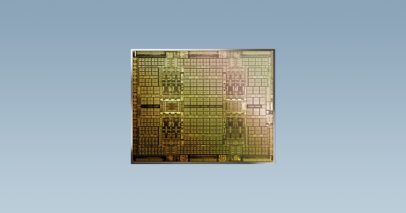
Nvidia Limits RTX 3060 Hash Rate, Unveils New
Gamers to the right, miners to the left.
Tom
280 points · by stambros · 5y ago · 506 comments
The CMP version is a straight-to-landfill product. As soon as it stops being profitable for mining it will have zero resale value, and become e-waste.
Like literally every other piece of Bitcoin or crypto mining technology. It’s straight to the landfill every 6 months.
Bitcoin generates 100 GRAMS of ewaste for every transaction. Every 2 transactions consumes as much energy as driving a Tesla from SF to NY [edit for clarity: round trip] and as much ewaste as throwing your phone out the window along the way.
Don’t hate the player; hate the game. Nvidia is maximizing shareholder value as per their charter, creating differentiated product offerings for different segments. Quadro, RTX, CMP. It’s all segmentation, and better, likely binning. I wonder if CMP products are just failed RTX and Quadro parts they’re offloading. For every card Nvidia doesn’t sell, Ant will sell 2 ASIC miners.
Time to push back on proof of waste, and end the economic incentive.
[0] https://digiconomist.net/bitcoin-energy-consumption/
[1] https://www.google.com/search?hl=en&q=road%20distance%20san%...
Thank you for going through the numbers and adding the sources. I was on my phone and meant to circle back.
I have limited knowledge of Bitcoin so maybe not quite "explain like I'm five"... but close. :)
Perhaps this is the cost of running a secure system.
Fuck that. I can hate the game, and the players who decide to play it.
There's zero chance of ending the economic incentives of cryptocurrency mining without (global) government intervention. Instead, the best effort the US government has provided is increasing SUPPORT for it.
Apple took a unique, aggressive, and still-controversial stance for privacy. This position has easily cost them a double-digit percent of their revenue; the amount of money they could generate from selling out their billion+ users, who are generally above-average income, in the same vein Google does, is unfathomable. I don't like Apple as a company, but I still feel its important to give them recognition for how industry-leading they were, and still are, in pushing for Privacy.
There are ethics which can transcend corporate interest, even when considering negative PR. There are some things companies just don't do. The excuse of "optimizing shareholder profit" and "hate the game" is bullshit; it moves the onus of responsibility off of companies who are fully capable of acting more ethically by blaming some Invisible Hand as if they had no choice in the matter.
That's bullshit. Jensen Huang had a choice. He made it. End of story. You want to shift some blame onto Ant and the miners themselves; that's all fair game for Round 2. But at this time, we're still on Round 1.
Its reasonable for Nvidia to stand by and do nothing. Graphics cards are, after all, general purpose computing hardware. Even after they've outlived a useful life in a mining farm, those miners may attempt to extract an ROI by reselling them in secondary markets. Not ideal, but certainly better than Nvidia's plan for the future.
Nvidia's plan is to, instead, support miners directly, while intentionally tiering consumer hardware, then positioning the entire move as somehow "Standing By Gamers". A dystopian science-fiction author legitimately could not write a more canonically evil storyline. I would change this position if Nvidia walks back, cancels the CMP line, and continues forward with driver limitations on the RTX 3060 with public plans to move to in-silicon ethereum mining protection on future cards; I think that's reasonable, given its fair to assume that the "ship has already sailed" on Ampere. Until then, fuck Nvidia; I'm not touching anything their hands are involved in.
It is disgraceful to watch people such as Elon Musk and most of the VCs put money ahead of the environment.
Fiat bans cannot really work well against just doing math. Taxation schemes/financial regs tamping down on bitcoin speculation, what you can spend it on? By design I don't think you can just pump money into bitcoin in order to "deflate" its value without similarly consuming a lot of energy?
Isn't that a trend that has mostly ended or is about to end now? It looks like that was mostly caused by nm process improvements for ASIC chips in the past. With 7/5nm ASIC chips it seems like it should now progress as fast/slowly as the nm process capabilities of chip manufacturers in general.
Not pro-BTC, but this seem very much like faulty interpolation based on a past trend.
3nm will hit in 2024, but until then there will always be advances in chip design. It’s not just about speed, it’s also about thermals, power consumption and manufacture price to work out the TCO of mining.
I don't get this comparison because Nvidia isn't a Bitcoin mining technology company. Or at least they weren't until a week ago. When someone deems it not profitable to mine on a set of 50 GPUs they purchased, they can resell those to gamers. But these mining cards are just e-waste.
> Don’t hate the player; hate the game.
Games don't exist without players.
Of course they do. Just because a game isn't being played doesn't mean it doesn't exist. Or at least, the rules do.
In a world of 7 billion humans, all you need is 2 to be the first movers and start playing. If the game is rewarding to the players, then it will continue to attract more players and grow until the size of the network of players itself becomes a huge part of the value of playing.
Games are just a protocol. And if the protocol is useful and better than other protocols, or has some first/second mover advantage, then the network using the protocol will grow until it saturates the addressable nodes.
Except they can't. GPUs used for mining are trash - too much heat and stress continuously.
Think about the average load on a consumer card used normally - maybe a daily 4 hour gaming binge max?
Meanwhile a mining card is running near 100% capacity 24/7, probably without enough cooling.
It's rather strange to see so many luddites on HN advocating to ban technology they dislike.
First, they came for the miners. You'll be cancelled someday too.
In the Wild West you would need maybe several horses each in order to exchange a certain amount of gold. What does the carbon usage be here?
Bitcoin solves that problem in software, which is magnificent. For the same carbon footprint.
That won’t stop Nvidia having a near monopoly on high end GPU. They use this to jack up the price of machine learning cards as well.
The Titan RTX is ~$2,500, which is incredibly well-priced considering that a 100G dual NIC is going to cost you $1,250.
With a 3080 you can make over $12/day in BTC and the electricity costs required are less than $2 in a majority of the US [0].
[0] https://www.nicehash.com/profitability-calculator/nvidia-rtx...
I'm not saying that's a good thing, I'm just saying its not the transactions that use power.
Milton Friedman's doctrine was a failed turning point in business thinking [0] and unfortunately pervasive in people's perspective today. Prominent shareholders often have different motives than that of delighting the customer. Motives that are very short term profit driven. Such a toxic way to purport value.
Back at PS2/PS3 they were used for computing, Sony actually released a kit and had paid staff helping people who wanted to build PS2 supercomputers -- a good friend from college worked on the project at Sony. They had amazing vector processing units in them.
* https://www.theverge.com/2019/12/3/20984028/playstation-supe...
Article from 2003 on PS2 setups https://www.ign.com/articles/2003/05/28/ps2-supercomputer
Maybe nvidia should be held responsible for thier products. Anyone else up to support a law imposing disposal obligations on single-use products designed to kill secondary markets? When the boom slows, the miners can give these cards back to nvidia for environmentally friendly recycling.
This line of thinking scares me. It’s basically saying “they aren’t doing what I want so let’s use the government to make them do what I want!” How is this freedom? Forcing people to bend to your will though government is the opposite of freedom, and should be used very sparingly
It's not really the same because playstations are sold at break-even or at a loss with the expectation that follow-up revenue would make up for it. On the other hand no such dynamic exists for nvidia. For them, sale to a miner is the same as a sale to gamer.
I would have had Sony and friends not create a closed ecosystem in the first place.
You're replying in a thread about (compared to consoles) general purpose computers, which developers depend on gamers actually playing their games on, being effectively DRMed.
I don't particularly care about shareholder obligations in this case. I'm glad this incentive structure exists, and it doesn't necessarily inform my ethos.
This is being received well by people who are practically triggered by the notion of cryptocurrency operations.
Trucks generally are often wasted (from a green perspective) because people like them not for their intended design utility.
Same for single passenger SUV usage etc...
(I drive an SUV - not trolling those that do)
The analogy is improved like this: Ford announces in advance that their upcoming truck requires a certain usage, and if you want whatever special commercial usage, you need to pay a premium. You might be grumpy about the upcharge, but this is a very different situation from them changing the terms of the deal after the sale.
Implicit somewhere is the economics and supply is that nvidia has made these ans knows people use them for work. What would be our collective thinking if they made the gpu not work for non games?
This would probably increase supply further for the gamers. Commercial users should and would pay more since they are literally profiting from their use.
Miners would buy the edition now meant for them.
John Deere has entered the chat.
Provide a better product for mining .. don't cripple what's out there.
This feels similar to when Nurofen tried to repackage generic drugs for different types of pain. I.e. ultimately a branding exercise.
--
Edit: spelling and s/paracetamol/generic drugs
1) covid-19. Factory closures, employee, and supply chain issues. 2) 30-40% growth in gaming due to covid-19 3) trump tariffs (for the USA). Gpu exemption expired in January.
Crypto is affecting prices but they aren’t causing the supply issues. I don’t think amd has produced many 6800/6900s. Ryzen 5800/5900 cpus are rarely in stock.
Nurofen, and ibuprofen. I assume it's a winning strategy as the products have been on sale for an (un)reasonable amount of time in some countries now.
If you want to talk about acetaminophen/paracetamol than brand names would be Efferalgan or Tylenol
You're right, Nurofen contains ibuprofen in it's main product range, not paracetamol.
The point is a generic drug was branded to solve specific ailments, when it acts in exactly the same way in all cases.
Also, undervolting isn’t always the correct choice it depends on how valuable the coin being minded is relative to energy costs. Someone mining in their dorm room for example may not be paying based on electricity useage.
Here’s a fun report from NASA that I love to cite (it is also the citation for my lifespan claim).
https://c3.nasa.gov/dashlink/static/media/other/ObservedFail...
It depends what you mean by "wear out". Hardware does fail with time.
Not to mention crypto miners will often have the GPUs overclocked on top of running full tilt to get every last hash out of it. It's about as brutal of a situation as you can get for a GPU.
Another less related to electronics, is simple heat cycles.
You are aware that this already happens to BTC ASICs when the new generation of ASIC comes out, right? Straight to the landfill. BTC is very wasteful, this is not new.
> Nvidia does state that these GPUs "don't meet the specifications required of a GeForce GPU and, thus, don't impact the availability of GeForce GPUs to gamers." Frankly, that doesn't mean much. What does Nvidia do with a GPU that normally can't be sold as an RTX 3090? They bin it as a 3080, and GA102 chips that can't meet the 3080 requirements can end up in a future 3070 (or maybe a 3070 Ti). The same goes for the rest of the line. Make no mistake: These are GPUs that could have gone into a graphics card. Maybe not a reference 3060 Ti, 3070, 3080, or 3090, but we've seen TU104 chips in RTX 2060 cards, so anything is possible.
Combine with their after market value (see https://youtu.be/XfIibTBaoMM), this is no more than Nividia trying to spin goodwill whilst padding their bottom line.
Who can really blame NVidia for this? The actual target market for these products, gamers and the lower end graphics professionals, have been plagued by supply issues. In the long term NVidia stands more to gain by providing consistent supply.
There's lots of old graphics cards no one sells or buys as well
Also, you just don't buy that hardware - so it's not "what you can use your hardware for" - unless they're retroactively updating drivers to prevent the same use of already purchased projects.
I'd argue your concern is an issue only due to patents that may prevent a competitor from coming in and making a competing product if the main producers are engaging in bad behaviours.
Edit to add: I love the downvotes - they're such a strong way to sway someone's thoughts on something, so much effort gets put into clicking a downvote too - it must be serious business!
That abusive practice is the only thing enabling this kind of business pivot. The pivot also doesn't even achieve what Nvidia claims to be setting out for, because they are splitting already limited capacity to support two distinct product lines thereby halving the overall supply available. If anything, this is just making sure everyone pays inflated prices due to scarcity.
What I'll say is that the absurdity of this trite dismissal presents a large undertaking for anyone to begin to try and teach you what cryptocurrencies are.
Most of the silicon valley billionaires acknowledge it as a promising technology, if that doesn't warrant some serious (read: many hours of difficult reading) consideration than expecting strangers on a message board to help you do it seems a bit entitled.
I'll grant you that trite dismissal of cryptocurrencies in general is quite common on HN.
Are you talking about your trite dismissal of my stating it's a global MLM scheme - which it fits the pattern for precisely? And also a Ponzi scheme because the final latest adopters are left holding the bag - meanwhile wealth was unnecessarily transferred weighted towards the earliest adopters.
Blockchain is a promising technology, designing it like Bitcoin to align people through financial gain (of an MLM) has unavoidable-unfixable pitfalls. You're welcome to go through my comment history to read more about the actual solution. You're making assumptions too that my stating it's an MLM scheme isn't backed up.
I find it hilarious, the irony, of you claiming my comment is a trite dismissal - as yours has exactly the same depth as mine, with the only truth you state is that blockchain is a "promising technology."
Your holier-than-thou defensive comments, articulated almost poetically, is getting more common though - as the more intelligent sucked into the MLM scheme get defensive and their guard goes up - feeling the need to defend their position, needing the price of Bitcoin to go up and up and up; while you're financially incentivized to write and spend energy, and others like myself with counter-narratives aren't financially incentivized to do so.
The unfortunate reality is that Bitcoin advocates all sound like people who bought into an MLM scheme. They desperately convince others that it has value and should go up.
[1] https://www.youtube.com/watch?v=TY4s35uULg4
Could it possibly even be usable as a second card in a SLI setup?
I want to know if I could use one as a second card for 3D rendering. Although I guess the render farm people will know about that and suck those all up...
Well yeah, because the alternative would be that the miners dump them on the secondary market to gamers.
I think we can probably all agree that corporations should have some responsibility in the ramifications of their products.
It has been tried 2 years ago on LinusTechTips: https://youtu.be/TY4s35uULg4
TL;DW: Very weird and extremely unofficial, but it can be done.
These might still be some cheap rendering cards on Linux when they're used up.
Needs quite a bit of driver fuckery to have it recognized as either a GTX 980m or a Quadro M5000m, and you lose HDMI/DP output, but it's not a bad card for an upgrade if you only use the internal display.
I'm surprised there are no MXM to PCIe x16 adapters, these kinds of cards are cheaper than desktop ones (due to the market/pricing being totally screwed) while providing similar performance.
"RTX 3060 software drivers are designed to detect specific attributes of the Ethereum cryptocurrency mining algorithm, and limit the hash rate, or cryptocurrency mining efficiency, by around 50 percent."
open source drivers have been long due. Now there is real $Billions staked on that need.
Also on reddit: (Linus from Linus Tech Tip's Take, I'd reccomended watching this one) https://www.reddit.com/r/hardware/comments/locpyb/nvidia_pre...
(Initial Article) https://www.reddit.com/r/hardware/comments/lmnpag/geforce_is...
(Clarification that the restrictions in driver+firmware) https://www.reddit.com/r/hardware/comments/lnf78f/nvidia_gef...
https://www.reddit.com/r/hardware/comments/lnrgdc/cryptomini...
https://www.reddit.com/r/hardware/comments/lng4q4/nvidia_has...
https://www.reddit.com/r/hardware/comments/lmqd56/nvidia_ner...
https://www.reddit.com/r/hardware/comments/lmom3w/nvidia_is_...
(Initial Leak) https://www.reddit.com/r/hardware/comments/lmrsrj/zotac_gefo...
If this is the case (perhaps an expert can chime in) - it makes sense to limit the hash rate now, to prevent these cards being dumped later this year? And to redirect miners towards higher-margin products in the meantime, whilst ensuring better supply for gamers (who are the actual long-term customers).
What does a 'sub chain' actually look like to interact with? How do you coordinate with many of them? All these questions have answers in theory, but not answers in solid production ready interoperable code.
Furthermore some of these problems like 'how do you store a bunch of sub-chains' are questions not even properly answered in ETH1 nodes for the much simpler one chain case.
By launching the beacon chain early the organizations developing ETH2 can validate and make money while all these questions are figured out. This is where the money goes instead of the improvement of ETH1 since that's a tragedy of the commons as this point.
ETH2 is only worth money if these questions are figured out and ETH1 is somehow brought under the beacon chain's governance. Exactly how this is to happen... well I haven't even seen anything credible on this. Greenfield addition of chains under the ETH2 beacon chain is generously described as 'incomplete' moving ETH1 under ETH2 is much more challenging and I have not seen a plan with any level of detail.
Given that everyone is making bridges to ETH1 now and typical development timelines. I would give a medium to high chance that ETH2 will miss it's window by a couple of years and activity will move to other faster chains that are available now and capable of siphoning off traffic from Ethereum using bridges until they reach their own critical mass.
If I had to put money on it I would place 'proof of stake Ethereum' (defined as ETH1 under the POS beacon chain) more than 2 years out.
I could see the sub-chains (greenfield) working by EOY, although I wouldn't grant it a high probability.
Also if I had to put money on it I will bet on a halt of the Ethereum 1 chain for a time greater than 24 hours within that period, due to lack of maintenance on ETH1 nodes and increased stress from DeFi activity.
-----
ETH2 is kinda like 5G, yes there is a very real 5G network protocol, but in terms of pubic messaging, everything is 5G and communicating anything about how it works or when it will be available is filled with pitfalls and nuances that are difficult for the highly technical, much less the general public, to understand.
That could create a lot of momentum/adoption for ETH2, very quickly. And it wouldn’t take much: all these substrate projects are intentionally architected so that you can just develop for them as if you were developing for an ETH1 side-chain, and defer all the operational questions to network launch time. They’ve intentionally commoditized themselves!
So, as long as ETH2 is the best choice for a substrate when these projects go to mainnet, it’s what they’ll pick. And, for many reasons (that all mostly come down to “lifetime cost of bridging to either ETH1 and/or chain-foo-where-DEX-foo-lives”), ETH2 may be the best choice.
(Imagine if you developed your project against some Postgres-ish-DB-aaS cloud provider like Greenplum Cloud, but only used regular Postgres features; and then, when you went to production, you looked around and decided that Amazon RDS was good enough—and on top of that, required no re-engineering, since you weren’t doing anything fancy.)
But why exactly? Until ETH1 is in the ETH2 chain ecosystem ETH2 is just another blockchain platform, providing no network effects.
ETH2's big selling point was higher throughput but bridges are already starting to commoditize access to more throughput from ETH1. ETH2 could provide smoother access than the bridge interfaces provided by other chains. (I'm speaking of bridges both to and from ETH1 and within the bridge blockchain's ecosystem like IBC)
It's not that I don't think ETH2 could win this. There's a clear path to victory.
- ETH1 integrated ASAP, going all in on expanding ETH1 capacity and bringing it under ETH2
- Provide a subchain interface that's better than IBC or any other cross-chain interface on the market
- Fullnode tooling that really works well (partial syncing for block availability, seamlessly syncs multiple chains etc)
Once you have these you can keep ETH1 users via network effect and provide access to more capacity more easily than other potential platforms.
But I don't see a clear plan from ETH2 to do either of those things. Cross chain communication is a theory-only problem devoid of the extremely polished tooling it will need to win and ETH1 under the beacon chain doesn't even seem to have a plan.
Nvidia announces mining GPUs, cuts the hash rate of RTX-3060 in half (nvidia.com) 454 points by bcatanzaro 2 days ago | flag | hide | past | favorite | 731 comments
There are 30-ish more submissions here: https://hn.algolia.com/?dateRange=pastWeek&page=1&prefix=tru...
The oddest solution I can think of is gamers lease graphics cards at a low low price and nvidia mines on them in the off-hours. With a big enough operation they could force all the other miners into becoming resellers. It's free, distributed electricity and it gets the gamers off their backs.
(While I have your attention, I'm pretty sure proof of work is the paperclip maximizer sci fi warned us about.)
This would be a complete non-starter in markets with high electricity costs or temperatures. Running a GTX 3090 at 100% load during the summer where I live would cost $140/month and will heat up my room to about 65°C.
I'm from Germany and our power is around 35 cents per khw.
Even using a 14th/s asic with bitcoin as high is it is now, you're losing lots of money. It uses 1,3 kilowatts.
The fact that the prices of the cards are so high in Germany now too... the 3080s are at 2000€ plus.
I don't know if this is a typo or just a slightly different way of writing it in German, but now I'm trying to work out exactly what a "kilohour watt" would be. I think it's just a millionth of a kilowatt hour? Definitely wouldn't want to be paying those prices!
I can't find anywhere genuinely using that unit, although it is mentioned in this 1979 9th grade Electrics curriculum as part of a True-or-False quiz at page 370: https://files.eric.ed.gov/fulltext/ED182438.pdf
Time to file it in my list of "technically correct but extremely annoying units" along with "5Mm" (5000km) and - mainly in the context of batteries - "10Ah" (10000mAh).
This word play can be played backwards too.
I'm not in a rush or I'd just buy a prebuilt PC which you can still find with these cards, but I wanted to show my daughter how to build a PC. Guess it will be a few more months...
Maybe I will finally be able to afford top of the line GPU.
I mean, bitcoin miners can still pay high prices if they want but finally there will be GPU that will not be encumbered by mining craze.
However, I'd always be suspicious of my "crippled" GPU
As for the mining specific cards, all that ensures is that there will be swats of silicon that will never be accessible for gamers. That they try to spin this part as pro-gamer is very cynical.
What does that mean? What has NVIDIA actually done on those cards? Also, if this doesn't effect 3050, 70, 80 , Ti's, Quadro's and Tesla's - does it really matter all that much?
The only real problem is e-waste.
(caveat: don’t know enough about contemporary ethereum to know how this works with PoS)
I mean, is there any inherent upside to burning tons of energy for games vs burning it for a cryptocurrency? How much electricity do all the gaming PCs and gaming consoles in the world consume vs Argentina? To me, it feels a lot like Nascar or Formula one burning tons of fuel.
I don't think that it is somehow bad to play games, but I wonder why the one (crypto) is always criticized into oblivion for the energy consumption, while the other isn't.
You presume the total energy consumption would be the same whereas it'd be more likely that GPUs that are used for mining will be used 24/7 whereas gaming is likely to be performed by a human being who cannot or would not utilize the GPU nearly as many hours of the day.
Yup. And even if they could utilize them 24/7, gamers generally* won't have 10+ cards going at once.
*:I'm sure someone has some weird 360 degree flight simulator edge case.
Crypto operations in modern times are not subtle. Margins are razor thin, so it's all about scale and efficiency
I’d argue the target total fertility rate per woman should be somewhere below one. To hell with economic growth that relies on an ever increasing human population.
I never had that specific opinion, but I have another point of view.
Games bring inherent value to the table. That is, if you didn't play games you would be reading a book, going outside to play, browsing the web... Games fill a purpose and bring value. Whether or not I believe our current consumption of videogames is acceptable is irrelevant.
I don't see tangible value in crypto. Crypto is worth what other people are willing to pay for it. If you wanted to invest in an asset that does not depend on the currency you could buy gold.
(I had a paragraph here making a point about international transaction costs. I removed it because I started to find it offtopic. Long story short: I find the societal cost of crypto way too high).
Try convincing any crypto "enthusiast" of that, though. Literally none of them have ever been able to explain to me why cryptocurrencies should have value, but that doesn't stop them from proclaiming it the best thing since sliced bread.
I'd also agree that price bubbles happen and future speculation becomes a dominating factor in their price action, but this doesn't mean they don't have inherent value.
As with most things in finance, it's all trust at the bottom of it. If there is any doubt, no one will be around to be left with the bag.
That's pretty much true for anything that has financial value, though. Setting aside the chemical properties of gold (conductivity, resistance to corrosion, etc.) that make it more valuable than some other metals, pretty much every financial construct in human culture is only valuable because we decided it was valuable. That's not to say everything is inherently valueless, but crypto is not too dissimilar to, say, digital coins for a game; you just can't usually swap it back in the latter case so it has little/no tangible value. Similarly, the value of stocks, foreign currency, even money itself fluctuates daily. As long as you can swap it back to "real" money, I see it as having tangible value.
That being said, I personally choose not to get involved in any cryptocurrency because I would rather invest in more "established" forms of value, like stocks and bonds and whatnot.
Correct. Maybe a better statement would be "I don't see that the inherent value of crypto is bigger than that of the dollar or gold". This gets even more complicated when you take into account the cost of the transactions that I have discussed with another user.
Newer projects like Uniswap, AAVE and MakerDAO (for DAI) are uniquely new and novel concepts that can't be accomplished trustlessly without blockchain technology.
Bitcoin has a lot of intangibles (name recognition, trust, hashpower) and for many is a more intersting asset (in what it represents) compared to gold.
I would like to clarify something. I didn't say I disagreed with the value of cryptocurrencies (that is, its value in dollars). I said I find their societal cost way too high. In other terms, (Inherent Value of crypto < Societal Costs of crypto).
> would you at least agree that their inhenrant value isn't 0?
I agree with that. Although my previous answer stated "I don't see tangible value in crypto" I suppressed the paragraph that said that crypto may have some inherent value when it comes down to international transactions (or transactions in general). If international transactions in crypto are cheaper than with banks, clearly those who want to make these transactions do see some inherent value in the currency. That is, its value would emerge from its transaction properties.
I did suppress the paragraph because I just don't know enough about the fees of such transactions. I think it is reasonable to expect Banks and Financial entities to offer transaction fees lower than Crypto for all use cases. If that happened, then I just don't see any value in crypto whatsoever.
I have said it a few times on HN: I see more potential into a "Crypto Dollar" than in crypto in general.
Does the efficiency with which a game utilizes system resources alter its value?
Sort of the inverse of crypto.
Crypto is an investment the same way $GME or playing the roulette is an investment. Better term would be speculating or gambling. Nothing wrong with either, but let's call it what it is.
I don't doubt that is the case, but that kind of reinforces my point. The societal cost of crypto is too high. If we have to justify the electrical consumption of crypto because people enjoy it more when they see its name on their screen, we are clearly doing something wrong.
[0]: https://en.wikipedia.org/wiki/Material_properties_of_diamond
First some variables:
  RTX3090 idle power usage   = 21  Watts
  RTX3090 mining power usage = 270 Watts
  RTX3090 gaming power usage = 350 Watts
270W \* 24H = 6.48 kWH per day
  (low, 1  hour  per day)  350W \* 1H + 21W \* 23H = 0.37 kWH per day
  (med, 4  hours per day)  350W \* 4H + 21W \* 20H = 1.82 kWH per day
  (hig, 8  hours per day)  350W \* 8H + 21W \* 16H = 3.14 kWH per day
  (ext, 18 hours per day)  350W \* 18H + 21W \* 6H = 6.43 kWH per day
Note: From what general figures I've seen online the energy works out roughly the same for the rest of the recent RTX series cards (some such as the 3060Ti work out a few % more favourable for mining as they are more energy efficient overall)
Gamers also use monitors(~40W) for many hours a day, and run the whole machine with 1 card while many miners minimize all other costs but the GPUs. Also gamers typically damage their cards a bit faster and change them for newer ones faster on average (miners keep mining with very old cards still).
Also, gamers and professional users will likely still buy graphics cards in 5-10 years (and more so), while I'm pretty sure miners will have either given up or switched to more custom solutions like ASICs by then (which has already happened with Bitcoin). So NVIDIA also risks losing a long-term market to please a potential short-lived market, hence I think they do the right thing by trying to disentangle these two market segments for good.
> Nvidia does state that these GPUs "don't meet the specifications required of a GeForce GPU and, thus, don't impact the availability of GeForce GPUs to gamers." Frankly, that doesn't mean much. What does Nvidia do with a GPU that normally can't be sold as an RTX 3090? They bin it as a 3080, and GA102 chips that can't meet the 3080 requirements can end up in a future 3070 (or maybe a 3070 Ti). The same goes for the rest of the line. Make no mistake: These are GPUs that could have gone into a graphics card. Maybe not a reference 3060 Ti, 3070, 3080, or 3090, but we've seen TU104 chips in RTX 2060 cards, so anything is possible.
Nivida isn't risking anything.
They boost their sales now by selling mining cards knowing they won't enter the seccond hand market to compete with their new products.
They gain good PR with their mining locked 3060 cards. Gamers praise them without internalising that a number of mining cards would have been binned lower and sold, but instead an artificial restriction allows Nivida to allocate behind the scenes.
You can say Nvidia is making a smart business decision (questionable) but to say this isn't anything other than a pr disaster imo is incorrect. The people who were the target of their press releases saw right through it.
It also combines and supports advantages in science by making this more affordable for the rest.
You can still critizie it and there have been huge energy savings for idle GPUs which was not the case 10? years ago.
Nonetheless, one thing doesn't make the other thing better or worse. Doing bitcoin is supporting a system which requires mining to make transactions. It also doesn't free me but potentially people who benefit from this directly. Like money washing, moving their millions from left to right or other things. And while doing that, taking my graphicscard, i wanted to play with, to sit somehwere, running 24/7 for what?
What real problem solves bitcoin for me and most other people on the world?
Both are using energy, I don't know what the 'other' even r refers to.
>It also combines and supports advantages in science by making this more affordable for the rest.
.. Both of those apply for crypto. Better GPUs are developed because of usage, gaming usage doesn't necessarily give you more than crypto usage and cryptocurrencies are putting a lot of money into cryptography.
I have not had this amount of return on investment when doing something with bitcoin.
It was more like 'huh? how much is the transaction fee now?', ah why is this market seized? Oh i found a little bit of bitcoin here, i totally forgot.
And while i play 85h over a span of 4 weeks or so, your mining rig already consumed 590h more energy than i did.
I said 'to a certain degree, i think this is okay' and i also think that for bitcoin, this is not the case.
Trustless exchanges and lending (including tokens pegged to real world assets like the dollar or stocks).
NFTs as digital proof of ownership.
Not an upside, but probably that the mining is mostly done by 1 person (or org) who use a lot of energy. A gaming rig probably won't be running 24x7 as max utilization.
I'd also say that gaming at least occupies the human who is playing. Mining would be running in the background: the human would still be consuming energy doing something else. So one doesn't replace the other. Therefore using the inefficiency of one to justify the inefficiency of the other is not a valid argument.
One last observation: you're assuming that all these video cards would still have been produced. Maybe production of hardware has gone up to serve the mining demand.
The basic fabric of society is much less reliant on the ability of citizens to play digital games, so losing that ability wouldn't matter much.
Running with the Nascar/Formula One analogy, those things aren't such a huge deal because they're niche applications of vehicle technology. It would be far more disastrous for society at large, on the other hand, if we decided to make all commuter vehicles get 2 MPG and require high octane fuel and new tires every two hours.
Similarly, cryptocurrency is (relatively) harmless right now because it is a niche speculative commodity. It would be a global disaster if it ever became widely used as actual currency. Cryptocurrencies are like castles, gaudy but interesting spectacles when only a few lords build them, but the world would quickly run out of rocks if we made them the universal unit of housing.
The number of games that actually cause a modern GPU to hit its maximum TDP is also much lower than you'd think. If vsync is turned on, even a 3060 will trivially hit 60fps on older/simpler games, and modern ones unless the settings are turned way up. Games like Doom Eternal and Counter Strike Go are incredibly well optimized and can easily hit hundreds of frames per second on modern hardware. Likewise if it's a simple 2D game or more balanced title that leans on the CPU (unless you're using complex shader packs, popular games like Minecraft do a lot of their work on the CPU)
No. Really, no.
Mining hardware is just trash when new hardware is released, pretty much immediately.
OTOH, gaming hardware very often has a second life in the form of used hardware and lower-specced gaming computers. Don't be fooled by YouTube influencers, most of the real people won't be buying the latest and greatest hardware and drop their previous hardware. IIRC, valve stats showed that 1080-era cards are still very common and in use.
And by the way: pretty much no one is running games 24/7. Mining hardware OTOH are specifically meant to be kept going 24/7.
Except people are still mining with cards they bought 4-5 years ago. This is not True.
I would assume miners keep these cards pegged at 100% 24/7. By comparison very few games actually push graphics cards to 100% utilization, especially when you're talking about top of the line cards like the nVidia 3000 series, and on top of that very few people play games for more than a couple hours per day. A card in the hands of a gamer probably consumes only a small fraction of the power that same card would in the hands of miners.
Besides, it's also the transacting that uses a lot of energy, not just the mining.
> Nvidia does state that these GPUs "don't meet the specifications required of a GeForce GPU and, thus, don't impact the availability of GeForce GPUs to gamers." Frankly, that doesn't mean much. What does Nvidia do with a GPU that normally can't be sold as an RTX 3090? They bin it as a 3080, and GA102 chips that can't meet the 3080 requirements can end up in a future 3070 (or maybe a 3070 Ti). The same goes for the rest of the line. Make no mistake: These are GPUs that could have gone into a graphics card. Maybe not a reference 3060 Ti, 3070, 3080, or 3090, but we've seen TU104 chips in RTX 2060 cards, so anything is possible.
There's also seemingly little value for miners:
> Note that the 90HX lists an Ethereum hash rate of just 86MH/s and a 320W TGP. After a bit of tuning, an RTX 3080 can usually do 94MH/s at 250W or less, so these cards (at least out of the box) aren't any better.
> It gets worse as you go down the line, though. 50HX only does 45MH/s at 250W — that basically matches the tuned performance of the RTX 2060 Super through RTX 2080 Super, with a TGP that's still twice as high as what we measured. It's also half the speed of an RTX 3080 while potentially still using the same GPU (10GB VRAM). Or maybe it's a TU102 that couldn't work with 11 memory channels, so it's been binned with 10 channels. Either way, who's going to want this? 40HX at 36MH/s and 185W and 30HX at 26MH/s and 125W are equally questionable options.
Restrictions placed on the 3060 has also confirmed to be more than just the drivers:
> According to Bryan Del Rizzo, director of global PR for GeForce, more things are working behind the driver. > According to Mr. Del Rizzo: "It's not just a driver thing. There is a secure handshake between the driver, the RTX 3060 silicon, and the BIOS (firmware) that prevents removal of the hash rate limiter." This means that essentially, NVIDIA can find any way to cripple the mining hash rate even if you didn't update your driver version. At the same time, according to Kopite7Kimi, we are possibly expecting to see NVIDIA relaunch its existing SKUs under a different ID, which would feature a built-in anti-crypto mining algorithm. What the company does remains to be seen.
(from https://www.techpowerup.com/278712/nvidia-geforce-rtx-3060-a...)
Unfortunately for those that think this would be a good move, I'd agree with this article that:
> Nvidia probably can't implement the same restrictions on existing GPUs without facing a class action lawsuit...
To put it best is Linus from LTT (https://youtu.be/XfIibTBaoMM):
1. Silicone production is finite
2. These cards have no after market value
Nividia isn't doing anyone but themselves any favours by releasing this.
That's an interesting take. After the discussion of the announcement earlier this week, I presumed that this was a way for NVIDIA to improve yields by rescuing bad chips from the scrap heap. If a failed 3090/3080/3070 is going to a CMP instead of a 3060, that's not the win-win that they're pitching. If the alternative is a 2060, on the other hand, I'd still give them the benefit of the doubt.
The manufacturing processes will also improve over time and at some point demand will dictate binning over yeild. Chips that are capable of better performance are restricted and sold as lower end cards. If yield is no longer an issue is simply more profitable.
Back in the day it wasn't uncommon for enthusiasts to take lower end cards and bios mod them for equivalent performance, but now features are often disabled in silicone.
Nvidia is making the same money regardless if a miner or gamer buys their existing cards. They won't be losing any money of 100% of their production goes to gamers. As a game er if this reduces miners interest in the products I want I'd say it's good for me.
Maybe the model number would do it, but I'd imagine it would have to be pretty distinguishing.
Not unbeatable, but it would require a much more involved hack than just modifying some drivers. Nvidia have painted a huge target on it, so we will see what happens.
Rabid gamers who MUST have that 1440Hz refresh may be willing to pay anything for their space heaters, but there are people who play games but aren't willing to spend 1K (or 3K, how far have they gone these days?) on a video card.
In other words, is this done to increase sales volume or just nvidia's profit?
What if it’s neither? Nvidia tried increasing production of 1070s and 1080s three years ago to meet bitcoin demand, and it bit them hard when the bitcoin bubble suddenly popped. They got stuck with an oversupply of cards right when Turing was launching, it ate into sales and the stock dropped in half overnight. Meanwhile their customer base of gamers were pissed because they couldn’t get gaming cards. What if they’re just hedging against another bubble popping, and trying to avoid getting killed by it, again?
In 2017 everyone was buying GTX 10XX cards, on one hand because they actually represented a good improvement over the last generation for a change, but mostly due to the crypto bubble. Which then burst at the beginning of 2018.
Then RTX 20XX came along, which actually represented a slight drop in price/performance if you don't count the raytracing/AI cores (which to this day hardly matter in gaming), while used GTX 10XX cards were still everywhere.
So now nvidia wants to make sure cards used for crypto go straight to the landfill after the current bubble bursts.
I just checked and my 1050Ti costs new about 30% more than what I paid for it 2 or 3 years ago...
[1] https://twitter.com/bdelrizzo/status/1362619264423747590?s=2...
Geforce was the consumer range, and Quadro was used for workstation graphics.
They both used the same chip .. but a resistor on the board gave the driver an indication of which range the card belonged to.
I remember AMDs Phenom tri-core CPUs being unlockable to quad-core 12 years ago, but nothing really since.
For an ordinary game developer this means cheap operations like texture readback will go from taking 1ms to 16ms (bumping your framerate down). The same stuff is consistently fast in Direct3D because enterprise/industrial workloads don't use it.
NVENC for hardware video encoding is also artificially limited on consumer cards, which forces you to buy quadros for scenarios where you want to do multi streaming.
> According to Bryan Del Rizzo, director of global PR for GeForce, more things are working behind the driver.
> According to Mr. Del Rizzo: "It's not just a driver thing. There is a secure handshake between the driver, the RTX 3060 silicon, and the BIOS (firmware) that prevents removal of the hash rate limiter."
https://www.techpowerup.com/278712/nvidia-geforce-rtx-3060-a...
In all reality, what they are doing is totally normal, I just wish they wouldn’t lie about it.
They've already done it for AI. This is just doing the same thing for crypto.
Unfortunately (for their bottom line) it probably won’t work, if the restriction is in the driver then someone like myself (or many other people in HN) will have it patched in a number of hours. If it’s in the firmware it’ll take longer, but it’ll be done. Unless they’ve actually fused out integer units on the consumer cards, that would be bold.
> According to Mr. Del Rizzo: "It's not just a driver thing. There is a secure handshake between the driver, the RTX 3060 silicon, and the BIOS (firmware) that prevents removal of the hash rate limiter."
https://www.techpowerup.com/278712/nvidia-geforce-rtx-3060-a...
I think it's important to look at as the article does - the other way around, the CMP lineup will be excellent for their bottom line as miners, without competition from gamers and others can buy up cards that won't contribute to the seccond hand market when the mining boom dies down.
As suggested in the article, silicone would have been allocated to mid and low end cards is now allocated to mining only cards that have little resale value and won't hurt their bottom line when they release the 4XXX series.