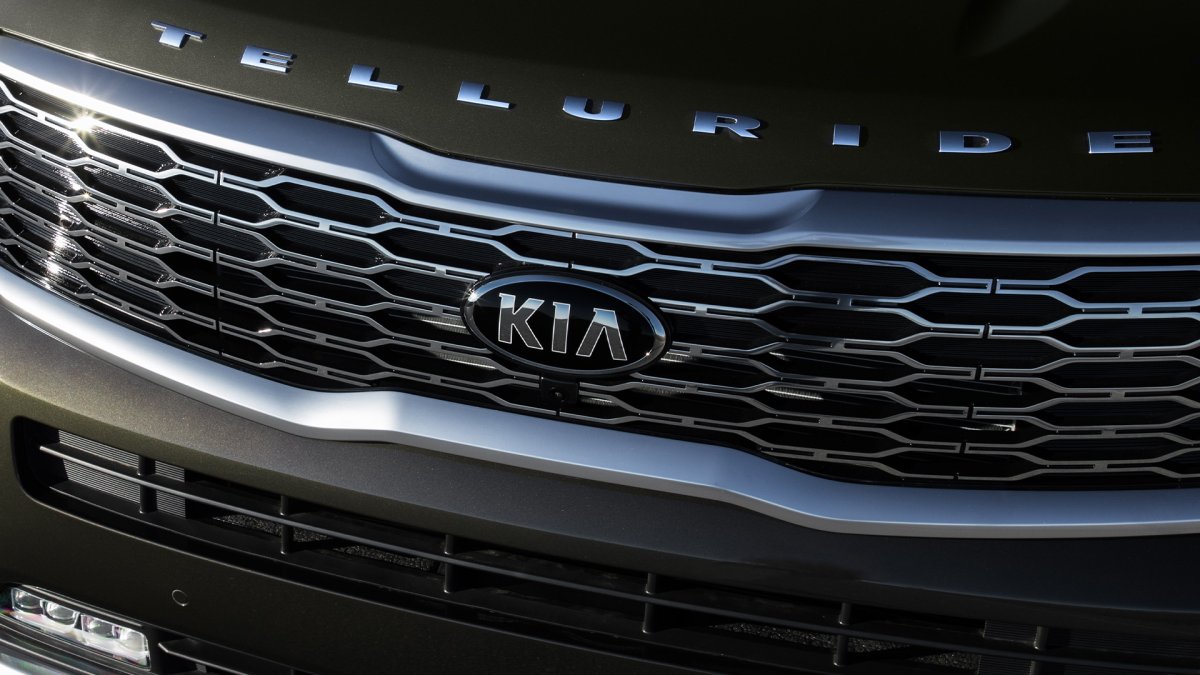
The Apparent Hackers Behind Kia’s Ransomware Attack Are Demanding Millions in Bitcoin
The automaker denies it was the victim of a cyberattack, but the alleged culprit left a pretty detailed digital ransom note.
The Drive
225 points · by ourmandave · 5y ago · 281 comments
Cars had remote unlock and start decades ago (if not OEM, then aftermarket systems were and still are widely available), with zero dependence on what appears to be the company's servers. The only advantage I can fathom for being able to unlock and start a car over the Internet instead of only by being within radio range seems more oriented towards attackers and other user-hostile scenarios ("your car has now become a subscription, please pay to unlock it"). Have we gone backwards...?
I don't understand why after this people weren't in an uproar.
https://www.nytimes.com/2017/09/11/business/tesla-battery-ir...
When Tesla decided generously to temporarily grant residents fleeing a hurricane an upgrade that allowed full usage of their battery.
People's lives were literally in the hands of an optional, upsold firmware softlock.
The fact that it's come to that is completely appalling. When the manufacturer of your car has the power to save your life because if they didn't they'd suffer bad publicity is disgusting.
And the fact is, the only reason why hackers are able to gain access to vehicles, the only reason for any of it is because companies have decided cars need to be a service provided by them so they can keep making money after the initial purchase.
People buy cars so they can travel freely without relying on others. Making cars reliant on a third party server for something as basic as the ingition goes against the entire premise of owning a car.
People's lives are literally in the hands of optional firmware softlock all the time in medical devices that you can find in hospitals. If the hospital doesn't pay for x feature or for support technicians to service them, then some people could actually die.
Saving lives or not, you can't blame a company for not giving you for free features you haven't paid for.
Who's fault is it? The person who dies because they couldn't afford a firmware unlock which in most cases is a sunk-cost that's locked purely to produce profit?
Sorry -- that's too much of an ethical/moral opinion -- and honestly edges near victim-blaming; making lots of money in life isn't something that is guaranteed by any shot.
I'm of the opinion that anyone with actionable ability to change a situation -- and then chooses not to act on that ability -- is to blame for the situation progressing.
I hope and wish for public companies to attempt to act altruistically -- and the ones that don't should be held responsible by their audiences. The BioMed profit schemes out there are devious and for-profit-engineereed, no doubt about that; commonality doesn't make those practices morally appropriate, though.
I agree with the OP that it is a disgusting business practice at best, and totally indefensible.
Yeah, you can.
My workplace is currently struggling to sell a more expensive device, where in the majority of the cases it will offer no advantage over the original device, but in some cases it will be life saving.
Naturally, many health services are dragging their feet on wanting to buy our device.
I thought on the checkout page Tesla was pretty explicit that they were selling a 75 kWh model with discounts thrown in for artificially software-restricted 60 kWh version.
If an ICE brand sold two trims of the same vehicle - the cheaper one with the smaller tank or worse fuel economy, is it as appalling and aren't they endangering the drivers of the budget version?
Consider how you would do this with a battery. The battery has to have extra cells in order to have extra capacity, and the software allows the user to use or not use the extra cells if you pay for the privilege. But if one of those extra cells fails, the entire battery pack does as well.
In your example, the hardware IS configured differently, and there's no sense of waste or increased failure therein. You bought a car with a crappier engine or a smaller tank, and that's what is in it. There's no software key to fix it. Something about the idea of software letting you access hardware you already paid for (even if you didn't pay for the software to use it), just feels wrong.
The whole 'lets smartify everything', 'control everything' or even 'collect usage information' is exhausting. We have collectively given up our freedom in the name of 'comfort' and often for features that nobody really needed but became mainstream.
[1] https://www.wired.com/2015/07/hackers-remotely-kill-jeep-hig...
I wonder how long before there is a large enough backlash from customers that "works fully offline" becomes a marketing label.
The batteries have been already manufactured and you physically have them in your possession as they are there in your car; they just chose to artificially cripple their capacity in software.
If not, then it is no different at all from someone dying in a Ford Focus that was only front wheel drive where all-wheel drive would have saved their lives.
If the FWD version also came with all the parts that the AWD one has, but they were simply disabled in software and only acted as dead weight, people would be just as furious (and no doubt someone would find a way to reenable it.)
The equation everywhere is "the cost of the security is always too high because the failure of security is always an unusual situation and something that usually works and is cheaper will win in the marketplace."
Have we gone backwards.
Yes, expect more of this.
Yet... here we are. Entirely predictable.
The last one such event (also with blackouts) happened in 2011 and was generally called "1 in 10 years cold snap."[0]
Not weatherizing for 0.1% chance can be acceptable, not doing for 10% is not.
When IKEA introduced cloud devices, IKEA hardly a company known for high prices or using expensive stuff in their products, they had local fallbacks. Their product is competing with the reliability of less expensive devices controlled with a light switch. Locks are another case where if you reinvent the wheel and get significantly less reliability people will be mad.
This would only break the mobile app's ability to unlock the car, for example if you misplace your keys.
It's kind of an annoying solution, but it sounds like a bit of a security risk to just let someone permanently stay logged in to an app like that without requiring authentication every once in a while.
Unlocking and starting from the app make sense, but that doesn’t mean it will allow you to put it in gear without a hardware transponder.
Never operated a fleet, though - so that's my speculation.
Do you mean buttons on key fobs? That's not what this is about. This is apps on phones that let you access the car. Why would you want to do that? Range of the signal, additional functionality (you can see the fuel level for example), and you don't need to have your key fob to use it.
There's still no need to make it go out through the Internet and back again --- even Bluetooth has more than adequate range.
In fact, I'd argue that the limited range is a benefit, because it prevents some hacker anywhere else in the world from manipulating your car.
The range of Bluetooth for consumer devices like phones is about 20m...
New technologies aren't nessecarily robust against misapplication
Your car might be parked further away than the radio distance, especially if you're living in a big city with few parking spaces. There are also a lot of scenarios where you are not at home but want to preheat your car anyways.
Sort of. A lot of this is pushed by fleet sales, where it makes more sense (to the customer).
Systems designed by and for users lose control to business interests.
Leading to streaming over media ownership, as we become renters in every domain.
Movies, shows, music, video games. “To improve the consumer experience” reads ever closer to “with DRM we can charge subscriptions in perpetuity (telemetry’s just a bonus!)”.
Why would I want or require internet to play a single player computer game? At least with cars, perhaps we’ll begin to see some pushback.
Yes, I think this is a reasonable conclusion from your priors.
My car isn't from Kia, but this is not unique to Kia. I eventually personally found the microcontroller and shorted the modem myself, after doing extensive work to figure out how to do it without breaking anything else.
(perhaps silly?) question - why not just disable the antenna or put it in an appropriate faraday cage?
The antenna on the body of the car is for XM/FM/AM radio and is only a receiver. It's not connected to the cellular modem in any way at all as far as I can tell (apart from being attached to the same car).
It'll vary for each manufacturer, but in my case shorting the modem was trivial once you knew which pins to connect.
I would think that breaking the antenna would be easier.
Or are they not that large anymore since car bodies have so much plastic in them these days and not so much metal to interfere with the signal?
https://www.cbc.ca/news/canada/montreal/quebec-man-fights-ba...
My SO absolutely loves being able to enter a heated (winter) or cooled (summer) car for the drive home from a cafe, restaurant or similar.
Parking for these activities is seldom within direct phone range (BT/WiFi), so would have to be something else.
You could say: "but I want to configure my car to upload data to a different pod" -- but this is possible today. If there were an interest, the car could ask for WebDAV / sftp / webhook address + credentials, and put telemetry there. But manufactures don't do that because there is not enough interest for this feature to justify development + support costs.
Or alternatively that you live in an apartment complex where your vehicle does not reach your personal router.
My house thermostat is failing. Many segments on the display don't work, the programmable bits no longer work, I woke up to a frigid house last week.
I went on amazon.com and looked at thermostats. Internet connectivity galore, fancy phone apps, full color LCD displays, dashboards and logging, the works.
I bought an $18 model that has a weekend/weekday programmable schedule. I know I can't trust these vendors. They care entirely too little about my security.
Some day I may sit down and build myself arduino-based thermostat, but that day is not today.
Why do you think that? It provides valuable functionality that I use, such as journey logging, fuel status, access from an app, and so on. You need an intermediate server run by the vendor. I can't give it my phone's IP address, can I!
1. Why couldn't you give it your phone's IP?
2. You could just as easily use USB, Bluetooth, or local wifi, none of which require anything other than your phone and your car.
Because my phone frequently changes IP as I connect to different networks. It's dynamic, not static.
> You could just as easily use USB, Bluetooth, or local wifi, none of which require anything other than your phone and your car.
USB is wired.
Bluetooth requires me to by physical standing by my car.
My car and phone may not be on the same WiFi.
>After the publishing of this story, numerous Hyundai and dealership employees contacted BleepingComputer to state that Hyundai was also affected by unexplained outages.
>In emails sent by Hyundai Motors America to Kia dealerships on Saturday and seen by BleepingComputer, Hyundai stated that multiple systems were down including their internal dealer site, hyundaidealer.com.
[1] https://www.bleepingcomputer.com/news/security/kia-motors-am...
Monero markets itself to criminals. Bitcoin to speculators and ancaps. You can hide your BTC gains by saying you made some leveraged trades in Malta. You can’t hide your Monero gains. Ironically it’s what makes it better at its job that makes it less useful.
You really want to toe the line.
For more than half a decade many bitcoin invoices have actually been paid with Monero and we don't have a way to quantify that except to participate in forums where people talk about what they do. The merchants wouldn't even know if thats what happened.
For every XMR.to that shuts down, another has already risen and is just waiting for marketshare.
There are also trusted bridges between blockchains.
And people are still working on trustless bridges compatible with Monero, which will really unlock its value and make exchanges completely ignorable.
Ultimately the state will never accomplish its goal of strongarming the intermediary.
The people buying goods online are not usually very tech savvy, so you lose a lot of potential customers by requiring a difficult-to-acquire cryptocurrency. Those selling the goods usually know what's up though, so they're still going to be doing the BTC->XMR->BTC->exchange swap in order to hide their identity.
edit: You would be surprised how dumb some people are online though. Nowadays folks are a bit wiser, but the original silk road got taken down because they used hotmail, lol.
Wouldn't this just shift the risk to the exchanges who are now holding tracable proceeds of crime?
To my knowledge, there is at least some amount of identity verification on the major exchanges, so presumably that they're fronting with stolen identity documents and the exchange is the one "holding the bag" so to speak?
Not being able to do business with any business that does business in the United States is a pretty big deal. Not to mention your executives not being able to travel anywhere with an extradition treaty.
“All outputs in the Bitcoin transaction with hash <...> are illegal to redeem.”
This, however, means that criminals (who don’t care about the law) can still use these segregated Bitcoin to transact between themselves — as long as miners aren’t punished by including the illegal transactions in new blocks.
When you transfer to a bank account, it cannot move out of the country's jurisdiction without triggering multiple regulatory touchpoints. It's not easy to cash the money out overseas.
But when you transfer bitcoin, it's done once to a virtual ID. The person receiving doesn't need any online account. You can't trace anything here. It's just "sending from wallet id X to wallet id Y". wallet id Y is just a cryptographic key known to the sender and receiver. Yeah so this "virtual ID" is replicated across the network, but who cares. It doesn't point to anyone yet.
After this single step, there is no jurisdiction. The hacker can travel and cash it anywhere in the world outside jurisdiction of the host country's law enforcement.
So how do the coins evade that since any transfer is traceable on the blockchain?
Existing transactions cover other usecases just fine
You make trade-offs, which is fine until you pretend like your set of trade-offs is the best set, and everyone else is wrong.
New tech being abandoned down the road doesn't help any of the poor saps who bought that new tech.
It's not quite to this extreme, but IIHS did a test (https://www.youtube.com/watch?v=xtxd27jlZ_g) a while back that showed the difference in safety standards between a 1959 Bel Air and a 2009 Malibu. The Bel Air is about 5% heavier.
Probably less of a worry in a 3/4-ton truck though.
https://www.bleepingcomputer.com/news/security/kia-motors-am...
Btw, not to mention that New Cars are becoming too expensive compared to say 15-20 years ago due to all this "tech" while the engines are becoming crappy with plastic (shout out to famous youtuber Scotty Kilmer if anyone knows him :))
The next sucker down the line though is in for some severe finacial pain.
watching transactions on a blockchain is a wild goose chase that relies on amateurs making stupid mistakes.
You dont know if a transaction was an exchange for something on a different blockchain
And even when you do know that, that just increases the ways for them to obfuscate and unlink. If they got ethereum or an erc20 token, it goes into an AMM, a layer-2 system or straight into Tornado.cash and its gone. Even if you did compromise Tornado Cash somehow in the future, you wouldnt know of the note was sold offline to someone else or again about the original depositor selling their ledger/private key.
If the funds were used to pump a different token, you wouldnt know if the criminal had different funds under their real identity that was just a benefactor of the price appreciation in the pumped token, indistinguishable from any speculator that got lucky. Tokens rallying in price 5,000% is not uncommon, someone with $100,000 in clean funds that already own the to-be-pumped token can sell a 50-bagger for $5,000,000 with no suspicion.
If that sounds too contrived, it doesnt even account for cloud mining at a loss and earning slightly less new bitcoin over time.
Or buying a bunch of actual mining machines and really mining new coins because the chinese vendor doesnt care about tainted US/EU coins. Can we even say that when one of those states seizes and auctions the coins off, that they are magically clean... everywhere? If the Myanmar disputed government did an bitcoin auction, would chainanalyis systems even factor that in, are those clean? Would you even know or would you still be following transactions around like “aha! I see you!”
Your assumption is that the original funds needs to be invisible and never tied to anyone’s identity, when thats not the vector at all.
Following a transaction around tells you nothing, and reintegration of tainted coins is exceptionally easy in unlimited-enough amounts.
Even major exchanges that require KYC still often have 2 BTC/daily thresholds before they require identification to increase that. Thats currently $120,000 per account per day. And thats the worst and one of the slowest ways of getting liquid given the possibilities of them freezing funds and requiring the user to be more careful and also quick.
We can solve money laundering but it needs political will - write your congressman!
Is this one of those things that's completely trivial as long as you're willing to completely throw privacy out the window and make life more difficult for completely legitimate transactions, or is it really "just" political will?
There’s been plenty of examples of politicians deliberately hampering corruption and fraud investigations because they might embarrass the current government. Semi-recent good example is Theresa May hampering the serious fraud office in the U.K. [1].
Lots of this work can be don’t in a privacy sensitive manner, and without impacting legitimate transactions, but that would require the political will to do more than just pay lip service to the problem.
[1] https://www.independent.co.uk/voices/serious-fraud-office-na...
Too many big corps have been victimized to think that it can't happen to anyone. You must assume it will happen, and when it does you must have a plan to recover.
If your data is important, you should replicate your backups to an append-only storage with a long retention period.
I've been using S3 in "Compliance" retention mode, which coupled with Glacier is cheap, and more importantly lets me sleep at night.
An LTO backup tape on a shelf might as well be stored in Fort Knox as far as a hacker is concerned.
Somehow I hope that when, say, Toyota sees this someone somewhere pushes for better recovery plan / offline backups, etc.
I'm sure a few "out of control" cars causing mayhem would attract sufficient attention. The question then is whether it'd make the manufacturers reconsider their "always connected" stance, or just cause them to lock down things in a user-hostile fashion even harder.
Now you know one of the answers to the question of why am I scared of self-driving cars...
Also, I can pay my bill at kmfusa.com right now, so what does the article mean about not being able to pay on the loan?
I will say the standard two e-mails they send aren't being sent. They sent the "Kia Motors Finance Payment Authorization" from speedpay.com, but have not sent the "Thank You - Your Payment Has Been Processed" email from KMFUSA@servicing.kmfusa.com.cname.campaign.adobe.com yet. Odd. Money was taken out of my checking account.
Of course, if the intruders have the means to disable my car remotely, that is a much more serious issue.
There are always promises, wishful-thinking, hypothetical demand for a use case but it never materializes. Here are some:
BTC: Trade (edit: for goods and services)? No use since price is too volatile. Store of value? Tell me again after this bull run. Besides, what's different than LTC, or even Doge that defines a different value proposition?
DEFI: The infrastructure is there but people just use it to speculate. Never heard a real business borrowing in DEFI to finance, for example, shop renovation. The only use case I can come up with is miners borrowing to buy miner hardware, since returns will be in crypto and will be implicitly hedged against crypto price inflation. Other than that, trading SUSHI or UNI or whatsnext is the only way.
NFT: What happened to CryptoKitties between last bull run and this one? NFT actually guarantees the uniqueness of the outer shell, not what's inside. Rare gaming items might be a use case, but why a game maker would use something it can't control, or fully extract value is beyond me.
But I think the ransomware attack is more on the Kia internal servers rather than on the cars themselves. The inability for people to unlock their cars remotely seems to be a side effect rather than a main target of the hacker group.
The bitcoindollar, negotiated by nation states with hacking syndicates to price all their contracts in bitcoin, forcing nation states to continually purchase bitcoin and is a key demand driver of bitcoin, and vital to diplomacy and hegemonic peace.
replace bitcoin with petro. same thing
If crypto become the payment system for criminals I wonder what will happen with crypto.
IF Kia pays the ransom, then they are arguably playing a willing part of the economy of Bitcoin.