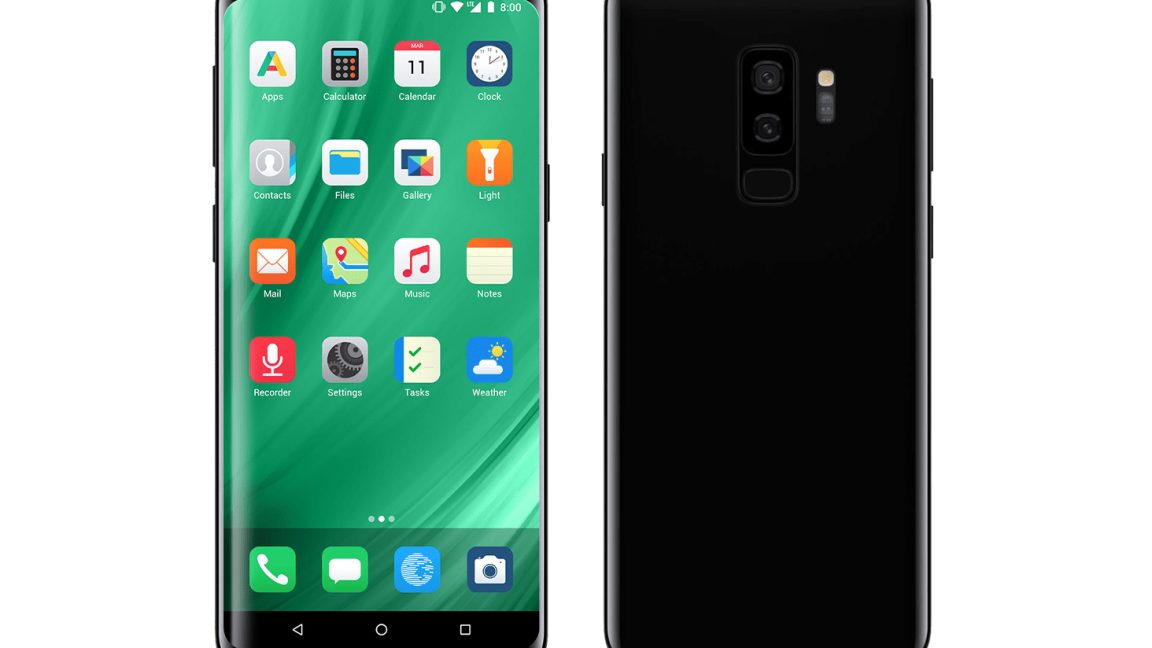
Google-free /e/ OS is now selling preloaded phones in the US, starting at $380
If DIY flashing isn't your thing, refurbished Samsung devices are now available.
Ars Technica
155 points · by thg · 5y ago · 84 comments
Could you find someone to pay you more than $150 an hour to flash a rom?
Do you have to sit there the entire time you're setting up a phone with a new rom?
The comment you replied to is making a great point, generally people running custom roms without Google's services do so because they are enthusiasts.
An Android device without Google is going to require avoiding very common apps and using workarounds that are already going to be time consuming whether you flash the device or not.
Meanwhile people who aren't enthusiasts probably don't care about Google's hooks into Android via GPS.
-
People who apparently think... their hourly rate... is too high to flash a rom (something mostly automated anyways...) but also want to flash a rom and deal with a phone that is missing the core services that normally define an Android device on an outdated device and want to pay a 2x premium for a privilege may just be a sample size of you lol
And I agree flashing is no fun. It takes time to find a rom that supports your device well, realize you need to root/unlock bootloader first, etc etc. Most of the time for casual flashing is spent finding the right tools and setting up.
Possibly. But that will not include installing updates, and it does not include troubleshooting when something breaks down the line.
Either way, when I'm ready for my next phone i'm going to strongly consider /e/
Say that again :) ?
Tease apart I think and believe /e/ is a really great initiative, which aligns better with ecology than Fairphone does (so far).
If my phone was supported I'd have switched long ago (it's a 2015 sony z5c I bought second hand 3.5 years ago).
What do you mean by that?
If you are really serious and you won't flash a new ROM then you will need to filter the traffic after it leaves the phone as you cannot trust the phone or its apps. IMO the only way to do this is to use a VPN to connect to a device that runs a proper firewall. It could either be a Raspberry Pi you carry around (bit too geeky for me) or a server somewhere you trust. I connect to a pfsense machine at home via VPN and filter traffic with pfblockerng. You can block on geography if you want.
My girlfriend's iPhone is just as bad as my OnePlus..
My definition of google-free as it relates to phones, and I think the more common one: No callbacks to any Google service such as Play store, google cloud messaging, or any of Google's usual default android applications.
https://m.gsmarena.com/t_mobile_revvlry+-9764.php
I use one of these myself as a daily driver and have done several for friends and family so I have the flashing part down. I have toyed with the idea of turning this over to my grandson as a business for college spending money.
I replace some of the default apps with better non-tracking, privacy focused alternatives such as Brave browser and TwinMe for video calls and instant messaging. Note: Your iOS friends will like TwinMe too.
Any interest in going turn key "Google free" at this price point? The goal is for my grandson to net $50 per phone. Any less is not worth the time and effort required.
Or on any other supported phone (see this list: https://doc.e.foundation/devices/) you can follow the install guide there. Might even work with your current phone!
The first time I followed the install guide, I ended up with a "hard brick" --- wouldn't even power up. Contrary to popular opinion, it is possible to recover from this but it does take time, effort and determination.
As a result of my experience, I made suggested changes which were incorporated into the guide for my device.
Sailfish has a runtime for Android apps, but under the hood it's closer to other mobile Linux projects, and to that end the hardware compatibility is less like Lineage or /e/ and more like UBPorts.
Android's handling of the Linux kernel, until this current version cycle, has involved several forks per device -- patches from Google (the Android Common Kernel), then patches from chipset vendors, then patches from device vendors -- with closed binary drivers inserted at various points in this process. [0] Treble has been exposing generic hardware interfaces to system images since version 8, but the drivers themselves haven't had that kind of uniformity re: how they interface with the kernel itself.
There are projects that will adapt them to run GNU-based systems -- to use UBPorts as an example again, it actually does exist as a GSI -- but since the modifications needed to get them to run depend on a custom kernel, they're still device-specific.
Meanwhile, Android devices are required to run Google's entire test suite using a generic build of AOSP, so while GSI compatibility isn't perfect, the minimum baseline is effectively just the ability to unlock your bootloader.
[0] Generally. In some cases -- most Huawei devices, non-US Samsung models -- the device vendor is the chipset vendor. But that doesn't mean their chipset IP is any more open than, say, Qualcomm's, nor does necessarily alter that of other components like camera sensors.
It's the best non-Google, privacy enhanced experience you can get at the moment.
With Generic Kernel Images (and APEX to an extent), do you see phh-treble likely replacing LineageOS as the preferred base for projects like /e/? Merci.
I haven't had a good look at either /e/ or CalyxOS, but /e/ looks like they are too focused on the marketing for my taste, /e/ really isn't known to be a contributor in term of source code to the community, their only contribution is bringing users (I do have a bit of respect for that). CalyxOS has nice things, it is much closer to what I'd want than GrapheneOS. CalyxOS tries to makes features closer to what you can get on a "standard" google-owner Android, and they are definitely a great value to the community, like SeedVault is a really nice addition for de-googlizing one-self. I feel that CalyxOS goes too much into security, while privacy/data-owning are already very nice features, and they restrict their user-base because of that.
I doubt that GKI would help phh-treble replace LineageOS. First, I'm happy there are LineageOS GSIs based on my work :-) But the real reason LineageOS persist is that most users want a ROM tailored for their own device. Sure one of the biggest real issue of phh-treble is the lack of security upgrade of the kernel, but from my experience discussing with many people asking me for device-specific ROM, the reason they want device-specific ROMs is really about feelings.
Most users feel a device-specific ROM will be more optimized. (no they are usually not Gentoo users). Usually they'll come to me with "hey, you have this feature that works on my device in GSI, but not in my device-specific ROM, could you help fix it?", when I ask why not just use my GSI, the answer goes with optimization, and the obvious answer is "It's so much more optimized that hardware features doesn't even work.".
Gah. Your tab just crashed.