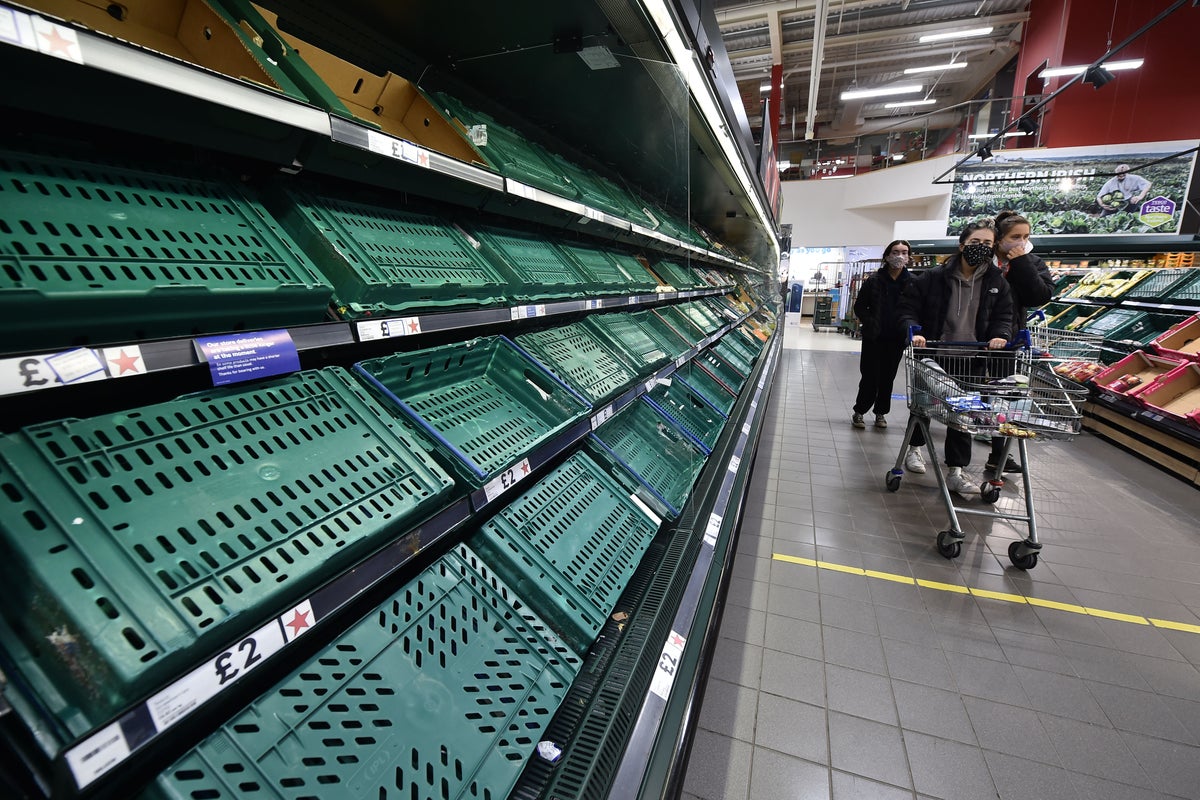
UK announces it will unilaterally change Brexit deal with EU, risking new confrontation with Brussels
UK to extend grace periods for supermarkets without EU approval
The Independent
31 points · by sofixa · 5y ago · 20 comments
Sorry Indy, that’s the last click you get from me.
Then you decide that being in the club isn't for you any more. So you leave.
And you don't have to pay the membership fee. But you can't use the machines or pool any more. or have any other benefits that you had as a member.
Most people would agree that is reasonable.
The UK left the biggest free market and customs union group in the world and asked to be treated like any other country not in the EU.
The EU has done nothing more than accede to the UK's wishes to leave the EU. It seems that some people who voted the UK's departure from the UK actually had little idea what that meant in practical terms and are now complaining about the loss of their membership benefits.
By contrast, the EU benefits from buying things from and selling things to the UK. Products made in the UK did not suddenly become less safe because of Brexit.
A lot of people in mainland Europe are pained that the UK left, and in my own opinion (as a non-European), it’s more of a show of pity on themselves than sympathetic with the British. And so, they rejoice at any news of problems and use it as an opportunity to remind the rest of the world that they're right, the EU is nirvana, and the UK is matching to hell. It’s tiring.
The EU might be regarded as a free trade area with a bunch of extra features related to common rules, laws and courts. Everyone is subject to the same law and same courts, and that enables a lot of optimisations, some big, some small.
You can see this for the current bivalve affair. The EU rules basically say that since everyone from the grower to the final consumer answer to the same court and obey the same law, various processing can happen anywhere along the chain and the same liability/hygiene/safety rules apply everywhere. However, if the grower is in one legal domain and the consumer in another, then some processing has to happen within the grower's legal domain, before it crosses the border.
The UK would like to have the benefits of the optimisations, but decide on their own laws and not answer to the same court as the others. That won't work, because the benefits derive from being within the same legal domain. No amount of good or ill will will change that.
Fool me once, shame on you. Fool me twice, shame on me.
Therefore any such "free trade" agreement has limits and usually involves some sort of harmonization of standards.
However, if the British democratically decide they no longer want to participate, then the EU has no option but to respect their wishes.
In addition to that as soons as the UK diverges in law or regulations enough, free trade will not be possible at all until these differences are handled from both sides in trade deals. This is why unilateral changes are self destructive.