52 points · by morpheos137 · 5y ago · 126 comments
Essentially, you want to guarantee a way for governments to be able to track every transaction, this would be the way to do it.
That being said, I am not anti bitcoin, I just don't see it as a privacy thing.
Of course it is 20x less efficient than tracking Bitcoins, and requires input sources from several places, but it’s fun to know that even banknotes are quite easily traceable.
The value only exists because someone else is willing to exchange it for goods or services.
You could however make "accepting" coinjoined UTXO's illegal, but the lightning network fixes this (you can use coinjoined coins to open channels, lightning payments do not know the payer).
If a government decides you need to do full kyc to buy a coffee, then it might be time to emigrate :D
The more likely scenario would be that it's treated like cash. You're not going to be questioned for using it to buy coffee, but if you decide to buy a house with a sack of cash they'll start asking questions.
If you come up with some way to cheat the tax man, the tax man will come up with a way to make you pay interest and penalties. One man can evade all of the taxes, and all people can evade some of the taxes, but all people can't evade all of the taxes. The state always wins and will always take as much of a cut of the economy as it wants to.
So Ecuador [1] and every member of the Eurozone are powerless? As well as practically every revolutionary force in history? What about governments when we were on the gold standard?
> If I have billions of dollars worth of BTC I may start paying men with guns to defend me from the other men with guns, well then we have a power struggle
This works equally well with your holding Bitcoins or dollars or renmimbi. Wealth conveys power. Whether it is held in gold or Bitcoin or Amazon stock is irrelevant.
Gold standard reflected sound monetary policy and kept government misallocations in check. Since moving to the fiat standard, governments have unleashed record spending. Bitcoin is exposing what happens to the money as a result of the monetary expansion.
Bitcoin has replaced gold, and those of us who have adopted a BTC standard will have separated in prosperity levels from our fiat based peers within a generation or two.
Is saving more of your income worth living in Africa, South America or South Asia? There have been proposals for a Global Minimum Tax which is pretty scary.
There are also alternative ways to redistribute wealth from individuals to a centralised state. The Great Reset seems to go in this direction.
People with incomes that high have too much to lose in a revolution. Also, part of being filthy rich is living wherever you want without having to worry about the cost, which is why most rich people live in the most expensive locales in first world countries.
AFAIK the real tax rate at the time wasn't anywhere near that because there were tons of exemptions/deductions.
What percentage of the population was affected?
Sure. But this has almost nothing to do with which currency is used.
The state always wins and will always take as much of a cut of the economy as it wants to.
I binged on David Graeber last year. I so appreciate criticisms of the Liberal tradition from outside of the Liberal (left vs right) sphere. It's like only being able to appreciate the forest once you get out of the forest.
Anyway. Graeber asks a lot of hard questions. Such as "What is money?" And provides historical precedents which may lead to answers. Like prior relationships between money, currency, debt, empire, military, markets, capitalism.
For a long time, governments minted gold (or whatever) into currency. Then we adopted some kind of virtual currency, so now there's more money than their is actual currency. (Which, humorously, is not first time in history.)
More recently, non government systems like bitcoin are minting electricity into currency. I don't really care that "there's no there there". Meaning the lack of a physical existence (eg gold or unobtainium or whatever) doesn't bother me.
However, I am concerned that there's no big ass military compelling everyone to treat bitcoin as a fiat currency. Until then, bitcoin is just an escrow or collectible.
A very, very fragile escrow.
It feels like the tulip bulb craze. aka Castles in the sky. Bitcoin's preceived value is held up by everyone's belief that they can sell their holdings to the next sucker.
Which is fine. Until it isn't.
What happens when the inevitable shock happens? When there's the equivalent of a run on the bank? When everyone tries to "withdraw" by converting bitcoin to US dollars at the same time?
Who's gonna step in and stabilize the system?
Right now, no one.
So then all that currency, minted bitcoin, just goes up in smoke. Poof.
We've seen this story play out so many times.
-It's a speculative bubble, that will cause a transfer of wealth from the poor to rich(I.E. Hedge funds will find a way to front run)
- It uses a ton of energy, with the climate accords they could get many countries to ban it at once. Why should a few bitcoin holders be allowed to destroy the plant.
Whether these arguments hold water or not( I think they both do) They both at least make sense and the majority of people can understand them.
Quite so. After all, every other store of value is mostly owned by the ruling class. The way to neutralize the threat of a new store of value is simply to own it. I don't think it is too late for that. Elites already own 6.5% of the total supply: https://bitcointreasuries.org/
If Bitcoin started a new shadow financial system, then so did collectible card games and Ebay.
As I understand it, it is designed to be easily verifiable by any participant. How is it designed to be traceable?
(I’m personally increasingly convinced that the U.S. dollar’s reserve currency status no longer benefits America [2].)
[1] https://en.m.wikipedia.org/wiki/Currency_of_Ecuador
[2] https://carnegieendowment.org/chinafinancialmarkets/56856
And btc is not really anonymous.
The government does not need monetary policy to be in charge. They need firepower and a monopoly on law enforcement.
I also don't think it's so much as "governments don't care about people storing wealth" so much as "it's not storing wealth." It's not worth as much as you think it is, and it's not that good at storing wealth (I will accept that it may be a decent high-risk opportunity for growth). The current $1 trillion market cap is calculated by assuming all of the 18.65 million BTC ever mined could be sold at the current asking price. But they can't be, because the order books aren't that deep and never will be, plus there are a lot of mined BTC that are in wallets with lost keys. It's probably still worth more than some small countries, but BTC definitely isn't worth $1 trillion. And when you consider BTC as a store of wealth, gold is a way better choice. I don't want my store of wealth to be experiencing gargantuan shifts in value over a few weeks.
It might sound like I'm shitting on BTC. I'm not, I think it's a cool experiment. I like the idea of being able to transfer money to friends without fees, and I'm glad that crypto helps keep banks honest. It was certainly novel. If I were to shit on anyone, it would be cryptocurrency bros that are full of themselves and think that their one thing is going to turn the world upside down. I'm for BTC as long as people don't get too hung up about it and instead we see BTC as helping us figure out ways to do financial things better.
You can say that about literally any asset because "market cap" doesn't mean "liquidation price".
Is this a relevant factor considering that many assets are trading several times above this price floor? In other words, if you bought $5000 worth of shares in a highly overvalued company (eg. GME or TSLA), and the bubble pops, is it really much consolation to you that there's a price floor of $100 rather than $0?
>That is why the term "Bitcoin market cap" is BS. There is nothing to capitalise.
This is technically correct in the sense that "market cap" is only defined for companies (according to wikipedia at least), so you could say that it's wrong to quote the "market cap" for anything other than companies (cryptocurrency, precious metals, commodities, houses).
1. BTC is a proxy for gold and greatly relieves pressure on gold prices and the money-center banks and sovereigns accumulating/trading gold.
2. BTC circumvents capital controls in countries where those with the power to stop BTC are using it move funds into free market economies; and those free market economies are happy to see the outflows from adversarial regimes.
3. BTC (and crypto in general) expands global liquidity without the need to print even more USD/EUR/RMB.
4. A failure/crash of BTC - should it occur - would result in a flight to USD/US Treasuries and the like. If you're looking for a possible conspiratorial outcome - look here.
5. Massive money supply growth has laid bare the need for an alternative currency, and even USGOV/EU/CCP recognizes the need.
You tell me why/how it is breaking the "government's monopoly on monetary policy, since it's your example.
All they have to do is purchase JUST enough that they don't care which way it flips.
If you take the argument one level deeper, you might come to the conclusion that nearly all rational participants in politics will purchase some amount of it. And if the price rises while this happens, they may personally feel like supporting it rather than destroying it.
And since the price will rise while this happens, well, it becomes a bit of a self-fulfilling prophecy.
Examples where the zero 'paper'value is reflected in what the tokens represent: Zimbabwe and Confederate banknotes, share certificates in non-existent companies, deeds to nationalised land, etc.
BitCoin is really just a set of numbers, no different to the very simplistic "2 + 2", and having no more intrinsic value than that.
This still poses the question: what about anonymity enhanced cryptocurrencies like zcash? Why are these legal?
Furthermore why are unhosted wallets legal as well? It seems like FinCEN is fine with them so far and do not treat them like VASPs (so not affected by the travel rule). Why?
[1] Is Bitcoin Legal?
https://www.investopedia.com/ask/answers/121515/bitcoin-lega...
[2] Legality of bitcoin by country or territory
https://en.wikipedia.org/wiki/Legality_of_bitcoin_by_country...
Another thought is that there are ~200 countries. Some of them survive only on illegal funds. Will it be possible to ban this thing completely?
They already do mandate it which is why they don't see it as a threat. It's called taxes, fees, and fines. In the US you can only pay those in dollars so there's your demand for their own currency.
retail gas in US: one year ago: 2.41. Today: 2.86.
So yes, compared to some major asset classes that are omitted from consumer inflation calculations, gas is "cheap".
I am very hopeful about Ethereum 2.0. But as the article says, it seems that if it really starts to have high transaction rates that make it compete as real money or even see things like distributed autonomous organizations take off, governments will probably protect their turf.
Here are a couple of fantasy scenarios. First, maybe government will just not be able to effectively ban Ethereum, despite trying. And a new era of decentralization and effective and fair international cooperation flourishes.
Or two, maybe instead of WWIII, countries decide to work together to create a new international system, based on a shared currency built on Ethereum and tied to a comprehensive decentralized resource tracking system (possibly bringing in other distributed protocols). Designed to ensure food, housing, sustainability, and security security for the global populace and cut back on runaway inequality. It will be a new type of economics, more sophisticated and based on sustainable practices rather than infinite growth.
Well I did say they were fantasies.
Why do you think a deflationary currency built on staking assets would reduce inequality?
But I did mention other decentralized technologies. What I was proposing was a massive social-technological engineering task rather than a complete solution.
But it seems obvious that the economic tools we are working with are severely outdated and insufficient.
It is untenable to ban such a thing in "free" societies and have people still buy in to the idea that they are free.
From the perspective of a "pioneering early adopter", Bitcoin does not seem volatile. Instead, it seems like prices across the board are going down and everything is getting cheaper.
The effect on me is that since my saving is rewarded, I'm now way better at saving. I've stopped making irrational, impulse purchases. I'm far more in tune with my spending.
I'm also able to keep the purchasing power I earn from working. This beats the hell out of losing it slowly.
Volatility hasn't been a problem for me.
If I awoke from a fever dream with the unbreakable government-proof cryptography currency paper scribbled on a legal pad I’d burn it.
In fact its extremely easy to go after users seeing as its a public ledger and all that. You can claim some laundering schemes will protect users but any significant movement of money will be trackable unless your opsec is perfect.
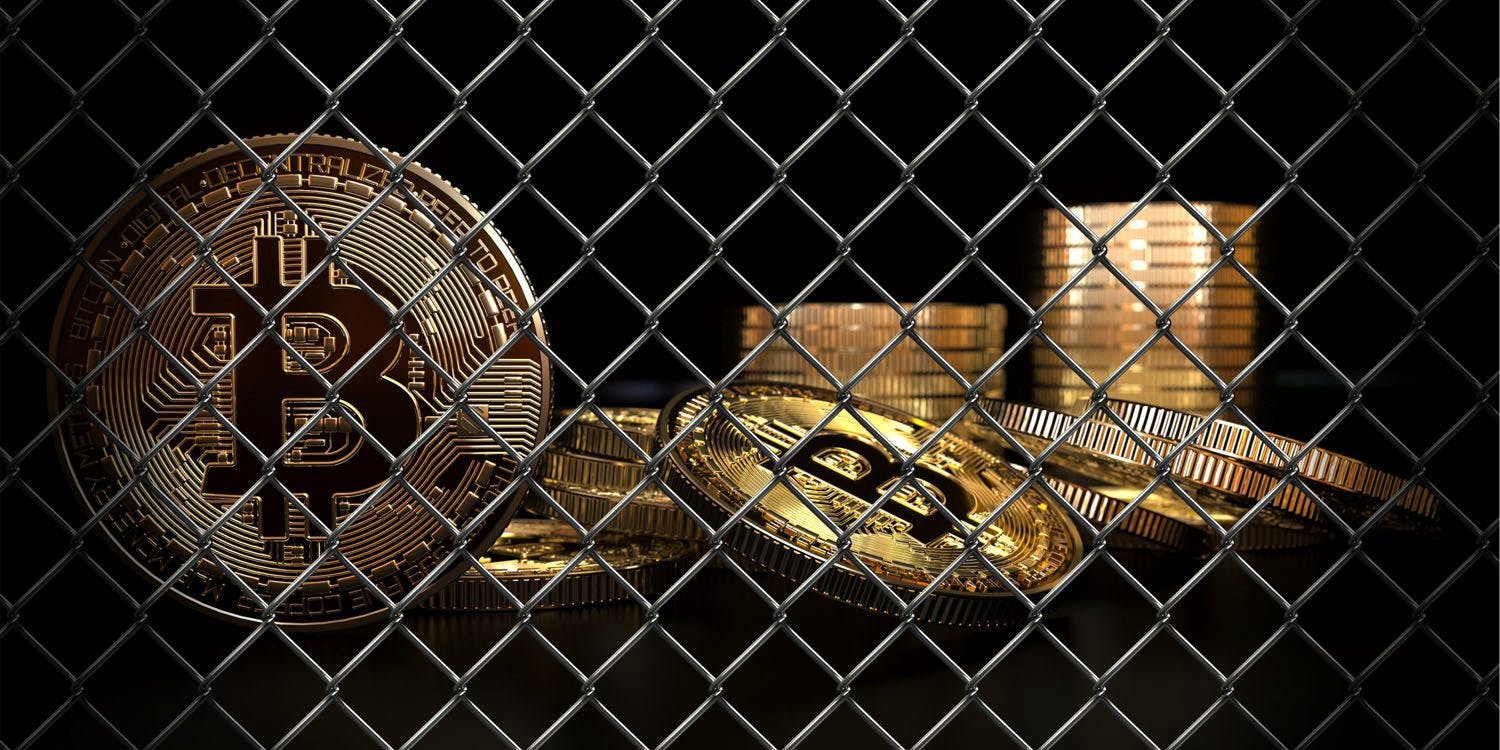
Eradicating Bitcoin wouldn’t be that hard. Publicly committing to repeatedly launching 51% attacks is well within the budget of many governments. It would singularly destroy the currency without even requiring criminal statute. Hell, I think the President could do it without permission from Congress.
But why? Why do that? Bitcoin threatens nobody. It underwrites a lot of wealth. And voters don’t care about it.
I agree with you! It wouldn't stop it though, just like prohibition didn't stop alcohol consumption. If anything, it would make the system more resilient over time. Besides, the governments would want to retain some control through exchanges, rather than lose all control and possible tax benefits, etc.
The better question is why they’d want to. For example, the U.S. government doesn’t have an ideological crusade – pay your taxes, follow anti-money laundering laws, etc. and they don’t care.
You could also ban mining if you wanted to, though that's slightly more difficult to enforce.
edit: after your clarification, you can easily use tor, IP addresses can be easily changed, miner's don't have to use the same IP address, they can solve the block wherever they want and broadcast it from wherever they want. There is even satellite blockchain connections now.
At exchange level, that's what I mean by on-ramp and off-ramp, that would only push exchanges to decentralized platforms and to black markets.
I'm astonished at the way this is hand-waved:
> Remember, if governments truly believed Bitcoin were a threat, they would outlaw it and shut down cryptocurrency exchanges. This would crater prices and liquidity. It would not be the end of Bitcoin of course, but it would be the end of Bitcoin’s dream of displacing gold.
...what? Is there any example of government banning something and that thing later appearing in an illicit market at a lower price? I can't think of one.