Scientists Develop Cell With Synthetic Genome That Grows and Divides Normally
New findings shed light on mechanisms controlling the most basic processes of life.
NIST
345 points · by sdht0 · 5y ago · 138 comments
[1]: https://www.nature.com/nchem/journal/v9/n5/abs/nchem.2644.ht...
https://www.electronicdesign.com/technologies/boards/article...
After you had bottom-upped a few times, one might even try to figure out a necessary order for the steps and possibly gain some more insight into evolution that way.
"What I cannot create, I do not understand." - Richard Feynman
And to clarify, currently the ribosomes are provided as part of the cell-free transcription/translation system. Additionally, amino acids, tRNA (plus tRNA synthetase), RNA polymerase, and a primitive energy source (ATP with some extra energy in creatine phosphate) are all provided.
Here are the components of the most common cell-free transcription/translation systems (PURE): https://www.nature.com/articles/nprot.2015.082/tables/1
...but for the record, the above is not an advice. Here's the mandatory and responsible advice: kids, have fun (with science), but wear the things to keep it safe!
God: “Get your own dirt.”
This gives you an appreciation of how little we know. I work in bioinformatics, and every one in the field will tell you that there's been an explosion in the number of datasets. However, try finding recent data on your condition of interest! The number of experiments grows incredibly fast, but we're not there yet to build a comprehensive model even of a simple organism.
They're working towards it :)
But would that be like watching my CPU decode and fetch instructions, interesting but completely useless for most practical applications, or like a debugger introspecting a running process, an incredible useful tool?
If you have an atomic-resolution cell simulator, you can add lots of automatic interpretation to layer up the information. For example, you can use relatively basic inference software to get a list of metabolite interactions (and their rates and derivatives). An additional layer would contain inferences about the way those metabolites move inside the ER and so on.
Even with those layers, the amount of brain power needed to understand anything would be significant. We may not have enough experts or expert-years to accomplish much. Perhaps a further step would be to make the models more accessible to people with less specialization. Even find more playful names for cell metabolites, the ones we use right now are utterly unpronounceable.
It would be like watching the cloud of electrons moving over transistors across an entire chip, without the benefit of knowing quantum mechanics. Except in this analogy, everyone is in the same boat and working on a single codebase that's the surviving vestige of billions of years of "just good enough" coders fighting it out, so every little bit helps.
So there are a lot of interesting things to do (which I don't know if they did), like instead of having those last five genes in there, copying one of those five genes five times...
At some point, not today and perhaps not in the next 20 years, humans will understand exactly how cells and DNA "work" from first principles to final behavior. At that point, humans will either cease to age and never suffer from disease (Venter would have liked that), or humanity will be wiped out by a malicious organism that is designed by a deranged practitioner.
Yet another technology produced Lady or the Tiger challenge.
Have you ever maintained an application of vintage? You have some idea of how complex an application can get after a decade or two... Now, imagine an application which is X years old, where X is our age going back to the first ancestors...
I must have read your comment differently than you intended, since understanding exactly how cells and DNA work implies that the first cell v1.0 would have divided as intended and that it would not have taken 5 years of painstaking research for v2.0.
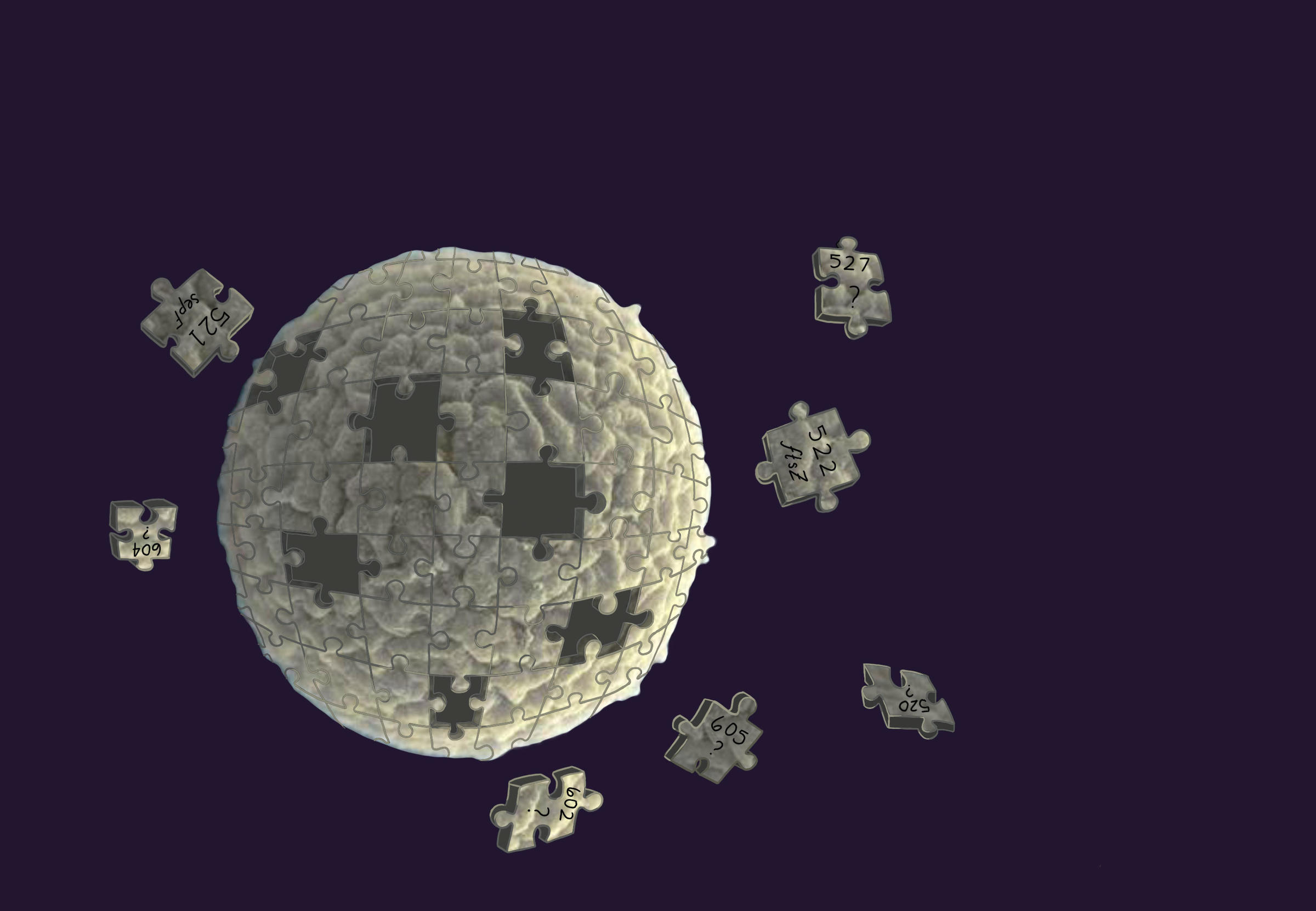
From the article, "Of the seven genes added to this organism for normal cell division, scientists know what only two of them do."
Each of us is a n=1 genetic experiment.
https://www.quantamagazine.org/what-is-life-its-vast-diversi...
Much like the COVID-19 vaccines are the first widely distributed "product" of our understanding of messenger RNA, I would expect the first widely available products that come from our understanding of building and operating single cell organisms to be things like water purification, drug production, Etc.
For example, an organism that secretes vanilla extract would be a multi-billion dollar product. And "all"[1] it would have to do is mimic what the vanilla Orchid does when growing seeds.
[1] This is a deep and wide void of knowledge about how it does what it does, not trying to gloss that over, just making the case for single cell organisms as useful products.
E.g., France was said to export 12x as much "natural vanilla extract" as it imports, yet produce none at all.
Insulin production using microorganisms is likewise mature, although prices are kept artificially high.
Yeast produce rather a great deal of economically relevant ethanol.
Back at FreeGenes we synthesized all of the genes from this organism with codon optimization for Escherichia coli (https://stanford.freegenes.org/collections/gene-sets/product...), the workhorse of synthetic biology. If you combine the right transcriptional and translational elements, you should be able to build a fully modular genome from this gene set! We also did a couple other organisms in pursuit of this modular genome. As a nice bonus, you can also easily do in-vitro cell-free experiments since the codon tables are nice (and I've heard from Kate Adamala's group that JCVI-Syn3 has pretty bad cell free, though that was a couple years ago)
It's important to note that JCVI-Syn3A has a LOT of problems when it comes to its practical use. There just isn't enough energy being put into making an understandable and practical modular/minimal genome.
> Scientists at JCVI constructed the first cell with a synthetic genome in 2010. They didn’t build that cell completely from scratch. Instead, they started with cells from a very simple type of bacteria called a mycoplasma. They destroyed the DNA in those cells and replaced it with DNA that was designed on a computer and synthesized in a lab. This was the first organism in the history of life on Earth to have an entirely synthetic genome. They called it JCVI-syn1.0.
Not quite creating life but definitely hijacking it.
Now, i guess that - like last time - we're going to have news everywhere claiming that scientists "created life" (again).
LOL
"They didn’t build that cell completely from scratch. Instead, they started with cells from a very simple type of bacteria called a mycoplasma. They destroyed the DNA in those cells and replaced it with DNA that was designed on a computer and synthesized in a lab. This was the first organism in the history of life on Earth to have an entirely synthetic genome."
In another words, like in the previous attempt (in which i was equally amazed - at first - only to then became disappointed latter) THEY DID NOT CREATE LIFE!!!
They picked up an already living organism and "reprogrammed it".
Its like having a computer. They are learning to program, and remove all the unnecessary parts but they still don't have a clue on to build the hardware.
The problem, it seems, is in transforming bare lifeless quimicals into something "alive".
Creating life, it seems, is still something reserved only to God Himself! (and i suspect it's going to be like that for a loooong time, if we ever manage to accomplish it anyway)
It’s the same deductive logic you would use if you found an artifact in the middle of the desert. Yes natural forces could have carved an image from the rock, but the more detailed the image the less likely it arose naturally.
The fact that even now, no one has any idea of how to create the basic forms of life shows the astonishing amount of information that exists in even a simple cell. It’s time to reconsider intelligent design, even if the designer is an alien species or a programmer of a simulation. There’s too much information to spontaneously generate, and we have never seen life come from non life.
The theory has been essentially banished from academia for political, not scientific, reasons, but Michael Behe and Stephen Meyer’s books, specifically Darwin’s Doubt and Signature of the Cell, lay out the case in detail.
I say this as someone who once believed as you do, that you've been fooled, perhaps like me, by not honestly examining the evidence for the other side with an open mind. May you also find enlightenment.
But then at some point those aliens, or the ones that created them, or the ones that ...... created them ..., must have been created spontaneously.
1) We don't know how life originated on Earth.
2) We don't have a full idea of what happened during the Cambrian explosion.
3) We don't know how human consciousness manifests itself in the brain.
4) Evolution by random natural processes is not possible without deliberate nudges.
Is the claim here that 1-3 is simply not possible without an intelligent entity intervening in the natural laws? If so, I'm personally fine with it. God (who is the most popular potential Intelligent Designer) has always been a God of the Gaps. In the future, I am pretty confident we'll figure out the explanations using just the physical laws of the universe.
But if the claim also includes 4, then I think it can be discarded with a high confidence. We can already observe how evolution works at the virus and bacteria level. We have found the transitional fossils [0]. The science of evolutionary development biology [1] is already giving us great insights into how organisms translate the genetic code to build our complex bodies. It also shows how the same genes have been reused across species (e.g., the genes for eyes in the house fly and humans are the same). We don't need the Intelligent Design hypothesis to explain evolution.
(EDIT: I see from another comment that you already agree to the above point.)
The claim Intelligent Design supporters can make at best is that God created the first cells, perhaps nudged them a little during the Cambrian explosion, and perhaps again intervened before the evolution of Homo Sapiens. But all the rest happened the boring way, following the natural laws.
> we have never seen life come from non life.
Does not imply we never will. Given the countless other times this argument has been used to justify an Intelligent Creator when we didn't know something, I give very low credence to the idea that /this/ time is truly it. Unless someone can show mathematically why life cannot possibly emerge from the natural laws, naturalism remains the best hypothesis.
[0] https://en.wikipedia.org/wiki/Transitional_fossil [1] https://en.wikipedia.org/wiki/Evolutionary_developmental_bio...
Guess what? Such simple creatures as an early bacteria did it even harder over 2 billion years ago, making the earth nearly inhabitable by anything that came before it.
Also, lots of religious people are socialist as all git-out, and some organizations advocate those political positions officially.
It's easy to hate on the stupid, uninformed conservatives. Just like it's easy to hate on the stupid, uninformed leftists.
I'd be more concerned about viral gain of function research and the weaponization of synthetic biology in general.
What are the chances they unknowingly create a new virus/ bacteria for which no known defenses are present. How is this probability mitigated during design process and what protocols are followed for ensuring this doesn't happen. I did read about bio safety levels, but I feel they themselves could be bypassed.
I'm kinda curious the minimum number of bytes it takes to make a living cell.
A simple synthetic cell is so far off from the myriad of potentially deadly cellular organisms(or even deadly malformed protein chains) that already exist and evolve right this instant that it's not worth a second thought in the context of "organisms that can kill us" for now.