110 points · by ciconia · 5y ago · 53 comments
It was a big cast iron contraption, with what I remember as white powder-coated sides and trim, and she knew how to get the temperature just right for whatever she was cooking.
I remember walking downstairs on cold winter mornings to the smell of ham, eggs, and biscuits, all prepared on that thing.
One more thing I remember. It was positioned about three feet from the wall. There was enough room to walk behind it (if you ducked under the pipe), and our dog used love napping there.
According to this article from 1993, it was a toss up in terms of cost savings then:
https://nasdonline.org/1359/d001154/do-you-waste-money-by-he...
Since that time, heat pumps have become much more efficient at a wide set of operating temps, and the cost of wood has gone up, so it's unlikely that a wood stove is cheaper to operate, unless you have your own forest, and are willing to fell trees and chop and dry firewood yourself.
I miss the smell of the oak from the old boiler, but not the smoke or absurd amount of wood we were going through.
I understand it takes a fair bit of experimentation to learn how to cook on one. :)
I was talked out of it by the fireplace guys and the plumbing guys. Now I regret it every time I light the fire.
The main problem is that wetbacks fall into a gray area, they are mainly plumbing, but plumbers are more used to dealing with standard components and materials. Architects are usually not familiar with them so don't push for them.
In a video they show their home setup and how the stove is used as a stove, oven, heater and water heater. I wish I could have one of those.
I'm curious about this. Around here the carbon from the wood (less emissions from a relatively small amount of petrol to cut and transport it) would've been taken out of the atmosphere in the last 20-ish years, where the natural gas carbon is in the millions of years (and additionally a much longer supply chain). I understand that smoke particles are not great in the short term, but assume we're talking about modern equipment.
First and foremost - at a time, when every bit of CO2 not emitted counts, we should be happy about CO2 being fixated in trees - once it's released, it doesn't matter whether the it is coming from jet engines or wood - the effect on climate change is the same. Furthermore, burning wood is quite inefficient in terms of mass/energy gain - even worse than coal.
But besides that, there are a lot of systematic effects which make wood a non-neutral source of energy and making use of it as energy source comes with a lot of issues. Even if wood would be completely neutral, it would still be negative due to the energy required to harvest, process and transport it.
Trees don't only sequestrate carbon in wood, but also in the forest soil through their roots. Decaying wood is processed by microorganisms and mycelium in the soil, so it's not only about the tree itself capturing CO2, but also about it being part of a more complex sequestration system which is disturbed by removing the tree.
Cutting down single trees from an otherwise intact forest as part of a "sustainable forestry" strategy is actually often quite problematic, as the sudden exposure to sun & weather leads to decreased survival rates of fresh growth, but also soil erosion and thereby CO2 release - not even taking the damage of harvesting machinery etc. into account.
Those "wounded" forests decrease the Earth's Albedo which also adds to climate change.
Last but not least are forests not simply something that can be "renewed" by replanting trees, but are extremly complex ecosystems which might take millenia to build up.
Right now, we're cutting down massive amounts of old growth around the world which can never be properly restored - we're far from managing wood like a crop on designated "farms".
With technologies available like Passivhaus construction, heatpumps, solar and/or geothermal energy, there's zero reason to add to our systemic issues by using wood as an energy source.
When it comes to particle and toxic emissions, there isn't a single non-industrial wood burner that would only come close to the emissions of a gas or oil furnace (not saying they're good, as they're using fossil fuels). The best even modern filters will get you is still worse by factor of ~400-500 compared to oil.
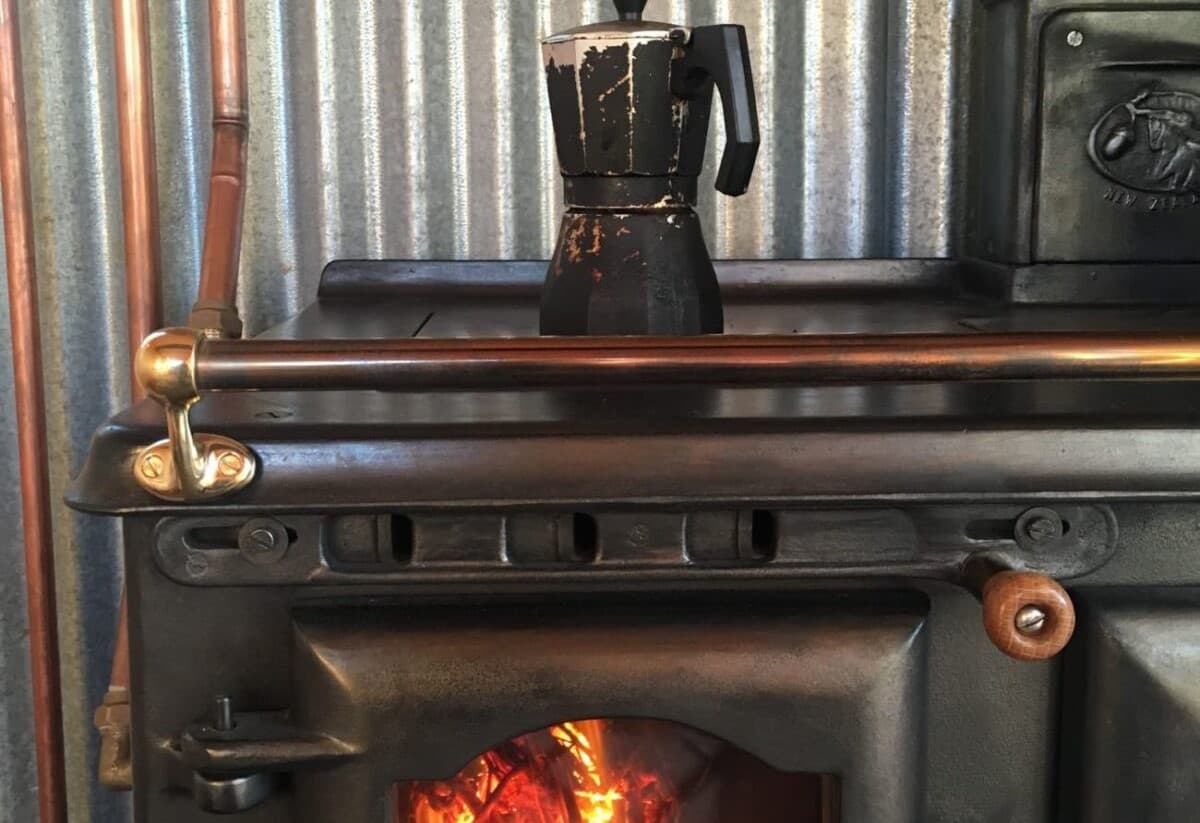
OP is right that it's dirty as hell, by modern standards.
Specifically particulat matter / PM2.5 emissions, the same factor that causes most concern in wildfire smoke.
My home for instance was built in the 1950s, and in the attic has a copper "header tank" which has an overflow/vent to outside and a float valve to maintain a set water level in it. That would've supplied one or two heat exchangers in the wood/coal fires, and cold water at the same pressure.
Now, the header tank is out of the circuit, the original fires were removed decades ago in a remodel (their water heating functionality replaced with a "low pressure" electric hot water cylinder which still vents through that same pipe), and we're now connected with city water. The current situation is like many homes of similar vintage and has a couple issues: the cold water is substantially higher pressure than the hot, and we now have an Ajax valve which occasionally needs to be checked on in case it's leaking through and pumping electrically-heated water out on to the roof.
How big is that pipe that goes up to the roof? I assume it's covered with something to avoid random debris or animals from getting in?
From memory, the pipe is just a piece of 1 inch copper. There's nothing on the top, it just points straight up to the sky.
Do you not use your stove for cooking as well? I guess most people with a wood-burning stove us it as an oven, a hob, a toaster, things like that, which they want to use during summer as well.
But even then I don't leave my oven on 24/7. This article runs under the assumption that your heat source is constantly running. In fact he advocates for large tanks that take a long time to warm up in most cases because of the assumption that your stove is always burning.
Yeah that's the way many of these combined heater / oven things work - the oven is literally on all the time. Starting it up can take a full day.
https://www.google.com/search?q=wood+burning+aga&safe=active...