The Great Unsettling
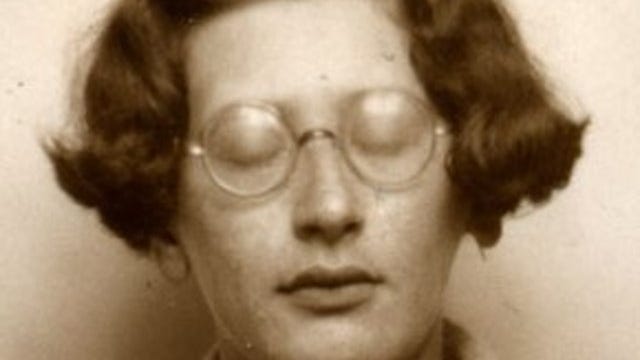
Simone Weil and the need for roots
paulkingsnorth.substack.com
80 points · by acsillag · 5y ago · 70 comments
In the past few years I've had the good fortune to have some very kind, generous people in my life, and when I saw the positive impact they had on those around them, and on myself, I realized that things about me were magnifying the distress in people around me, and I needed to make some changes.
If you have the good fortune to be in a situation where you can work on cultivating a generous spirit, I think it could be one way to push back against the machine.
It is chock full of ways for people to become rooted, even from a cold start. Here's the wikipedia page about the book: https://en.wikipedia.org/wiki/Braiding_Sweetgrass
I've posted this before, from Emerson's self-reliance. It is describing geographical roots but the human want for short-term novelty at the cost of building on something more familiar is applicable to all sorts of aspects of life. Moderation is key, and so in circles (like mine) where people crave new experiences rootlessness seems much more common an issue than provincialism.
Her older brother was André Weil of course. As a kid she decided she would never have the talent to be a mathematician because he was so good at it... talk about sample bias. The philosopher George Grant said something like (paraphrasing) "that family had intellectual culture on a level undreamt of in North America".
There's a lovely article about the family by André's daughter here:
My Father André Weil (2018) [pdf] - https://news.ycombinator.com/item?id=24492000 - Sept 2020 (7 comments)
We are mostly connected to each other via sanitized business transactions. Meanwhile, we don't even know the names of most of our neighbors.
Also, countries like Finland manage to be high-trust and relatively homogeneous societies, while at the same time having strong expectations for privacy in a block of flats, where neighbours might find it uncomfortable and intrusive if you tried to interact with them.
We are profiting off nature, turning it into a domesticated version we hope will be sustainable (but have no proof it will be, quite the contrary).
And yet it’s true that we never understood the world around us so well. This is fantastic if you are interested in sciences. Overwhelming evidence shows that most people don’t care.
Given the current social direction and inertia, maybe it's best for people to begin channeling their own Saint Leibowitz.
These cultures have been uprooted, but still have a common, shared identity, which seems to qualify rootedness. Otherwise we'd not have Russians, Ukrainians, Kazakhs, and Uzbeks, but some single, post-USSR identity, those demonyms having failed to have any official meaning for 3+ generations.
I _do_ think, on the other hand, that modernity has led others to question more about what's around them. Others have latched onto the resulting uncertainty and fed those questioning half-truths and outright lies, definitely, but this to me doesn't qualify as uprootedness.
https://en.wikipedia.org/wiki/Deterritorialization
This is easy to observe in somewhere like San Francisco. Most traces of culture from the pre-1990 era have been erased completely or have been turned into a theme park. Contemporary SF has almost zero connection to its roots and the sociopolitical consequences speak for themselves.
This isn't new. Places change, and "capital" has nothing to do with it.
The complex numbers are famously the algebraic closure of the reals, but I find myself wondering lately if there is a related thought which doesn’t privilege them over the hyperbolic numbers or the dual numbers.
Simone Weil had a brother, André Weil. You may not know his name on the top of your head, but I guarantee you that you've heard of the pseuodonym he created together with some other mathematicians: Nicolas Bourbaki.
I'm sure Weil and/or Bourbaki has lots to say about these topics.
This is true, but to what end. Will we truly end in civil war or anarchy because I don't live on the Italian countryside of the great grandparents I've never met?
As far as the metaphor of rootedness: a plant does not wither and die upon being uprooted if it is planted in new soil in a reasonable amount of time (in fact, international houseplant shipping is done bare-rooted due to phytosanitary regulations). Upon replanting, the plant will go into shock and probably have a few weeks/months/years (depending on the size of the plant) of acclimation where you'll see no new growth. Perhaps it will die if the new environment is not offering good conditions.
In the right conditions, you don't even need the full plant with original roots, you can just take a cutting off many plants and grow new roots in water or moss, then transplant to soil. In the houseplant community, propagating plants through cuttings in this way is much more common than reproduction by seed.
The thought provoking premises/ideas in it at-least, what ever bits and pieces that were locally consistent was some food for thought.
You might. I need friends and family, some community participation is nice, sure, but I don't particularly feel the need for gods, ancient traditions or worship, which these seem to be tied up with in the text.
> Our culture is not in danger of dying; it is already dead, and we are in denial.
This just seems like unnecessary hyperbole.
>This just seems like unnecessary hyperbole
This refutation seems to be as vague and unfounded as the thing it's refuting and doesn't provide much value. It would be beneficial to everyone reading if you can elucidate.
Essentially we are tribal animals, and nothing can really change that. Without a sense of common identity there's little solidarity, and without solidarity you'll eventually have conflict. Failed states with civil wars tend to be those which lack any kind of common identity and ideas, while more successful ones tend to have those.
She wrote a letter to the Vichy Minister of Education in 1940, What is a Jew?. She writes 'I myself, who profess no religion and never have, have certainly inherited nothing from the Jewish religion, Mine is the Christian, French, Greek tradition. The Hebraic tradition is alien to me and no statute can make it otherwise.'
"Weil herself was Christian, but was scathing about official forms of the faith which had, she said, in most cases lined themselves up with ‘the interests of those who exploit the people.’"
You do. It's just that in modern society we've substituted these for more easily digestible, commodified, manufactured replicas. Hollywood celebrities have replaced the pantheon of Greek gods. Consumerism is the new piety. Techno Utopianism and liberalism (in the classical sense) has supplanted the ancient traditions of old. The Zuckerbergs and Musks of the world are our priestly class. We still need these things, but instead of searching for them, communing with others, and engaging with our inherited body of three thousand years of western cultural heritage to find meaning, we purchase it with the press of a button on an app.
"The notion that all deeply felt conviction is sublimated religion is not new. Abraham Kuyper, a theologian who served as the prime minister of the Netherlands at the dawn of the 20th century, when the nation was in the early throes of secularization, argued that all strongly held ideologies were effectively faith-based, and that no human being could survive long without some ultimate loyalty. If that loyalty didn’t derive from traditional religion, it would find expression through secular commitments, such as nationalism, socialism, or liberalism. The political theorist Samuel Goldman calls this “the law of the conservation of religion”: In any given society, there is a relatively constant and finite supply of religious conviction. What varies is how and where it is expressed."
So I say again, you may need these things, I don’t.
"Don't like the current situation? Well you just need to <do very vague things like find your roots> and things will be fixed!"
The author is of course not alone in writing this kind of meaningless content. "We simply need more Justice!", "We need to ground ourselves", "We need to rediscover God" etc etc.
If you want to write on these lines start by defining, very very tightly, your terms. Be specific in the ill you think your solution addresses. You should probably plainly list cons of your claims.
I didn't get the impression he said that things can be fixed.
- For Pillaging, and power grabs, jealousy, envy individual ownership was required that didn't emerge until we settled down with farming anywhere at 10,000 bc
>decamping to somewhere more promising when the vaunted Land Of My Ancestors crapped out
This too did not happen until we started settling down and consuming all the local resources until they ran dry. Hunter gatherers foraged from larger areas of land with lower population density like wolves or other big predators of today and in a more sustainable way. I'm sure as tribes prospered and grew they split off exploring for greener pastures. One could argue why they couldn't just have a conflict with their neighbours, it's because beyond a certain size tribes tend to be very violent and dangerous governing structures for their constituents. That's the reason why we don't see geographically contiguous tribes beyond a certain size and they usually move to a more chieftan structure of governance.
I think all of this is a round about way of saying, I don't think there are innate, universal, roots that humans are bound by. Beyond our mammalian firmware, and human firmware, most of the rest would be a software programmed through your experiences with the world, that's why there is such an expansive manifold of how humans can live and behave for better or worse.
Now in the case of the (in)Famous mathematician, he seemed to have made a value judgement based on his interpretation of similar facts and the decay modernity wrought, and so it goes.