119 points · by awb · 5y ago · 194 comments
I believe the ECB's interest rate is currently 0 or 0.5%, and thus the Danish National Bank's interest rate is negative to maintain the DKK loosely pegged to the EUR. This means, it costs money for regular banks to have their customers' money at the National Bank, and therefore offsetting the cost to their own costumers.
Initially, the limited was 750'000 DKK before the negative rates would kick in, then 250'000 and now 100'000. Danske Bank is hardly alone in this, a lot of other Danish banks have already done the same. The slow lowering of the limits is indicator that the banks more and more believe that the negative rates at the National Bank will remain with no end in sight.
Disclaimer: I am not an economist.
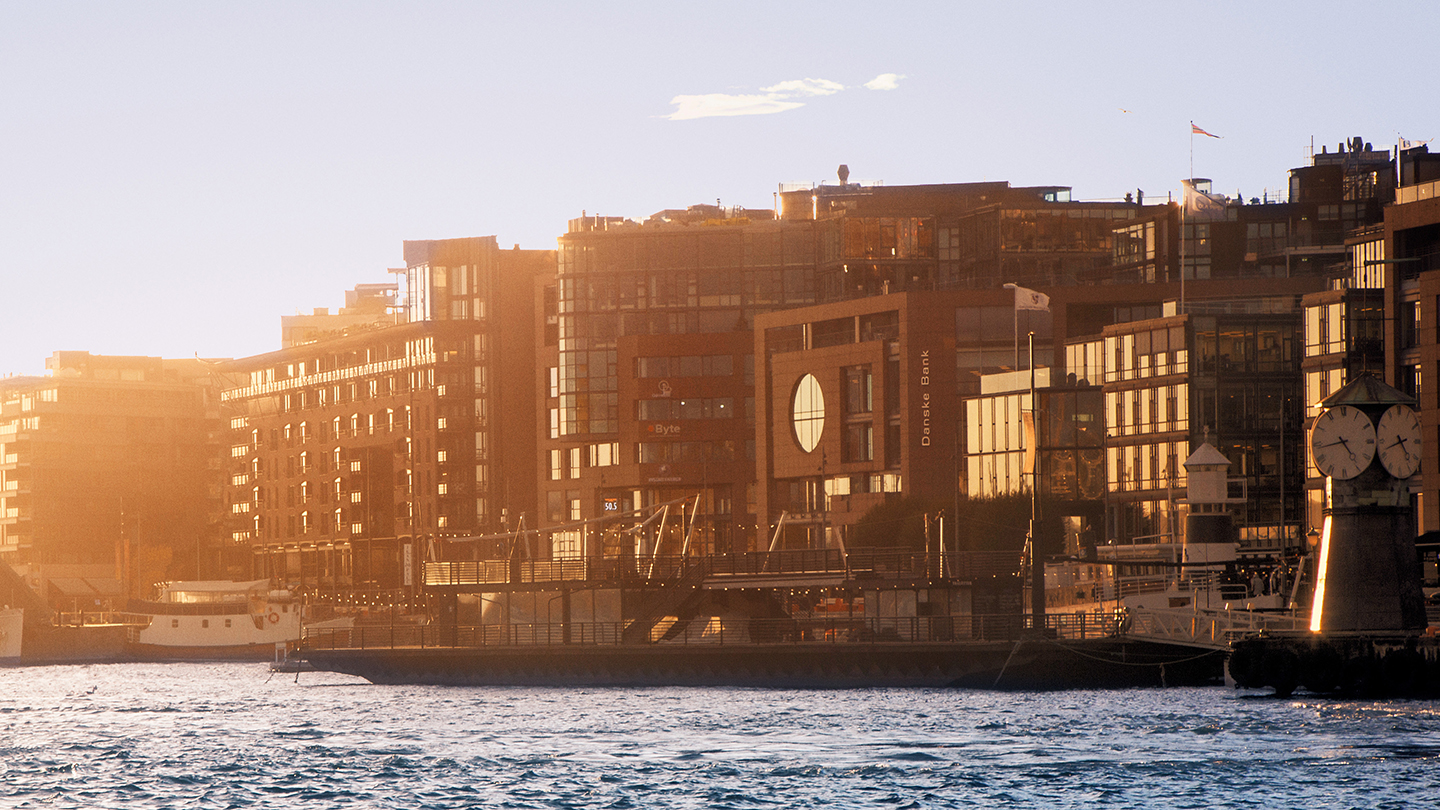
This is why you find these negative rates in many more countries in Europe. The Netherlands and Germany, for example. My bank charges negative interest, too, above 100k.
The news (at least to Danes) isn’t that the bank may charge negative interest, but the at they are starting doing to savings we might actually have in the bank.
I think the more interesting discussion personally would be on inflation, rather than interest rates. In purely financial terms as an individual you tend to only care about purchasing power. I have a bunch of friends who're worried about paying -1% interest while they've held cash at 2-3% inflation for years.
In Denmark we have a NemKonto system that forces people to have a bank account. In short, you register an account with the government they will use to make all payments to you (social benefits, return taxes, etc). Most employers also use this system for salary.
Practically speaking, it is not possible to live in Denmark without a bank account. Therefore people might see it as a principal right to have a place to have free deposits.
Ie. When bank accounts are imposed as they are, they should be outside of the market.
Anyway, the maximum amount of deposits is now around 4 months of wage. So, I hardly see the necessity to have a bank account or banking infrastructure.
I wish I could join "We don't need banks anymore" motto. But now, It looks like It is becoming a reality.
You are somewhat right so I think it needs to be clarified to non Denmark living people that it has nothing to do with banks and all about Danish government regulation. They have specific laws that look differently on foreigners depending if they are EU, non EU, living for 5 years in Denmark, living less than 5 years. I think what OP might refer to is that he comes from a specific non-EU country that Danish system doesn't look kindly on. (check the recent changes in the way citizenship is granted to read more about it)
If you are EU and if you have stayed more than 5 years in Denmark you should have no trouble getting mortgage. Basically also if you are non-EU if you have been in Denmark continuously and hold permanent residence.
If you are EU citizen you can get a house and mortgage immediately if you have 5% (or better 20%) but in case you leave Denmark you won't be able to rent it. (as I remember correctly).
Current mortgage rates for 20 years are around 1% if you deposit 20% of house value. Most of the time if you are looking to buy something that hasn't skyrocketed in value, you will be paying the same (with taxes) as you would the rent equivalent. (aka if you can, go for mortgage)
You can use this calculator from Jyske bank as it is the most simplest one. https://www.jyskebank.dk/bolig/regn-paa-bolig/beregn-laan-ti...
If you want a rough numbers try putting like 2.5 million which get's you a 4 room house in a small town or outskirt of a larger one.
If neither investment nor spending happens, then excess savings occur which are savings that are simply doing nothing. Excess savings are bad for the economy because they break the investment = savings equation. If one person earns more than they invest/consume, then some other person must consume/invest more than they earn.
The negative interest is mostly aimed at companies that are hoarding money. The current increase in the household savings rate is a reversal of that trend and it is actually a good thing because it puts even more pressure on companies to do productive investments. As it is right now, the bottom 90% of consumers shouldn't feel bad about having savings.
But having a pile of money beyond those things "just because" does not really serve the purpose of money: as a medium of exchange for goods and services. Money in itself is not useful, it is only useful for the things it can give you: shelter, water, food, and the various other things as you work your way up Maslow's hierarchy.
At most having a (digital) pile of cash may help you sleep at night (assuming it's covered by deposits insurance). Paying a fee may be worth peace of mind.
Neither you nor anybody else has any business in telling me what my hard-earned money is meant to be used for. I put blood, sweat and tears into earning it, and I deserve the reward for my work. Maybe I'm saving it up for my future descenants to finally lift my family line from poverty that they've been in for generations, or want FIRE for myself. Maybe I'm saving up for a flight into space. It's none of you g-damn business. Get your hands off my money.
This is exactly why I'm against both negative bank interest rates, and high inflation.
Also, "piling" money in a bank account doesn't remove money from economy.
These days mortgages are capped though. My mortgage rate is MAX(Euribor 12m, 0%) + 0.5%. Unsurprisingly I have never paid more than 0.5% interest.
If they would bring negative interest to normal acocounts they’d likely have to do the same with mortgages. Bringing it to euribor + margin.
At fixed rate 30yr, it was 1% + some fees.. so total cost of the loan over 30 years would be 35k USD.
The flex interest rate (adjusted every 5 years) was a current rate -0.25 + fees. In total that would cost around 10k USD over 30 years. (Of course with flexible interest rates, the rates could go up).
So I think most of the cost is now just fees... Looking at owning vs. renting it's quite competitive.
So no, it is not capped, but the interest has to become even lower before the interest on your Mortgage helps pay itself off.
Wait, isn't this illegal ?
Sorry, I don't get it. What if you have ...shudder... more money?
Hopefully almost no one has more than that in a normal savings account. There are lots of better alternatives.
[0] https://www.nationalbanken.dk/en/marketinfo/official_interes...
I don't think this policy is actually a problem for many people here. Most people above that limit either invest it, put it into a "savings deposit" (you agree to not touch the money for some pre-definied time and in exchange you get better, positive interest rates), or spread it out across multiple banks (since savings accounts are usually free, but only guaranteed up to €100K when the bank fails).
[0] https://www.moneyland.ch/en/swiss-banks-with-negative-intere... [1] https://www.swissinfo.ch/eng/business/swiss-national-bank_wh...
You won't save cash in a bank, it's literally better to put it in a safe.
You won't buy a productive asset, that'll just lose value as more people buy the same asset - lowering the value of the goods it produces.
Which pretty much leaves assets that are inelastic to demand e.g. housing, stocks, art, unique jewelry etc.
That costs money too. You need a safe, space to put the safe, and bear the risk of the safe getting robbed. Sometimes paying 0.75% might be worth the hassle.
Seems like a terrible deal unless for for small amounts of money.
Which is a fallacy of composition because whoever is selling you the house etc, ends up with the same choice.
Assets always reach their indifference level, and some bank somewhere has to end up holding the reserves the Central Bank has created.
Good job people aren't rational isn't it.
The advice i've heard for France is to have roughly 3 months, preferably in a liquid savings account which even has some interest (0.25% atm, so not much).
At around 2500 USD / month for up to 2 years, it's a pretty decent deal for average Joe. I think I pay around 800 USD / year for unemployment insurance.
In practice, I'll probably never need it though.. so I have considered dropping it.
So, I'm switching more and more accounts over to DeFi infrastructure over the last year, but getting direct deposit there is still a bit of an issue for employer.
The institutions I do like are smaller Credit Unions.
They deserve to fail.
It's the new online advertisement. I remember my grandma being completely flustered by all the "you're the 10.000th visitor" flashy stuff and my brain ignored it completely. In this vain my brain now hunts for that button that does not really look like a button but just enough to identify it as a button. That is the one to hit.
But in my opinion what our problem in Europe is, is a very conservative investment culture at the very top. It is very hard to get funding for anything. No wonder there is barely any growth. Even most flashy startups here get money from government grants.
A bank run is when people pull their money out the banks. If you want to put your money in the stock market you need to pull it out of the bank.
They aren't pulling the money out of the bank and using a third party broker.
I even if I loose my job and don't need to pay so much, I'm sure the government is good for it and can pay me back :)
Sadly, I still have to pay interest if I don't pay taxes on time.
Real humans tend to move in crowds, though. Everyone will stay in until relatively suddenly, everyone will start getting out. Perhaps there will be a precipitating event, maybe it'll just be time. It's the same thing as trying to time the market.
They’d probably be willing to pay a lot more, -5% yielding government bonds anyone?
Realistically speaking – will this policy spur spending, or will people go back to just hoarding cash?
Post COVID, things will get so bad, this may even happen in the US.
I learned "max 2 salaries in a bank account because you are being stiffed otehrwise as the bank doesn't pay interest rate" since I was a kid. It's as much hammered into me as "keep N months salary in savings".
Funny world. Negative interest rates would have been unthinkable a decade ago. Yet, here we are about to normalize that savings in a bank account are not okay.
> I learned "max 2 salaries in a bank account because you are being stiffed otehrwise as the bank doesn't pay interest rate" since I was a kid. It's as much hammered into me as "keep N months salary in savings".
There was a time when you put your money in a savings account and the bank will pay a reasonable interest to cover inflation and give you some extra. (The power of compound interest, anyone?). People's memory are insanely short.
Here is also what you might be missing: Central interest rate will gradually affect all aspects of economy and thus all investment vehicles. 0% interest means that any investment with yield will carry risk. Negative rates will mean that for society, on average, they'd be losing money on their investments.
Around 15 years ago, I was getting something like 8% interest from my UK-based ISA account (an ISA is a kind of tax-free saving account in the UK). Now typical rates are more like 0.5%.
A consumer can offload all of the risk to the bank (and the underlying guarantee, usually state), in return for most of the reward. Example: I can open a savings account with some restrictions (minimum balance, or restricted withdrawals) and since the bank is now in a better position to invest my money, they can offer me an interest rate despite central rates being 0%.
For example, a $50 minimum balance but free withdrawals gives me 0.6% interest rate, with state deposit insurance. That's not "risk free" since there are other risks than that the of the bank (currency risk, not least) but it's the exact same risk as any savings account.
There is a pattern/trend, and the banks started with a certain amount and now lowered it. If the trend carries on, it's a matter of time before what you suggest is no longer possible.
Going from receiving interest to paying interest is psychologically shocking, but not financially. We have always paid the bank to hold our money, it's just called inflation.
I just bought a house. Do you know how nice it was to not have to cash out investment accounts and move cash around? I just wired the cash directly, as it should be.
For a lot of people repaying other debt like mortgages can be an efficient form of saving.
Or is the "expense" just that the bank's profit would decrease when interest rates on loans go down but those on deposits stay put?
Then they are exposed to exchange rate movements.
Of course, past performance doesn't indicate future, but so far, BTC has performed much better than fiat consistently.
So no, bitcoin is definitely not a replacement for cash deposit.
As to "lead weight", that is very good. There is enough people on HN to see through bullshit and understand Bitcoin for what it is or is not.
People looking for extreme safety might want to at least put a tiny bit into Bitcoin or some other crypto. Certainly, they'd be significantly "safer" now had they done so at any point over the past decade.
This. This is why people put money in bonds and gold. It's not a get rich quick scheme, it's an uncorrelated asset. Which BTC absolutely might (heavy emphasis on might) be. BTC is a perfectly valid hedge, but beyond that it's speculation.
At the start of 2018 BTC hit around ~17k, it took 2 years to get back to that price and the history of this asset means you can't even expect that to be predictive. So be careful.
Also please point me in the direction of these "better-return" bonds.