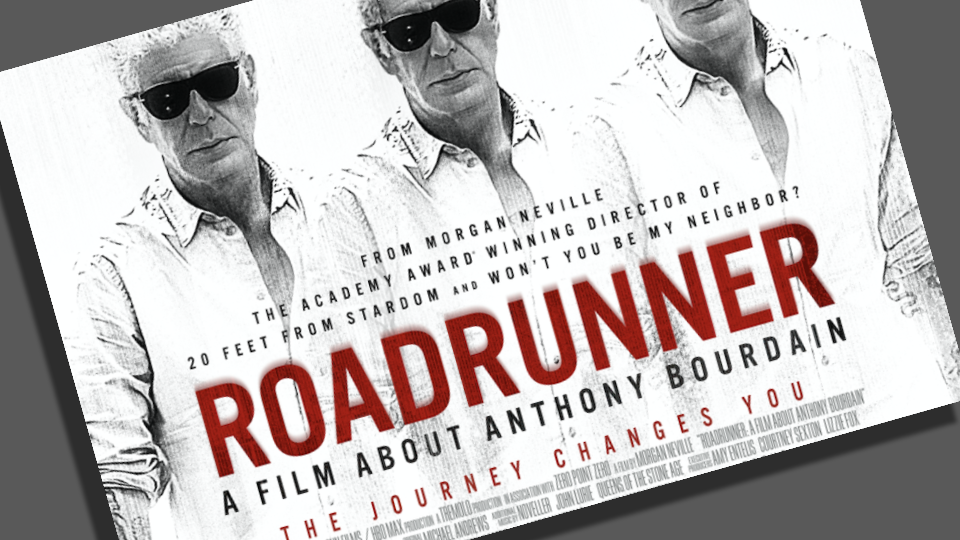
Voice clone of Anthony Bourdain prompts synthetic media ethics questions
The filmmaker says he had an "A.I. model" of Bourdain's voice created to depict the deceased chef 'reading' from his own email.
Tech Policy Press
242 points · by andreyk · 5y ago · 191 comments
He hated fake phoney people, or food.
He hated when his production crew would stovepipe his bits.
He hated a scene in Greese (I believe) where crew went out and bought squid, and threw them into the water to made the shoot better.
I really liked Bourdain. He was one of the few celebrities that didn't seem to change with fame, or money.
I watched him for years, and knew he was unhappy, but never thought suicide unhappy.
I would just like to point out the irony in this comment. You're speaking on behalf of a dead person in objection to someone else speaking on behalf of that person.
We can debate the ethics of this whole thing without trying to lay claim to what Bourdain would have thought.
The objection isn't to speaking on the behalf of the dead, it is to using phoney tactics to do so, playing them up for emotional value
I think the squeamishness about AI as it becomes more and more capable will be interesting to define why we are feeling it. The machine is going to be capable of (and consequently used to do) these things whether you like it or not.
> “If you watch the film, other than that line you mentioned, you probably don’t know what the other lines are that were spoken by the A.I., and you’re not going to know,” Neville told the reviewer, Helen Rosner. “We can have a documentary-ethics panel about it later.”
...or we can have it sooner, on Twitter, and you'll get excoriated, and rightly so. I don't care if they train an AI to imitate Bourdain rapping the third verse from Modern Major General, it's a free country, but you have to be honest about it. You can't call yourself a documentarian and get cutesy about the authenticity of the material.
Perhaps we'll see a mea culpa later on, where he will say he misjudged the amount of outrage, which is not a real apology, so lots of commenters will jump on that thereby providing even more publicity.
[1] https://twitter.com/OttaviaBourdain/status/14158894550057164...
I should hope people's ex-wives don't get authority over their lives later (unless it's related to kids/shared-assets/etc).
The family giving consent is way more relevant.
Creating a digital voice model of abraham lincoln and then using it for ??? is not.
All of this is being done for profit means (the orville redenbacher, fast furious, star wars).
Just because we can doesn't mean we shouldn't stop and think if we should.
If I’m honest humans have never done the moral thinking, we largely just middle through and hope to get away with it.
1,000 Elvis' likenesses disagree.
His death really affected me in a deep way I didn’t expect. I miss him so much.
Refusing to disclose which dialogue the AI generated serves no one but the documentary maker himself. He’s not protecting a source or doing anything commendable. It doesn’t make the documentary better on any way.
It’s a media stunt.
It’s despicable.
I have no problem with a fake voice reading Bourdain’s own words.
I've had an idea to use propellerhead recycle to chop the output cloned voice into syllables, and then "play" the chopped parts in rhythm, through autotune.
The issue is you get Eifel 65 sounding autotune if your base vocals are monotonic or way off key. The only way I can think of fixing this is to use something like audacity's pitch changer that doesn't affect the speed of the sample - rough the lyrical tones in with audacity/recycle, then autotune it where it needs to go.
I'd like to say I'm too busy to get this workflow going, but mostly I'm lazy and someone else will do it first - and better - I can't improve the AI cloning software.
Check out Ableton Live’s “Simpler”
It does contain lyrics, but the singing is not AI generated.
It isn't wrong to replace a human with a machine, I'm not going after calculators, spreadsheets, or farm machinery.
What is to come though is a moral imperative that making machines mimic people is deeply wrong.
Our worldviews, values, and judgements are based on interacting with other humans and to have that set of long-tuned intelligence modeling of minds around us subverted by a computer model will bring out strong objections and eventually violence.
The science fiction writers had it wrong, the first conflict with machines isn't going to happen with an advanced artificial intelligence, it is going to be against naive misbehavior and trickery much like this, especially when the artifice comes into the real world (first iteration: self-driving cars). Semi-religious anti-machine fanatics will be the first wave with terrorist style attacks on machines ... that is if the sane moderates don't do enough to rein in the coming of the artificials first. Wait for a smoking gun event like a car driving itself into a gathering of schoolchildren to get things started.
Until then, it's not the machines that are the problem. It's the people behind the machines, people making business decisions about operations and deployment of the machines.
The actual gun industry has somehow managed to avoid being sunk by this problem by keeping the blame on humans despite a school shooting every few months in the US.
Cars will be explicitly advertised that you can turn the automation on, go to sleep, and arrive at the destination, but if the automation hits anything the sleeping human will remain liable. The misleading advert will not.
https://twitter.com/OttaviaBourdain/status/14158894550057164...
She is not his widow. She is an ex-wife.
There are two noteworthy limitations here:
1. The laws require a plaintiff to sue. If Bourdain left control of his public likeness to someone (like a family member or agent), they would have standing. I have no idea if anyone receives them by default if he died without explicitly granting them.
2. You don't need permission for using a person's name or likeness in relevant news or commentary. So this documentary might be protected.
IANAL, so if anyone knows relevant case law, please share.
And, of course, these are just the laws we have now. Whether we need new laws is iffy to me. I can just dislike this documentary using a generated voice because it's deceptive. Bourdain never recorded those words, but people watching the documentary could easily believe otherwise. It's not like TFA's example of a Civil War soldier reading a letter. I know he died before quality voice recording. And many documentaries label readings of modern documents with "Dramatic reading by actor" or similar.
[0] https://www.dmlp.org/legal-guide/using-name-or-likeness-anot...
What would happen between two people that sound similar, or even identical, to our imperfect human senses?
I'm not sure if it should go that way. I don't like the idea that someone like Disney could hire a voice actor once and then steal their voice forever. And it feels like we are headed down that path.
On the flip-side if you could trademark your voice, someone like Disney could buy up a bunch of trademarks and use them to sue somewhat similar voices. Kinda feels like a lose lose scenario.
Getting away from the specifics of this case, cheap impersonation of arbitrary individuals getting easier raises lots of questions... all those TV spy shows "voice print cloning" stuff becoming more real will make a lot of things involving non-face-to-face trust more interesting.
Consider getting a voicemail from your dead grandmother tomorrow. Public figure or not, we need to have a line somewhere where it’s no longer okay to scrape a profit from every little thing we can think of. Can we let dead guys just be dead?
We hang photos to remember. A voicemail or more would help our kids hear grandma.
The snide remarks from the documentary maker; “We can have a documentary-ethics panel about it later.” make it seem like he is trying to get a fire burning around this.
To discuss it now would only benefit the commercial interests who purposely baked this outrage manna in their advertising oven.
In this case, for a documentary, I see how that’s a defensible used case. They could hire an actor to read the email, imitating Bourdain’s voice as closely as possible, to the same effect. Other uses certainly could be problematic. Discussing them and working out legal and cultural rules is very relevant right now. We’ve already had posthumous celebrity event appearances over the past couple of years. Famous actors could be in movies with needing to be involved very much - mainly an IP license. I have no doubt record companies would love to create new music with all the artists of the 60s-80s, dead or alive.
But on a more exciting front, I think synthetic voice can be made like fonts. Celebrities and voice actors will be able to sell their synthetic voice like how fonts are sold today. You'll be able to change the voice of your Alexa, Siri to a voice you downloaded from a marketplace. Netflix may even let you select the narrator's voice for your favorite documentary. Hundreds of years later, people may be watching a documentary in Morgan Freeman's voice while having no idea that he was actually a famous actor in the past.
The electronic signature is completely different: there is no visible artefact anymore, but a process that seals a document and (under appropriate legislation), certifies that the signer is who he is. A visual object is sometimes added for aesthetic purposes.
Because he didn't need to do it. Using a voice actor would have been completely standard and they would get a credit at the end, which I'm sure they'd appreciate.
And Bourdain definitely would not have liked it.
Bourdain didn't die that long ago, and made many recordings. It certainly is confusing.
I thought that given is ex-wife had not said okay and given Bourdain's past actions he may not have agreed with something like this using this technique was a poor choice, not necessarily that viewers are shown generated instead of recorded content
I didn't really follow Mr.Bourdain at all, but given the clarity from other people who did, and believe he would have hated this; then it's not the act of making a voice clone that's unethical it's doing it outside of the wishes, or what would be the perceived wishes of that person.
In other words this is unethical because had they gone to ask permission from the estate/whoever could make that call now that Mr.Bourdain is no longer with us they would have likely gotten a no.
It makes it particularly egregious that if these people were so interested in making this clone of his voice that they likely would have followed him closely enough to know he wouldn't have agreed to this if he were alive.
I guess you can boil my position down to without permission, explicit or implied, it's unethical and not only that, legally I'd put it under impersonation.
Some day we may be reduced to nothing more than a pile of ashes and a USB stick with our personality reincarnated into it. That's far better than simply being a pile of ashes, and may be the closest we get to some kind of immortality, a way to keep our ego wandering the digital world long after we've died and gone to wherever you choose to believe.
Combined with advanced AR technology, all it may take is putting on some glasses to see the ghosts of your ancestors wandering the real world and interacting with it. Well, maybe not our ancestors. We will be the ancestors, and our descendants will be the ones watching us, tending to our digital souls.
His narration of the documentary March of the Penguins really hit the mark for me.
People who complain about that sound a bit like those mythical tribes that are afraid of photographs because they may rob their soul.
EDIT: i'm not sure that this is wrong, only confused
We already DO have this same controversy about edited photo and video so there is no difference: most of the people who think this is wrong would also agree that creating a fake photo/video would be wrong.
It’s scary.
I've consumed lots of random media from many WhatsApp and Telegram groups. I've lost track of lots of it in the stream of information. That stuff doesn't get indexed on Google. The media narrative is tightly controlled, ministers claimed things were under control on TV whilst us on the ground knew this was false. Zello has also been extremely useful for community security. But trust has been an issue because of the open nature of these platforms.
I've been trying for this whole week to come up with tech solutions to this, but there are also social issues technology alone cannot overcome. Eg: Community members organised in adhoc security patrol groups engaged in friendly fire because they did not know they were friendlies. A telegram bot to query registration plates makes sense...but that leads us back to apartheidesque access control (no!) and the issue of trusting the entity that controls the db.
This is the best reference I could find of it in 'mainstream' (News24) media: https://youtu.be/Jq14RiZyJRA?t=3767
ps: n8n is a great tool!
(I agree with you, I just have been corrected in the past with actual on-ground knowledge that hadn’t been reported yet - don’t know if that’s the case here :))
I don't know what the referenced video is, or if it is a deepfake though.
Arguably Sassy Justice is worse, Donald Trump is alive, and I don't think Sassy Justice was an attack, but it wan't flattering either. Sassy Justice was not audio, somewhat clear satire but no warnings.
It reminds me when Boko Haram kidnapped the 200 Chibok schoolgirls, they killed and kidnapped 1000's of school boys first. You don't have to like Trump or care about boys but it can come back to bite you.
I just hope synthetic media in docos is pointing out to people doco's aren't the truth tellers people think they are. They are entertainment not purveyors of truth.
I don't want to go down the rabbit hole here but everyone hears about 'fake news', they know what it is, they just label things they don't like 'fake news'. I'm not sure that's helping.
Either way we are going to find out.
IMO we need to mandate disclosures around deepfakes. It's impossible on a peer-to-peer level, but commercially it should be clearly disclosed.
Once people get more experience seeing and creating deepfakes on their own they'll be less trusting of random videos they see in the future
GPs whole point about body image is that, as a society, we don't have that immunity. Basically no one has a healthy ideal of what a good body image is because we never even get to see them.
That's not true for many people (I'd go as far to say most), and we're so inundated with it that unedited media is the minority. Ad campaigns get PR for being "unedited" and even then they're heavily art directed (casting, lighting, styling, etc) to compensate.
The effects are so widespread that they're subliminal, even if you're conscious of the scope that they occur. Billboards, tv, movies, newspaper, magazines, products on shelves, menus at restaurants, wedding photos, family christmas postcards... it's inescapable.
Even if you're some paragon of mindfulness and truth in image editing and can somehow isolate yourself from its influence, you're still subject to it because of how it impacts the way everyone else behaves and sees the world.
We should learn from these mistakes.
Even if they used a voice actor to mimic Bourdain, they should have informed the audience that an actor was reading the script.
Aren't the lines being read by robo-Bourdain actual things he write and/or said?
I feel like there's a difference there even if it is a bit weird to not credit robo-Bourdain in those instances.