The Highbrow Neanderthal
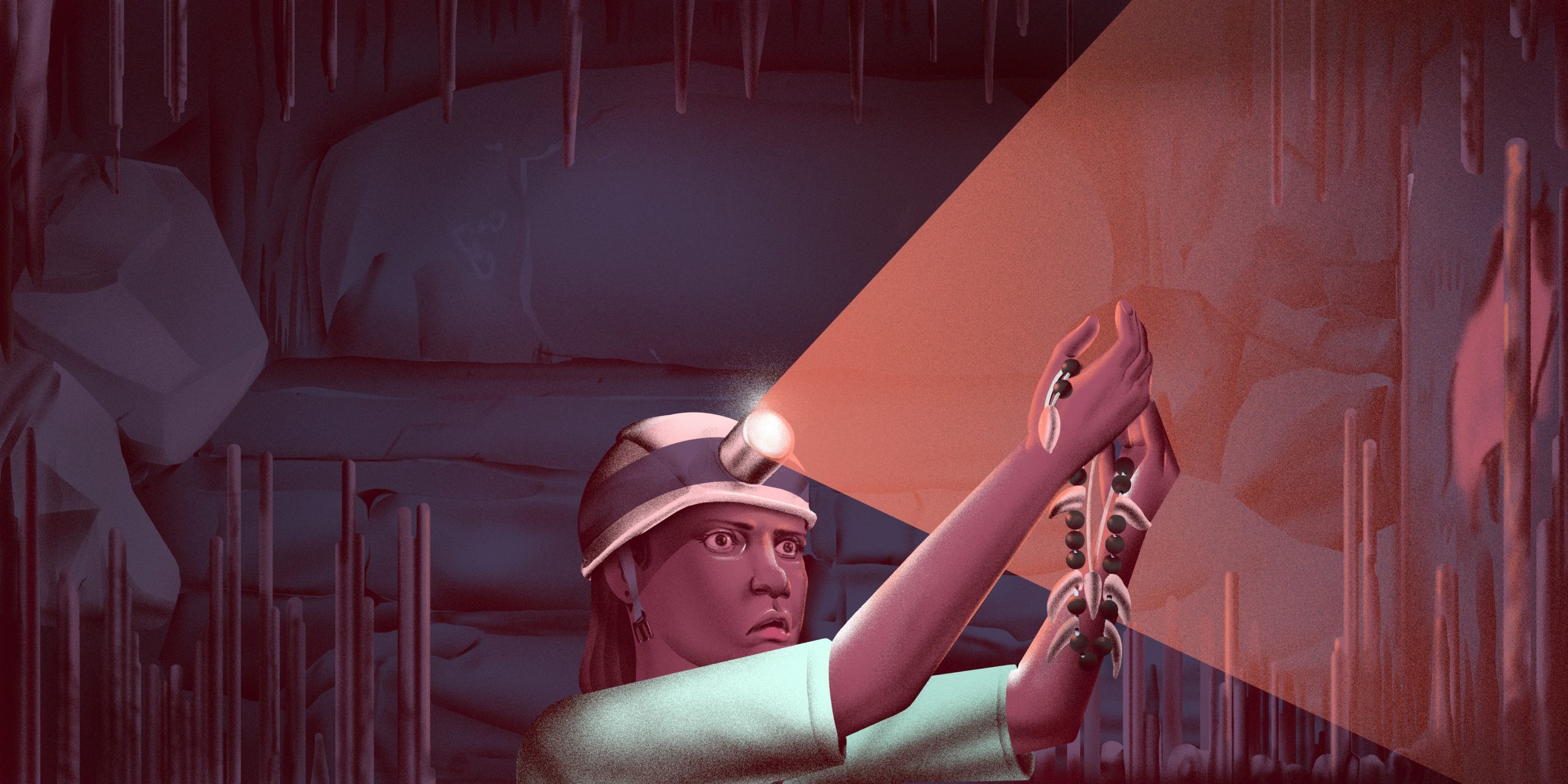
Neanderthals were making art long before we arrived on the scene.
Grow by Ginkgo
47 points · by item · 5y ago · 27 comments
Then the original Neanderthal civilization had a sharp edge over the Sapiens, through thousand of years.
Ok, everyone says here "but technological development SHOULD have happened". And I would say "not necessarily", and it actually could happened a couple of times, but it didn't had the written word advantage to keep building upon learned stuff (you keep discovering-then-forgetting the same things over and over), or maybe there was other factor limiting the Neanderthal technological development (neurological, strong "bad-to-tech" cultural practices, etc.).
You say "not probably", but Homo Sapiens just recently (re)learned to wash hands as a safe method to better health outcomes, maybe for the 40th time in several thousands of years across a dozen of civilizations / tribes who already know about washed-hands = good health:
Neanderthals lasted half a million years, and the more we learn the more we appraise them as sophisticated. That said, they seem to have faced a caloric challenge in a world with sparse mega fauna.
Based on everything I've read, modern humans pre-language excelled at one specific thing: walking very long distances without exhaustion on less calories. Ends up that's pretty dang useful in spreading across the globe.
Mine was an open question. Your speculation about what I might intend to insinuate is perhaps a projection from your own psyche, which you haven't actually articulated, so I can't comment further on it.
If you imagine I was saying something like modern humans were superior to other hominids because they defeated them - I wasn't. In fact, it isn't even true to say species X was defeated by species Y, because the outcome was a merger of (at least) 2 species, not an outright conquest. And as you seem to be saying in your comment, the survival of species is as much about the environment as it is about the qualities of a species.
Your point about modern humans walking long distances efficiently is an interesting one, though I'm not sure how it explains how the world was colonised. Are you picturing some kind of a race to see which species could travel the furthest out of Africa in the shortest time, to plant a flag on America or Asia and claim it for the species?
Wouldn't colonisation have taken place more gradually?
Assuming humans have to exist socially, in contiguous communities rather than solo, generation by generation, human populations would have progressively acquired more land (along the coast, say) by acquiring territory adjacent to their base. This equates to travel in the order of say 100 metres per generation - enough to support new housing and food supply for a population increase of a few percent. The success of this endeavour might depend on inter species competitiveness to a degree, and it would also be limited by genetic adaptability to climate variation as the distances added up over millennia, particularly latitudinally.
[1] https://www.theatlantic.com/science/archive/2016/05/the-asto...
[2] https://arstechnica.com/science/2019/07/humans-may-have-reac...
Just like it happens to migrants in our time, in just a few years, not thousands.
It could be that after 600.000 years, Neanderthals got somehow behind minimal species fitness required to endure lasting species survival, and they were - this time - absorbed by the Homo Sapiens.
At looking for clues about why those initial waves went exting, maybe we could take a look at how more recent tribes or even old civilizations like Incas, Mayas, etc. made it through a couple of centuries, and eventually got "extint".
Some of those groups were surrounded by other tribes, and tried to expand their territories, with different outcomes.
Some didn't tried to expand, they just got well adjusted to their original territory and didn't need more resources.
But everyone in those groups eventually disappeared from history.
Even when the american continent was discovered, the remaining "true" mayas didn't remembered or indicated that those big monuments, cities ever existed already taken / hidden by the jungle. Many of those also, were just found literally hundreds of years after having seen the last true mayas.
They not only had paintings on the wall but they were already using the beak of a live domesticated fowl to reproduce their tribal rhythms from vinyl records spinning on stone turntables.
IIRC their names were Fred & Barney.
So n=2.