408 points · by matsemann · 5y ago · 555 comments
Possible order of hypothetical events:
1. Scientist discover the asteroid. Calculate risk of collision.
2. Asteroid comes closer, probability of impact is calculated as high.
3. People will start saying that we cannot let our economy be controlled by the specter of an asteroid.
4. The asteroid becomes visible. You can see it with your bare eyes.
5. Still people start claiming it's fake news: The scientists are lying, it's a great conspiracy, it's all just to control us all.
6. Destroying or diverting the asteroid is estimated to be so expensive that it will change our way of life.
7. Anti-Asteroid-Action demonstrations would start all over the planet, to protest any expensive actions against the asteroid.
8. News outlets will be asked to be keep the bias out of their reporting, because they would support "asteroid believers".
9. Countries will create treaties to stop the impact by 2030, or perhaps delay it to 2040.
10. Scientists report new data. Impact is certain. Models about consequences are increasingly accurate and dire.
11. These scientists are labeled as alarmists.
12. The rich countries refuse to take the financial burden, because they feel it's unfair.
13. Impact is now a few weeks away. Nothing happened. Nobody did anything.
Update: Layout and spelling.
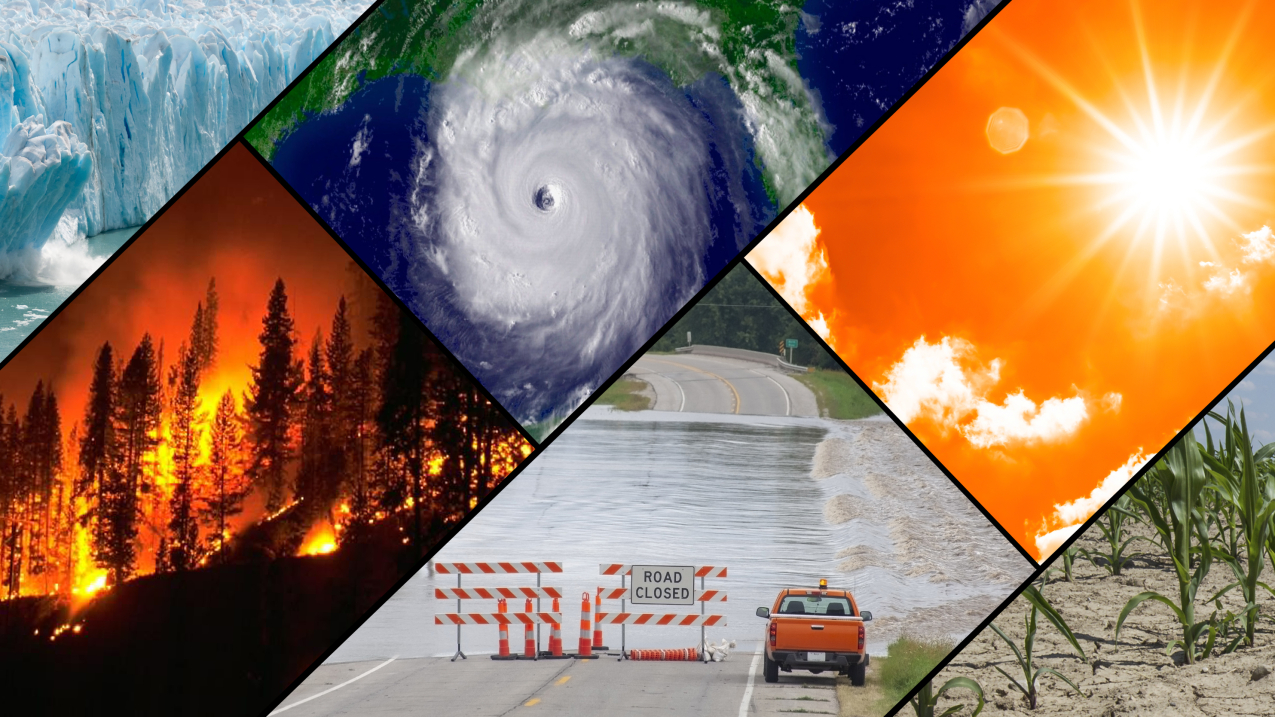
They won't be the ones working outside when the air quality is dangerous from wildfires. They aren't going to be the ones who can't sleep because it is 90 degrees in their home. They won't be stuck in the path of a hurricane without anywhere to evacuate to. They won't be the ones who are left homeless and penniless due to a flood. They won't be the ones who can no longer afford the high prices of food or water. They won't be the ones fighting in wars over dwindling resources. Short of those future resource wars going nuclear, they don't really have to fear climate change the same way the rest of us do.
And if their primary fear of climate change is decreased wealth, it isn't a surprise why that wouldn't be enough for them to sacrifice their current wealth.
This is a valid point.
To clarify, though, I don't think climate change is likely to make humans extinct, but I believe it has a non-trivial chance of destroying our civilization.
If/when the climate gets really bad, human irrationality will go into overdrive, and we'll be a massive danger to ourselves.
And you can see an asteroid heading straight for you, anyone skeptical could just get, or borrow, a scope. I don't think an asteroid collision would induce a politicized disinfo campaign personally, it's too concrete.
People commiting suicide because of their bullying isn't concrete enough, an asteroid might not be either.
(Case in point that everything I have ever thought of has been thought of already by someone else. :) )
More on the notion that climate change is not an existential threat here, from a Professor of Atmospheric Science at the University of Washington: https://cliffmass.blogspot.com/2019/08/is-global-warming-exi...
A hole in the ozone layer? We had better patch it at once!
Global warming? I never liked winter much anyway.
(Yes, they matter _per capita_ but that's a fairness discussion not a capability discussion.)
https://agupubs.onlinelibrary.wiley.com/doi/10.1029/2018RG00...
Uh oh, we are currently going through a Geomagnetic Excursion. Why are we not doing anything about it? Why is the population at large not alerted?
https://www.sciencealert.com/new-study-shows-that-earth-s-ma...
You can show a picture of an asteroid, but you can't really explain the greenhouse effect to consumers and voters.
It's easy to take action against an asteroid, but fighting CO2 emissions is far trickier.
> It's easy to take action against an asteroid, but fighting CO2 emissions is far trickier.
Really?
Political support depends on average people understanding the cause, and not needing to change behavior too much. Asteroid collision satisfies both requirements, but climate change satisfies neither.
Global warming is less obvious risk than an asteroid and still today most of the big economies start transitioning to greener energy. Not at a fast pace, but still a lot of work is being done.
It doesn't mean enough effort is being done to not destroy humankind but there are things happening
But nothing indicates non runaway climate change is an existential level event for humanity. Nothing.
By comparing it to asteroids, and then 10, 20, 30 years in the future, when what happens is nowhere near to the complete eradication of all humans on earth that you are predicting with this comparison, why are you surprised that people don't take activists and scientists seriously.
Stop with the hyperbole. Stick with the facts and only the facts and you may notice that we will have more support then ever in the fight against climate change.
Some say this is a feedback loop.
For some others this is an abstraction which has no concrete meaning.
Why?
Haven't you ever experienced an acoustic feedback loop, where the setup began to screech and howl because the microphone amplification was too strong and/or the speakers too loud?
I think now is the time where we begin to hear the first upswings of that, and it will get louder and louder.
Deafening.
Until we pull the plug.
Considering the inertia of the systems involved it's already too late.
So our plug will be pulled instead, sooner or later.
Except by sucking all that shit out of the air with excess electricty by whichever means, and turning it into something which makes it stay out of the air.
That may make it bearable, maybe.
crisis averted!
Carbon sequestration consumes more power than bitcoin mining ?
I am currently listening to audiobook of Tom Clancy's Rainbow Six (1998). It has a paragraph on global warming and trying to convince POTUS it is real. And POTUS not wanting to act on it because it would be too large economic drag on US.
This book is almost quarter of century old.
It's easy to make fun of, but the most direct experience that people have of a God who controls the universe would be the weather. These people need to be approached theologically; secular explanations are not going to hack it. The fact that polluters have an easy job getting their support doesn't mean that the ideas that they have about the weather originate from polluters.
To preempt a certain type of response, telling them that "climate" is different than "weather" is not going to work unless you can cite a biblical verse that explains that distinction.
We (middle-class PMCs) vastly underestimate the number of honest fundamentalists the same way we vastly underestimate the number of English-speaking illiterates. I'm always amused on HN when people in a thread realize that the reference to demonic possession or witchcraft by another commenter was completely in earnest.
I have been in a serious relationship with a wonderful, intelligent, university-educated, well-read, eloquent person who absolutely believed that Magic:The Gathering led to sorcery, which was in turn also an absolutely real thing (to her).
Similarly, the father of another relationship of mine was one of the most well-educated people I met, well-regarded principal of premier private school in Toronto, host of book clubs to which mayor participated in, but definitely prevaricated between "climate change doesn't exist", "it's not man-made", and "it's god's will/plan". His book club included a published physics researcher and university professor who similarly was the head of local skeptics society until his absolute inability & blind spot to apply skepticism/rationality to his strong religious views, including those impacting cosmology let alone earth weather, became too much of a conflict/contradiction.
My best friend is a Microbiology / Pharmacology PhD from prestigious Canadian university, who then went through medical school later in life; roughly half of her student colleagues in either program were similarly highly religious - with religiously-guided views on cosmology, climate, and of course what they can and cannot do as doctors :-/
The bubble is real, and for all its diversity Hacker News is a bubble of its own.
As I've aged I think I've drifted more and more toward the french view of religious freedom - rather than freedom of religion, freedom from religion.
There are also millions of ultra-fundamentalists who believe that we are presently living in the "end times" and in some cases doing things to attempt to bring about the end of civilization and final parts of the book of Revelations as quickly as possible. Or they simply don't care about environmental matters because they actually believe civilization and human life on earth will cease to exist in the next 50 years.
Can we make choices that effect the outcome of things or is it all part of Gods plan? It can't be both right?
Did God create everything including free will or does it exist outside of his control?
I don't blame my program when it does something wrong, I mean I wrote the code that tells it how to behave.
I’m one of them. I don’t think that is a silver bullet to getting them to shift. Part of their resistance is because they think it’s not possible for them to live in a ecological conscious economy. Too much disturbance.
I have used a theological approach to getting them to adjust. I call it karma. If you Waste more resource, god will punish you. And the warming of the earth now is a result of that waste. We waste far too much like it means nothing. Their is a whole lot of truth in that even for the agnostic. But the agnostic needs a different argument to change. Something along the lines of saving the fragile planet.
Also, "PMCs"? A search suggests "Professional-managerial class" for the acronym, but I wasn't familiar with that. Is an engineer or a programmer considered to be in the PMC?
[1]: https://news.gallup.com/poll/341963/church-membership-falls-...
[2]: https://www.pewforum.org/2019/10/17/in-u-s-decline-of-christ...
[3]: https://fivethirtyeight.com/features/its-not-just-young-whit...
https://twitter.com/co2coalition/status/1397912884756107269
The cynical dishonesty of an organization creating a billboard like that boggles my mind.
They tried to tell me no-one knows how the last Ice Age happened. So I explained, but because they didn’t understand any of the concepts involved they thought I was just making it up.
It’s a good reminder never to assume malice when plain old stupidity is on the table.
Other friends have CS degrees and don't believe it either.
It's particularly hard because there's a lot of little battles that they might win in an argument.
In the end it all comes down to secondary source critique, since nobody is ever sitting there with actual data. It's often "I don't believe in this guy, he's made a career out of scaremongering".
This is the worst kind of bullshit, because it starts with something that's technically true. Nobody is ever going to say the Earth's climate hasn't changed. Obviously, we've had ice ages and warmer periods. And, we've had CO2 concentrations much, much higher than today.
What we haven't had until is human civilization, and the capability to affect the climate ourselves. But, that's never going to impress someone who starts out their argument with "but the Earth has always had climate change."
We are only in this mess because of this attitude. Don't let evil people get away with evil things just because you think they are stupid. The current groups that believe climate change isn't real all believe that because of decades of misinformation specifically targeted at them, by Exxon and others.
Malice is 100% present and 100% at fault for this. Greedy companies wanted more short term money and knew that it would kill millions of people and cause untold chaos and they didn't care.
I have to say, that on some days I almost feel like I share that mindset, as the promise of democracy that I was raised up on does not seem to bear fruits. It feels like people have learned to game the system too well.
This is not typically my public stance; I would very much like for us to do something about it. I'm just afraid that even that amounts to wishful thinking these days.
Hardly anybody is making a genuine effort to look at what's going on and concluding it's not a problem at all. People are against it, often, because of tribalism. They don't like the people who complain the loudest about climate change and the political party they're aligned with says not to worry about it (for a variety of reasons). The climate crisis is also genuinely scary and it is much more comforting to believe that it can't be as bad as they say it is.
The number of voters who say climate change is important is growing every year (currently about half say it's a "critical threat") but that increase has come almost entirely from Democrats and Independent in the US.
Or it would if the audience wasn't resistant to proofs altogether...
This is what we have today when it comes to climate stuff. It's not a conversation. It's often not polite. This has the sad effect of pushing many people we disagree with further into their position. Which is exactly what we don't want.
Maybe instead of talking about climate change, which is a symptom and not the problem, we should talk about “destabilising the atmosphere”.
I feel like people will find it harder to use nonsense arguments if they’re confronted with the problem rather than the explanation.
> Yet the most interesting findings come from looking at data from the Heartland Institute. In fact, the thinktank used the two terms with roughly the same frequency until 2013, when we finally see a decoupling as the use of global warming dropped while the use of climate change remained constant.
> This shows that “global warming” was widely used by climate change deniers over this 30-year period. Perhaps this is because the phrase is relatively specific, which allowed them to contrast it with simple arguments like saying that the planet cannot be warming as it’s cold outside.
https://theconversation.com/there-is-no-evidence-that-global...
Or, more bluntly, "planetary fuckups."
Habitat loss, chemical pollution, overfishing, and microplastics are others, all leading to very bad things on their own.
Climate change is the big one though.
Sorry, but that is even more opaque.
"It looks fine to me!"
Try to explain what happens with an unstable atmosphere and why we need it... and you are better off going with global warning.
The problem is that we don't know what is going to happen. We aren't great at figuring the weather in two weeks. Then look an credit cards where we know and understand the consequences and penalties... and people STILL act irresponsibly.
You have to provide very specific and likely negative outcomes to specific regions.
Yeah, it's fun to blame Republicans for not believing in climate change (and they deserve a lot of blame), but I have a much harder time with people who profess a belief in climate change but behave like climate policy is a nice-to-have.
Downvoters: How are the Democratic reconciliation bill's climate provisions up to the challenge of tackling climate change? Why is climate change a middling priority on the agenda? Or is it all just okay because the Republicans are worse (i.e., we shouldn't let Democratic failure to address climate change distract from the more important work of blaming-Republicans-as-sport)?
The reason what we're getting out of Washington doesn't include enough to fight climate change may not be absolutely 100% the fault of the Republican Party, but it's enough that blaming the Democrats for it to any meaningful extent just smacks of disingenuous both-sides-ism.
See https://noahpinion.substack.com/p/why-has-climate-economics-... for instance (skip the political commentary at the top and go straight to the next section).
Perhaps most ridiculous in rejecting emissions reduction is Senator Rubio who "said it made no sense for the United States to cut its emissions while other countries like China continue to pollute. But at the same time, he also rejected trade policies that would apply pressure on China and others to curb their emissions".
[1] https://www.nytimes.com/2021/08/13/climate/republicans-clima...
I remember when covid started out and there was all those expectations on emissions going down. I got the feeling that some people thought that if we stopped "doing things" emissions would go down to almost zero and if emissions would go down to zero then the problem would be gone almost instantaneously.
I do not think it was intended as satire, but the idea that we should cook ourselves to death to prevent freezing to death has a very Swiftian vibe to me.
https://financialpost.com/opinion/opinion-ipcc-global-warmin...
So now, if you doubt any of (1) it's man made (2) it's terrible (3) it's fixable, you're a "climate change denier."
The question I pose to people which sometimes is misinterpreted is this: What will we do in order to survive climate change? All we hear is how to consume “greener” products.
Where’s the plan for major city relocation, new technologies, etc?
I don't get people.
Rock, paper, scissors, jobs, children. I beat you.
This group deeply believes that technology will solve their problems, no matter how large. All that is required is believing in this strongly enough. There is a nearly rabid belief that everything will be fine because "technology" will find a way.
What these people fail to recognize is that technology is a function of energy. This comes across pretty clearly in Vaclav Smil's Energy and Civilization. Technology has felt magical in the last 250 years because we have had a tremendous amount of energy.
There is a very common myth, one I used to believe myself, that magically in the age of reason man woke up and started creating amazing things. I think everyone in tech has been at least someone seduced by this vision. The cover of SICP has a wizard on it!
What more accurately happened is that we started extracting fossil fuels, and that let to us being able to to magical things, including finding more fossil fuels faster. Even the earliest hunter gathers were able to harness fire and benefit from it. The first agrarian societies learned how to use the sun to build truly solar powered economies. We live in the age of fossil fuels, and as much as we wish it to be true, we are not able to build renewables on a scale and timeline to even begin to replace the magic of fossil fuels. In fact we continue to globally use more of every fossil fuel every year. Renewables are only able to supplement our insatiable hunger for energy.
So technology can't magically save us from our energy problems because energy is the magic that makes technology happen. But for many here such statements border on heresy.
First, it's possible to accept that climate change is a huge (and largely man-made) problem, and also believe technology will fix it.
Second, you're talking about a centuries-scale trend about the relationship between technology and energy, and we're talking about the technological breakthroughs that are possible in the next couple decades if we all work together on this important problem. While it may be true that energy begets technology, technology also begets technology.
Thirdly, you seem to be under-estimating how much energy we can actually get from the Sun with today's technology. We have the tech and economic output right now to completely supply our energy demand with the sun within 10-20 years via worldwide solar farms and a trans-continental grid (so the daytime side can provide for the nighttime side). Again, if the entire planet comes together to make that happen. The only thing we don't have is the will. Telling people "we're doomed, it's too late, we'll never have the technology because of this flimsy historical correlation, just lay down and die" harms the global will to fight the problem, rather than helps.
The far bigger issue in addressing the global warming matter is actually people who seem incapable of having a rational and logical discussion and debate about things, and instead simply demand imposed obedience and blind trust in people who repeatedly and constantly on many different topics keep proving themselves untrustworthy and even malicious in intent. It is in fact also why we will end up in global conflict over not just this topic, but all other topics that will also be on the line when the dam breaks.
It is unfortunate that people, which you may or may not belong to, are so ideologically and fervently obsessed that they aren't actually talking about "global warming" at all, and what underpins their base assumptions are not only a deep rooted compulsion to hate their own, but also are driven by a need to dominate and subjugate others. It is akin to a psychological state in a turned/toxic relationship, where a deep and irrational resentment based on real or even just perceived slights and insults boils over into ever increasing hostility and often even also blind need to dominate or "win" even if it means self-harm and spiteful self-destruction. It is essentially a manic episode on a societal and civilizational level that we are going through, not just regarding "global warming" but on many different topics like gays, trans, immigration, freedom vs authoritarianism, etc.
They are all issues that are like in a toxic and unhealthy relationship where resentments have built up so badly (regardless of origin or legitimacy) that, no, e.g., she blows up over tiny things as a proxy for whatever the far bigger issue is.
Now, considering how highly educated (not only he was a great author but he also had studied MD) and smart (this should be obvious to anybody that has read his books and watched over his career) he was, it means a lot to me that this person had these beliefs. Also the fact that he is not related to the field so he doesn't have anything to gain by believing and advocating these opinions makes the fact even more important.
As I said I am really puzzled about that. Does anybody has more information to shade a light on that?
However I don't think that he was doing it just to present himself as smarter than the other people. He firmly believed that opinions, at least that's what I was getting out of his talks and some of his books.
If you think something is "controversial" because one person thinks otherwise, we would never land at anything.
Look at their arguments and proofs. If you don't have time to examine those, look at their credentials and motivations.
Michael Chrichton was a writer and filmmaker. Not a climate resarcher.
https://climatecommunication.yale.edu/publications/politics-... https://www.pewresearch.org/science/2020/06/23/two-thirds-of...
The key thing to remember is there was a deliberate decision made around 40 years ago to try to delay actions, by the time companies like Exxon realized it was a real threat[1] — and that was far from the time the risk was first posited: here's someone in the 1920s saying it was probable:
https://chroniclingamerica.loc.gov/lccn/sn87055779/1918-09-1...
Part of that strategy was to turn it into a partisan issue and there are billion-dollar companies (Fox, Facebook, Google, etc.) helpfully providing communications platforms to ensure that message is constantly available in circles they believe might find a receptive audience. Note that I'm not saying their executives all share that view — only that it doesn't bother any of them enough to turn down the ads and engagement metrics.
Because that was successfully turned into a partisan issue, that means there are many millions of people who are faced with the choice of either admitting both that they were wrong and that this is because people whom they trusted were lying to them or continuing to hope that it won't impact them much and they can just continue to make no changes, which is quite correct given their average age and affluence.
https://www.documentcloud.org/documents/2805576-1982-Exxon-M...
The general story line about the terrorists trying to "deal" with the global warming is ahead of its time. Don't want to spoil it for anyone, but it's funny how the President wasn't the (most) ridiculous one there.
I am literally listening to it right now!
Unreal
Al Gore was holding congressional hearings on climate change when he was first elected to Congress. In 1976. Environmental issues were the focus of his efforts during his Vice Presidency. From 1993 to 2001.
So. We're actually closer to 50 years.
It's not like we were not warned.
I do, however, know several highly intelligent people who have looked at the atmospheric carbon and temperature data and wonder (quietly, for obvious reasons) if we might have got the causal mechanism story wrong.
> CO2 produced from burning fossil fuels or burning forests has quite a different isotopic composition from CO2 in the atmosphere. This is because plants have a preference for the lighter isotopes (12C vs. 13C); thus they have lower 13C/12C ratios. Since fossil fuels are ultimately derived from ancient plants, plants and fossil fuels all have roughly the same 13C/12C ratio – about 2% lower than that of the atmosphere. As CO2 from these materials is released into, and mixes with, the atmosphere, the average 13C/12C ratio of the atmosphere decreases.
...
> What is found is at no time in the last 10,000 years are the 13C/12C ratios in the atmosphere as low as they are today. Furthermore, the 13C/12C ratios begin to decline dramatically just as the CO2 starts to increase — around 1850 AD. This is exactly what we expect if the increased CO2 is in fact due to fossil fuel burning.
In other words, all CO2 with biological source (including fossil fuels) comes pre-tagged, and the pattern we see in the atmosphere exactly matches the assumption that they're from fossil fuels.
So, unless your acquaintances theorize that it's the global temperature that drives mankind's demand for fossil fuels, there's really no ground in doubting the causal direction.
It's too bad they're doubting quietly. If they actually voiced their doubts in the form of an honest question, they would have learned about C13 ratio by now.
When you look at the graphs for atmospheric CO2 and man-made carbon emissions laid on top of each other, it looks perfect. This is the money shot. But, when you lay the 150 year temperature data on top of it, it suddenly doesn't look so good (ignoring the normal 11 year solar fluctuations, just looking at the general trend line). There's a 70 year stretch when temperatures are flat to declining as atmospheric CO2 climbs by almost 20% (in advocacy training we'd be encouraged to skip past this: zoom out and highlight that they are _directionally_ similar and definitely never chart in percent change, of course).
Personally, I still ride with Team Atmospheric Carbon. But I also don't think there's anything unhealthy with good-faith questioning of the new dogma. The Earth's magnetic field has weakened by about 5% over the past 100 years. Global temperatures have risen by about 5.5% over the past 100 years. The magnetosphere protects the Earth's atmosphere from charged solar particles which would otherwise strip off parts of the upper atmosphere, allowing more UV radiation to hit Earth. Is that a coincidence? Maybe. Is increased UV-B penetration just as likely to cause warming as increased reflected infrared radiation? Yeah? So I keep an open mind.
End of June (June! Not even July/August!) we had a heat wave. What would you expect to find in such an event? Maybe 34? That sounds pretty hot. 35? 36?! How hot can it get in a place that has never seen higher than 33C in 100 years?
Well, it hit 42 god damn degrees. If you told me I would ever see that, if I lived to be a thousand, I would not have believed it. Over 40C in a place where 30C is a hot day, where a year going by with zero days above 29C is the norm.
Yesterday hit 38. That would have been shocking last year. Today I was glad it was under 40.
But yeah nothing scary about a hot July. Right. No denial at all.
Where I live, we've had the mildest July in many years. It only hit 90+ for a day or two. That's unusual. We've had more rain and cooler temps than I can remember in a decade.
Argumenting global climate change from your local experience does not work.
It only works when:
* you can measure things globally (you measure the effect)
* you understand relation between the greenhouse gasses and the measured global climate change (causation)
Fortunately, we have both. We both measure temperature pretty much everywhere and we understand the underlying mechanism of the change even if we can't exactly predict how the chaotic system will be have in the future.
Figures 1-4: https://www.epa.gov/climate-indicators/climate-change-indica...
https://www.climatesignals.org/data/record-high-temps-vs-rec...
https://www.axios.com/climate-change-warm-cold-temperature-r...
https://phys.org/news/2019-03-ap-hot-falling-cold.html
https://skepticalscience.com/global-warming-cold-weather.htm
This hot July had my fingers on emergency services as temperatures rose, AC couldn't keep up, loved ones with asthma and already trouble breathing sometimes, etc. This hot August has unhealthy fire smoke and it's difficult for me to breath outside if on a long walk.
Physical realities of this hot July for just me, in my one physical location, were INTENSE. And that's not even considering the idea that most future Julys will be hotter than this one.
And that every month being so hot is a leading indicator of more chaotic weather in all the bad ways - storms, heatwaves, etc.
I honestly don't know how you could live through this July and not be scared of it. Maybe you got lucky with your location? This July was 100% miserable to live through and totally scary.
It seems like there are now several imminent threats to continued human thriving on earth, global warming among them. But humanity cannot collectively solve its problems (anymore?), and I have not heard anyone smart propose a practical way to think about solving the problem of humanity being unable to collectively solve its own problems.
The more panic that gets spread, whether moral or existential, the more people seem to just throw their hands up. I find this understandable, although depressing, because even small contingencies of voters within a place can't agree on the basic terms of reality anymore. It isn't obvious to me how Russia, China, EU, India and US will come together soon to alter course. But a lot of municipalities will pass legislation that amounts to virtue signaling.
What's scary when everything you've read from the media your whole life promises mass death and suffering to come? Everything and nothing. By some forecasts dating back 50 years, it was supposed to be over by now. The Malthusians thought the planet would run out of food a hundred years ago.
I think this current era has a higher likelihood of being a true threat to humanity, but how much study should I undertake to be sure? How much work should I do to look behind the headlines, that at least 30% of everyone knows are full of lies and sensationalism. What is the impact of my individual contribution or vehement agreement that things are dire?
How can we replace the insistence that everyone be afraid with the insistence that we do something constructive about it?
Cold kills more people than heat. Milder winters will save more lives than will be lost in hotter summers.
Sorry that you had family members that were affected by this.
But, no it doesn't seem scary. The fires are caused by poor forest management (talked about in another thread this week). But, I am in South Carolina, and this week it is in the 90's like just about every week in August ever down here. And actually, this summer, we have gotten a ton of rain, more so than I can remember. But, it's been hot like it always is in the summer in the south, I can't say I ever walked out my door this month and been scared about it.
The same people who think there are more risks for old people to take the covid vaccine than to not take it.
Not everyone is rational, and especially on climate change were acting means much more than moving 10km to get the vaccine
Climate deniers - Depends how you define them.
I've been called that but my position is that it is happening, some of it is attributable to human activity, but it is not happening at a rate that we won't be able to adapt to.
They've just been so inundated with propaganda that they take the terms "act of god" so literally that they don't believe at a base level that humanity has the power to modify climate in ways that'll hurt us in the long term. Sort of that Teddy Roosevelt line of thinking; when he heard that buffalo were going extinct he organized a hunting party to not miss out before they were all gone. The idea is that any problems we cause, we'll be able to fix after the fact or won't really matter. The idea of being shepherds of the earth rather than simply inhabitants is a very new one, at least among western cultures.
Half of all voters say it is a "critical threat," up from 40% in 2017 according to https://morningconsult.com/2021/04/27/paris-agreement-climat...
The mass of the atmosphere is 5 x 10E15 tons. To heat that up by 1.5 degrees is off my scale of intuitive comprehension by a couple of orders of magnitude.
My skepticism was rooted in the fact that politicians, pundits, and the media were trying to scare me about it. Any time politicians or the media try to scare me about anything my default response is to assume it's a get out the vote drive or a power grab and to become extremely skeptical. This isn't partisan. It doesn't matter if the politician is "left" or "right."
I still think that should be a default suspicion, but that means you have to dig and check the details and check multiple sources.
Seems like a rather useless razor, since politicians often both say pro- and against- arguments for things.
But here especially, "politicians" or "the media" trying to scare you about it is a bit of a red herring. E.g., the media was talking about it because scientists were making claims. Scientists have been wrong before, of course, but discounting the claim because "the media" picked up on it instead of looking into things like "how many scientists" "how long is the trend" "what is the reasoning" is just foolish.
And who would exactly benefit from peddling that kind of conspiracy?
The problem is you can tune into those hosts with a simple AM radio. Getting access to the scientific literature is somewhat more difficult, especially if you are a tech illiterate.
I'm sorry, but this excuse borders on a clear lie. There were "politicians, pundits, and media" lined up on both sides of this issue. And there had been going all the way back to the dawn of the issue in the 70's.
What happened was that you chose to believe one side. And it was wrong. But rather than admit that "your side" was wrong you're blaming the "other side" for, I guess, making you distrust them on a subject where you should have trusted them.
> I still think that should be a default suspicion, but that means you have to dig and check the details and check multiple sources.
Which is exactly what you did not do! You get that, right? Rather than check details and multiple sources, you chose to walk away from the people who were telling you the truth.
To be fair, a combination of heuristics that say "distrust people with proven record of lying" and "ability to detach your opinions from reality is a significant advantage when getting and maintaining power" and "lacking external corrections, any ruling system will accumulate exclusively those who spend most of their effort on power games" strongly promotes automatic distrust for any an all politicians.
And I can't say those heuristics are wrong. Then if is up for individual to become an expert in all areas of life or be left to their natural biases...
So yes, ACC is real, but we should still encourage honest people to investigate and propose a better explanation if there is one. Drowning out honest voices makes the entire scientific community look bad. (Certainly, we should not give a platform to dishonest, known frauds)
The presence of any strong uniform ideology makes me extremely skeptical just like political interest does.
I'd summarize as: I assume that strong ideological beliefs or political motives make people irrational, dishonest, and untrustworthy.
There is an enormous momentum, by the time the model predictions are here in the """real world""" you already have both feet in the grave...
I think people are "crisis hardened" at this point. So much news and opinion about most everything is framed as a "crisis" and people are just sort of tuned out to it and they're sick of being made anxious about everything. It feels a whole lot better to have someone else say "don't listen, they're just trying to scare you to get power" and people will tune into that eventually.
I think people see hypocrisy all over the place as well, especially in the climate issue and people hate being preached to. People hate hearing that they shouldn't have meat, they shouldn't have a car, they shouldn't fly, etc. They fear the currently proposed solutions like taxing these heavily or rationing it. Simply put, people at large will not get behind a massive project like this politically until it is sold as something that makes their lives better. That they don't have to give these things up but that we should work towards doing them better.
It's especially difficult with this issue too since it's been sold poorly (global warning, then why is it freezing today?!) and it's a very slow process when considering a human's life. Yes, the data we have and the models we have are compelling. However, denial is a powerful thing especially when people are told to listen to an authority that wants to take their pleasures away.
I just don't think going around calling other people idiots or asking why they didn't just listen to scientists (science and especially scientists are not infallible.) is very useful. To get a super majority behind this we need to sell it as a project to not take away anything but to find new ways of doing it without putting excessive CO2 into the atmosphere. That you can have a steak, and a car, and un your AC, and travel but that we also need to agree to finance projects in making these things sustainable. That engineering ourselves a better future is possible and that stopping doing things doesn't have to be the way.
I don't know, I just think psychology of how it is being sold is ineffective. Unlivable conditions, death, the Earth's destruction should motivate people but the threat just isn't imminent enough for people to sacrifice. I think it does the opposite and sends people looking for a safe place where it's going to be OK and anyone who tells you otherwise is just trying to pick your pocket. Our style of government is not great at unifying around big projects and unless the threat is clearly imminent and/or in progress. We need persuasion to win and positive visions for the future to get there.
I grew up with ample evidence and cries of scientist of the reality of global warming, and no actual real evidence to the contrary.
And everybody else grew with the same information.
If you think that it is ok to deny everything "because somebody said so" until your house burns down because of it, then you are THE problem.
Please, don't push responsibility somewhere else.
No, straws and plastic bags won’t abate it. Electric cars are nice but won’t do much to lessen emissions.
They need to address industry, shipping and population growth. The last one might be a third rail for some countries. But look, China did it. The west did it (via progress on education, etc).
It was never recycled. Pretty much always was systematically illegally dumped into the ocean.
That will be a very hard sell, as most of the people that count and actually take the decisions that matter still don't believe in Malthus.
> The west did it (via progress on education, etc).
Unfortunately that is still not enough as long as those same Western consumers will keep, well, consuming as much as they do. Problem is that changing today's consumption patterns will most probably have huge (negative) economic consequences for most of the world's population.
Straws and plastic bags are about pollution more than global warming, I think.
> They need to address industry, shipping and population growth. The last one might be a third rail for some countries. But look, China did it. The west did it (via progress on education, etc).
I'm not a malthusian, but there's still good news for those types. Birth rates have greatly declined globally, and continue to go down. This is largely due to greater access to education and contraception, which I think we can almost all agree are good things.
https://data.worldbank.org/indicator/SP.DYN.TFRT.IN
> Electric cars are nice but won’t do much to lessen emissions.
Transportation is 29% of emissions in the US, and over their lifespan, electric cars have much reduced emissions. They will get better as we transition away from fossil fuels, unlike gasoline cars. Fun fact: in the US, 40% of our power already comes from nuclear and renewables.
https://www.epa.gov/ghgemissions/sources-greenhouse-gas-emis...
Banning plastic bags has immediate results in containing visible litter.
That would be possible with well thought out tariffs. Foreign countries (like China) have no problem bringing online coal power plants at an out of control pace. Then, with all these cheap power plants it's no wonder they can undercut every European and American manufacturer, who has to pay for green energy and environmental norms.
Population control WOULD be effective at solving the problem. That is if it was humane.
Your arguments seems true because at first sight it looks (and it is true) that it is the first world that emits most of the greenhouse gasses.
But everybody forgets that the third world countries do also experience progress and will also want industry and cars and air conditioning and KFC and AliExpress packages shipped to their doors.
That they don't do it now is just because they don't have means to do so, but they work very hard to get there.
That being said, can you elaborate on how "anything green related" costs an arm and a leg? Do you have a few examples maybe?
If it refers to something like organic food, then, well, yeah... mass producing food without regard for anything but efficiency in creating said food will make it cheaper, not doing that means higher prices for still turning out a profit.
But I don't want to put words in your mouth, please say what you were thinking of.
It is us, right now, who are exploiting the world.
It is our kids and their kids that are going to pay for this.
And here somebody complains "the cost is too high".
It is as if the robber, after robbing your house, complained the bus fare was too high to get to work, so it somehow excuses the theft.
apparently thats just completely backwards
We need to focus on innovations focused on extracting CO2 directly from our atmospheres at scale.
An interesting read on the topic: https://www.bloomberg.com/news/articles/2021-03-05/bill-gate...
"We describe a process for capturing CO2 from the atmosphere in an industrial plant. The design captures ∼1 Mt-CO2/year in a continuous process using an aqueous KOH sorbent coupled to a calcium caustic recovery loop. We describe the design rationale, summarize performance of the major unit operations, and provide a capital cost breakdown developed with an independent consulting engineering firm. We report results from a pilot plant that provides data on performance of the major unit operations. We summarize the energy and material balance computed using an Aspen process simulation. When CO2 is delivered at 15 MPa, the design requires either 8.81 GJ of natural gas, or 5.25 GJ of gas and 366 kWhr of electricity, per ton of CO2 captured. Depending on financial assumptions, energy costs, and the specific choice of inputs and outputs, the levelized cost per ton CO2 captured from the atmosphere ranges from 94 to 232 $/t-CO2."
[1] https://carbonengineering.com/ [2] https://www.cell.com/joule/fulltext/S2542-4351(18)30225-3
But for the record, I absolutely don't believe it's that cheap to take CO2 out of the air at scale. So this whole thing is a pipedream.
The journal is Joule.
However, How many plants (and at what cost for building these plants), would there need to be, in order to make a meaningful difference? For example, would a $100 billion dollar investment over the next five years make a meaningful impact?
For example, people don't want to live in the Rust Belt because the winters are too cold. Could the region's economic viability increase if winters get milder?
In some places, climate change makes things worse for growing crops, makes people need to move out, or increases the probability of disasters. Everyone is talking about this.
In other places, climate change should be making things better for growing crops, making people want to move in, or decreasing the probability of disasters. Why is no one talking about this?
What's up with the asymmetry?
Edit: Wow this got downvoted fast. I was hoping to get meaningful answers to a genuine question from knowledgeable people with minimum political agenda, but apparently the HN crowd isn't good at dealing with even slightly contrarian takes on this issue.
First, I'll address your asymmetry comment, with a couple of example points.
> crops
This is a common misunderstanding I see. Crops aren't solely viable because of climate -- a large portion of crop-viability is due to soil quality, which is built up over many many years. As areas that have traditionally been extremely cold become potentially more viable, crops are much less effective because the soil has not historically had a lot of fertilizer-producing flora/fauna.
> decreasing the probability of disasters
As far as I understand climate change, this is not expected anywhere. A disaster can be considered an event that goes dramatically against the norm. For example, flooding [extreme rain], drought [extreme lack of rain], fires [extreme heat], crop freezes/cold snaps [extreme cold]. Climate change essentially results in increasingly extreme deviations from the norm, so "disasters" go up. There's nowhere in the world I'm aware of that is going to get more consistent from climate change.
> make people want to move in
Even if climate were a zero sum game, and some places got better while others got worse, forcing everyone to move would be pretty awful. Further -- it's not a zero sum game, as mentioned in my last point.
The final point I'll make around climate change is that it's very likely to lead to geopolitical instability. As some areas become unlivable, famines, wars and refugees become more and more frequent.
I live in a rather less urban area than most HN readers, but I actually don't know all that much about farming.
I'm fascinated about some of the implications of your comments.
Having seen potting soil and fertilizer for sale in greenhouses and garden centers, I've always assumed soil fertility is a portable, manufacturable commodity. That is, if you want to start a farm in a place with the correct climate but unsuitable soil, you can simply buy healthy soil from somewhere else to get started, and then after a while your crops will establish themselves and create a somewhat self-sustaining ecosystem on your fields that only requires input of sunlight, water and nutrients that are commodity chemicals (nitrates and phosphates that can be mined or chemically manufactured).
Where does the bought soil come from? Established farms. Presumably crops have some capability to create soil from barren earth over time, so you can safely harvest and export 5% of your soil a year, or something. Or you can use dedicated compost piles which produce soil from crop / livestock waste. Perhaps occasionally importing rocky / sandy / clay soil to replenish the base mass.
You seem to disagree with this view; your comment instead implies that soil fertility is more fixed, not fungible. I find this interesting, and want to learn more.
The "AMOC" might stop, in other words. Maybe not? Let's hope. But is it worth the risk of pushing things so far that we might just find out?
Most of us don't live in Siberia or Greenland. Sure these places might become great because of climate change, but it doesn't matter, since barely anyone lives there.
In the places were we do live, the temperatures are already (semi) ok, meaning that increasing these temperatures will bother more people than it will help.
Furthermore, most people live close to water, which means a rising sea level will be bad for them. Maybe (probably not, but just imagine that) after the sea level has risen we have more viable land that is close to water. However, at that point all the current cities have been ruined by it, because they were built for the old water levels.
"Billions of Acres of Cropland Lie Within a New Frontier. So Do 100 Years of Carbon Emissions: Crops grown on this land could feed a growing population. But if these soils are plowed, they could unleash as much carbon as the U.S. emits in more than a century." https://insideclimatenews.org/news/12022020/agricultural-fro...
And I don't think people should be able to downvote a question without answering, or upvoting a response that addresses some criticism, I agree it sucks.
Some areas may become more livable, but we're talking the extreme northern reaches of Canada.
If you are curious about where humans were measuring temperatures between 1880 and now, I put together an animation[1] of temperature station locations in GHCNv3 some time ago. With GHCNv4 out, it is due for an update, but still informative.
And this is still a thing.
That’s a symptom of a much, much deeper problem.
I don't think that's really what they're trying to do. It looks more like garden variety virtue signaling. Just like flags in the back of the truck, etc. They're announcing membership in their tribe. I do wish they'd choose something that didn't pollute the air we all breathe.
Unfortunately, this is nothing new.
I think the deeper problem is that even "concerned" people have emissions deeply baked into their lifestyles but don't realize it because they check all the right cosmetic boxes.
"Okay apparently in Texas we have moved past climate denial within the oil and gas industry to outright CHEERING ON THE RCP 8.5 APOCALYPSE"
Teslas and solar panels are cool now.
There is some hope.
They're the tip of the iceberg, as it were, the visible portion of a largely invisible but sizeable community who establish (through direct action, voting, and how they spend their money) a pattern of willful environmental destruction. And this is even without considering climate change. These are the people who think it's fine to toss garbage on the street, which has a much clearer and short-delay impact. If they don't care about that, good luck getting them to think on anything with long-delay impacts.
Some guy blowing up smoke in the truck might make you raged but it's misplaced. Can we get raged at the coal powered power plants?
There are more than just power plants to worry about... Concrete is 8% of our CO^2 emissions, agriculture is 9%. There are these things that no one thinks about that need to be addressed as well that sneak under the radar. There are teams working on them that don't get the glitz and glamour (or funding) that will make an impact, if adopted.
EDIT:
I'm not downplaying transportation pollution... just a quick edit to make it clear.
The concrete thing probably still flies under the radar though.
(Warning: these videos will make you very mad.)
https://www.youtube.com/watch?v=mS5psOvHFIE
https://www.youtube.com/watch?v=ZdDxjge5hmY
https://www.youtube.com/watch?v=dHmJSsRLgj4
https://www.reddit.com/r/PublicFreakout/comments/j1yj0c/trum...
This should be some sort of crime.
edit: Sorry, I edited out my comment about this probably giving bikers cancer after I included more videos. This can't be healthy for the lungs.
edit 2: Downvoted to -3 for calling out this shitty behavior? y'all are insane.
I said this to someone who showed me one of these videos once and they basically told me to wise up and stop being paranoid.
How about the whole world stops being a pack of idiots instead?
YC is funding startups in this space: http://carbon.ycombinator.com/
The climate of the Jurassic was generally warmer than that of present, by around 5 °C to 10 °C, with atmospheric carbon dioxide likely four times higher. Forests likely grew near the poles...
Wherever happens the planet will continue, same can't be said for modern human civilization on said new climatic landscape, wheat, corn, and other plants staple foods just didn't exist back then and heck knows if we'd be able to keep cultivating them with such different weather patterns and co2 amounts
I believe tho, that rsther than you quoting the jurassic, you ought quote the Permian triassic event, that's certainly more apt for how abrupt current atmospheric changes are
We can and should continue to discuss and explore our options for sustainable civilization, but at some point we need to start mitigating the risks for calamitous outcomes.
It feels a little like we are living at the base of volcano, debating about the best way to prevent the volcano from erupting.
Fundamentally policy changes to curb global warming will have economic consequence, those of which will be borne disproportionately by the poor. E.g. efforts to curb oil and coal extraction will naturally result in the price of energy going up.
I can tell you it makes no difference to me if gas is 3 or 4 dollars a gallon, but it matters a lot to those who live paycheck to paycheck. And especially to those impoverished and living in emerging markets.
Im not suggesting a specific policy course of action (at least in this comment), but we'd be a lot better off if there was more of an effort to quantify impact of action/inaction using real numbers.
Temperature is projected to be X by year Y (we have varying projections of this), and the cost to humanity is Z.
What level of economic sacrifice is justified to address this and how much should we frontload that effort?
Should the poor bear the largest burden, or should we normalize the cost somehow? (Energy subsidy, remittances to emerging economies to use cleaner energy)
I have no doubt people have run these numbers, but I don't see the connection being made to specific policy proposals.
But the conclusions are unanimous: it’s going to cost much more to do something today than it would have cost yesterday, and it’s going to be much more expensive tomorrow. The poor are the ones that will be hardest hit, not because they can’t afford AC, but because its their food that won’t grow when there’s no rain or too much rain, and they can’t move.
Science is currently speaking loud and clear: do much more than is currently planned, or we are facing centuries of wildfires, floods, storms, food and water shortages and hundreds of millions of refugees trying to find new futures.
And this is not alarmist. This is what climate scientists, like Cassandras, have been shouting about for decades.
I’ve met a few like you, who think they represent the voice of balance and reason. But you are the ones that still are haggling over the price of buckets while the fire breaks through the roof of the orphanage.
Saying there will be floods or wildfires is not meaningful discussion. We've had those throughout all of recorded history. How much worse will those things get? What is the economic cost?
Just saying climate change is bad because X, Y, Z danger and not quantifying the actual impact with numbers is simply a discussion of hysterics.
There's an endless list of bad things in the world, and logically we should address them from most impactful to least impactful. So where is the math justifying policy X with economic cost Y?
And as I said in my comment, yes studies have been done. Where is that in political discourse? To the average American, addressing climate change will have effectively no impact on their livelihood within their lifetime. Economic consequences will have an immediate impact. That's simply a fact.
Will it get hotter by a few degrees with some knock on effects? Yes. But very little actual impact on day to day life. It becomes obvious to see why many people will vote against these policies.
If you can describe to somebody how it will meaningfully adversely affect their life, you will get more support. Hence why I suggest using numbers rather than "scare language" when discussing.
It’s the report from 2014, the updated one will come next year. It’s a few thousand pages, but still just a summary of thousands of academic studies. You can go to each individual paper if you want exact confidence interval for each study.
Climate change is already impacting the average American with wildfires, drought, more hurricanes and floods. Costs of insurance in many areas and homes that are no longer possible to insure.
And for the political discourse. Just fucking google it! It’s everywhere. There are countless studies and articles and discussions that are easy to find.
The idea isn't to punish the poor for driving to work. Rather, it's an attempt to charge the major carbon-emitters for their pollution of the commons (the atmosphere), then compensate the public with that money.
But any policy without an explicit redistribution scheme will raise the cost of business, and thus, raise the cost to consumers (as businesses pass these on).
e.g. for demonstration, imagine you sell apples for a 10 cent profit. Government enacts a 10 cent tax on apples. Now you must raise your price to consumers by at least 10 cents to stay in business. Consumer feels the effect of the tax
Market based solutions are still best, though.
By raising the price of apples, some people might just choose to eat pears instead, and still collect their rebate from the apple tax.
(People can buy electric cars, hybrid cars, take public transit, ride their bike, etc)
Water level rises by how many feet, displaces how many people? What is the cost of the coastal real estate lost? It can all be quantified (within range).
You'd probably find that for poor areas it's quite cost effective for people to relocate. New York City going underwater is much harder to replace. Obviously due to the level of cost to replicate the construction.
You say famine... Why would climate change bring famine? Farming and arable land would just shift to more cost effective areas. Some arable land is lost, others is gained (cold areas becoming warm). Building logistics to transport food to localities that can't support it locally is a good idea, and easy to achieve. That's the power of trade.
I don't dismiss the reality or impact of climate change at all, but look at the responses I get. Just people taking hyperbolically without really getting into the details that matter. Or lacking convincing and detailed statements. It's all hand-wavey and vague generalities about flooding or fires.
I am about to hit 30 and I've never had an opportunity to vote for a winning government. I have been powerless to do anything other than basically pointless personal responsibility actions for my whole goddamn life. Sure I've gone vegetarian and bought green energy, I don't drive and try to avoid flying but it doesn't make any difference.
So given we live in democracies where the majority of voters will block any kind of progressive action (or authoritarian regimes) how do you cope mentally? And effectively stoicism is the only course. Don't take liberties with the environment in your personal life and support and promote solutions at a social and fiscal level. But you can't change any of this shit. The next generation is going to blame my generation and that's completely fair but there's nothing I could have realistically done.
Acceptance is important to stop the despair, feelings of doom and self hate. It isn't the same as denial.
But is there a place somewhere that explain how could the world works without emitting too much co2, or any gaz which are problematic. How do we replace cars ? trucks ? how many people on earth is possible ? Can we have plane ? Boat ? How do we produce clothes, how do we have electricity at night ...
I'm not asking to have a plan for everything, because this is not possible. But a complete description of important areas of life
Invest on lowering the price of solar and increasing panel production;
Invest on lowering the price of batteries (I'm not sure ramping-up production is wise right now);
Invest on nuclear power on the (very few) places it can be ramped-up quickly, and stop taking offline the reactors that have no extraneous safety problems;
Invest on electrifying transportation (that's mostly by replacing trucks, buses and cars, but if it's viable to replace things by trains, that's a double gain, I would ignore planes for the time being);
Invest on lowering the costs of carbon capture (I would focus on atmospheric capture for chemical usage, but any kind could be great);
If you live in a place without them, press for carbon taxes, the government can use the money to pay for the things above or distribute it to the poor. It's easier to get if you make it mildly protectionist, but that has the side effect of impoverishing your local economy (politics is weird).
You personally can not do much, unless you have a lot of money. But any reasonably rich government can do a lot of change (it doesn't even to be at the national level).
Per capita per year CO2 emissions, in tonnes:
US 16.06
China 7.1
EU-27 6.56
France 4.97
World 4.72
Sweden 4.26
India 1.91
Maybe the answer is somewhere between Sweden and India.* Clean electricity generation (solar, wind, hydro with some sort of grid storage/distribution mechanism to handle when sun isn't shining/wind isn't blowing) and
* Electrification (EVs, non-gas heating)
> Can we have planes
Yes, at some point. Electric planes are being explored but have difficulties with battery weight. Another possibility is green hydrogen or perhaps some other yet-undiscovered energy source. Planes account for a relatively low percentage of global emissions (maybe 2% right now?) so this is not a priority
> Boats?
Yes -- electric pleasure crafts exist already. For long haul/shipping I'm not totally sure what's being worked on, but it certainly will be possible
> Clothing
Another space I'm not super familiar with. Again, it's important to remember that we need to focus on the heavy hitters, which currently are dirty electricity production (ie coal plants) and transportation (gas-powered cars)
As for storage for the grid, are we actually confident that we can transfer that quantity of energy between countries ? Because if everything becomes electricity powered. That means a lot of power over long distance.
Do we know if there are enough natural resources to produce that amount of lithium batteries also ?
> Can we transfer power between countries
Certainly possible, but requires infrastructure build out. Most countires can also provide a lot of their own solar/wind
The countries that contribute most significantly to greenhouse gas emissions almost always have very low demography. Because of that, if we were to change demography to reach strict population equilibrium in every country without changing countries' emissions per capita, we would actually emit more greenhouse gases.
There are not enough resources for everyone to live like we Americans. As the world gets richer we’ll collectively destroy more of the environment. This is not disputable.
[0] https://en.wikipedia.org/wiki/Instrumental_temperature_recor...
https://earthobservatory.nasa.gov/features/Paleoclimatology/...
2065, 4 plus Celsius projected by the ipcc. And usually they are very very Conservative to not be labelled alarmists. So.. It's likely going to be 5 or 6.
Not to say that climate change isn't a very serious issue, but we will likely have to live with the realities of where we are headed, and life has adapted in the past to much larger swings of temperature.
Closer to home, there is "life" on the deep ocean floor today. And most of it has evolved to exploit the oxygenated water of the environment, which is fed by an arctic downwelling off of Greenland (yes, all deep ocean water is fed from a "spigot" in just one place).
Well, guess what, with the reduction in ice cover over the last decade or so and the increases in temperature expected to accelerate that process, that downwelling is collapsing. All those ocean floor ecosystems are going extinct within the next thousand years, and it's probably too late to save them.
> the combined land and ocean-surface temperature was 1.67 degrees F (0.93 of a degree C) above the 20th-century average of 60.4 degrees F (15.8 degrees C), making it the hottest July since records began 142 years ago. It was 0.02 of a degree F (0.01 of a degree C) higher than the previous record set in July 2016, which was then tied in 2019 and 2020
I'm so glad the US has rejoined the Paris Agreement.
"Meet the new boss Same as the old boss"
The kind of reasoning you're using rings hollow when you actually look closer at what's going on politically:
https://www.slowboring.com/p/climate-left
> $16 billion for capping orphaned wells and cleaning up abandoned mines.
> $47.2 billion for climate resiliency projects.
> $48.5 billion for public transit.
> $66 billion for freight and passenger rail.
> $15 billion for EV charging stations and electric buses.
> $73 billion for upgrading the electricity grid.
EDIT: updated the linked article. I originally linked to an opinion piece rather than a news piece.
[0] https://www.wsj.com/articles/white-house-urges-opec-to-boost...
old link: https://www.wsj.com/articles/joe-biden-wants-opec-to-drill-o...
The CO2 emissions output has been coming down since the high in 2006. With the old boss and the new boss.
https://www.statista.com/statistics/183943/us-carbon-dioxide...
If anything, fracking helped the environment, since it offset resources being mined by the traditional, more wasteful methods.
Arguably the most powerful tool the POTUS has is words. So they are not unimportant.
That's not fair. When you're the chief of a fire station, saying "Yep that's a blazing fire right there, let's do something" is not virtual signaling, it's called not being a fucking idiot.
Deleting this sentence from your comment really improves not only your argument, but the tone of discussion. It just makes things needlessly adversarial to lead with fighting words, and for sure it triggers defensive mental antibodies before you've even started.
Maybe fracking helped reduce emissions for now, but it remains to be seen whether it helped the environment. It could take decades to learn about all the negative impacts it has.
Denial is not the same as acceptance. Saying that it doesn't matter if the president is a climate denier or not is pretty far out there - I haven't heard this take before.
Is it okay for the president to spread messages of pro-genocide and hatred? That doesn't matter right? The president's words literally don't matter, so whatever, he can go on about yelling that he's gonna nuke someone, doesn't matter. "Words [of leaders] don't matter" is a terrible take.
I think it's ridiculous to say Biden and Trump are the same on climate. Biden is pushing through a bunch of climate stuff on the bipartisan infrastructure bill, and hopefully will get even more in the reconciliation bill.
Words _do_ matter, because the threat of serious climate legislation makes companies shift in a direction where said legislation won't completely destroy them. Read this piece to see more: https://www.theatlantic.com/science/archive/2021/06/climate-...
Maybe the EU will one day get it's agenda together, and apply crippling tariffs to all goods and services imported from countries that don't have carbon taxes.
Most fears about fracking are either myths or overblown.
Fracking has allowed the extraction of more natural gas; and natural has is the main reason that the US was able to reduce its emissions the past decade because it has a higher Joules/CO2 ratio.
https://www.youtube.com/watch?v=VTA-M12vrT4
> I'm so glad the US has rejoined the Paris Agreement.
Any climate accords not involving the major C02 producers, especially China and India who produces more C02 than all of the rest of the developed world combined, will only outsource the problem to those countries with very poor to non-existent environmental regulations while we sabotage our economies my making them noncompetitive in the mean time.
Earth is 4.5 billion years old.
Humans have existed for 200,000 years.
This all comes off as political or quasi-religious because I can assure you that the author knows average people will read that headline and assume "begining of time". Hence I call bullshit.
'On record' implies 'since we started keeping records' and that length of time is specifically stated in the article.
The headline isn't "July was Earth’s hottest month ever" - that's the clickbait headline that would justify your reaction.
It doesn't matter what happened millennia ago, what matters is how rapidly things are changing now.
If you don't want to
Why? Partly because it's a technical problem, and partly because we care about the environment, because that's where we live.
Once the deniers soften this is always their answer. The reality is nobody is prepared to sacrifice to the extent demanded, skeptics and alarmists alike.
My cynical belief is that amongst conservative leadership, there is already consensus that climate change will take place. The anti-immigrant agenda is advanced preparation to repel the imminent hordes of climate refugees out of Fortress America.
Citation needed. This is the doomsaying that people see, then see legit science doesn’t suggest this, and assume it’s all as real as the book of revelations. We need to spread real information not act like the world will legitimately end because the temperature goes up to what it was 3 million years ago.
0: https://psmag.com/environment/global-warming-is-putting-phyt...
1: https://news.mit.edu/2015/ocean-acidification-phytoplankton-...
2: https://newportbay.org/ask-a-naturalist-do-phytoplankton-pro...
>the researchers observed that as ocean acidification prompted some species to grow faster, and others slower
> By 2100, the local composition of the oceans may also look very different due to warming water: The model predicts that many phytoplankton species will move toward the poles. That means that in New England, for instance, marine communities may look very different in the next century
So basically, yes, the ecosystems will change and some species will die while others blossom and thrive. That paper says nothing about oxygen levels or phytoplankton as a group of species going extinct. As is typical, and actual scientist says something and talks about its ramifications and people turn it into an apocalyptic tale. I particularly like the beginning quote from the researcher himself
>”I’ve always been a total believer in climate change, and I try not to be an alarmist, because it’s not good for anyone,” says Dutkiewicz.
It sometimes seems the more data we have the more gloom and doom we get. I'm not one to use emotional quasi religious terms like 'denier' but that does give pause for thought.
The NOAA started out Surveying the US coastline in 1807 as the 'U.S. Coast and Geodetic Survey' to provide nautical charts to the maritime community for safe passage into American ports. It's morphed like all giant government bureaucracies into well over 11k people now apparently surveying the entire planet and collecting vast troves of data.
https://www.oftwominds.com/blogdec10/lifecycle-bureaucracy12...
Ignorance really is bliss isn't it?
I do wonder and worry about the damage this 'you did it' alarmism is very negatively affecting the human psyche, causing substance abuse, depression, suicides etc.
The first hard data that existed from global warming came from Exxon and a small team of scientists on the 70's or so, when they attached temperature sensors to a couple oil tankers and measured the temperature of the ocean as it traveled
If you call for "less data" because things scare you, then I am sorry to say that you are a coward and unscientific