1690 points · by fredley · 5y ago · 538 comments
The film Enemy of the State (1998) was science fiction except with the parts where the techy operators were just normal nerds like us. That what was most scary part of the film not the (at the time fantastic) surveillance.
The NSA implant was a passive retroreflector implant, which when illuminated by powerful radio waves, broadcasted back what was being typed, or what was visible on screen.
This seems to be more of a tiny chip that captures and stores keystrokes etc.
See all the Sandisk U3 drive based badusb payloads that people could cleverly hide into all sorts of form factors.
It has a complex codebase and firmware update methods to migrate to new USB specs. Cheap cables don't even support signing so go to town tampering with stock cables if you are so inclined.
Also an Attiny85 can fit inside just about anything.
My favorite BadUSB hello world is using the Arduino HID library to make a Digispark toggle caps lock randomly with maybe 10 lines of code. Drives people nuts.
Only some of the Type-C cables. Normal 3A ones don't have anything like this.
That's why when you use the iPhone HDMI adapter, everything looks a little bit compressed. Because it is.
For regular home/app views, it does hardware compression of the iPad's screen, outputs that over lightning, then the adapter decompresses it to raw HDMI.
While for Netflix/etc. streams, it outputs the stream directly to the adapter to decompress, without quality loss. (And at full size as well, rather than double-letterboxed.)
I still haven't figured out the magic of how apps like Netflix are able to do overlays of subtitles on top of the compressed video stream. Best I can tell, there must be a separate API for that, that gets sent in parallel.
https://hackaday.com/2019/07/30/apple-lightning-video-adapto...
Thanks for the comment. Had no idea. Mind blown.
https://www.ifixit.com/News/8448/apple-audio-adapter-teardow...
https://www.kenrockwell.com/apple/lightning-adapter-audio-qu...
I don't know, but I do know that back in 2013 you could get an ARM computer running linux and a webserver with wifi and 16Gb storage in a space the size of an SD card. That is still a bit too big to fit inside a USB plug without being obvious, but not by much. https://hackaday.com/2013/08/12/hacking-transcend-wifi-sd-ca...
Fitting the electronics inside the usb plug itself has been used for years in slimline usb memory sticks and in tiny readers for micro-sd too.
I expect that this has been possible for nearly 10 years, but maybe just not commercially viable for consumers for most of that.
Chips have been small for decades. What’s changed over the years is that it’s gotten cheaper and cheaper.
those readers usually heat up like crazy for any significant length transfers. good in a pinch, though.
Like 20 years ago? 32 bit micros were actually not that far behind low end CPUs until they start to fall off dramatically in the 90, and post-90nm age because perf was good enough.
After nineties, CPU improvements were guided as much by software getting worse, slower, and more shoddily written, than genuine need for more raw computing power.
C-to-C charger cables with Bluetooth remote activated dual payloads: https://sneaktechnology.com/product/usbninja-custom-type-c-t...
I easily modified mine to mimmic Apple Keyboard USB IDs to avoid notifications. Works great!
Cellular GPS tracking car charger: https://www.amazon.com/Charger-Locator-Professional-Listenin...
Cellular GPS tracking USB charger cable: https://www.ebay.com/itm/223990414124
I have been making, collecting, and testing toys like this for more than a decade.
It is a race to the bottom on price now.
Your best defense for USB code execution attacks is use Linux with USBGuard or QubesOS with the default USB quarantine VM.
Windows and Mac users are currently easy targets. I don't know of any good defenses there.
Then we moved on to attacking the firmware in each others keyboards.
One such effort features locks made by Stuff Made Here sent to Lock Picking Lawyer. According to LPL the locks are theoretically sound and he did not attempt to pick them, but these particular implementations had a couple (easily fixable) bypasses. Made for interesting videos on both sides:
Stuff Made Here describes the design in detail: TWO Unpickable (?) Locks for Lock Picking Lawyer! - https://www.youtube.com/watch?v=2A2NY29iQdI
Lock Picking Lawyer reviews them and performs some bypasses: [1299] Unpickable Locks From Stuff Made Here - https://www.youtube.com/watch?v=Ecy1FBdCRbQ
>Then we moved on to attacking the firmware in each others keyboards.
In what world is hacking keyboard firmware easier than lockpicking?
What the school did was run a steel cable behind the desks, then put a loop of the mouse chord through a steel washer and ran the security cable through all the loops. If you secure both ends you can’t get the cables separated even with slack.
The trick is that the hole in the washer had to be smaller than the connector so you couldn’t fish it back through no matter how much slack you get. That could still work for USB-A, but these days the connectors are getting smaller than the diameter of curvature of the cable, so you’d break it trying to do this. And on many peripherals you could destroy the chord without reducing the value of the device. One could cut the cable and install this Trojan one on many devices these days, the only telltale would be that the cable isn’t routed properly, which might be harder to notice immediately.
You can get a female/male versions of this connector placed on either side of an attiny85 for a quick solderless implant no one will ever see.
Then just undo 2 screws, plug your implant inside the mouse/keyboard, screw it back.
To make this harder intentionally strip the screws with a drill, understanding you will never be able to repair that unit again.
That said I did make transparent and easily auditable USB type C condoms for one client that really wanted to use USB type C laptops.
Systems with security as a strong priority like the Librem 14 use barrel jacks for good reason.
I am in fact implying those that allow use of macbooks at coffee shops to directly access production systems at FAANG and fintech companies are taking a very inappropriate risk :-P
Not true, at least for iPhone / iPad users:
- 1. Download Apple Configurator (free to anyone)
- 2. Create new config profile
- 3. Setup your device in "supervised" mode and apply said profile (the reason for this step is that the "best" config profile options are only available in supervised mode).
Config profile items of interest include, but may not be limited to: - "Allow USB accessories while device is locked"
- "Allow pairing with non-configurator hosts"
- "Allow putting into recovery mode from an unpaired device"You either ban USB devices entirely or you make users approve on every connection with no white listing.
I have experience trying to get the cops to help in Oakland and San Jose and they really didn't want to.
A friend of mine got a motorcycle back by watching its movements via the gps tracking, and killing the engine while the guy was riding in a safe-ish and high visibility place, so the thief just parked it and walked away.
Iceland: https://blues.io/blog/vacation-gps-asset-tracker/
Full Asset Tracking Project: https://www.hackster.io/paige-niedringhaus/low-code-gps-asse...
Adapting this for a car would be straightforward.
(Assuming even car thieves use iPhones there's some poetic justice to be served in their own smartphones bringing them down...)
Odd, this got me wondering, and I can’t find any reliable statistics that show a rise in car thefts. Everything I see shows a pretty steady decline over the past 30 years in spite of an increasing the number of cars on the road.
Which is usually quite easy to check. It's not a guarantee, but with someone sophisticated enough to crack a modern car there's a good possibility they know to check the OBDII slot.
If you want to trust them I would have as much redundancy as you are comfortable paying for i.e. the software in these products is often dogshit so one failure or bug shouldn't let your car end in a scrap merchant.
It's crazy to me that this is true. Does the government pay Microsoft and Apple to keep it this way, or are they just negligent?
Keeping a whitelist of known keyboards and mice is really the only defence even on Linux, and unless you work in a data centre that’s probably way overkill.
With a home PC that doesn’t really work though, because in order to authenticate your mouse without some kind of central mouse log on a server you probably need to click a button, which you can’t do without authenticating your mouse.
As an attacker I just have the bootloaders of my malicious devices advertize the USB IDs of whitelisted devices like Apple Keyboards.
The computer has no way of knowing it is not authentic. There is no signing or certification for USB devices.
The only solution is a kernel that can place all newly attached USB devices in a queue for manual approval.
This is what USBGuard and QubesOS both do. The Linux kernel and udev have native support to hook USB devices early making this easy.
It means no one can drive by plug something in when your computer is locked. You will get a popup asking if you want to give some device other than the keyboard you booted with access to behave as a keyboard .
Also the majority of attacks I have seen in the wild attacking production systems were via endpoint compromises.
If your laptop has remote access to said high value datacenter, then your laptop is a high value target.
Note though that laptops have a nice advantage for this threat model as most have built in PS/2 trackpad and mouse which can let you approve external keyboards/mice etc.
https://www.amazon.com/PortaPow-3rd-Data-Blocker-Pack/dp/B00...
But it's a pain in the neck to always use them and difficult to enforce use in an enterprise setting.
There's much less discontent among the rank-and-file at Microsoft, so this sort of thing happens less with them.
[1] https://www.apple.com/business/docs/site/AAW_Platform_Securi...
So spy tools that spy on the spys.
It is sketchy as all hell and should not be sold.
That said this stuff pops up everywhere.
I just cite it as examples.
- Keylogging
- Manipulate USB Power negotiation to cook your hardware
- Sniff traffic from other USB devices on the same internal hub.
- Log your location
- Log screen lock/unlock times/habits via voltage draw and permitted device type enumeration
- Install malware via keyboard emulation
- Sound exfiltration by emulating USB speakers
- Screenshot by emulating a USB/thunderbolt external monitor
- Mouse movement/click injection to prevent screen locking
- Exfiltrate data to hidden internal flash memory
https://security.stackexchange.com/questions/118854/attacks-...
There is also an editor and parser for Duckyscript – the scripting language used by the Rubber Ducky offensive USB drive – which acts as a virtual keyboard and launches keystroke injection attacks. That alone opens up a wide array of custom payloads for the O.MG cable. There also appear to be attack payloads for Windows and Ubuntu systems.
In April 2019, when the video was released, MG and the team of hackers working on the embedded cable were also developing extra functions such as detecting user activity/inactivity. According to the Hak5 listing, they also appear to have cracked another key problem: USB enumeration.
https://nakedsecurity.sophos.com/2019/10/02/omg-evil-lightni...
> Screen Crab: This covert inline screen grabber sits between HDMI devices - like a computer and monitor, or console and television - to quietly capture screenshots. Perfect for sysadmins, pentesters and anyone wanting to record what's on a screen.
> Shark Jack: This portable network attack tool is a pentesters best friend optimized for social engineering engagements and opportunistic wired network auditing. Out-of-the-box it's armed with an ultra fast nmap payload, providing quick and easy network reconnaissance.
> Key Croc: The Key Croc by Hak5 is a keylogger armed with pentest tools, remote access and payloads that trigger multi-vector attacks when chosen keywords are typed. It's the ultimate key-logging pentest implant.
They say "pentesters." What prevents a malicious actor from buying and using these tools?
I think I am missing something here.
I also make my own stuff like this from time to time. A lot of it is pretty easy. I could teach a class of people to make a badusb device from scratch, code and all, in an hour. Any USB capable microcontroller will do. Should we ban those too?
Bad actors have had more sophisticated hardware at their disposal for decades.
Just look at teardowns of credit card skimmers.
Hak5 is not helping those people. They are helping white hats catch up and helping spread awareness how easy this stuff is.
While your mind is adjusting to this, I encourage you to put "crown vic fleet keys" in Amazon and buy yourself keys to the police cars in your area.
The global state of security is a joke and we need people helping onboard whitehats to help teach people to do better.
> What prevents a malicious actor from buying and using these tools?
Nothing.
What prevents any actor from buying <insert any items here> and using it maliciously? A significantly deeper question. I rather promote this.
I am surprised that selling tools which potentially "enable murder" hasn't triggered some overzealous regulator in DC yet. It seems like low-hanging fruit. /s
Pro-authoritarian sentiment keeps going strong. Why is it so normalized these days?
Without products like this you have criminals, a small amount of enthusiasts/researchers, and government sponsored actors exploiting vulnerabilities. If you put it out in the open, much like open source software, everyone can do it, but there's more pressure to fix blatant vulnerabilities.
It, for example, hasn’t resulted in accessible bulletproof vehicles for all.
In technology, vulnerabilities found push companies to develop and deploy protections for them.
I can’t protect myself from someone with a RubberDucky with a RubberDucky of my own. However, knowing that these tools exist and how easy they are to acquire and the ability to try one out for yourself might actually make you think twice about plugging that random cable or USB drive into your box.
The difference is most people know about those other things and don't know about the things that hak5 sells. They don't even know it's possible, let alone it exists and is usable.
Recently the lock picking lawyer got a USB drive lock in the mail and while he picked the lock, he refused the plug in the drive. People mocked him saying that he was silly for not simply plugging in the drive into a VM or special purpose computer. The next time around he brought out a USB Killer. https://www.youtube.com/watch?v=ctByXhte_-A ex: https://usbkill.com/ .
If you don't know a random cable or USB drive can be dangerous, you're likely to be the person who picks one up off the ground and uses it. Or worse, see one sitting unattended in a coffee shop or airport and decide you need a quick boost.
What's being sold is educational just as it is dangerous. Terrible people are going to find a way to do terrible things. The least you can do is educate yourself to make it harder for them.
* enthusiasts
* professional security people (blue team, pentesters)
* criminals
in the last 2 cases, they buy them because it's cheaper than making it themself.
Cause nothing stopping you from buying any of that, at what looks like very reasonable rates.
It's not that most people want to hurt others. It's just that most people care only for themselves. Source: reality.
Now, we could quibble about whether people are more like to help you or victimize you and we could both be right. Or, we could observe that I'm correct about society functioning mostly because people don't mess with other people very much, you could chalk it up to friction and the lack of interest in others, and I will chalk it up to general back-ground good will.
As an example: a bowl of candy on Halloween with a “take 2 pieces only please” sign on it. Most people will only take 2. A few people will grab a handful. And one person will come along and take the whole bowl.
I have a very messy car. Not rotting food messy, just a lot of clothes and things, often a lot of workout clothes, backup winter clothes, a couple blankets.
Thieves like clean cars. See target, break in, grab, leave. Messy cars are slow, annoying, and induce too much cognitive load.
If I lived in San Fran right now, I would have a shitty car with a lot of clothing in it just for the purposes of covering up things I don't want stolen and being annoying to thieves.
edit: this was a joke and it got appropriately downvoted. I regret nothing.
They stole:
* cheap sunglasses
* tire pressure gauge
* box of bandaids
* my car's USER MANUAL, ffs
* charging cable
They left:
* small envelope with $80 cash tucked under the removable console coin holder.
* all the coins.
So very confused.
All the stuff you mentioned was immediately visible (so no complex problem solving to find it) and would probably look "definitely probably valuable" to a hyped up 5 year old.
Aaaaand thennnn whoever did the stealing probably just sold it all to someone else in _exactly the same condition_ (high on whatever) who also considered it valuable enough to make a fair trade to swap it all for $amount of $thing.
I'm not sure what the balance is, but it's part-hilarious and part-sad that, if this theory is correct, there's an utterly illogical commodity market being sustained by tweaked-out squirrels with half the attention span of a goldfish, leaves people scratching their heads in its wake, and is so confusingly successful people just don't park in certain places.
I've been trying to build web/single page applications using new ES modules and no build tool, so all dependencies are pulled from their creator/CDN rather than bundled locally. Would this set off flags for a no-script user?
It was surreal to see them and even though I probably acted all nervous around them (still kinda had a crush on Shannon even after all these years) they were beyond nice and friendly.
They were super busy selling their kits (these OMG cables were being sold unofficially as well lol) but they took the time to chat about the history of Hak5(TechTV in the case of Patrick) and to take pics. All around a superb bunch of folks.
Its crazy to think they have been doing Hak5 for like what 15-16 years now?! So many great memories all thanks to their hard work.
Seems like they get a big chunk of their yearly revenue from Defcon sales. Makes sense as I bet a lot of hackers might just want to do an in person transaction and this is the perfect opportunity to do so.
For lack of a better use (just a hobby for me), i use a Screen Crap (https://shop.hak5.org/collections/sale/products/screen-crab) along with a Key Croc (https://shop.hak5.org/collections/sale/products/key-croc) for a poor mans KVM to my headless server :)
I don't know about the omg.lol page :)
chrome is now showing me a new "you added this to your cart" feature on my new tab page. it says i have added that product to my "cart".
that page is obviously doing something but i can't say anything evil.
I couldn't find much for parallel port hax (in 5 min googling), but I'm sure it's been done. Probably too old to be documented on the shallow web.
https://www.quora.com/Can-a-computer-be-hacked-through-a-PS-...
In the 1980's I worked with CAD/CAM software that required hardware dongles on parallel ports as an anti-piracy measure. That probably could have been exploitable: e.g., instead of returning the security response, cram a ton of data and cause buffer overrun on their 80286 + DOS5 application and smash the stack. It would be fun to go back in time and see just how vulnerable that software was.
I’m simultaneously impressed, curious and disturbed.
I also use my phone as my computers webcam. It's way better wired than the wifi for me (which honestly shouldn't be true, but).
I almost never use wireless charging, because it takes longer to charge, is everyday inefficient, and most people don't own wireless chargers. And even if they do, it's never in as many places as normal chargers. On an old phone, I ruined the port and had to only use wireless charging, and it was so annoying.
And app development is so much nicer when you have a USB connection. When I lost the ability to do so, coding was a good amount more work
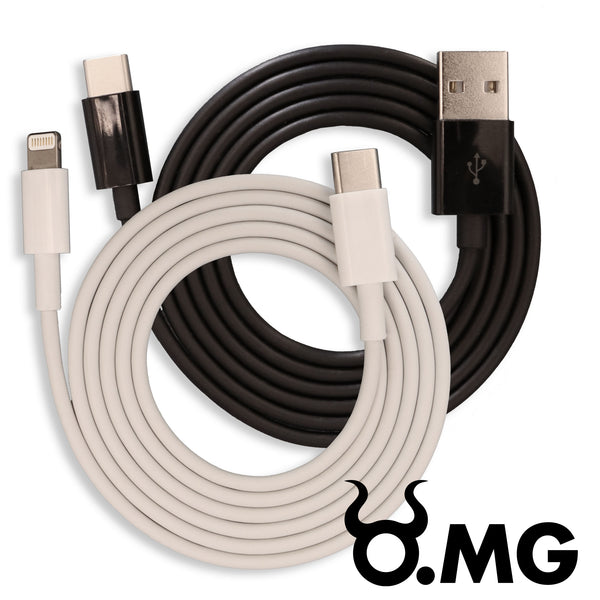
I do wonder how thoroughly they vet their customers, and what silly things I could get up to with one.
https://stackoverflow.com/questions/2181476/bandwidth-from-h...
[1] DOWN THE RABBIT HOLE AND BACK OUT AGAIN: SERIAL OVER HEADPHONE JACK https://hackaday.com/2016/10/21/down-the-rabbit-hole-and-bac...
[2] A better audio jack console cable for Google Nexus devices http://www.pabr.org/consolejack/consolejack.en.html
"But the case is locked!" Are the peripherals? Even if the case connectors are locked away behind a bird-box/knockout, if someone left one of these dangling unplugged off of the keyboard, do you think your field technician won't unlock the box and plug it right back in?
Maybe this is on their todo list.
How much are you willing to bet that there's not a private exploit against newer iPhones? Not in terms of dollars, but in terms of private data that Apple's iPhone that you're renting from them has access to.
You could also do some passive/active data gathering. On Windows when you plug in an iOS device, if the device trusts the computer it will allow it to access all the photos and videos on the device. The cable it self could then start grabbing those images and sending them over the WiFi link. I don't know if these cables support that, but the concept is valid.
Its kind of cool to see someone I've been following for years and seeing the whole dev cycle of this product.
His exploding USB drive was pretty cool and came before this idea:
I have tried to make a cable like that in the past be the best I got was to hide the electronics in what looked like a bead. Unfortunately, this only really works with USB-B devices where users are already used to having beads on the cable which for practical purposes limits attacks to printers and older scanners.
Nowadays, with 2FA and all the big companies doing extra security check up when they see something wrong with the login patterns ... I don't see the use of keyloggers anymore.
You know the content of all the emails this user writes. You know the websites they visit. Based on the 2FA auth key they use, you may find out what kind of system it is.
A great start for social engineering. The target user writes an email to someone and the day afterwards you can fake call them and pretend to be the recipient of the email (you have all the information). If you're lucky they wrote an email to management and now you can pass orders in this call.
Maybe in a couple more decades they will have begun to use basic defenses already available.
One thing I've heard other comments mention here is a USB condom (USB data blocker). It's just a male to female adapter with only the power lines patched through, not data lines.
Not only do they allow safe use of Arbitrary power ports but they also allow me to charge my phone from my laptop without syncing for updating things…
Got any links for those?
0: https://www.alibaba.com/product-detail/3-in-1-cable-led-ligh...
I don't care much about quick charging when in a hotel room though. I just want to make sure my phone isn't being probed while I'm sleeping.
And when I need quick charging, I have the right cables and a strong external battery.
https://panic.com/blog/the-lightning-digital-av-adapter-surp...
To exfiltrate data by WiFi, there is a neat way to get data out... Just have the esp32 connect to all unencrypted WiFi networks in turn and send the data out via a DNS tunnel.
Then the attacker can provide their own WiFi network, but it will also work with airplane WiFi, cafe WiFi, guest networks, etc.
And obviously with DNS tunnelling it works against WiFi networks that require a 'sign in' after connection, even without signing in.
Unfortunately the only real legit use for it is boring security work.
The best way to use this while avoiding big legal trouble would be to stalk a single target that would never have any idea they are being stalked and doesn’t have much resources to come after you legally. Maybe an ex-girlfriend or something.
I remember in the early days of the web getting a copy of the Anarchist Cookbook. One idea was to glue the phosphorus material from a match stick to the spinning portion of a floppy disk. Of course that was a n00b level hack.
We've come a long way since then...
Couldn't find this information. If yes, you can just switch someones cable in his bag and attack him with that. We need to be very careful in the future with our cables...
Can someone explain what this is? Is it a hardware keylogger?
Simply a Male to Female USB adaptor with the data wires not passed through.
A decent USB-C condom would also have to cut not just the USB2 D+/D- line, but also the USB3 SS and SBU lines... the really interesting thing is the CC wires, since without these you can't have reversible connectors, but not cutting them leaves an avenue for attackers (e.g. putting an USB-C port into JTAG mode). And on top of that USB-C PD 1 used the Vbus line with an overlaid HF signal.
That means a decent USB-C condom will need:
- a low-pass on the Vbus line to block PD1
- cut D+/D-, SS, SBU
- cut CC1/CC2 and insert an as-dumb-as-possible controller chip to handle plug orientation
Power negotiation is also not a big problem. Just use a correct resistor on the CC pin and you can make the phone use up to 5V/3A, which is plenty for any smartphone. You'd have to make sure to use a 5V/15W capable power source, though.
I did look into designing one a few years ago. The PD negotiation is quite complicated (and is done through the signaling lines, so you have to manipulate them yet block all other uses).
That was early days for USB C -- there may be better chip support for doing that today.
Had an entirely different image in mind.
I would also assume they are not paying enough attention to even notice, there is no regulation against them so there is no reason to even train to notice differences in USB cables.
> They probably see thousands of cables and it'd be pretty easy to spot the difference.
If anything seeing thousands of cables will make them less likely to notice anything, change blindness is a real problem in jobs like that.
The sheer volume of bags that get run through those x-ray machines in a shift, and the time given to look at each one precludes too much fine grained inspection, especially for something as minor as cables.
Airport security is pretty dismal at detecting actual weapons or contraband, why should they be any better at noticing a slightly different cable?
I don't think transport security people would care about any small tech stuff until something happens inflight because of it.
Such a classic tech podcast. So cool to see them still around.
This page pulls stuff off 44 domains!