137 points · by MikusR · 5y ago · 185 comments
I'm reasonably certain those are not the most popular mobile games right now.
Not sure how a mouse would be fun with that.
I am saying that as someone who got excited by the thought and actually bought a Dell touchscreen laptop.
In laptop mode, its just not worth it.
It gunks up the screen and a mouse is just more precise.
I had the option of "tablet mode" and the pixelbook is pretty much the thinnest notebook/tablet on the market, but even it's 12" size is just too big to hold in "tablet mode" for extended periods of time.
IBM created a Windows compatibility layer. However, that meant that developers saw that they could write their programs once for Windows and OS/2 users would be able to use the programs. The reverse wouldn't be true. So there was little incentive to create native apps for OS/2 compared to Windows.
https://www.howtogeek.com/688970/what-was-ibms-os2-and-why-d...
> Also, OS/2 had a chicken-and-egg problem. Its best selling point was its compatibility with MS-DOS and Windows applications. However, this meant few developers took the time to write OS/2-native apps. So, why run OS/2 at all?
Do developers start believing that an Android app is enough to also court the Windows market? Android apps, even if they run "well" on Windows, won't be as well adapted to the Windows UX as apps intended for Windows. This isn't the case of Microsoft saying "you can now develop for Windows using the Android APIs." It's more, "you can now run Android apps with their phone UX (as submitted to a phone app store) on Windows."
I'm not saying that the feature won't be popular. However, it is potentially a weak strategy. Let's say that Microsoft makes Android apps on laptops/desktops popular. That makes it easier to market ChromeOS/Android-based laptops/desktops. If people see their apps as coming from Android and not Windows, why bother with the Windows license?
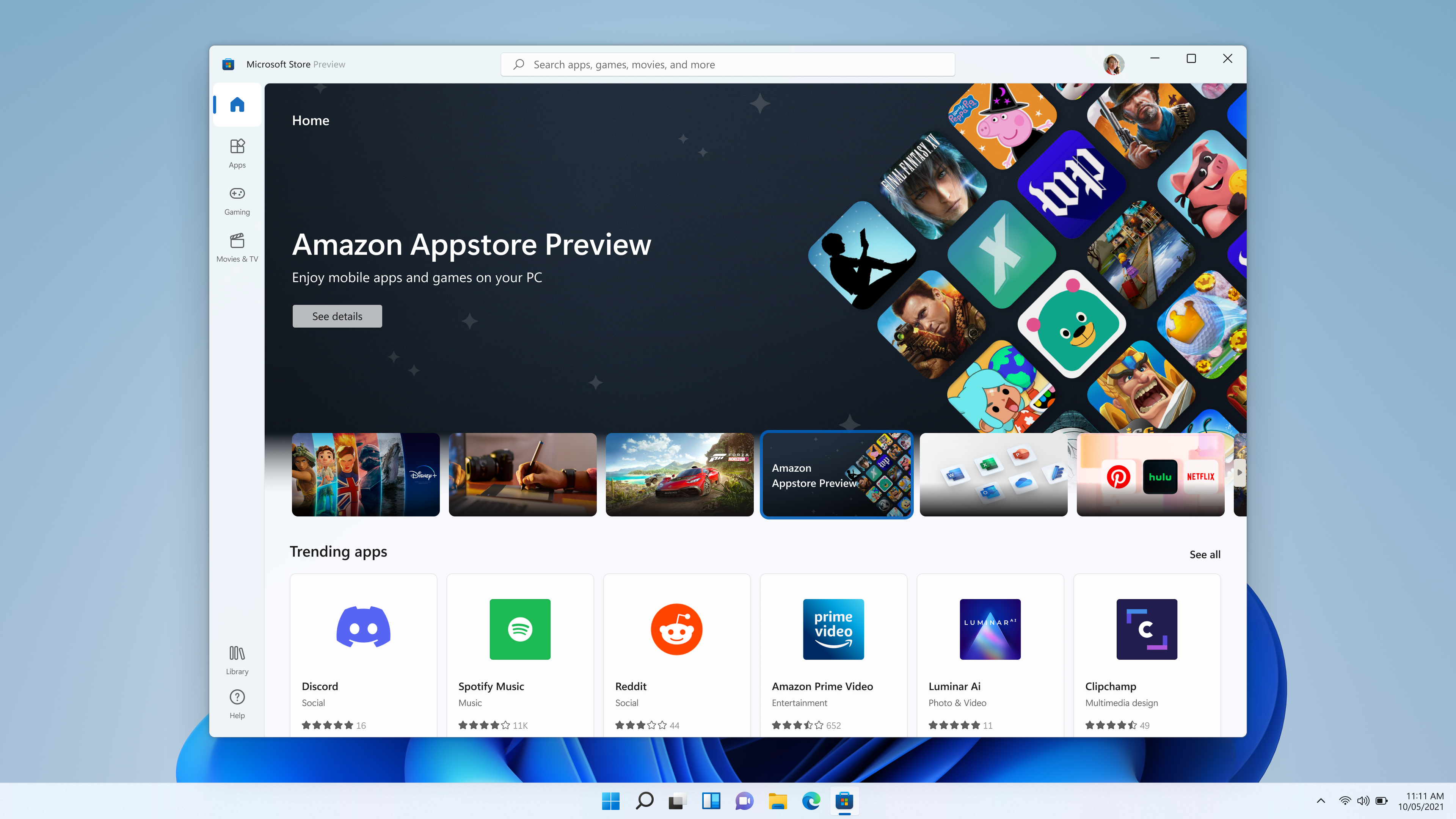
One of Microsoft's greatest strengths on show here. Embrace and extend.
They made a mess of trying to build an app business with windows RT, Windows 8, windows 10. They can't get into the apple appstore ecosystem so they pivot to embracing the Android ecosystem to have an app catalog on windows.
(Ironically what google did with Android was the play that Microsoft should have done with windows phone - classic OEM play which they had done successfully for years before)
The day Microsoft announces that the next version of Windows will be wholly incompatible with player's existing libraries is the day Windows ceases to be relevant to this market. Suddenly, Wine and Proton on Linux go from being "pretty good, but real Windows works better" to being the best option by a mile.
And this is without mentioning how important legacy support is to enterprise customers. A whole lot of the jank and inconsistent UI designs present in Windows 11 is there because enterprise customers still use old software that relies on old features and APIs.
The developments of personal computing since subscription applications became prevalent and app stores were integrated into operating systems has made things quite different from the era that preceded this one.
Apple used to sell OS upgrades. Today you can basically run Windows 10 for free. The revenue streams are different these days and they have plenty of incentives to turn your OS into a mall.
Yes - Microsoft had credible plans to wall-off app installation via an iOS-stye app store. Valve considered this threat to be viable enough, they developed SteamOS and promoted Steam Machines.
Since then, Microsoft has continued its cryptographic crusade to plug all avenues for loading software that's not Microsoft-approved from pre-boot, right up to the userland. Currently, Microsoft already have a turnkey walled garden
The moment you add something "windows specific" to Linux you prevent it from actually being used because then you can't deploy it.
I don't think Microsoft's MO is to completely dominate your entire stack anymore. They just want to make sure they form some critical piece of it so you can't get rid of them.
WSL, I'll admit, will be trickier to convert. However, they have decades of experience at this so don't put it past them to figure it out.
[1] WSL is based on Hyper-V virtual machines.
Windows CE was certainly an interesting platform. The problem was it tried to be some sort of ... hybrid. On one side it tried to have some semblance of being Windows (not just in terms of UI but also in terms of APIs), on the other side it was different enough to not be Windows (weird CPU architectures such as Hitachi's SuperH, for one). Not to mention unlike Apple's Xcode and Android Studio, developing for Windows CE required paying through the nose for Visual Studio and addons (or pirating them).
And then, once the iPhone and Android hit the market, Microsoft just stopped development or even trying to catch up... and when they entered the field again, they messed it up completely.
Why would Android developers go along with anything Microsoft tries to "extend" Android with when Google will just go "lol, no"?
This seems more like a desperate grasp than "embrace/extend/extinguish."
> Regardless of whether you choose to apply Amazon DRM, Amazon wraps your app with code that enables the app to communicate with the Amazon Appstore client to collect analytics, evaluate and enforce program policies, and share aggregated information with you. Your app will always communicate with the Amazon Appstore client when it starts, even if you choose not to apply DRM.
https://www.developer.amazon.com/docs/app-submission/underst...
I don't know if the telemetry applies to all apps on the Amazon store, or only apps installed on Fire devices. If the former, I would feel very uneasy about installing Amazon store apps on Windows.
This is a very interesting feature. Integrated notifications means you can run any android messenger and keep it minimised.
> The Windows Subsystem for Android is available across the full spectrum of Windows processor types (AMD, Intel, and Qualcomm).
So, on your Windows-ARM laptop, you can run android apps now. Being able to run android apps was one appealing feature of chromebooks IMO.
> We are partnering with Amazon in engaging the developer community, and we will have more details to share about early developer programs to publish Android apps to the Amazon Appstore
I had assumed that the Amazon App store had withered on the vine, but I guess their Kindles have kept it alive.
But scroll down to see "Feature-specific requirements for Windows 11"
> Apps available at Amazon Appstore. Additional requirements apply, including 8 GB of RAM, a solid-state drive (SSD), and a supported processor (Intel® Core™ i3 8th Generation, AMD Ryzen™ 3000, Qualcomm® Snapdragon™ 8c, or above).
https://www.microsoft.com/en-us/windows/windows-11-specifica...
Overall, that's much higher requirements than you'd find for WSL or Bluestacks. I wonder why they've set the bar so high!
> Windows Subsystem for Android™
You can install Windows 11 on lower requirements. But you might not be able to run Android apps.
From a consumer perspective, the Amazon app store has no real reason to exist. It's just another place to download the same apps that are already in the Play Store, only with the extra hassle of needing to sideload it and set up a separate account from the one you already use for most other things on your phone.
If Amazon is actively making the app submission process worse for developers, then that is a colossal failure on Amazon's part to understand their market position. Developers are not the ones who need Amazon in this relationship.
Sure, but other people can have different needs. I installed Bluestacks just so that I could run my bank's Android app on my desktop: unlike the bank's website, to pay with the app I only have to enter a 5-digit code. But having the app run on a phone is error prone and slow and a lot of manual typing because all its input (account numbers, amounts, ...) come from other documents/pdfs/websites/emails and I can navigate all of that much faster on a desktop. So: the app on the desktop is, for me, the fastest and most convenient banking way I found so far.
It was handy being able to use certain apps that don't exist properly on computers like Instagram, SMS, some other messaging apps. Copy and past works and you can install apk files by dropping them into the window. I found it quiet interesting.
Surprise - Dev channel members (who were there because they wanted Android apps as soon as possible) are pissed. It also doesn't help that Microsoft removed the ability to switch to the Beta channel from the Dev channel a few months ago without notice.
A Microsoft announcement about running Google Android OS apps, that you download via Amazon's App Store on Windows.
That's wild
Windows Subsystem for Android™... runs in a Hyper-V Virtual Machine, like the Windows Subsystem for Linux.
> The newest version of WSL uses Hyper-V architecture to enable its virtualization. This architecture will be available in the 'Virtual Machine Platform' optional component. This optional component will be available on all SKUs. You can expect to see more details about this experience soon as we get closer to the WSL 2 release.
I didn't come yet across an app I would want to run on my computer.
It's a total pain for me to have to always open my phone and use the tiny keyboard to carry out some trivial task.
Even stuff like TextPlus that lacks desktop clients. I can think of quite a few apps I'd immediately grab.
I could see myself using this if I ever bought a windows tablet.
For example, if you like comic books, the touch friendly comic readers on windows are pretty bad. Also the biggest comic store, Comixology from Amazon, is not available in a windows app version.
So that is one use case! They even tend to support tablet layouts.
So I think Microsoft wants to position Windows 11 as the platform for all apps.
Gaslighting 101
That’s just my unfalsifiable hypothesis, and I’d like to hear other takes.
[1] https://youtube.com/watch?v=JT79TVpF1ds&list=PLlc94szfcNDHtz...