151 points · by jb1991 · 5y ago · 138 comments
Notice: I don't know if any browser besides Safari can play HDR content on MacOS.
Not sure if that is the case on Mac but I am pretty sure Firefox bundle its own decoding and playback engine on Windows. And the same for Chrome. ( They are practically a mini OS ) The only one using OS default is Safari. Hence why supporting VP9 or other codec require an OS update.
Unless of course it is Hardware Accelerated Decoding.
And at the same time, it depends on if the file have 8-bits or 10-bits. Some CPU/GPU don't have the support for 10-bits which can offload it to the software decoding which can be resource intensive for your system to decode the file at the software level.
I almost guarantee this is the root of the issue. My friend doesn't have iStat Menus so I couldn't see the full resource picture but curious if the GPU is involved or its a pure CPU decode and the issue lays somewhere within that.
https://singhkays.com/blog/apple-silicon-m1-video-power-cons...
On my Intel Mac it still requires 4 thread with close to 100% CPU usage to play a 4K AV1 using latest VLC. ( Which I assume comes with latest dav1d ) This is easily 20W usage.
But on M1 this takes less than 1W.
This basically eliminate any argument against AV1. Even with software decoding. You could watch AV1 4K video with passive cooling on a MacBook Air without it ever getting warm.
It may be a good question to ask, with these kind of processing power, what can we do to further push the next gen video codec.
I love it.
I assume you saw no problem with quality of the 4k video on a laptop screen, but you automatically want it to do more.
Of course, I'm not against the idea of improvement, it's just funny how the goalposts continually move.
HDR content should default to and only be viewed with VP9 on Safari. Since Safari does not support AV1.
Here's a good one if you want to fall in love with the display: https://www.youtube.com/watch?v=1MieluM0c6c&t=28s
And here's a good one if you want to feel a little disappointed: https://www.youtube.com/watch?v=AYtvehF9-Z8&t=20s
Well, that's in part because Firefox doesn't play HDR Youtube at all:
https://www.reddit.com/r/firefox/comments/kvqec5/its_2021_an...
But yeah those play on Safari for me without issue (MBP M1 Pro, full screen).
Also side by side the Firefox picture is flatter and less bright.
Model Name: MacBook Pro. Model Identifier: MacBookPro18,1. Chip: Apple M1 Pro. Total Number of Cores: 10 (8 performance and 2 efficiency). Memory: 16 GB.
Both times it was when I moved my mouse after 20 minutes or so of watching fullscreen via my USB-C monitor in Safari.
I have viewed 4k HDR content on YouTube in Safari AND Chrome several times. It was the first thing I did when I received my 16" M1 Pro. And I have not experienced a single crash with this laptop.
I tested VP9 and AV1 codecs on youtube without issue. I am on macOS 12.0.1
Then I started getting some crashes occasionally but still relatively rarely. This increased a bit around Sierra then reduced again with Mojave.
Then Catalina happened and with the new 2019 mbp retina, I started having crashes about once every two weeks. Now, I have an mba m1 running Big Sur, and I think my average uptime is around 2-3 days. Crashes are now something typical, I no longer expect my computer to run for long stretches of time. For a few months, my mba couldn't even go to sleep with crashing, couldn't restart without crashing, this was only solved once I updated to 11.6.1 (I tried reinstalling mac os x before to solve this, it didn't help)
So, yes macs used to be very stable but not anymore, I don't know what happened with Apple's QA but it seems there's now major issues. I didn't change the way I use my mac, if anything now I don't use SIMBL or kernel extensions (which I used to use back when my mac didn't crash) so things should be more stable not less. Yet, despite having ever more control over our machines, being more restrictive over what we can do, Apple somehow is making their system less stable, more flaky than before.
Of course, this is anecdotal, I might be very unlucky but in the past year, I've had quite a few coworkers drop out of calls or be temporarily unavailable, telling me that their mac crashed and they needed to reboot. So, it does seem to be widespread.
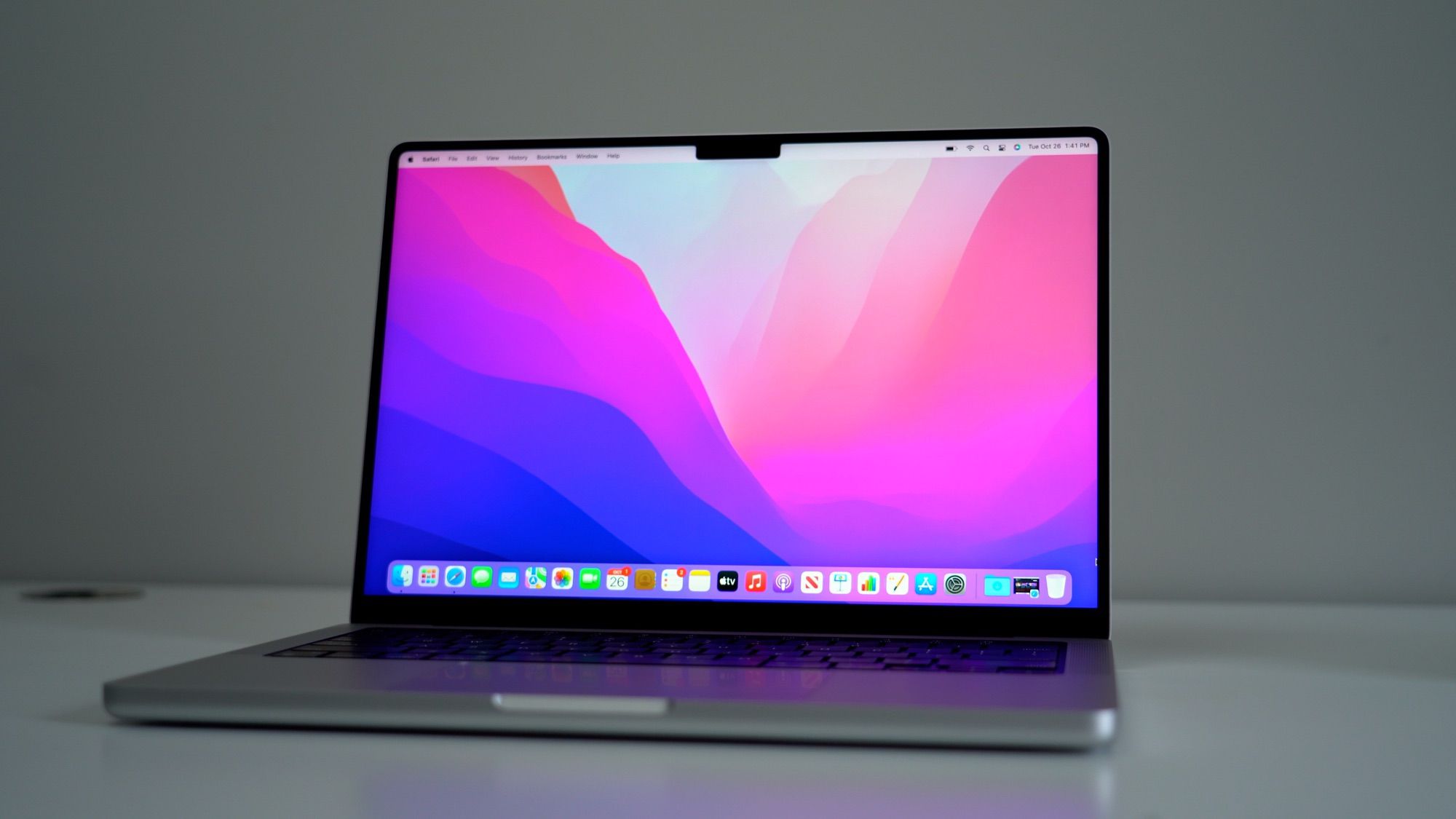
Not contesting your experience at all, but if you're having crashes every 2-3 days it might be hardware-related?
For years I’ve been convinced that they let go majority of the QA and have outsourced QA to the customers/public.
If I stick to web browsing I can have uptime in months too. But as soon as I start up xcode and run the simulator, then I consider myself exteremly lucky if I don't have to reboot (manually or spontaneously) every other day. And forget trying to run the simulator and any video activity on a browser - that seems to be a recipe for instant browser freezes (at least on this 2019 16" macbook pro).
FWIW, I can't remember the last time I had my Mac crash, either my M1 work machine or my personal Intel. Uptime is regularly measured in weeks.
Terrible, but I haven't figured out a better solution.
Sucks if you need one, though.
I had been saying this for nearly the past decade. I'm done saying it.
macOS is still much better than the alternatives, but the golden age of it being in another universe entirely is over.
Windows 95 & 98 would crash pretty frequently. Not as badly as win 3 though. NT 4.0 was no bastion of stability either. Windows didn't stabilize until well after Win2000 versions.
MacOS 7 & 8 also not great. The first versions of OS X were also pretty flaky.
In my experience dependable reliability of workstations and servers didn't happen until the mid-2000s where just software couldn't simply blue screen an OS, or lock it up forever.
If I remember rightly it was about that time that MS got serious about driver reliability, which seemed to help a lot.
For Mac OS X it was 10.3 to 10.5 that was the (seemingly) most stable.
I think the scope and size of hardware, software and interaction has just gone so large that it's not commercially viable anymore to test or QA the entire system to the same standard. It's also why service managers came along, we just assume that everything breaks and hope restarting it makes it go away...
"I run Solaris, so you know my machine restarts as often as I get laid."
Next-gen NT 3.X was rock-solid (from memory).
This was one of the big draws to pulling down "mainframe/workstation" systems like unix (or what MS did by hiring what IIRC was the VMS team to build NT) onto desktop machines. These mainframe systems actually had memory protection, and more generally, had been built to do what "pc OSes" hadn't been designed to do, which was running several programs at once, for long periods of time, and juggling resource contention between them.
DOS machines, CP/M machines, Apples, Macs, Commodores, and several other early machines were pretty tactfully designed to avoid the (too heavy for their hardware) complexity of that by simply building themselves to run only one program at a time. There were hacks to let you run multiple programs (like the Multifinder in MacOS 6, which got mainlined into being a permanent thing in 7), but they were just that — hacks. They were fragile.
As computers started taking on the burden of juggling tons of different simultaneous programs, this fragility really started to blow up on them, and these previously "seeming stable" systems started to crash all the time.
Imagine having a fully functional app but you still can't do anything because the service 'on the other side' doesn't work. It's better because it won't crash the entire system, but it's the same because you still can't do the work you intended to do...
By what measure?
my macbook pro did the same before it.
If running the Linux kernel on Apple hardware did not require a massive reverse engineering effort (see https://asahilinux.org) then maybe you would have a point.
The hardware is only there to enable the software in this concept, not the other way around. This is also why if the UX conditions are met, more powerful/newer/shinier hardware was often not used since it doesn't improve any of the software enablement.
You can't sell a good UX with bad software on good hardware. You can sell a good UX with good software on anything.
https://allthingsd.com/20111005/iphone-4s-its-the-software-s...
https://www.computerworld.com/article/2476239/apple-and-wear...
https://www.computerworld.com/article/3353038/apple-in-2019-...
https://techcrunch.com/2008/10/15/what-android-can-learn-fro...
For a given feature, the user might not know how much of the implementation was done in software versus hardware. Apple excels at integrating their software with their hardware.
I was using Linux on laptops until 2004. When I bought a 12" PowerBook G4 and experienced WiFi, sound, and printing working reliably, I realized I could no longer bother with Linux on laptops. This reliability has suffered lately and I hope they can get it back.
They've recently been branching out into designing their own hardware (or claiming to, it's not clear to me how much they've done in-house vs contracted out or off the shelf, but I digress) but they've been making software to put on other people's slightly-customized hardware for a much longer time.
https://www.macrumors.com/2021/10/28/macbook-pro-display-blo...
It seems like the sighted equivalent of mp3 compression to an audiophile's ears.
If you're in a room with big windows and direct sunlight, a cheap Dell will have a good contrast ratio. If you're in a windowless room in pitch darkness, a MacBook Pro XDR display will show clear blooming.
I have a 2017 iPad Pro that I use in what I would consider moderately dim lighting, and the contrast / black levels are fine.
https://www.reddit.com/r/macbookpro/comments/qgkhku/noticeab...
What a surprise they might not be objective.