126 points · by dmitriy_ko · 5y ago · 151 comments
That article contains this interesting nugget of information: "the proposal [...] is backed by an organization called Build with Strength. The campaign, led by the National Ready Mixed Concrete Association..."
So it seems this may have more to do with $$$ than actual safety.
Playing devil’s advocate, if I’m in a concrete business’s government relations office and I see a fire safety proposal that would help my company’s sales, I’m going to pitch in to help. That doesn’t necessarily mean the proposal was corruptly originated or advanced. (It does merit closer inspection.)
This is tautological. Whether they’re safe to live in is the entire debate. (Wood-frame house in a suburb has a different risk profile from one in a dense neighbourhood by brush.)
Safety standards evolve as the environment changes and our tolerance for risk, mediated by technology, decreases.
If a California wildfire comes through and ravages the area, your fireproof building will still be there, but the walls will heat soak can and then set things on fire inside a fireproof building.
It just seems to be accepted as “ok” that houses are constructed from wood and can fairly trivially burn to the ground - especially given the standard of electrical wiring often found! I for one welcome any ban on wood housing construction and hope it spreads far and wide - and certainly will never spend money on a house that fundamentally represents the second of the Three Little Pigs.
(Edit: Perhaps LA also has earthquakes to consider - that’s fine and a trade-off worth discussing. Where I live earthquakes are non-existent, yet it’s still basically impossible to buy a house constructed properly)
Los Angeles doesn't have frequent earthquakes, but because it's near a fault-line, that tail risk has to be addressed (the same way one wears a seatbelt, even though car accidents happen only a couple times in an individual's life).
Even the smallest of residential houses here (Serbia) are constructed with reinforced concrete as the base and reinforced concrete pillars, with brick walls filling in between the pillars and floors and ceilings: basically, a house is a reinforced concrete box that can move independently from the ground, and that's supposed to guarantee earthquake stability (it's definitely not done for fire reasons, since roof construction is still predominantly wooden). Construction standards have been heavily modified post-1963 Skopje earthquake (https://en.wikipedia.org/wiki/1963_Skopje_earthquake).
Buildings such as Ušće tower, built in this style, have not survived a big earthquake, but I imagine surviving a couple of tomahawk missiles is a good enough reassurance of stability: https://en.wikipedia.org/wiki/U%C5%A1%C4%87e_Towers#NATO_bom... (though I am fully aware that earthquakes and missiles are completely different when it comes to shocks a building experiences).
Interestingly, concrete based construction is one of the cheapest around here, possibly because most houses are built that way.
So I wonder, how prevalent is reinforced concrete use for houses in USA and esp California? Are there many houses and buildings built with insufficiently-reinforced concrete? I know that wood is a predominant construction choice, but what type of reinforced concrete are you comparing it to?
Where I'm from organizations which have both "National"(or adjective referring to the nation in question) and "Association" usually settle on being a corrupt clique - without any influence in matters other than their internal ones.
Concrete just cracks and then crumbles.
There are some pretty massive advantages to using stick-built construction, it's part of the reason it's been so popular for so long.
Stuff like this makes the whole movement hard to take seriously.
As was mentioned by other commenters, affordable housing has a value that can be balanced against fire safety. Carbon contribution as well.
Everything has trade-offs. "Safe Enough" needs to be an allowable state.
https://constructionphysics.substack.com/p/wood-construction...
Conclusions:
-> Overall, it seems like wood construction does somewhat increase the potential risk of fire, mostly by allowing fires that do occur to be somewhat deadlier and more destructive. However, this effect is mostly swamped by other factors such as what state and city you live in, or whether you live in a house or an apartment. For a wood apartment in Salt Lake City, the risk of fire is vanishingly small; for a wood single family home in a tiny town in Arkansas, it’s much larger.
-> The most important factor for fire risk in a home is whether or not it’s sprinklered. Fire sprinklers reduce the risk of fire by an enormous amount, and sprinklered wood construction seems to perform about as well as sprinklered non-combustible construction. And sprinklers are cheap, costing about $1-2 per square foot (much less than it would cost to say, change a wood house to concrete).
-> For wildfires specifically, we see something similar - construction details such as fire protected eaves and class A roofs, along with things like community density, matter far more than whether your home is wood or steel.
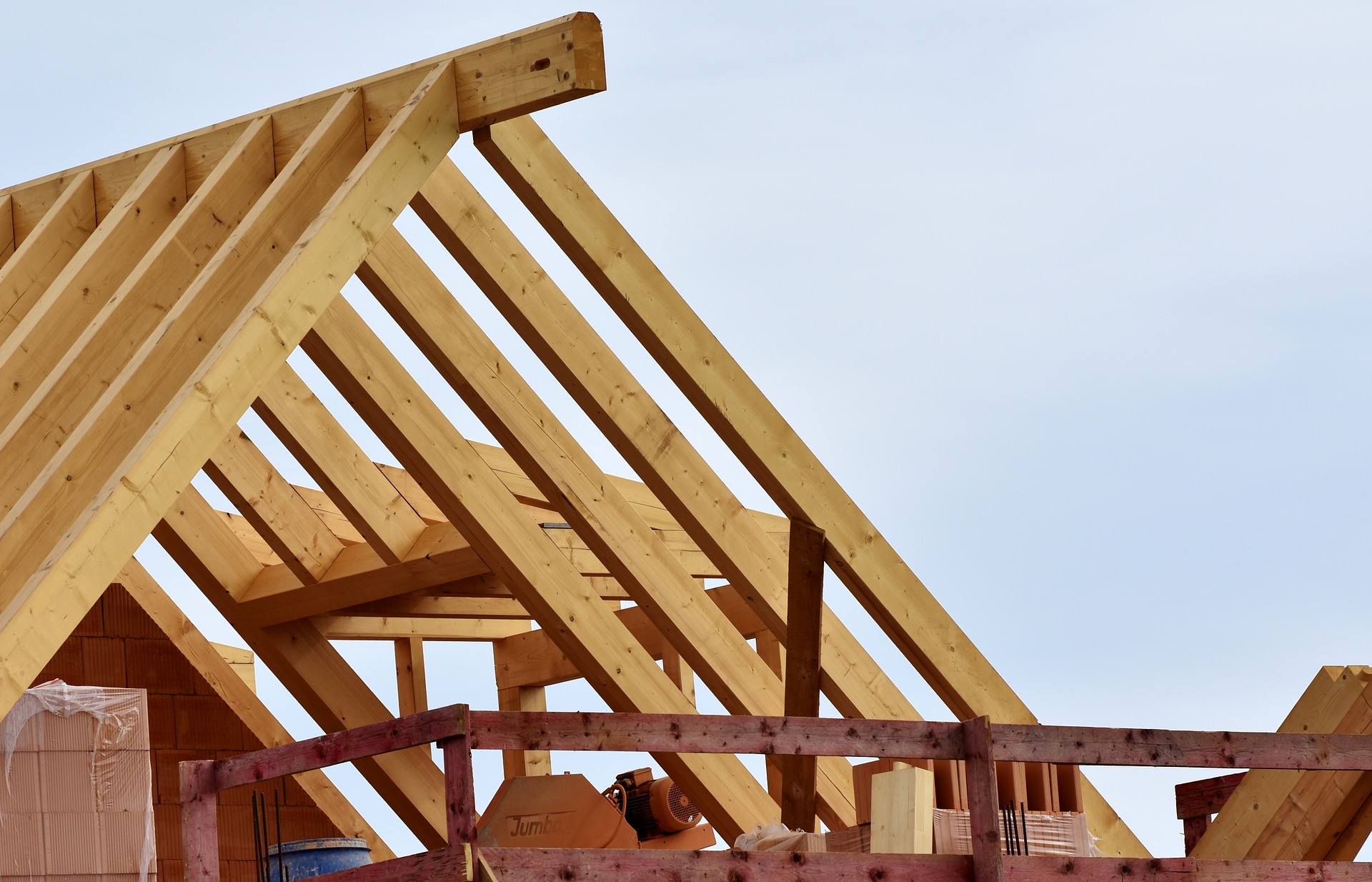
For most of LA (apart perhaps from certain canyons and hill areas) the risk of fire is not significantly different from anywhere else. It's a cityscape. Earthquakes however are an omnipresent threat and wood frame buildings in general do far better. For example - many of the concrete buildings built along Wilshire blvd. in the westside may not survive a big quake.
Grenfell Tower was constructed using pre-cast concrete blocks, and was not timber framed [0]. The devastating fire [1] was due to flammable aluminium composite cladding.
That doesn't necessarily make building everything out of it good, but concrete can definitely last a long time.
Sure there are compositions that are in fact better, but are they used in common buildings? I think the answer is 'no,' since costs won't cut themselves.
Which means very heavy, and only designs that can use gravity to hold them together.
The vast majority or LA county homes are not in a WUI zone, so wildfire extent can’t be used as an argument for this.
Here, wood makes more sense, because of cost and earthquakes. Many brick buildings and brick facades failed during the Christchurch earthquake. I own a home with a broken ring foundation, but completely lovable (edit: liveable) still, because it is a wooden home from the 30’s. The main issue with wooden homes are that they need a lot of expensive ongoing maintenance or they deteriorate. Not so much of an issue in the inner city where buildings get demolished, and replaced by new apartments or town houses.
In Europe, you have 'Post and Beam' framing which means the underlying structure can last 'a very long time' while the non-weight-bearing walls can be replaced. And there's a lot of stone work which can last 'a very long time' as well.
But yes, stone is a problem for earthquakes.
I wish there was more research into modern materials for this kind of stuff.
I would hope that 'wood' would be something we use for decorative things we see, touch or feel, and that something more mundane can go into the framing.
That said, in 1669, Amsterdam no longer allowed outside walls made of wood due to the fire spreading risk. Though that means that the construction would still be 'post and beam', but the outside walls would be make of bricks.
For timber used outdoors, e.g. for making decks pressure-treated timber is used. It's a timber treated with pesticide (chromated copper arsenate). In the past creosote was used to treat things like wooden railroad ties and power poles, but it's no longer used because it's toxic.
Original motion is here --> https://clkrep.lacity.org/onlinedocs/2019/19-0603_mot_06-05-...
Full history here --> https://cityclerk.lacity.org/lacityclerkconnect/index.cfm?fa...
In my region in several places it was banned to build houses using wood hundreds of years ago and there a lot of beautiful stone houses still stand today. Avoiding wood in dense areas really makes sense I guess.
No it isn’t, the R value of wood is much higher. Imho the real advantage is longevity (doesn’t apply to earthquake areas tho) also when there isn’t wood available
It's great for thermal mass, but you still need insulation.
I found a site that explains it with numbers: https://gambrick.com/does-a-brick-home-need-insulation/
Additionally, brick is superior at weather resistance over time. 50 years from that brick will continue to insulate about the same as a new wall. You won't get that with wood even with lots of treatment over the years.
NIMBYs at it again.
[1] Sometimes this is explained as the "five over one" meaning five floors of wood over one floor of concrete, rather than a reference to building codes. Either way the concept is the same.
https://en.wikipedia.org/wiki/One-plus-five
>The one-plus-five style of buildings exploded in popularity in the 2010s, following a 2009 revision to the United States-based International Building Code, which allowed up to five stories of wood-framed construction.
https://www.readyforwildfire.org/prepare-for-wildfire/get-re...
There are a lot of relatively low-cost interventions that homeowners can do for hundreds-to-thousands of dollars (rather than the ~50% increase in construction cost of this proposal) that have proven benefits. Keep dry brush and plants more than 5 feet away from the home. Use fire-resistant roofs (which don't have to be expensive; asphalt shingles qualify). Prefer vinyl or stucco siding over wood. Cover attic vents with 1/16" mesh. Clean your gutters.
These are not complicated things, and many are things you should do anyway. They're much cheaper than building out of reinforced concrete, and more effective.
Yeah, no. It might not easily catch fire itself, but it definitely melt off and expose whatever is under it. They have cement composite siding that is probably a much better option if want something that looks and installs like vinyl.
Overall, that's a very bad decision they made or want to make and there are even more technology available to prevent any form of fire in wood framed houses. Example: circuit breakers with lightning detection.
I’ve seen a few lovely mass timber buildings built.
These are radically different than the stick frame construction which is of dubious origins.
https://www.sourcewatch.org/index.php/Pacific_Research_Insti...
That this would make new housing more expensive, isn't generally viewed as necessary for fire safety, and is funded by the concrete industry, don't seem to be disputed?
http://www.betterinstitutions.com/blog/2021/6/13/dont-expand...
You can also just read the proposal yourself and draw your own conclusions:
https://clkrep.lacity.org/onlinedocs/2019/19-0603_mot_06-05-...
Refusing to read and consider arguments from people you disagree with isn't a particularly useful strategy for gaining knowledge about a topic.
On the other hand, there are a lot of people out their paid to create and push propaganda. As a general rule, one shouldn't engage with it. If even the writer may not believe something, one isn't obliged to take it seriously. Indeed, I think it's a frequently exploited mistake to bring more credulity and good faith to something than the source itself does.
Much better to spend one's time finding reasonably sincere sources and reading those.
Sometimes I'll find that they were indeed making up an alternate reality or misrepresenting things. Sometimes I'll find something where the arguments being presented are unrelated to the data being presented. Sometimes I'll find disagreements in values leading to different interpretations of the same data. Sometimes I'll find that I learn something.
It does take discipline to do this, though: with many sources I have to be on high alert for anything that seems like it's trying to invoke my emotions to get me to agree with the article.
In the case of this article, I went and read their source material (the Los Angeles Department of Building and Safety report on this: https://clkrep.lacity.org/onlinedocs/2019/19-0603_rpt_dbs_%2... ), and found that the article fairly reasonably summarized the report. The last two paragraphs of the article are where most of their opinions are interjected, and I view their claims of the motivation of the backers with some skepticism. The claims about safety seem in line with what I could glean from the report, but I'm not very sure I understand the nuances of analyzing fire statistics across diverse neighborhoods.
This one, for me. I know nothing about it. Without further information, I wouldn’t want to conclude anything from a biased source (other than noting that the issue exists).
Why should I expend that much effort from an organization who's got an agenda and isn't known for their honesty? How much knowledge can be gained from looking through misinformation? Why should I poison myself with potential propaganda? What does it gain me then but an attempt to bait me?
Advantages of timber frame:
* Safer in earthquake * Easier to do remodeling tasks like changing layouts, plumbing, wiring * Easier to DIY * Cheaper
Most of the apparent disadvantages can be offset:
* I've never seen it happen, but you are right drywall is easily damaged. It's also easily replaced though. * Noise and thermal insulation can be added * Flammability is mitigated with firestops, fire resistant drywall and codes that require multiple points of egress. Larger wood buildings have sprinklers.
At this point I mostly have aesthetic complaints.
Our old-school socialist apartment buildings even have internal walls built out of reinforced concrete... drilling a whole to pull an ethernet cable through, means hoping for luck not to hit rebar