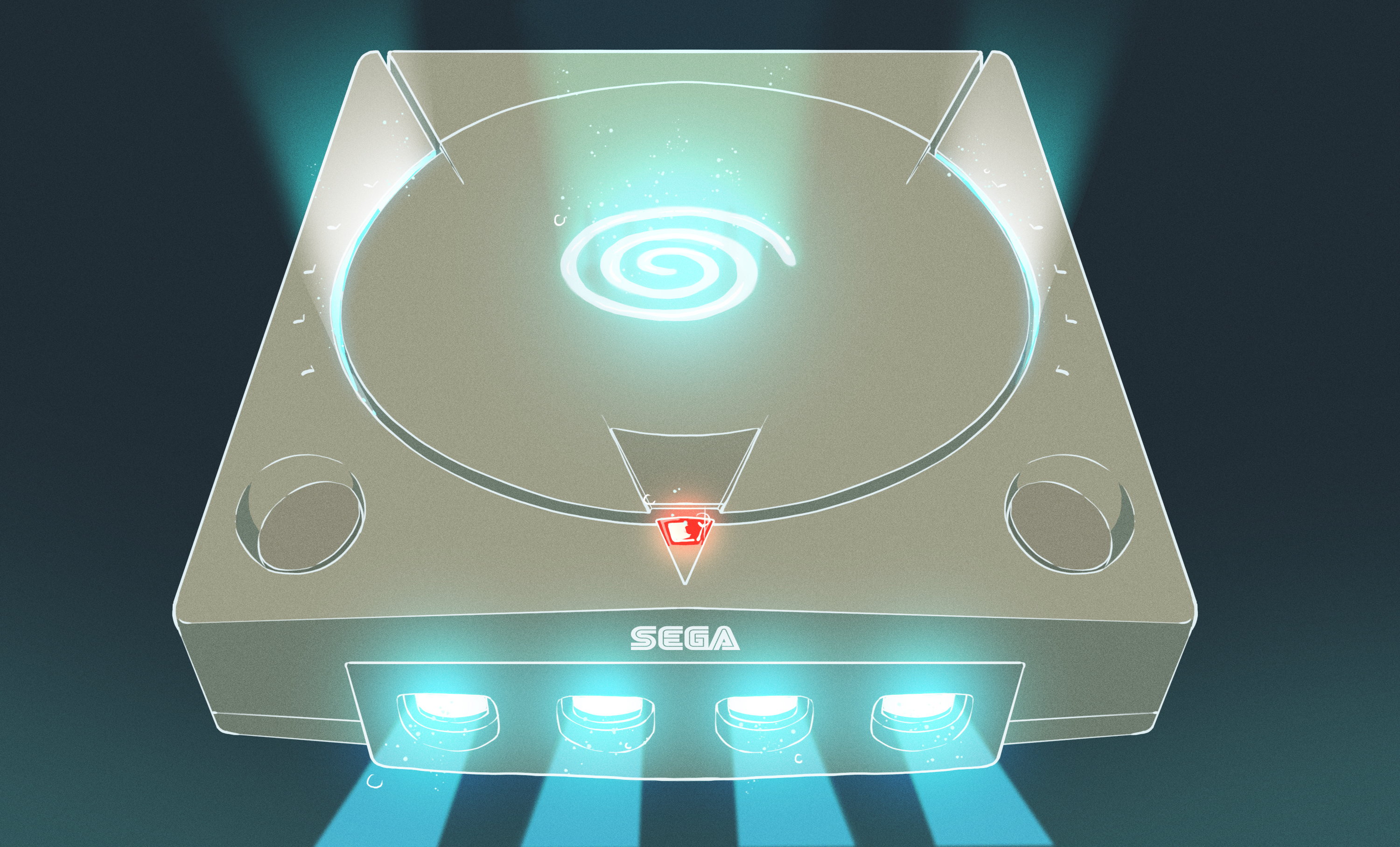
The Dreamcast Legacy
The Dreamcast is a bit of an odd beast. Coming on the heels of the unpopular Sega Saturn, the Dreamcast was meant to be a simple console built with off-the-shelf parts and released in late 1998. Th…
Hackaday
103 points · by zdw · 4y ago · 101 comments
Release dates:
  * PlayStation 1: '94/'95
  * N64: '96
  * Dreamcast: '98/'99
  * PlayStation 2: 2000
  * XBox: 2001
* GameCube: 2001Meanwhile the Dreamcast I had one friend who had one, but I also remember how everyone had a PS2, I remember the backwards comparability and launch titles were what sealed it. I'm the type that would have picked it up a few years later but it kinda always felt like the best games never left Japan for it, and then it was just kinda gone before you knew it.
I knew one guy that had a Dreamcast, everyone else saved their pennies for a PS2 and made do with their existing PS1.
I'd love to see some actual data on marketing spent in different regions for the consoles.
https://www.gamespot.com/articles/ps2-primarily-used-as-dvd-...
https://www.nytimes.com/2000/10/26/technology/playstation-2-...
Same thing with the PS3—it was a lot of bang-for-the-buck for Blu-rays when it debuted. (Not that Blu-ray took the world by storm like DVDs, but still.)
https://www.theverge.com/2019/12/4/20992215/playstation-3-ps...
There are dozens of us!
iirc a big selling point of the PS2 was it could play DVDs, whereas the Dreamcast couldn't
(source: I remember the store displays)
But, overall agree that the article has some factual issues.
The Dreamcast was a great machine, I have fond memories of many hours playing Rez, Phantasy Star Online, Sonic Adventure, Shenmue, Skies of Arcadia and Space Channel 5..
What's even more interesting is the modding community attempts in repurposing them and keeping the Dream alive.
Especially of interest on a site like hackaday, they don't mention the homebrew scene: https://en.wikipedia.org/wiki/List_of_Dreamcast_homebrew_gam...
Or the ports of Atomiswave games to DC: https://www.retrorgb.com/dreamcast-atomiswave-ports.html
A dirty but effective copy protection would have presumably been to just make use of the full 1GB of storage the retail Dreamcast GD-ROM discs had, making them to large to copy to a generic CD-R.
It was the vast majority of them.
> A dirty but effective copy protection would have presumably been to just make use of the full 1GB of storage the retail Dreamcast GD-ROM discs had, making them to large to copy to a generic CD-R.
They did that, so then the release scene would re-encode whatever videos inevitably were taking up space, and bring it back down under 700mb.
Really fun game!
When I visited Japan in 2019, I visited all arcades in Akihabara until I found ONE cabinet running it. It was magical.
Peter Moore (who worked on both consoles) has talked about this several times over the years, e.g. this recent example [0]
[0] from 7:40 https://youtu.be/tadtqchbbh0&t=460
People say this but I don't think it's really true or, if it is, it certainly wasn't apparent from the worm's eye view. As the Dreamcast was dying off, there were actually two rival console proposals within MS; one was from the Windows division (whatever it was called then) that became the Xbox and the other came from the Dreamcast team and was IIRC MIPS-based and, of course, ran Windows CE. (And we all know which one won.) Nor did it seem that the Xbox project had any particular interest in taking on ex-Dreamcast staff; of all the IC developers on the project, only one person successfully moved from the Dreamcast team to the Xbox team to the best of my recollection. (Remember that this era was the old Gates-led, cutthroat Microsoft where the internal competitiveness was just as high as external competitiveness. The Windows division and its leadership anecdotally was not happy about the existence of Windows CE.)
It remains a mystery to me to this day what expertise was supposedly transferred from the Dreamcast project to the Xbox project. Personally, I suspect it's a myth and the anecdotes by former executives are papering a happy face over a complicated history but, meh, what do I know?
That team lost the original Xbox internal design contest, but went on to design the 360 and later Xbox consoles.
The Dreamcast WinCE project did contribute several engineers to the Xbox org. It mostly taught MS how the console game business worked, showed them where WinCE/Direct X needed to be improved to support consoles, and gave them a list of things not to do.
Dreamcast’s controller and accessories were also quite influential on the original Xbox controller.
Next you'll be telling me they got rid of all those free snacks and drinks.
I never understood the hype around the PS 2. It was so bad that when I went to the store to buy NHL 2K2, the employee said they no longer made Dreamcast games. She asked the other employee, who said the same thing. I told them the game was being advertised. They called company headquarters and were informed that it was coming out in a few days. They said I was the first customer to ask about the Dreamcast in months.
There's, to this date, new (indie) games being released, new/old builds of long-lost games do surface [0]...
The Dreamcast is a gift that keeps on giving...
[0] Even more controversial opinion: Sonic '06 is also better than Sonic Adventure 2.
Having never played either but having watched gameplay of both, I'm very interested in your thoughts on that.
I also agree that Sonic Adventure 1 holds up surprisingly well despite the jank. A lot of Dreamcast era games have a certain aesthetic to them that feels distinctly different from other games. Sega really had some wild ideas and while they didn't always hit they were still exciting because of how fresh and unique they felt. The lack of polish adds to that aesthetic; the games weren't following a cookie cutter formula like lots of modern open world games, they were spending their time really experimenting because designing for 3D and internet connectivity was still so new.
* Dynamite Cop
* Unreal Tournament
* NBA2k2
* Army Men
The Dreamcast was fatally wounded as a platform because their DRM was easily bypassed. You didn't even need a special hardware dongle or modification. You could instead straight up download copies of games that were modified to work on the system. No point in supporting a platform that was dominating arcades but whose sales were getting obliterated by piracy at home.
Internet access was one constraining factor. Not everyone in 1999/2000 had broadband to download entire CD images. And an even smaller portion ever knew where to find the piracy methods and content - most of it was on Usenet.
I had a Dreamcast at launch and still love the games that came out on it. If it had a new revision with a DVD player in it announced at the same PS2 price point to compete with the PS2 and XBOX then Sega might still be in the console business.
Unfortunately they wanted a way to add Dreamcast content to music CDs ("MIL-CD"), which led to a massive holes in the security that meant it would happily boot off CD-Rs. I guess they didn't want to tie record companies to Sega's own duplicators so the CDs don't have any direct copy protection. Instead CD programs are "encrypted" (unlike GD-ROM games) and the disc drive turned off after initial load. Naturally the encryption / scrambling was figured out, and people figured out how to turn the drive back on[1]. Thus fun with piracy and homebrew. Late in the production run they removed the MIL-CD stuff entirely, although the vast majority of systems out there would've been built by then.
(Sorry if I've got any details wrong).
[1] Plus a bonus that the boot sector could contain unchecked extra code that made "self booting" pirate games possible.
Copying itself from the source discs (GD-ROMs that had their grooves packed closer together than a traditional CD for extra capacity), from what I can remember reading, was primary done via a dreamcast console (perhaps initially it was done via a development kit) and a serial cable or ethernet adapter.
I think over the years more means of doing the GD-ROM copy became available, like firmware overwrites of certain PC drives.
Now you can pull almost every retail Xbox game off of internet archive and throw nearly all of them on to a massive multi TB HDD.
The Dreamcast is somewhat simpler, a fairly straightforward CPU and an "off the shelf"[1] PowerVR chip that isn't as weird (though the tile based rendering stuff is I guess?). Cue emulator authors pointing out all the weird annoying bits of the Dreamcast I've missed.
[1] In itself an interesting choice for the late '90s, when consoles still nearly always had bespoke graphics, instead of just variants of PC GPUs.
It works on my 2012 MacBook Pro...it should work on any fairly recent hardware with zero fuss...
Previously I assumed that PCSX2 development for Mac stopped around 2012 with 0.9.7. Can't remember what was my result with it, but possibly the same.
I guess the problem might be with the embedded GPU of the Macbook. Which is still telling, if a weak modern GPU can't handle a system from 2000 while being able to run games from mid-to-late 2010s.