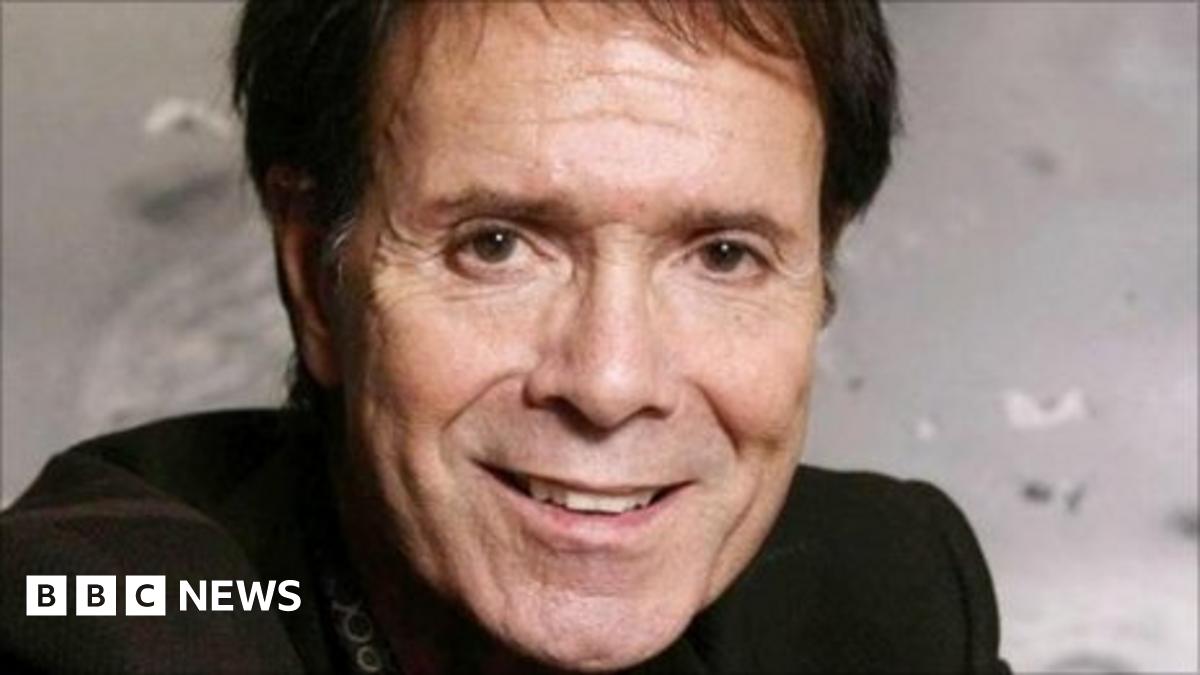
Victory for Cliff's law
In Brussels today a key EU committee voted to approve a directive that would extend music copyright from 50 to 70 years.
BBC News
131 points · by sambeau · 15y ago · 90 comments
I can see the court in Brussels going, "Mm, yes. I know what will motivate them to create better music! We'll make sure they own it when they are 105 years old! There's just too little good music these days, and this will make all the difference."
Joking. Obviously it's special interests pushing to make money from their 1950s creations after having been incentivized enough to make them in the first place, at the expense of the public.
If I recorded a song in 1961, that recording would go out of copyright this year under the previous regime.
The rights and wrongs of lengthy copyright protection are a separate issue, but the differential treatment of different artistic forms is something I feel should be addressed. This is a step towards equalisation (not full equalisation but a lot less controversial and so easier to enact), and for that I'm thankful.
Nor is it clear that different countries and different media should have the same rules in the first place.
The problem is it would be like any one of the entrepreneurs on HN being told in X-many years that "Sorry, you lived too long so your company is being taken from you, you'll no longer receive any profit from it and it IS NOT being purchased from you at a fair market value. Sucks to be you.
Copyright is one of the most difficult issues we have, because almost anyone who has worked to make their own money be it entrepreneur, writer, musician, etc. would think it abhorrent that they could eventually be forced to give up their work that may still hold a reputable value on the market be forcibly given up for economic loss. It's quite frankly absurd.
Then you have organizations like the RIAA and MPAA who act on behalf of mega-corps that have conglomerated thousands of peoples work under themselves and keeps those artists trapped with huge debts, lengthy record contracts, etc. The RIAA does to musicians what Monsanto does to farmers. They're elephants throwing their weight around in a pen full of guinea pigs, and its hard to see these corporations as anything but evil and greedy. Basically because all they are are evil and greedy.
Then you have the legislators who all have a lot of green mysteriously slipped into their pockets, and they claim to be pro-business and support copyright because it helps the little guy. Whilst the little guy is generally unable to be helped because they're firmly squashed beneath an elephants feet.
The problem gets really complex when an authors children starts making legitimate derivative works, because then the series as a whole needs to be kept in copyright to enforce the derivative works clause. So who decides what would be a legitimate derivative work to extend copyright to the end of the child's life, and what isn't so the material has a chance to re-enter the market and not be killed off by the Estates greed.
Personally I believe copyright should be 20 years on a work and in case of a series it should be 20 years for the whole from the date of the latest derivative work. Basically, if an author or their estate haven't produced a derivative in 20 years, then it's time to shit or get off the pot. As a writer I don't think this would be harsh, it might encourage creativity and discourage people trying to make Hollywood sales on everything they make.
Personally, I'd give software the shortest copyright terms, music slightly longer, and literary works slightly longer than that, with no copyright term ever longer than 28 years.
As an aside, increasing lifespans should give us more time to enjoy the world and push it forward. Instead, they're used as a justification to slow the world down with things like longer copyright terms for long-lived authors.
What good does it do a song you wrote in 1960 to be copyrighted in 2060?
Look at Disney and don't tell me that a lack of copyright makes creativity. A lack of copyright just enables corporations to mass produce drivel from non-copyrighted works and cut out the talented people. Disney is barely a step away from just an algorithm that creates film scripts from Brothers Grimm stories.
Copyright is about the government stopping other people from using a work without permission of the copyright holder, not about identifying whose work something is.
There's other ways to handle the music labels than abolish copyright.
Imagine if you were still making money off a program you wrote in 1960. Almost inconceivable in any mass market.
This has affected me and my business in the past - see http://blog.th.ingsmadeoutofotherthin.gs/eucalyptus-availabl... (halfway down, "A Note on Copyright" has an explanation of this oddity).
Here in Denver (2M population in the larger metro area) there are at least:
- One AM swing/standards station (Benny Goodman etc) playing music from the thirties to the sixties.
- Two FM oldies stations, one of which is also AM, playing music from the fifties to the seventies.
- Two primarily classic rock FM stations and one progressive station that sits partly in their Venn diagram, playing music from the sixties to the eighties.
- A public FM station that plays folk/bluegrass/world, back to the thirties.
That's not to say that the retirement plan is any more solid than an NBA career, but the music itself, if it once had traction, will likely be played for a long time.
Isn't that narrowing down, to a few super-stars who stand the test of time, quite typical? There must be lots of rock musicians from the 1970's who I cannot now remember and will never bother to listen to.
Musicians need to put some of their current income into a pension plan. They cannot expect to get royalties when they are old, whatever the duration of copyright.
For example: where's the big new music scene? It's not because there's no musical avenues left to investigate. It's because our culture is so laden with ideas, we're incapable of propagating new ones into the mainstream. Why not an exploration into pure acoustic tonality, a la Yoshida Brothers? Because our culture is not capable of accepting it. We've become static. Hell, the whole concept of a "hipster" was in thrifting old, expired cultures. The vogue was in retro. Bruce Sterling, eat your heart out.
So, to answer your question: if we don't see any major cultural revolutions? Soon, but genesis will always be around 1900-1960.
If we get cyborgs and AI? Never. It would be like trying to rehash ragtime. Eventually patents will melt away, and reform at the beginning of the new age.
Basically: patents are the cultural realization that old ideas are still valid and commercially viable today. I don't like that, but there it is.
I think people would not even know how to handle it if eg the Beatles recordings would suddenly be free. They would probably still buy CDs in the stores.
The [Copyright Term Extension] Act extended these terms to life of the author plus 70 years and for works of corporate authorship to 120 years after creation or 95 years after publication, whichever endpoint is earlier.
-- http://en.wikipedia.org/wiki/Copyright_Term_Extension_Act
I'm not sure that extending copyright from lifetime+50years to lifetime+70years was really aimed at encouraging creators to create more.
Steamboat Willy was released in 1928, so expect the next extension in around ten years time.
There have only been 3 Mickey Mouse cartoons in the last 56 years and the cynic in me suspects that they are only being made to boost their moral justification for continually extending the copyright on the character. http://en.wikipedia.org/wiki/List_of_Mickey_Mouse_cartoons
It had something to do with the differences between the philosophies of Locke and Hegel, and how the former had more influence over American political philosophy, and the later had more influence over European political philosophy.
Anyway, the net result is that in the US, the philosophical view of IP is tied to the idea that you should own the fruits of your labor, including mental labor. In Europe, the philosophical view is that the works of an author are an extension of the author's personality, and so you should have rights over them for the same reason you have rights over your mind.
This is why European copyright law has much stronger recognition for so called "moral" rights than does the US, such as rights of attribution, rights of artists to prevent defacements of their works, and so on.
Alas, unlike the USA, there is no offical reason why it should be protected.
Many things (telegraph, telephone, Tee Vee, automobiles, Knuth-Morris-Pratt pattern matching) are invented nearly simultaneously by several inventors. If "intellectual property" is property, how can more than 1 person own it?
If you don't account for independent invention, your "respect" is fake, and doesn't take into account the labor of the independent inventor.
Of course, I don't feel terribly much sympathy for them - they've all lived lives of privilege that I will probably never know, and I don't see why they should be able to continue making even more money from something they did half a century ago.
I wouldn't mind so much, except that in the music world, the idea of a derived work has received such a broad definition by the legal system. I mean, I don't think it unreasonable that the Beatles should continue to receive money for copies of their performance of Hey Jude, but why can't another artist do a cover without having to pay them, 50 years down the track? IP was supposed to aid creative expression, not stifle it!
This extension only applies to their recordings (as performers). The songwriting copyright is already set at 70 years, so nothing is changing there.
All art is derivative, originality is a myth.
i.e. Some legislators write a law, then pass it to a panel of judges, the judges attach a note indicating what they determined the purpose of the law was, and then the law went on for a vote. The opinion wouldn't have any legal effect, but it might provide for a bit more honesty.