227 points · by justinzollars · 4y ago · 275 comments
(I'm no virologist but given that the common cold didn't seem to be impacted by the severe lockdowns in the UK at all, whereas flu was, I've gotten the - uneducated - feeling the cold is a bit like some STDs in the way it can linger around in people and pop up whenever the conditions are right. Maybe some COVID variant will end up similarly persistent and endemic?)
Then we learned that viruses cannot spread like that, and so that old theory is basically invalid.
But some time ago I read somewhere that this theory might still hold true somehow, because our nose stores all kinds of viruses, and they might burst out when we are weakened.
Maybe someone more knowledgeable about this might chime in here ;).
For making fire, there is the rule of three, the triangle, and you need all sides to keep combustion going:
- Heat
- Fuel
- Oxygen
knock one out and it falters.
We should describe infections the same way. Needed for infection:
- Virus/pathogen
- Outer defenses penetration (skin/mucous membranes)
- Immune system defeat
Seeing it that way, it doesn't have to be so mysterious. Some viruses are dormant or almost omnipresent. The infection may be triggered by other conditions changing, including factors that affect your immune system status or efficiency of your outer protections!
Wikipedia (I don't link cause unpretty images):
"Worldwide rates of either HSV-1 or HSV-2 are between 60% and 95% in adults. HSV-1 is usually acquired during childhood. Rates of both increase as people age."
"Following a primary infection, the virus enters the nerves at the site of primary infection, migrates to the cell body of the neuron, and becomes latent in the ganglion"
"The causes of reactivation are uncertain, but several potential triggers have been documented. A 2009 study showed the protein VP16 plays a key role in reactivation of the dormant virus. Changes in the immune system during menstruation may play a role in HSV-1 reactivation. Concurrent infections, such as viral upper respiratory tract infection or other febrile diseases, can cause outbreaks. Reactivation due to other infections is the likely source of the historic terms 'cold sore' and 'fever blister'. Other identified triggers include local injury to the face, lips, eyes, or mouth; trauma; surgery; radiotherapy; and exposure to wind, ultraviolet light, or sunlight."
1) The atmosphere is in an unusual state (lots of fast moving water droplets, probably with a lot of backscatter as they hit the ground fast or bounce off leaves). Maybe bacteria use that as a travel mechanism.
2) Maybe an immune system defence is weakened by high humidity.
3) Maybe wet weather causes changes in behaviour unrelated to being wet, but that lead to higher disease transmission and the correlation is being misintepreted.
4) Maybe the bacteria really like rain and multiply like crazy when it is wet.
5) Maybe some people have an unrelated non-infectious illnesses that are triggered by the cold, damp weather and that is being misinterpreted as a cold.
6) Maybe grandmothers just say that because it seems like good advice and they don't like water being traipsed through the house.
There are enough different options there that any correlation is not actionable. Leaving aside whether any correlation even exists.
(Note how even your wording of the grandma theory is surprisingly in line with infection principles: the wet hair makes you "catch" a cold, from someone else, not directly causing the cold)
First off, I am impressed by your credentials, very nice work, you should be proud.
But this segment in your about: box is oddly hilarious to me. Maybe I've just had too much champagne. Happy New Year, from a West Coaster posting at 12:05 AM.
>yt code channel: https://www.youtube.com/playlistlist=PLf5mA1y1vDNlydJ8d5CmSt...
>[censored by desine] dot [also censored] at the only useful google service
That depends on who you ask. Different people have different hypotheses and concepts they explore.
Really? Do you have a reference for that? It doesn't match the experience of myself and others that I know. Everyone I know was talking about how great it was that they hadn't had a cold for so long, during the lockdowns.
Flu cases are tracked due to its severity. Cold cases are likely not often even paid attention to by many of those experiencing them.
Anecdotally, I and my friends and relatives hunkered down for COVID in 2020, and we had more cases turn out to be actually COVID-19 than common colds.
From this I made an uneducated extrapolation that the common cold pretty much stuck around somewhere and began to rapidly spread again as soon as people got out and about (I got one first week of schools going back in September, as per usual), whereas flu clearly did not.
There is a well known research paper from years ago showing that both exposure to cold temperatures and exposure to cold virus could cause cold symptoms, if I recollect right 30% probability when subjects were intentionally exposed to virus, 10% when exposed to cold temperatures. I don't recall the control group results.
This is consistent with covid appearing as an outbreak out of nowhere.
virons = a complete virus particle that consists of an RNA or DNA core with a protein coat sometimes with external envelopes and that is the extracellular infectious form of a virus.
For me, the intrigue centers on my personal realization that I pretty much never think about individual pieces. And that is what this word is all about.
It's everything needed for Covid to happen, no less, no more.
Apparently PCR tests and antigen tests differ in this regard, but RIP to our insurance providers paying for millions of redundant tests
In this case a medical dictionary might help. For reference here’s what the Merriam Webster Medical Dictionary says:
To discharge usually gradually from the body (e.g. exposed persons may shed virus from the oropharynx)
I do a lot of scuba diving. There are many anecdotal reports of divers who briefly experience cold / flu symptoms after failing to decompress correctly. The popular hypothesis is that tiny bubbles in the bloodstream trigger an inflammatory immune response, but who knows?
There's nothing "peaceful" about pneumonia. It's a very frightening strangling feeling. The only thing "peaceful" about it is that you don't have the energy express the horror.
I also feel like lockdowns are a red herring in discussions like this. People not being locked down by force of law doesn't mean that a huge amount of people are minimizing their contact with other people.
https://www.science.org/content/article/new-ebola-outbreak-l...
Until then unlikely
https://en.wikipedia.org/wiki/Nipah_virus_infection
Read that and be afraid.
If COVID-19 were to evolve to become milder, it could become a fifth coronavirus that causes the common cold.
Maybe some sinus washes would help.
Critical part of the conclusion for those not wanting to skim the article:
> Virus might have persisted in the respiratory tract of one or more men at the Base. If such were the case it would be necessary to postulate a triggering mechanism to precipitate symptoms, and it is interesting to note that symptoms occurred 4 days after a precipitous fall in outside temperature, and during one of the coldest months of the year, which Hope-Simpson (1958) and Lidwell, Morgan & Williams (1965) have correlated with increased incidence of respiratory disease. There is disagreement about whether the viruses which cause common colds can be carried by adults, and how important this is in epidemiology. The pattern of virus infection revealed by long-term studies, such as the virus watch programme (Elveback et al. 1966), is of a series of short infections with different viruses, and in the case of influenza virus disappearance of the current strain when a new serotype appears. On the other hand, adenoviruses may be shed by children for periods of months and recove"ed from the tonsils in a high proportion of cases, without evidence of acute respiratory infection, and non-respiratory viruses such as those of the herpes group often persist for the lifetime of a man. Furthermore, observations in animals have shown that pigs can carry swine influenza and transmit infection to other pigs 3 months later (Blaskovic et al. 1970), turkeys may carry and shed influenza virus A after apparent recovery (Robinson, Easterday & Tumova, 1972), and cattle which have recovered from foot and mouth disease still reproduce virus in the pharynx, and can initiate epidemics on contact with non-immune cattle (Graves et al. 1971).
> There are thus precedents in both children and animals for persistence of respiratory viruses, but in adults the laboratory evidence for carriage and reactivation of common cold viruses is weak. It may be that such evidence can only be found in rather unusual conditions of isolation and stress, such as occur in Antarctica. It is likely to be a rare phenomenon, but it might well be important in explaining the persistence of the large number of rhinovirus serotypes which make an appearance in many areas when the temperature falls.
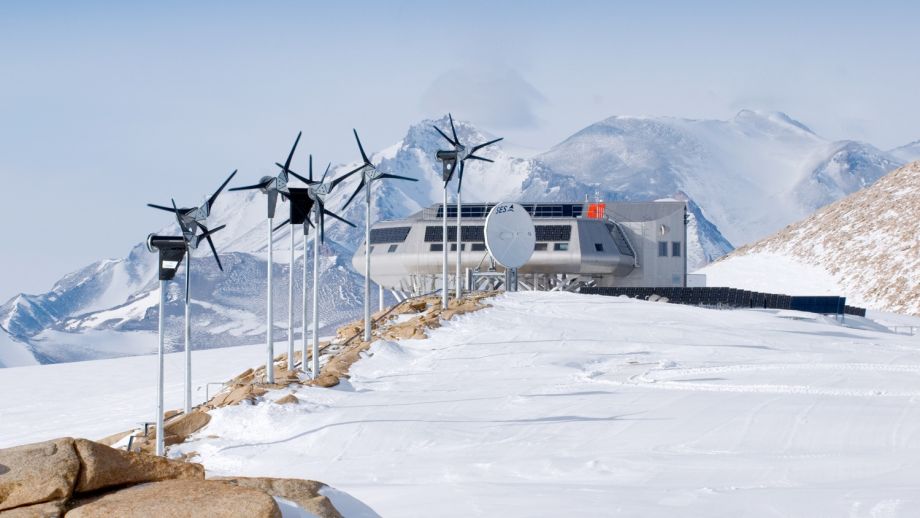
To me, that sounds like lots of testing, not strict health measures. There is a difference.
Just spitballing here but to me strict health measures would be something like:
1. Here is the antiviral prophylactic we expect you to take starting X days before you depart and continuing until X days after you arrive.
2. Here is the shower at the entrance to the base that you must use before entering the base proper.
3. Here are the OTC meds or other protocols we expect to keep coughs and such under control in common areas if you are having any issues.
4. Here are your instructions for how to do lung clearance in the shower to minimize coughing and such in common areas.
I'm sure I could come up with more if I really needed to. This is just off the cuff for the sake of conversation with an internet stranger, so not much effort or thought has gone into it.
https://www.webmd.com/cold-and-flu/otc-meds
Seriously those are almost all bad or pointless suggestions reflecting a lack of relevant medical knowledge.
Oh wait, that does not help against catching and transmitting the virus.
I don't think I've seen anyone with any reputation make any claim about "zero covid".
https://en.m.wikipedia.org/wiki/Belgian_Antarctic_Expedition
The book "Madhouse at the End of the Earth" by Julian Sancton is a great read for this story of the first humans to spend a sun-less winter in Antarctica.
https://www.asoc.org/advocacy/antarctic-governance/overview-...
Stay safe & HN(Y) everyone.I don't think it will soon be over, because this "pandemic"[it's actually more like an endemic disease but whatever] has stopped being about health since half into 2020, and politicians & people in any power don't have any incentives and reasons to let the power go.Especially not until the 1984 measures are all put in place.
This is clear evidence that the current paradigm for dealing with the pandemic is ineffective at best.
I don't think it's clear evidence of this, but you could definitely say it's not 100% effective. Whether it is useful is not something that you cannot determine from this story alone.
I always thought the whole prevention thing is because we want to “flatten the curve”, remember? Not to prevent every single infection, which is impossible.
If I understand correctly, you can mathematically model how effective countermeasures have to be in order to suppress a virus with a given R0. Given that the measles vaccine is 93% effective and sufficient to suppress one of the most infectious diseases we’ve ever seen (R0 of 12-18), I think 99.9% would be in the overkill category.
How do you even deal with this? I can have more rational discussions with fundamental Christians.
I completely disagree with your statement. The goals of the current paradigm of dealing with the pandemic is to minimize the strain on various processes from a public health perspective. Anything moving the needle is effective. That's why guidelines are like 'gatherings of 20 people or more'. It's to minimize spread, not completely obliterate it.
Comparing this incident with public health directives is disingenuous at best. It's the exact same line of thinking about masks. Oh, masks aren't 100% effective in preventing infection. Therefore, they're useless so nobody should wear them, ever.
We've also sent some people to the IIS and they didn't test positive. What does that say about the current paradigm?
But many mainstream trusted sources have been carrying out misinformation/divertion campaigns by focusing prevention on hand hygiene and vaccination, instead of explaining the actual mechanism of transmission. So unless they're curious and proactive about searching for neutral information (which is orthogonal to intelligence), many people by default believe transmission happens by touching surfaces, or cannot happen when one has taken vaccines, for instance.
That said, omicron is apparently insanely infectious, so it could have been something as simple as a member of the ground crew being inside the plane for a bit to stock or check something.
That they focused on the person action (quarantines, tests) and not the environment (transfer shuttles, testing rooms, bathrooms and dressing rooms) kids hints the latter as a source. After all, you drop your mask during testing, and I've seen places doing it in a small, unventilated room with no pause between each person.
Both are possible, though the former is more likely. 5 day intervals for incubation seem too short for 100% safety. I believe omicron has some data points of longer incubation already.
Another point is that there are animal reservoirs for SARS-CoV-2. We've known this since well before the zero-covid debacle, making such a plan was doomed to fail, as it did. It's likely that the virus can live in intestinal tracts of animals, including humans, for long periods without being detected and destroyed by the host's immune system. This makes the use of negative nose/throat swab tests as a guarantee of no subsequent infection a fallacy.
The way we deal with COVID is to stop testing asymptomatic people and use the plethora of effective early treatment protocols we've developed since as early as December 2019 to vastly reduce the need for hospital treatment in those that do develop symptoms.
They are also exceptionally reliable. The home test kit I used had a sub-1% false negative rate.
(And maybe not even that. There could have been an infection between the tests “when leaving Cape Town for Antarctica” and actual departure)
Whether or not that's "realistic" is another question. It really depends on what's at stake, which is not clear yet. But the point is that governments around the world may face a very similar question in the weeks ahead.
In the US, omnicron is going fast. Hopefully, and I say this with week old information in a huge information-differential environment that evolves hourly, omnicron itself is a step towards mitigation.
What can go wrong?
Edit: I missed the 10 day quarantine in South Africa. So it is not so bad.
But of course, there could have been more quarantining.
The word choice foe describing covid over these years (!) is quite exaggerated.
If you read the article, where is the suffering?
It’s torture to take an already isolated group and isolate them with “strict measures” which apparently do nothing to stop infection.
Im sure when are fighting the 200th variant whose symptoms are a day of fatigue we will almost be ready to end the restrictions.
And just for the record, im 2x vaccinated, not an antivaxxer or denier or something.
Surely that shouldn’t dictate whether you’re allowed to express your thoughts on a subject or the factual accuracy of your statements.
So at a minimum, dismiss me if you want, but not because I'm in the evil other camp, because I'm not.
That’s just a convenient fallacy to dismiss criticism.
https://www.england.nhs.uk/statistics/statistical-work-areas...
The decision to terminate unvaccinated individuals reeks of bureaucracy, not an understanding of science or medicine.
There’s a long history of this type of sanction. If you are a provider or nurse in a hospital who fails to get a measles, hepatitis, or rabies (after exposure) shot, you’ll be terminated for cause in many places.
The reason why recovery doesn’t “count” the same as vaccination is that immunity doesn’t last very long - 60-90 days typically. Some countries, such as Israel will recognize a single Pfizer dose and recovery as immune, if you have a negative PCR test.
Note that this is not like not hiring someone who likes to go mountain biking and therefore are more likely to hurt themselves and not work. Hobbies like that have real benefits. Vaccine denial not.
EDIT: Sorry that might have come off a bit blunt. But the entire pandemic response has been frustratingly insufficient in my opinion. A variant like Omicron was long predicted and expected. How are we not prepared with a plan to end lockdowns?
And blaming unvaccinated or anti-maskers is not a good answer. Modeling of acceptance should’ve been done. It’s not like these contrarian sentiments were surprising either.
All together it feels like this response to omicron is a public health failure.
So we got what we wanted, the best nurses are making $300/hr in COVID hotspots and leaving new grads and understaffed facilities in their wake.
https://www.personneltoday.com/hr/uk-lacks-nursing-staff-to-...
We barely ever had anything approximating lockdowns and they ended long ago. We don't generally make plans to do things after they are already done.
We don't have lockdowns, and haven't had lockdowns in America
> And blaming unvaccinated or anti-maskers is not a good answer
Blaming the unvaccinated, who comprise the overwhelming majority of those that get hospitalized, spread it and die, is a good answer. I think a lot of this is solved by deprioritizing them at triage time or letting them recuperate at home.
Nursing is hard and takes years of training, but 2 years would have been long enough to teach people how to manage the average case of 1 disease.
There have been a lot of people sitting around doing not much, they could probably use the work.
https://ourworldindata.org/grapher/current-covid-patients-ho...
There were 60,000 US fatalities of people younger than 50 (1 Vietnam War's worth of US casualties, or, if you prefer, 15,000 Benghazis).
Yes, for many of the dead, you can retroactively point to "health issues", but those are _extremely_ common, even among people who generally don't consider themselves "chronically ill" at all. And some of the "health issues" might come down to having a bad set of certain genes that up to now have never caused any significant issues.
Finally, there are other Covid consequences than death. I personally know several people (some of them perfectly healthy people in their early 20s) dealing with fatigue/loss of taste for a year (and counting). Personally, I'm fairly confident that the risk of severe outcomes of an acute COVID-19 infection are minuscule for me, thanks to vaccination (So that's a vast improvement over a year ago), but the risks of chronic complications are not as well managed with vaccines, are not particularly closely correlated with severity of the acute infection, and are, as of yet, practically unknown for the omicron variant.
Even at 0.1% over 7b population that's still a couple million body bags so measures even if only partially effective at preventing transmission are still worthwhile
https://www.cdc.gov/csels/dls/locs/2021/07-21-2021-lab-alert...
False: https://khn.org/news/article/fact-check-cdc-pcr-covid-test-d...
And the page says nothing about the now-withdrawn test being unable to differentiate between Covid and Influenza (which is not true). It encourages the development of tests that test for BOTH (since the patient is being tested anyway), but points out that those results must be reported separately.
The cynical take would be that that would mean they can order quarantines for the flu as well, of course.