Exploiting IndexedDB API information leaks in Safari 15
Discover how a software bug in Safari 15
Fingerprint
250 points · by danpinto · 4y ago · 88 comments
Last IDB shitstorm was discussed at https://news.ycombinator.com/item?id=27509206.
Super frustrating, makes me glad I’m not currently building anything that relies on significant local storage.
The web could fill so many needs instead of using apps, but with crap like this it’s no surprise that it still doesn’t.
Apple just doesn't care about IDB or the web.
This can in cases where the names follow a known pattern be used to infer domains of other websites in the session and, in the case of YouTube, your Google id which can be used to identify your Google account.
The vulnerability doesn't leak all your browsing history. It leaks a small part of it
edit: title is changed now
On the other hand they report (and help close) some gnarly exploits like this via sketchy web apis.
What do you all make of this? It's hard to not see it as some weird "were not doing a bad thing" gaslighting (perhaps even internally to their team).
Or ones they are not planning to use anyway, but are possible to be used by competition?
Or for marketing purposes to be not known as 100% clearly evil?
Or for marketing purposes to be better known?
What if clients use it for tracking and other shady purposes, would they do something about it?
Btw I tried with Tor Browser and it did not accurately fingerprint it between sessions which makes me wonder how effective it really is. Especially for fraudsters; intentional bad actors, I think it would be quite easy to bypass.
I hope regulators will eventually force support for other browsers (that can install apps) in iOS, I don't understand how Apple is allowed to have such a tight control on the market.
The default should be always to delete everything after a website/tab is closed. Want to store a login? Set up a button next to the url bar to enable persistant storage for that specific webpage, and you're done.
I guess I'm curious as to what the norms are around disclosure of such discovered vulnerabilities are in general.
[1] https://news.ycombinator.com/item?id=12308246
[2] https://googleprojectzero.blogspot.com/2021/04/policy-and-di...
Still though:
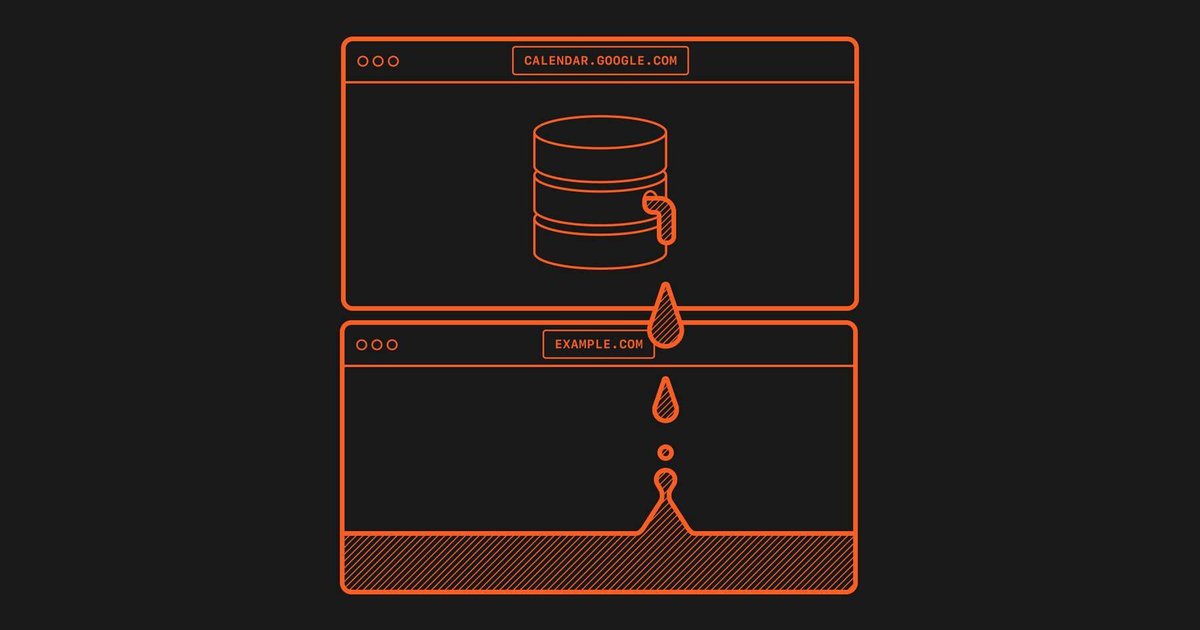
> Moreover, we observed that in some cases, websites use unique user-specific identifiers in database names. This means that authenticated users can be uniquely and precisely identified. Some popular examples would be YouTube, Google Calendar, or Google Keep. All of these websites create databases that include the authenticated Google User ID and in case the user is logged into multiple accounts, databases are created for all these accounts.
It pretty clear that Apple isn’t giving Safari/WebKit the focus it needs, but it’s also clear that developers just continue to push for more and more features in the browser. I’d much prefer that browsers started to cut back. While Google is excellent about updates, remember that critical bugs are found in Chrome constantly.
Already on chrome we can go to a URL, click the 'install' button, and have an app on our desktop/homepage. No app store, no massive download. I sincerely hope this is the future and not brilliant dead-end HN will be nostalgic about in 10 years.
Is Apple’s culture of secrecy that strong? Is it a sense of superiority? Is it embarrassment? Are they just not here?
As a mid-career engineer with highly marketable skills and an inbox stuffed with job offers the only two companies I would never entertain an offer from are Facebook and Apple.
Facebook because their fundamental purpose for existence is harmful to society and Apple for their perceived (or actual?) engineering incompetence.
I don’t really have a sense for the kind of engineer that works for Apple. With other big tech orgs I have some sense, even if informed almost entirely by tech forums.
It’s a shame really, because otherwise I think I’d quite like working at Apple. Their laser focus on product is right up my street.
You mean on HN? Oh they do, From JSC to Webkit Engineers. Mostly on technical discussions.
This might be different if I had some perception of what was happening internally or how problems are approached. But from what I see nobody at Apple cares. So the silence contributes to the perception of incompetence by not counter-acting it.
There isn’t silence though. The world doesn’t begin and end at Hacker News. Head over to Twitter, for instance, and you’ll see plenty of Apple developers talking about their work. Or join the WebKit mailing lists or Slack. Or join the Swift forums.
And this kind of an issue is exactly why Apple needs to stop screwing around and do the following things ASAP:
1. Decouple Safari from the OS so that it can be updated independently to fix critical issues like this and deploy to all customers quickly
2. Let other browser engines on the platform for fuck's sake!
Wow. I wonder what Brave thinks of this?
I tend to doubt that's true, mainly because, by far, the most likely alternative is Chrome, and Chrome is specifically designed to leak its users' personal information to Google's customers (the ones that generate the bulk of their revenue, that is).
At my last web dev gig, we had to go and get Apple hardware because our visual tests kept failing on Safari. They need to get their shit together or let people port good browser engines.
Apple's iOS browser monopoly is literally the only thing preventing Google from having a near total monopoly on web standards.
I genuinely can’t name a native application released for macOS built with AppKit or SwiftUI or whatever that didn’t come from Apple.
It's certainly true that the center of gravity is tilting toward web apps, but not every kind of app makes a good web app, at least yet.
Just named five I use daily...
I can recall a dozen of XSLT implementation bugs which were in Chrome from day 1.
XSLT is not going anywhere from browsers, but they also cannot be fixed, because there is so few people using XSLT today to raise above the noise floor for WebKit devs.