283 points · by pabs3 · 4y ago · 144 comments
To enable Fingerprinting Protection in Firefox, go to about:config and set privacy.resistFingerprinting to true.
Some Firefox forks enable Fingerprinting Protection by default, including LibreWolf[3] (desktop) and Mull[4] (Android). If you are on Android, the release version of Firefox does not include access to about:config, and you'll need to either switch to Firefox Beta/Nightly or use a fork like Mull, Fennec F-Droid, or Iceraven to take advantage of this feature.
[1] https://wiki.mozilla.org/Security/Tor_Uplift
[2] https://support.mozilla.org/en-US/kb/firefox-protection-agai...
Interesting side effect though.
[1] https://bugzilla.mozilla.org/show_bug.cgi?id=1369357
[2] https://addons.mozilla.org/en-US/firefox/addon/zoom-page-we
Seeing that a user has a site's zoom set to 90% seems to be close to worthless in terms of narrowing down what cohort they're in, let alone identifying them individually. What am I missing here?
For example, although tor --help still sends users to https://www.torproject.org/, as far as I know it's impossible to find the daemon documentation starting from there. The older website https://2019.www.torproject.org/ does have these docs, but it's surprisingly hard to turn up in a search. (You're much more likely to turn up old documentation on one of the man pages sites.)
It's interesting to compare https://www.torproject.org/ and https://2019.www.torproject.org/ more generally. To my eyes, the new site is uglier, less inviting and less useful, but I'm probably just getting old so my tastes don't align with fashion, if they ever did!
The thing I love about Tor Browser is such that when I end the session all tabs are gone. No more unlimited "interesting" tabs left opened for months. If I want to leave some information for later then I bookmark it in note app with a proper commentary why I would need it.
used this for like a decade. this works like firefox focus on android.
Looking at my logs, I couldn't identify where these people are coming from. I've added a bunch of checks to make sure it's not an automated script, but they seem legit. Until I started i started looking at their ip addresses.
Every single ip is from a tor exit node. I have no idea if these are fake users or real ones. I can't tell if I should be worried or excited.
Unless your blog is about online privacy, it does sound sus, though. If it’s all from a single actor, I wonder what the end-game is. Is it on the level where it’s starting to cost more to maintain?
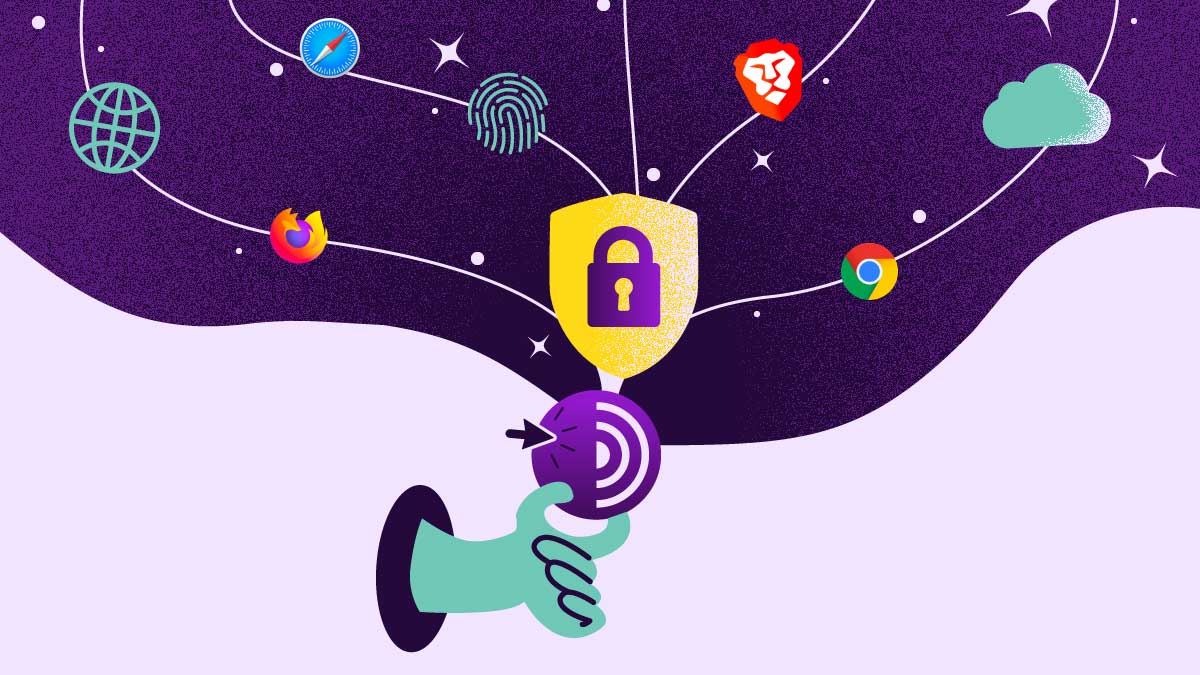
`Other reasons`. Would love to know other use-cases for Tor Browser Bundle besides the ones mentioned in the info-graphic. One other reason not mentioned is recon and intelligence gathering, or OSINT. I do little investigations on various topics, safe in the knowledge I'm anonymous doing so. Need to lookup about erectile dysfunction? (ED). Then Tor's perfect for that.
I've used Tor for a very brief period once in my life, and that was to purchase adderall off of either Silk Road or AlphaBay (I can't remember), and I'm unsure of what the Tor ecosystem is like today, but not even that long ago, the vast majority of the Tor network was used for crime - ranging from child pornography, to hitmen available for hire, banned weapons, and obviously, for drugs.
I did not come across anything meaningful browsing the onion ecosystem, but left with a depressing insight of anonymity.
On a higher level pov, anonymity allows some of the most toxic and damaging ideas to brew and fester.
This is easily pointed out by the characteristics and behaviors between Twitter accounts that have an association with a real individual as opposed to ones that don't.
The difference in what they tweet is staggering.
Not to mention sites like 4chan and it's children.
Don't get me wrong, I'm rather against Big Brother or ISPs tracking and selling off our data, but absolute full anonymity is just an invitation for some of the worst things to happen.
Mind you, if you look to buy drugs on Instagram or Facebook you’ll find many outlets.
Your experience is limited to the markets because that’s what you were after presumably.
We created the BBC Tor site to help audiences access BBC News where they can’t and also to provide more secure access if they want.
You probably don’t know how bad the internet in China or Iran is. Imagine you can’t access any news site other than the government’s own outlets, and forget about social media.
We expected our Tor site to serve more users in Iran but interestingly we found more users coming to BBC Chinese, BBC Mundo and BBC Portuguese.
We think we are getting more users from Hong Kong and Brazil who are doing it for the sake of privacy rather than circumvention (our clear web sites are still accessible in Hong Kong).
At times when the news flares up, we get more users for BBC Russian, presumably because news consumers there want to have access to an independent source of news.
BBC site on Tor:
https://bbcnewsd73hkzno2ini43t4gblxvycyac5aw4gnv7t2rccijh774...
The alternative is no anonymous internet which is also not something I would want.
Also, based solely on gut feeling, the speed Tor from 10 years ago to today is night and day. Something tells me a ton of nodes are state actors and Tor is quasi broken. Not “buy an oz of weed FBI don’t move we’ll shoot” broken but if you are planning another 9/11 they probably can figure that shit out even if you are on Tor. I base that on zero facts.
> …
> On a higher level pov, anonymity allows some of the most toxic and damaging ideas to brew and fester.
You mention Twitter, but haven’t mentioned Facebook. That anonymity makes people to become or expose the worst version of themselves — or that anonymity allows some of the most toxic and damaging ideas to brew and fester — isn’t necessarily completely true. On Facebook, people use their real names, post personal photos (including participation in local events), their location, etc., and there’s still a huge amount of toxic ideas from these same non-anonymous people that brew there and are allowed to (because that makes the company more money).
I don’t disagree that anonymity allows people to be more honest in expressing themselves without filters. It’s one of the best things that happened with the Internet. But completely banning or not allowing anonymity isn’t the solution that some may immediately reach out for when faced with some social problems. Usually the people who dislike anonymity and want to eliminate it (I’m not saying it’s you) are those in power or want to be in power. And they don’t like it when people can organize outside their surveillance view.
Same applies to Tor, it just needs more users.
All "good" things have serious downsides. Free speech is good but if you defend it you'll no doubt at some point have to defend its use by a scumbag who using it in a scummy way - but the alternative is worse.
Same could be said for democracy, presumption of innocence, habeas corpus or any other of the cornerstones of a liberal society - they have big downsides but the alternative is worse. Sadly, right now, we're living the worse alternative to having strong privacy because people don't see it's value so we'll have to make do with Tor.
Your examples are not things that people are given anonymity and then do naturally - it's what people seek out anonymity to do. That is, you have cause and effect backwards.
Meanwhile, there is a difference between using Tor to access regular websites to avoid surveillance and using .onion sites.
> the vast majority of the Tor network was used for crime
How could you know the scope of the Tor network? Is that technically possible? Perhaps looking for ilicit goods, that's what was found?
Tor has sites for the Facebook, NY Times, BBC, ProPublica, Deutche Welle, Buzzfeed, and more.
I mean, while using Tor, sites can't track you or fingerprint you. But the fact you setup Tor in itself gives something to someone so that they can fingerprint you.
Pluggable transports are not perfect and can be profiled by a determined adversary, although it takes more resources and sophistication than identifying unbridged Tor traffic.
I mean one can't see what I am browsing on Tor browser, but the fact I am using Tor or have downloaded Tor, is it also hidden information?
Sorry, I know very little about it.
Remember, Zerodium revealed a 0day in all Tor Browser v7 and under once v8 had been released https://twitter.com/Zerodium/status/1039127214602641409
That's irrelevant, per the guidelines.
> Please respond to the strongest plausible interpretation of what someone says, not a weaker one that's easier to criticize. Assume good faith.
1. I responded to the strongest possible interpretation based on what was said.
2. How is that irrelevant?
If, for whatever reason, your goal is to conceal conflict or negatives in general, I suggest you pick on someone else.
Privacy depends on security. Firefox is about 3-5 years behind security level of Chrome (Sandbox, Fuzzing efforts, hardening efforts, source code reviews, etc.).
When running in Safest mode, it's essentially just rendering HTML/CSS/images: anything that involves convoluted decoding (video, webfonts, scripts) is disabled. Treating your web browser as an environment for declarative pages is best practice for security: no matter how many layers of sandboxing you'll use, people will find holes.
So apart from a few bypasses like the parent comment explained, TBB is decades ahead any other browser's security level out there (except for your favorite CLI browser over Tor which has roughly the same properties).
Really doesn't matter anymore how extensive it is the browser fingerprinting protection feature or the access you do through Tor.
I believe we need a new type of Tor...
That's also why for the highest security needs VPN+Tor is a recommendation. Although to be fair i personally believe if an actor is powerful enough to perform traffic analysis across the Tor network, they're probably powerful enough to correlate your computer activity with the VPN<->tor link.
Networks that resist metadata analysis are called mixnets and there's some interesting research about them. The downsides are you add latency (because each hop needs to randomize sleep) so bidirectional sessions like TCP is unthinkable. So nothing as usable as Tor Browser for checking your webmail or reading a blog.
https://yggdrasil-network.github.io/
Granted, neither of those are designed as proxies to the clearnet... and maybe that's one of the bad things about Tor besides its its history with DARPA.