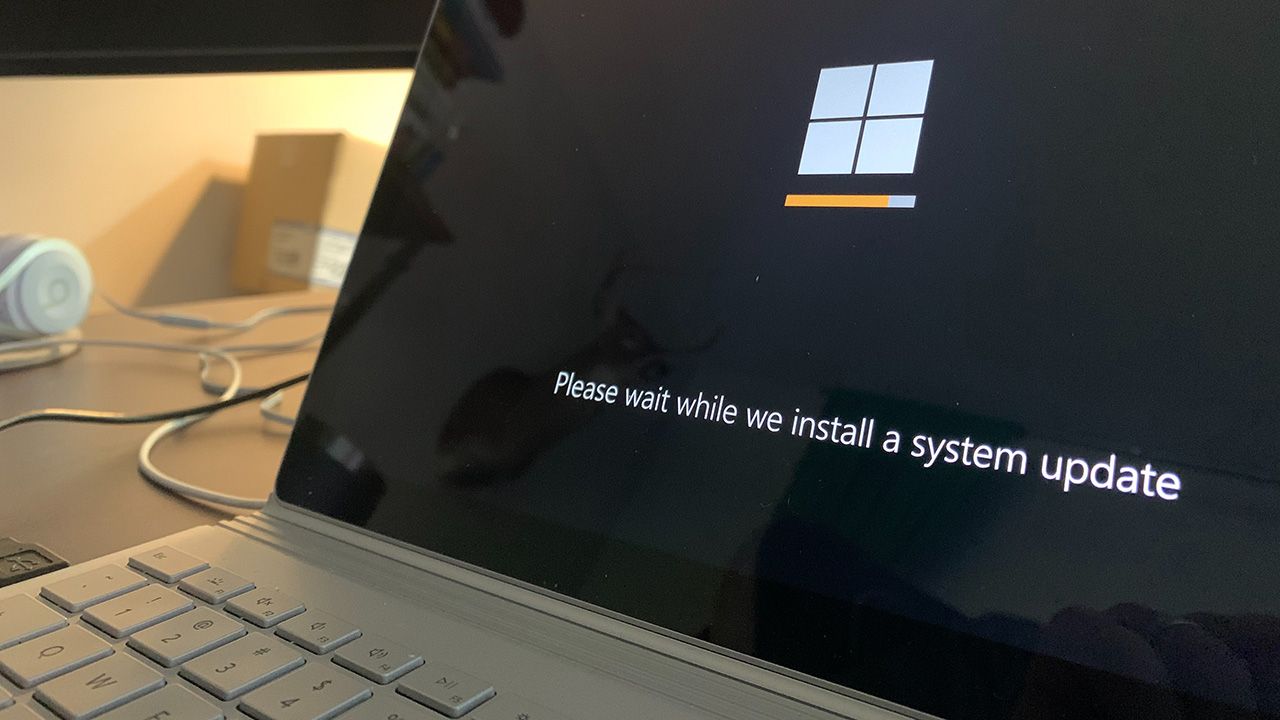
Microsoft Says Windows May Need up to 8 Hours to Update
And it
Tom
36 points · by rbanffy · 4y ago · 40 comments
From the actual release: "One of the most impactful things we explored was how much time a device needs to be powered on and connected to Windows Update to be able to successfully install quality and feature updates. What we found is that devices that don’t meet a certain amount of connected time are very unlikely to successfully update. Specifically, data shows that devices need a minimum of two continuous connected hours, and six total connected hours after an update is released to reliably update. This allows for a successful download and background installations that are able to restart or resume once a device is active and connected."
What the are saying is "you need to be able to reach the download server for at least 8 hours after an update drops in order to reliably install it."
Is very much meaningful
But FWIW, my mornings usually consist of updating everything for me, personally. I never have updates happen unexpectedly. There's a script I run when I sit down to my computer for the first thing, every single day.
Linux has warts, but being able to switch on your computer and definitely use it is pretty important.
So I just accept as fact of life that on a Asus 1215B, bought with Linux pre-installed, I have to reboot the network configuration every now and then.
I guess it is still better than when Canonical replaced the wlan driver with a half-working one because FOSS rulez, or having 3D capabilities downgraded to GL 3.3 support, when the legacy AMD commercial driver was capable of GL 4.1.
Computers being "out of date" doesn't stop them from working, it's most often updates that break things.
99% of things work as expected though.
I'll probably move to linux soon.
https://www.forbes.com/sites/jasonevangelho/2018/12/12/micro...
I have had the situation when the update was downloading for a long time then indicated that it had failed, wasting all the data that was already downloaded, probably around three quarters of a gigabyte.
On the other hand, I have an OS that updates individual apps and individual libraries. If something fails along the way, at least I have updated most of what was downloaded, leading to little wasted data.
And that be perfectly fine if it didn't do it in a middle of presentation. And yet here we are.