81 points · by kk6mrp · 4y ago · 59 comments
Buy an android phone. A good one. Whichever you like.
Install F-droid from website.
Install Termux from F-droid.
You get a full Debian linux running inside your phone as an app. No need to even root your phone.
You can now :
Access, parse your address book, sms, call records everything from command line.
Access sensors on your phone from command line -- like GPS, compass or camera.
Access SD card and other files. rsync, scp, wget and others.
SSH into your server.
Edit some Java files, compile and install it as an app from your phone.
Install other packages that you need using apt-get or pkg. Like python, ruby, php, gcc.
And many more.
The problem with the mobile ecosystem isn't so much what you can run on your phone, but rather what you can't stop running on your phone. And that perfectly good devices are relegated to the trash bin due to the upgrade treadmill. A Linux-first phone stands a chance at fixing these issues, whereas starting with an OS developed by a surveillance company does not.
A Linux-first phone does absolutely nothing to fix this. Even if you're running your own operating system that you wrote yourself, your GPU or hell even the power management controller might reach around and steal all of your stuff. The issue lies in the way we build computers and the rapid proliferation of cores without any serious thought as to how we're supposed to manage and secure the enormous fleet of heterogeneous hardware that lives on a modern SoC.
Second, it matters if those possibly-hostile cores have network access. Technically they could subvert the software on the main CPUs to communicate with command/control, but that seems like raising the bar to such an attack. Whereas with the standard mobile architecture, I can totally see some phone manufacturer getting the "bright idea" to have the baseband processor collect statistics on the application processor's software for market research.
But I agree with your general point.
Still, I think moving in the direction of Linux phones gives us a starting point to do something about this insecurity - proving the market allows there to be devices that truly separate out the cell modem.
Not sure about the threat by Google if you’re using f-droid. Though there is always dmr’s compiler attack I’m not sure ssh would be the right vector. A keyboard attack might be more useful.
Installing F-droid does not remove Google's presence in other software. On a vanilla Android phone, that is all of the Google (Play) services and who knows what centralized-expedient hacks have been put into the OS itself.
It's always great to have private options though.
Personally I can’t imagine a more awful thing than using the command line on a small phone screen to do any serious development. Even a tablet gets claustrophobic.
the usual benefits of command line --> parsing the result set, transforming, filtering is easier for me from command line tools than gui cut-paste.
i don't do long command typing from the phone. rather ssh into the phone from my laptop and can work inside the phone's shell.
https://play.google.com/store/apps/details?id=ru.iiec.pydroi...
Command line is just a poor man's REPL.
depends where your priorities are i guess.
It feels like the best of both worlds.
Install from F-Droid to get access to all of those.
The "it's vs its" fight's dilation is overdue: I knew that it was going to become a grammar mistake spreading throughout, reaching almost every pseudo-professional writer...
I guessed that anybody criticizing the trend towards the unnecessary apostrophe would be: either considered a grammar nazi; or their own writing being extraordinarily examined for mistakes (as a punishment for their criticism).
As a non-native speaker, my language credentials may be slim, but I can't really stand the -quite widespread- extra apostrophe when it's a possessive "its". The reversal, though, doesnt bother me that much. I guess that it's about character conservation.
Also, video recording is (albeit obviously somewhat poorly and not up to todays standards) is possible, it‘s just that Megapixels, the de-facto default camera app, doesn’t have the feature.
If you wonder about Linux Phones, I try to weekly collect what has happened in the previous week on my blog [0]. If you‘re wondering about apps, check out this app list [1].
We don't need endless combinations of "Desktop Linux" on the phone.
I think the bar is higher, and the experience is already better than that on a few mobile devices.
If talking about the UI, Plasma mobile is a bit experimental, but gets stuff done with bells and whistles, phosh is a bit barebones but better performant. If you want the Maemo UI, try Nemo mobile. When installing postmarketos on a device, you get quite a few to pick from.
If you talk about performance, there are plenty of devices to pick with better performance than the Pinephone (including the Pinephone Pro soon, and the Librem 5). It was meant as a cheap dev platform, and it has largely succeeded at that.
Now, telephony support is where it hurts. Supporting modems can get quite complex, so progress is slow. The Pinephone was deliberately engineered as to be doable.
Part of the Linux appeal is choice. Choose what you don't need, but we'll likely end up with different needs.
One way to bridge the gap is to get Android apps running. We're getting there thanks to waydroid.
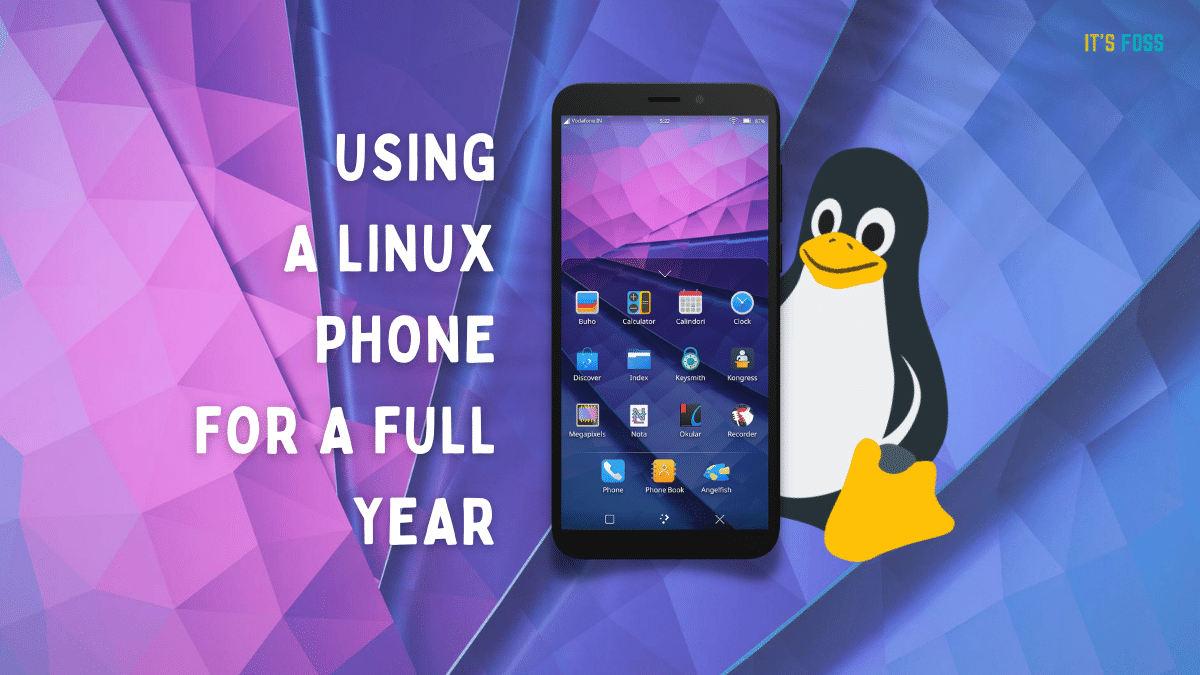
1. Use it as phone
2. Plug it to a dock and use it as normal linux desktop pc
Just wondering why it is still years out of reach...
He also wouldn't use WiFi or email, so his advice is far from practical for most users.
While the base PinePhone is admittedly underpowered, it's far from unusable. The Pro seems like a considerable step up that would solve most of the issues with the base model. The software is still not there yet, but it will also improve. I'm actually pleasantly surprised at how usable a true Linux phone is in 2022.
With the 4G partial shutdown I'd be in the market for a Pinephone but I just don't have time to do extra tinkering right now. I'll probably just limp along with my current pocket device and attempt to go VOIP-only.
Instead of collaborating on a single development and consumer experience, each of these efforts go out doing their own thing.
Meanwhile companies like Nokia[0] and Google come and assert this is how it is going to be, not happy move on.
The large consumer market, and App developers, don't care that many Linux syscalls aren't considered public APIs and communities like Termux refuse to acknowledge that.
So every couple of years these attempts keep being rebooted, all the way back to OpenMoko.
[0] - We all know why Nokia efforts bombed, and now their brand is also tied to Android phones
Such a device would probably not be any better than a $20 flip phone from eBay. They still make them.
They'd have to rely so much on individual apps for everything, but without layers of frameworks, the apps might not exist, because it would cost more to make them, and there might be fewer programmers in the world without those frameworks making it easy.
Making non browser phones useful would require really big change to the whole mobile ecosystem, or else phones could no longer serve their present role as do-everything devices.
I only know about 3 ncurses type TUI apps(No idea if they're actually ncurses under the hood). Nano, nmtui, and a demo test app I built for developing plugins.
I don't use any of them unless I'm SSHed into things, because tech has reached the good enough point where even Electron apps are pretty snappy on an SSD.
It honestly feels like close to being a daily driver with the only thing missing being the battery life. (Caveat: don't care about camera and honestly don't know what that state that is in).
Everything (mainly software) is still being worked on but I was surprised just how much of a difference the new hardware made
Why do I need an 8-Core processor to open Firefox? What is it doing with all that CPU?!?!