67 points · by Kaibeezy · 4y ago · 132 comments
Case in point: in Picasso's formative years, he was a great realistic painter. He became a great artist because he pushed the boundary of abstract art that is arguably easier to paint than his earlier work. To me, Picasso was so good because he built a story (myth) around his work that resonated with so many people.
The Mona Lisa is the most famous painting because of the myth around it. It's a beautiful portait, but is it really the best portrait ever? I think in the same wing of the Louvre there are better paintings of Da Vinci on show, even though there is no crowd around it.
Recently, the myth builders have been (maybe they still are) Jeff Koons and Damien Hirst, I think that's what makes them great artists.
We are very fortunate that image sharing on the internet has revealed that the art establishment has no clothes and people enjoy representational works. Artists like Will St. John, Colleen Barry, Ramon Alex Hurtado, Jeremy Lipking and others are reviving academic figurative traditions.
If I sound upset, it's because I am. In highschool I took AP art and all the other art classes I could. I visited all the nearby art associations and establishments that people revered. I wanted to paint people, wanted to make great paintings like the ones I saw in museums. I attended one of the best-ranked public highschools in my state and my teachers with art degrees didn't even know there was an academic path out there because their colleges just taught them about the greatness of conceptual garbage. I wound up giving up on that dream and floundering through the last decade with constructive methods like loomis and bridgman in my spare time. Now I have a degree I'm not passionate about and enough debt that pursuing academic training is out of the question.
Warhol's soup cans are neat and abstract movements were a refreshing breath of fresh air in art history, sure. You might admire works of lesser craftsmanship for their "philosophical" achievements, but consider the destruction that philosophy wreaked upon education and the cultural-nuclear-crater left behind.
Google Sargent, Repin, Bouguereau, and Homer. Then look again at Koons, Hirst, Twombly, etc. and try to convince yourself a grave error and loss has not occurred.
Picasso did what he did, and created what he created because of photography. In a world where capturing likeness, and form was basically free - what do you do with painting? Certainly not attempt to capture likeness and form - perhaps you make an Ernest attempt to capture or project the emotional response of form and subject. Picasso’s facial structure was modeled after African war masks, which were at the time ignored by the art world. And his composition and color and repetition were inspired by the Japanese print makers. A lot of the art from that era was inspired by what was coming out of Japan at that time. The product of Picasso was a mashup of influences, like all impactful art.
The backlash against likeness and form was certain way before Picasso. But the fact that he rode that style to such fame is what made the art world dramatically over correct so drastically.
Academy art was very expensive because it took a long time to make (so artists only made a hand full of work), and there were fewer artists at that level because it took so much training to get to the level of a Bouguereau or Sargent. Up until this point the people buying this kind of art were wealthy or powerful enough to afford it.
At the turn of the century, there was an increased demand of art from the new burgeoning middle class, however there simply was not enough supply, and it was all expensive academy art. Because of this, art dealers were incentivized to promote impressionists because they were already academy rejects so they were outsiders with chips on their shoulders, and the work they did was by design easier and quicker to make, so they were able to produce way more art that dealers could sell to the middle class who were less discerning than the traditional art world.
The new mass market ended up being far more profitable for dealers, the demographic so much larger, that it really just drove what kind of art was created and marketed afterwards. Bouguereau died at 80 and made less than a thousand works over his lifetime, Picasso made tens of thousands. Picasso's true genius is in his ability to produce and market his works.
Please enlighten me. The man made literal scribbles:
Anyone with functioning eyes ought to watch that and be able to immediately see that the "expert" is not wearing any clothing. They've got classical violin music playing to add a sense of prestige, it's grotesque. It would be more appropriate to accompany the video with "zen music"[0], the musical analog to twombly's work: https://youtu.be/uOOtJcWAk-A
[0]: news.ycombinator.com/item?id=13248549
A lot of this is compounded by the practice of working from high def photographs. Working from life is worlds apart from working from photos. As an illustration of this, try and take a photograph of a beautiful sunset and compare it to what you see
It's most obvious in paintings and videogames. Depth of field, bokeh, motion blur, perspective, lens distortion—even focal length and composition. Once you realize it, it becomes impossible to ignore, and it really compromises the work for me. So many of the most technically adept artists today are using all their skill to effectively simulate one form of art with another. It's an interesting exercise, sure, and I'll never dissuade someone from developing and refining a skill, but in the best-case scenario, I'm just left thinking I'd rather see the photo or the movie, or not see the image at all. And I'm someone who will gladly spend 20min+ standing in front of a Rembrandt.
I don't have any issue with realism in art and think it can be quite effective when used well. But so much of what makes something like The Night Watch incredible is how it feels both convincingly real and compellingly uncanny at the same time due to its rendering from some fuzzy approximation of what the artist observed from his models, conceived in his mind's eye, and meticulously sketched and reworked.
To me, it's the ability to capture and create something within/from that gray area that makes an artist great.
The Impressionists understood this and used effects such as 'optical mixing' (from the scientific findings of Maxwell) to create works that felt more real
Focal length being variable has nothing to do with photography either. It has to do with screens that vary in size and distance. To be able to match the angle of view of our eyes, the camera in a video game needs to vary it's focal length. And of course, our eyes have a focal length too.
Our eyes feel motion blur too. It's just cut out when you saccade your eyes by the brain. Track a car with your eyes and notice the motion blur over the whole street. Now, for video games, it doesn't make much sense until you realize that we use 30/60fps screens. Motion blur is a crutch to minimize the obviousness of low frame rates. In a perfect world of course, you would want your screen to have 144+Hz of refresh rate and let your own eyes do the motion blur, but that's too expensive for now.
So you see, these things aren't actually there because of photography. They are things that our eyes do just as much as any camera. In fact, the only real difference between our eyes and cameras is that eyes operate continuously while cameras operate semi-discretely, though at 200fps+ this converges almost completely.
There's a big difference between photographic reference and copying a photograph. For instance, Ben Aronson (https://benaronson.net/), a contemporary impressionist painter I very much like, heavily uses photographic references to paint cityscapes that he just literally couldn't paint live (because, say, its in the middle of a busy downtown street, or way up in the air between buildings). But his paintings are far from "photorealistic", not only utilizing an impressionist style, but also often moving or adding buildings or landscape that don't actually exist in the photo.
A big part of why abstraction took off at nearly the same time as photography is that the differentiation of an artist from a camera had to come from somewhere. Artists that make art that looks like cameras are simply drawing on their strongest reference and not doing much additional decision making.
Yes there are many photos that you can call art, but if you're not the one that took the original photo it feels like most of the creative effort was not yours and you're just showing off your brush/pen technique.
As a disclaimer, I have 0 talent when it comes to drawing/painting so I'm pretty much clueless about the creative process of modern painting.
There are lots of ways of using a photo as a source. A lot of the 'art' comes from choosing which techniques and paints and colors to use to capture the feeling you are after. You can also choose to make choices like adding/removing elements, changing the field of view or moving the point of view, playing with perspective etc. to make the composition more interesting.
You can give the same photo to 100 different artists and you will get back 100 different paintings with 100 different artistic choices, some of which will appeal to you on an artistic level a lot more than others.
People spend hours trying to become good at coding competitions, games, sport, musical instrument, embroidery, hoby electronics ... you name it. Why would "trying to become as good as possible at creating realistic drawing" would be weirder then anything else? The technical skill involved in making it look hyper realistic is huge.
What if you use a camera obscura, as many of the “old masters” are believed to have done?
Its of just bad enough quality (and hasn't been altered by algorithms) that you can get a 'sense' of the scene without too much detail, being over/under-exposed, etc.
Edit: also see the use of a 'black mirror' https://londonfineartstudios.com/the-mirror-the-black-mirror...
An interesting argument... which could be extended to "why paint from life?" because you're just copying what you see.
In fact, some artists who paint completely from their imagination or who create nonrepresentational art have this exact objection to just painting what you see (even without photographic reference), which they don't find interesting because it's not creative enough for them.
Photography is just another tool, and what matters is how you use it.
Picasso was a great self promotor and back before the internet the opportunities for proving him wrong we’re very limited indeed so the myth could persist. Nowadays, however, the stuff he did back when he was drilled by his father into being an artist can easily be found online and, guess what: it turns out to be fairly mediocre.
What? The source of Picasso being a good realistic painter is the paintings Picasso made when he was a teenager of which most have survived. You can see multiple of them at the Picasso museum in Paris or by simply googling it as you point yourself. Science and Charity which he painted at fifteen is in every way a descent classical paintings and Child with dove is a perfectly fine work in the post-impressionist style. It’s not revolutionary like the work he did later but the idea that Picasso is a mediocre painter is so demonstrably false it gets funny.
As to whether his early or late works were great or mediocre, that's not something that can be pronounced from on high, but I do think it's fair to say he was proficient in the techniques of his era before branching out.
There are many examples of his early work online. His skill in classical realistic art is hardly deniable even if one might disagree that it reached the levels of Raphael to whom he once compared his pieces of that period. He also was partly educated at the Real Academia de Bellas Artes de San Fernando which wasn't some no-name school either.
He failed to produce great realist work because he found those techniques boring, repetitive, and mechanical, and thus didn't try to work in that mode. He moved on to keep pace with the many radical departures from the French Academy that surrounded him. He had the skills, he just didn't use them.
In other words, doing well in the technical aspects of a student drawing course is not even close to demonstrating that one is "great" on the same level as, say, Caravaggio or Rembrandt.
Strong disagree. Expertise often looks easy. He had to understand the rules on a fundamental level before he could break them as he did, to express not just pictures but the underlying form and composition.
In my opinion it is harder to paint abstracts like Picasso did than it is to paint realistically.
I agree with this. It's harder because you have to have all the technique before you start picking and choosing what to leave out. An abstract painting becomes at least in part a story of what the painter decided to try, some unique combination of choices, at several levels of zoom. This is dangerous stuff because its easy to alienate a viewer this way. But done well you find a (substantially) new path to beauty and wonder.
Children's art usually has a freshness, originality, and vibrancy that's missing from highly skilled adult art.
I had to get over my worship of realism before I could appreciate it, though, and I find it very sad that most non-artists are still stuck at valuing art only by how realistic it looks.
No. Could a child paint something that to their own parent seems similar? Maybe.
That's not a good example to affirm your point : it's a painting that was historically know for its technical qualities, representing the pinnacle of Leonardo's sfumato. But it's also been extremely damaged to the point these qualities are heavily lacking now.
This reminds me of the old joke about the customer who got upset at having to pay $100 to a mechanic who fixed his car by hitting the engine with a hammer. The mechanic replies that he only charges $1 for the hammer hit, but $99 for knowing where to hit.
So it is with Picasso. His mature style is easier on a technical level than some more photorealistic work, but I challenge you or anyone else who thinks it's "easy" to paint something with even half the emotional impact of Guernica, or to come up with a novel style that's as innovative as Picasso's was when he created it.
Picasso wasn't copying anyone else's style. He was innovating and pushing art forward... that's why he gets pride of place in the art history books and artists who just copy his style don't.
As in science, you get a lot of credit in the art world for being first.
The art world also appreciates being shown the world in a different light, which you don't necessarily need great technical skill to accomplish (as Picasso and many artists before and after him showed).
This whole debate about the need for technical skill in "art" actually predates Picasso, and was hashed out before him about the Impressionists, who were already accused of sloppy technique by Academy artists.
Impressionism is no longer controversial, and most people can appreciate it, even though on a technical level it's arguably no better than cubism (the style that Picasso is most well known for).
This is hard to judge from the outside. My wife is an art school graduate and serious amateur painter. There are some artists that she follow, where she is in absolute awe of what they do, and I just see some quite 'simple' paintings that are nowhere near as detailed or 'interesting' as some of what she paints. Yet she assures me that what those artists are doing is Really Hard, and far beyond what she is capable of.
That is something I became aware when practicing competitive programming as a teen: anyone would have an opinion on how nice/pretty the outcome was, but only the few thousands people actually involved in the competition would have an actual clue about what mattered, what was important and what was actually hard to achieve. It's hard not to notice the same pattern in any activity one is deeply involved with, be it sports or arts.
It is to be expected, after all, that specialization implies some form of impediment to communication.
The bullfight paintings define to me how a master can do so much with so little:
https://www.pablopicasso.org/images/paintings/bullfight-3.jp...
You are of course correct that art is more than raw technique. And you are of course correct that art appreciation is no stranger to fads and hype.
But, you seem to suggest there is nothing else to it at all.
Is that what you mean to say?
Damien Hirst is a salesman who makes shit art. Jeff Koons makes things that are at least amusing. I don't think that these are taken seriously by too many people, and they won't be in the future.
You're an optimist.
It's more likely we'll slide towards an Idiocracy future, where it's garbage that'll be praised to the heavens.
The contemporary art world has been sliding that direction for a long time, and outside the art world kitsch dominates, and it's probably only going to get worse over time.
The only objection to this I can imagine is rooted in the misconception that it's somehow irreverent to see today's students as better than the old masters. The brilliance of the past heroes consisted in pushing the needle of what was possible, and today's heroes are pushing it even further.
But as in sports, or sciences, or architecture, or engineering, what the old masters had to discover or invent then became part of the standard curriculum, and could be refined, built upon further, and better tooling could be designed and taught.
I tend to believe that, given how intensive we train players these days, but are we actually certain that it is the case? I guess we could ask a chess engine to rate all available games but that would not be terribly convincing because they were playing a different style, against the players of their time (unlike a running competition, you really need two players to play a game of chess). Also, for some past players we don't have that many games to begin with.
I think we're fairly certain that chess players today would beat chess players of the past, in a regular 1 on 1 game. Assuming the old chess players didn't have time to prepare.
Chess programs can rate the accuracy of moves, so we can see how accurate past players were. In addition, a lot has been discovered about more correct opening theory - a grandmaster of the past would make many mistakes in the opening that a modern grandmaster would be able to take advantage of, simply because they didn't know those lines.
Take something more objective than fine art, like Roman Concrete [1]. To this day the Pantheon is the largest freestanding dome in the world because of the concrete's disproportionately good durability and longevity. It puts modern mass produced concrete to shame.
Grant that they don't have anything interesting to write about and it's too expensive to build decent buildings, but the poetry is indisputable.
Even their industrial buildings looked good!
What percentage of newly created poetry, books, and architecture do you read or look at?
There's an absolute glut of information right now, and no human is capable of consuming more than a tiny fraction of it.
I'm absolutely sure that "great" creative work is being made right now, but it's going to take time for humanity to sift through everything out there to find the gold.
That's not to mention that one man's trash is another man's treasure, and plenty of people who we consider "great" now were completely ignored or even denigrated in their lifetimes.
This is all so subjective.
Very few poems resonate with me... maybe something like 1 out of 100, and almost always they're old poems, like those by Kabir, Emily Dickinson, and Robert Frost.
It's exceedingly rare for any contemporary poetry that I've read to come anywhere close to being as moving, interesting, or deep as some of these classics.
That said, 99% of old poetry doesn't move me either.
I'd read a lot more poetry if the signal to noise ratio was higher, but sadly for my taste it's not.
If we look at the current issue[0] of The Threepenny Review, the pathology is quite obvious. The three "poems" in the list all share certain features:
- A variable amount of syllables per line (e.g. no metre)
- No rhymes
- No other discernible differences from prose
At that point, why even bother calling it a poem? You might as well save yourself the time by opening up the day's newspaper in a text editor, clicking randomly, and pressing enter. When you feel there's enough line breaks, you're ready to publish.
Not to mention the huge leap in quality of TV writing.
There is so much talent out there due to increased accessibility that people who don't specialize in portraits are still extremely capable, many (arguably) more so than old masters. I think even more than sports, where physiology limits how much one can train / improve. Digital tools have allowed artists to accumulate much more practice. Literally not having to wait for paint to dry is a huge advantage.
There are some awesome "hyper-realist" artists out there[0], [1]. It can be argued that they are even better than cameras, as there is an element of emotional interpretation, and the artist can do things like play with the context.
But there are many that would argue that this isn't necessarily "art," as art is an interpretation of an emotional experience, as opposed to simple documentation.
Piacsso's Portrait of Igor Stravinsky[2] is considered one of the better portraits out there, and it's not really much to look at, if you are looking for realism, but it will sell for a heck of a lot more than some of the hyper-realistic works in the previous links.
Art is a story, not just a document, and that story includes many components, including the artist's own story.
I know that one of my favorite artists, is Roger Dean[3], who is not particularly realistic. I have never really been a fan of Boris Vallejo[4], who is probably a much more skilled draftsman.
I'd say that the question "Is one artist better than another?" is almost meaningless.
[0] https://www.boredpanda.com/hyper-realistic-art/
[1] https://artincontext.org/hyperrealism-art/
[2] https://www.pablo-ruiz-picasso.net/work-117.php
[4] https://www.borisjulie.com/product-category/prints/boris-pri...
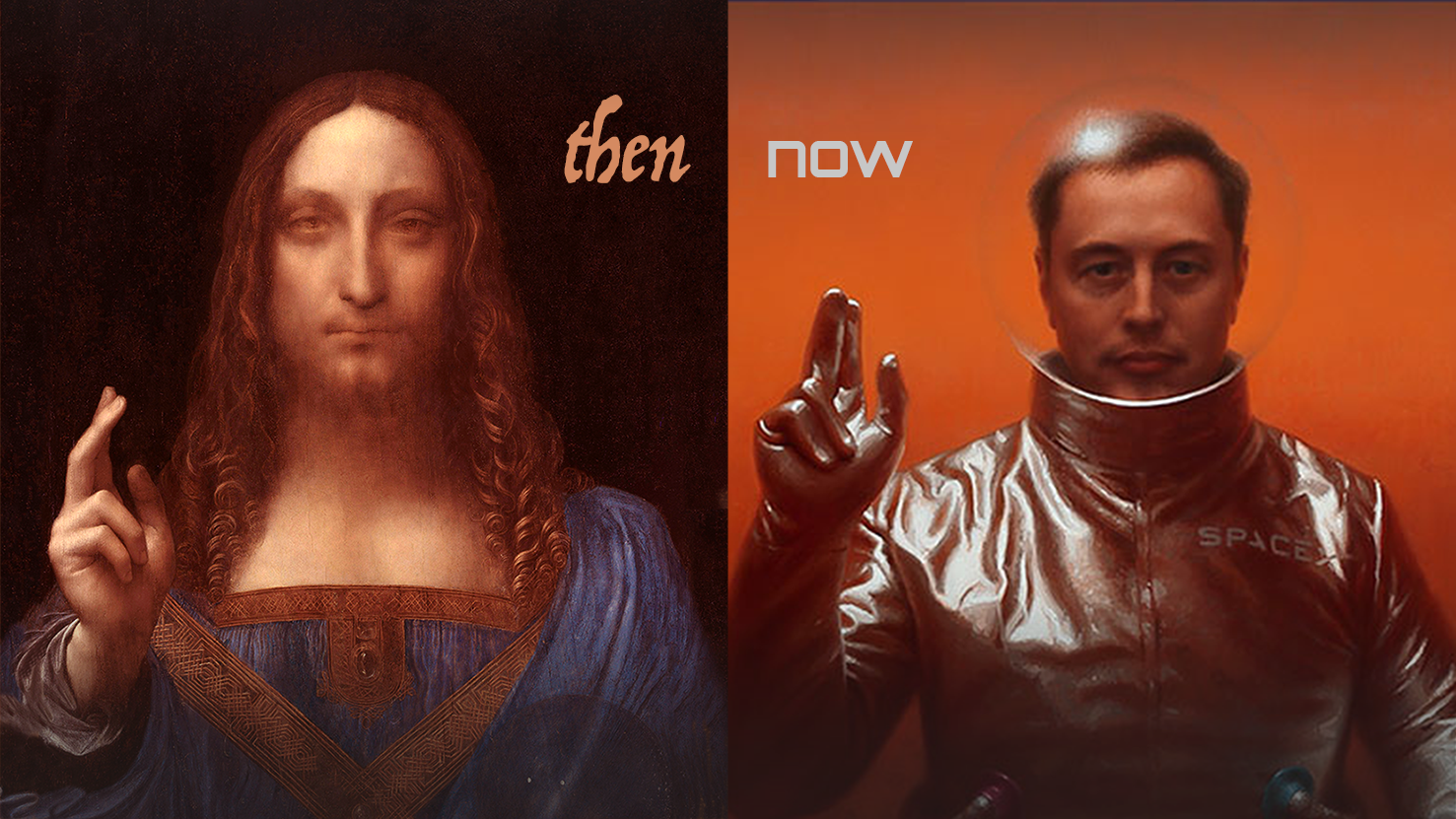
These sort of phases have always bothered me.
Art if about whatever you want it to be. My kid painting a dinosaur that looks like a scribble is art. A masterful recreation of a photograph in oil paint is art. T shaped lines on a page that have 'hidden meaning' is art.
Portraying someone realistically is as much art as throwing paint at a canvas with a particular meaning in mind is art.
It's all art. There's nothing wrong with enjoying art that doesn't have some hidden meaning. I love realism for the skill involved. I love abstract art for the ideas involved and the thought it provokes.
Enjoyment of visual art is entirely subjective, you like it or you don't, but it's still art.
There is so much of a "gatekeeping" sense when it comes to the question of "what is art", especially in the sense that "if you don't understand it your not appreciating it". You are allowed to like it just because of the way it looks.
It does, however, give me some insight into the community and mindset.
> Enjoyment of visual art is entirely subjective, you like it or you don't, but it's still art.
100% agree.
In my heyday[0], I was actually considering becoming a professional artist, but I knew that there are a ton of folks out there, that could blow me away, and didn't have programming to fall back on, so I went geek.
I used to get sneered at a lot. Fantasy art isn't really considered "art."
[0] http://littlegreenviper.com/art (I did these in the late 1980s. There's a bunch more, and I might end up putting more of them up there. My FB page has them. Feel free to judge whether or not I qualify as "artist." I couldn't do this again, right now. I'm out of practice).
I was getting at the points I've quoted below [1] - it may not even be your opinion, you say "there are many that would argue", but in my opinion art does not need a story or any emotion to still be art.
Some amazing artworks are just people trying their best to create something that looks good.
[1] "But there are many that would argue that this isn't necessarily "art," as art is an interpretation of an emotional experience, as opposed to simple documentation.
...
Art is a story, not just a document, and that story includes many components, including the artist's own story." https://www.pablo-ruiz-picasso.net/work-117.php
[4] https://www.borisjulie.com/product-category/prints/boris-pri...
As an artist, you should know that a camera does not represent reality, it flattens and distorts it in such subtle ways that often art of the thing is a better likeness than the actual thing. It's one of the most basic steps in any art class -- to draw reality, not what the camera gives you, and is the reason why Botanical Artwork is still highly favoured over images (along with other reasons, like being able to represent the most important parts of the plant accurately in a general sense as opposed to a specific specimen).
Hyper-realism, in my experience, also tends to be based off of images and still has that "unreal" skewed/distorted perspective thing going on.
So I'm sorry that you took offence from it, but it seems like one of the least important things one could take offence at on this website
I feel there's a lot of snobbery among artists and collectors and they look down on this kind of thing tho.
1) The medium. Old masters must made their own paint and then paint the portrait. And this is double of the effort that modern masters need to do. This is not necessary anymore. you just buy it exactly made, in the exact amounts and the exact color tone, all the times.
This means to grind the pigments to a fine dust (and many are poisonous), filter it, discard the extra materials until you have a pure paint. Mix it with eggs, or linem oil, or water and gum. Paint it and then let it dry for many months avoiding cracks in the painting. Paint products today have stuff to dry faster and more uniform. Using those you can accelerate the dry process or made it much more long, as you need.
2) Modern masters also copy, a lot, from photographs. All is done yet in a photograph. All the points and precise measures are here at the exact distance. This is much easier than building the structure slowly in your mind and improving it by iteration.
3) The eyes. With internet your work is seen by everybody in real time. If is good is good. You can use a lot of tricks to build a myth or spread your work. It was not so easy in the old ages.
Is Einstein a greater scientist than Newton? Are both of them better than Galileo? Now that would be a fun discussion at the pub, but with no real value. All of these guys benefited from previous work done by other "masters" and this helped them reach even greater heights.
Even in sports like chess, where it's a lot easier to compare matches and ratings across decades and even centuries you could debate that the old masters had a fraction of the resources available to current masters so the comparison doesn't really hold.
Ok so this piece is content marketing for a self-proclaimed master portraitist who gives art lessons. Guess what? He thinks the current generation is taking art to a "whole new level" (I wouldn't be surprised if the quoted artists are former students). I'll take that with a pinch of salt.
OP. Yeah, I guess I can see that now. Honestly, I did a search for Salvator Tuesday after a friend mentioned it, saw this link, thought the examples shown were interesting and the question intriguing. It’s one I’ve asked about music, literature and other topics many times.
Agree, his analysis is very limited. The better not to scare off any potential customers, I suppose. If anyone knows of a more academically sound paper or exhibition on these lines, I’d click that.
You could argue perhaps that the proportion is lower, but then we have a lot more people bopping around...
Yeah, that is what I meant. Amount of people buying actual drawings as gifts or to decorate office/house is smaller.
You could make a point that a lot less people back then had artwork in their homes back in the day, because living conditions of the masses were a lot more cramped and life was more difficult. But copies definitely were available and widespread.
And Laura In Black really knocked me back in my chair.
Who are "the best artists"?
According to who?
And what makes you think "the best artists" have to follow fashion?
I’m not being sarcastic; who is walking around talking about a coherent, optimistic and appealing future?