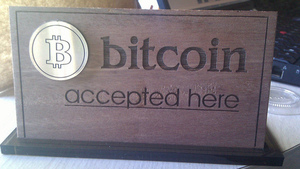
Bitcoin implodes, falls more than 90 percent from June peak
Bitcoin, the world's first peer-to-peer digital currency, has had a wild year …
Ars Technica
27 points · by wicknicks · 15y ago · 42 comments
What would be ideal, is to be able to use your credit card to buy BTC. But that won't happen because credit cards need the ability to support charge backs and that makes it difficult with BTC's anonymous nature.
Once this problem is solved, I think you'll find a lot more people becoming involved with BTC again.
While not intending (I am sure) to be a pyramid scheme (artificial value from short term demand) this is how it will/has inevitably turned out. The concepts underpinning Bitcoin however have a future - as long as the mining is done where wealth is accumulated and not on a GPU.
I think the term “speculative bubble” better describes value being primarily driven by short-term demand. A pyramid scheme is described as: A non-sustainable business model that involves promising participants payment or services, primarily for enrolling other people into the scheme, rather than supplying any real investment or sale of products or services to the public.
Now, if you needed to pay $100 to become a Bitcoin miner and you received $50 from every other person you recruit to mine Bitcoins, this would be a pyramid scheme.
All a currency really needs to be valuable are two people who have faith in it and who have resources they want to trade with each other.
Also for the record the only reason backing is important at all is because backing means there's a finite amount of currency that can be created. Bitcoin has, in theory, an equally valid limiting factor
This is why a government is so tied to its currency. In some sense it isn't a true cause and effect relationship, both the stability of a government and the stability of its currency is tied to the same third factor, its credibility.
"All a currency really needs to be valuable are two people who have faith in it"
Which is an equivocation game, in that "have faith in it" must itself be motivated by something at least locally rational or it won't work. I have faith in the ability of a dollar to buy off the men-with-guns who will come and take all my stuff and ruin my life if I don't pay my taxes.
All government fiat currencies are thus in fact backed by something real. I don't entirely disagree with the BitCoin community that that is a more tenuous backing than one might abstractly like, but I do not see anything in practice that would be better; value stores are intrinsically ephemeral and there is nothing you can do about it.
The reason why BitCoin is crashing is that it was built on the false premise that currencies have no backing, so we might as well create a cryptocurrency with no backing. But that's false. BitCoin is actually special in having no backing of any kind, and that is why failure is and will continue to be inevitable. The whole thing was built on a false foundation.
So, how about if someone would get a farm of computers mining bitcoins, at a rate where the bitcoins pay for the electricity etc, but then they also rent out this computing power for anyone to use for whatever purpose (like Amazon), but for this accept payment only in bitcoins, being the exact amount of bitcoin that would have been mined otherwise with the computing power rented out.
Would that work?
Then you back it with something else of value, namely computing power, but you only accept bitcoin as payment.
Just a thought, though.
But what happens if you do business entirely with an unofficial currency like BitCoin, do you have to pay taxes based on some arbitrarily converted USD value? Or can you escape taxes altogether?
Not true. They have the backing of their government's tax payers. Backing doesn't need to be a hard asset like gold, it can merely be the full faith and credit of said government.
> Also for the record the only reason backing is important at all is because backing means there's a finite amount of currency that can be created.
Again, not true; backing is important because you want to know your money is safe, not because it's impossible or difficult to inflate.
http://www.wolframalpha.com/input/?i=price+gold
A graph that looks like that is nature's danger siren. As they say in prospectuses, "past performance does not guarantee future results."
http://blog.thomsonreuters.com/index.php/graphic-of-the-day-...
But you're right, not as stable as the US dollar. Still stable enough that people buy it as a store of value though.
- no transaction fees you would normally pay to an intermediary
- works internationally, anywhere the Internet is, no exchange rates for cross-country transactions
- anonymizable
- cryptographically ensured trust (solved the Byzantine Generals problem)
All these things can create demand, not too dissimilar from the way gold's luster does, or the Dollar's reserve currency / oil currency / US tax currency status does.
Currencies fluctuate, BTC is no exception. But rumors of its death due to total lack of value are exaggerated.
Gold or dollar are not supported by anything but people's desire to have them. Well, gold is also limited, at least on this planet.
Bitcoins have more value to me than gold. It's digital (no need to store a brick of gold in a safe), it's almost anonymous (very hard to track to a real person), transactions are free, it's limited in quantity (like gold).
How is a bitcoin different from a Dollar? A Dollar is a piece of paper denoted with an acceptable value. Bitocins are mined on a GPU, Dollars are printed on paper.
You cannot guarantee that dollar is indeed backed by a piece of a golden bar, since it is very much not the case.
Legal tender is, of course, a fluid concept. If the Fishdollar becomes legal tender in a country with a microscopic economy consisting of two people, it's not very useful because you might not be able to cash out your collection of Fishdollars: The citizens might not have anything that they'd like to trade for Fishdollars. What you really want in a currency is an issuer which has a really big economy with lots of money moving around. That's one reason why everyone loves US Dollars.
If tomorrow the US economy flops, US Dollars plummet in value. In a fictitious world where government-controlled money lost all value, bitcoin is the alternative. And sure, bitcoin has yet to prove significant adoption.
But please don't preach that bitcoins are useless just because they're 'mined on GPUs'.
It falls under the same rules as buy and selling gold which basically has no formal regulation.
I heard somebody define "money" as the most liquid commodity.
The commodity that can be exchanged for goods and services the most easily and efficiently is money.
Whatever other people would accept as payment for their services and products might well be Bitcoin, and there's nothing wrong with that.
If it's expanding fast enough to cause a reasonable level of inflation, then it causes the tide to rise by encouraging economic productivity: If money only loses value by being stuffed under a mattress, then there's an incentive to use it by investing or spending it instead. This spurs job growth, velocity, and generally increases the GDP and ultimately helps everyone to become more wealthy.
Even without that, though, the money supply needs to expand apace of economic expansion, otherwise you end up with deflation: If an increasing number of people are competing for a static quantity of currency, so the value of the currency keeps going up due to simple supply and demand. That creates a strong disincentive to participate in the economy. Why would you spend any more money than you absolutely have to in the present, if you know that the money will keep becoming more valuable for as long as you're willing to patiently wait?
BTC, by eschewing a central authority with the power to (hopefully intelligently) control the money supply in response to economic realities, and choosing to use an fixed, artificially-selected growth curve instead, has almost certainly doomed itself. It can only work if the expansion of the BTC economy closely mirrors the expansion of the BTC money supply. If its popularity rises faster than the money supply grows, the result is economic gridlock due to deflation. And on the other side of things, if BTC adoption now falls very far behind that set curve, then it's going to run into an inflationary meltdown not entirely unlike the sort that many of its fans naively believe can only be caused by a government.
TL;DR: Just because a bad driver might cause a wreck does not imply that cars would be better without steering wheels.
Anyway, if there's a fixed supply of Bitcoins, then yes, it seems that one unit's value would keep increasing. But wouldn't it then be possible to use increasingly small fractions of a Bitcoin as necessary?
https://secure.wikimedia.org/wikipedia/en/wiki/Money
Regards, TDL