1069 points · by carlycue · 4y ago · 703 comments
These companies touting their solutions for creating a more connected world can't have it both ways. Apple was able to ship the M1 and roll out new iterations of many other offerings since the pandemic hit. They're just fine.
Apple didn't collapse since the pandemic hit, and the flexibility offered by remote work is far more valuable to lots of people than the loss of in-person collaboration opportunities. We deserve to have input into how we work best and if that means walking away from companies run by egomaniacs that need to see butts in seats, then so be it.
I imagine quite a lot of people who worked on M1 hardware probably still had to show up to the office. For some positions it is just required. A friend of mine who worked on hardware at Apple had to go to the office almost every day throughout the pandemic (and no, i dont know what product he worked on, and I am not going to ask given the whole thing with apple being extremely secretive). So clearly, there are certain scenarios for certain positions which might require the person to work in the office.
However, to support your point, that director of ML in the article had been working remote for the past 2 years just fine. So clearly he wasn't in the same position as my friend, and that director's position didn't really have a need for him to be in the office. Which is why imo it was silly to lose him just because of such an unnecessarily arbitrary rule.
Typically the positions for which work is "just required" are lab and hardware positions. These don't tend to have the shoulder-to-shoulder squeeze of humans and desks that I always see in open-plan offices.
Any time I have worked in a lab or on electronic hardware, I have had around 10 times the amount of personal space compared to the tightly packed "collaborative" open-plan offices that consist of programmers sitting at desks with monitors with their headphones on and desperately trying to focus.
I'd be much more enthusiastic about returning to the office if I had a private office with a door, Fog Creek style.
I changed to a much better job in 2019 regarding work and salary but everyone including the VP's are in cubicles. It is really annoying when everyone around you is on a different conference call and you have to block them out while trying to have your own conference call.
I only had to deal with that for 6 months before the pandemic sent us all home for 2 years. We are supposed to be in the office 3 times a week for the last 2 months. Some days I go in and immediately get annoyed by all the people talking loudly on their own meetings. I eat lunch and I just go home and work from there.
I look around on the days we are supposed to show up and about 1/3 actually show up. They are trying to entice us back with free lunch once a week but the food isn't even good. The company is doing well but the rest of the industry is doing great too so we have a retention problem. I don't think any of the managers really want to say "You have to be in 3 days a week" because they fear it will cause more people to leave.
I would really love to have an office with a door again but working from home is the next best thing. I like having my meetings with speakers and a speakerphone rather than headphones and a mic at my mouth.
I can't do any real work like that. Before COVID, I was going to the office to talk to people, attend meetings and do chores, whereas I did real work at home. It was unsustainable, as work ended up filling 80+ hours per week.
exactly
I'd be fine to go into the office but don't be under the illusion I'm going to accept materially worse working conditions in order to do it. I guess it isn't the same for everyone, but my home office is a very high bar to beat and it makes a real difference to my productivity and mental well being to be there.
The logical conclusion of this line of thinking is to organize your coworkers. You have much more bargaining power about your work conditions as an organized union. The history of unionization stems primarily from workers demanding safe working environments.
The company may be happy to give you a 10% raise, but they’d rather lower JU’s salary by 10%, so they won’t budge on your demands for an increase, since it’d also apply to him.
You could maybe make an argument that companies may increase wages for high performers for retention reasons, because needing to replace valuable employees is a large, if somewhat intangible cost, but that's pretty iffy. Companies are made up of and managed by humans, who are notoriously short-sighted and willing to discount potential risks when there are financial incentives to do so.
50% of the time Joe Useless makes more than you do already, because they joined later and market rate for the position shifted upward. You'll still need to fight tooth and nail, alone, individually, to reach parity, even if you're a top performer. Your manager isn't usually going to say "hmm, we're paying Joe Useless 1.2X, while we're paying Sally Superlative 1.0X--we really should pay Sally 2.0X! Your manager will be overruled by the CFO if they do suggest this anyway. Large wage increases based on expertise happen because you're able to better sell yourself to _another_ company when changing jobs.
Ultimately, I'd prefer a system where Joe Useless and I fight for equal wage increases collectively, because the balance of power is such that we're more likely to get them than each of us going it alone. Joe Useless is gonna be there anyway unless the company decides they're so useless as to fire them. So long as Joe Useless is there in the same role as I am, I don't care if they get equal pay, especially not if they're helping in the fight for increases in our equal pay.
What if you're the Joe Useless on your team and you don't know it? A lot of people here seem to think they're the 10X dude but what if they're the 0.1X dude lol. What if you're really the 10X dude but your manager thinks you're the 0.1X dude because they don't like you as a person?
Those systems have good and bad sides to them, but I do think the good outweighs the bad.
Then don't organize the union to work like that. A union is an agreement for the workers to pool their negotiating power, not an agreement for any particular pay structure.
You also give away your power as an individual to those running the union.
How did you get so intensely in thrall of the people holding your collar?
As the other comment mentioned the biggest individual power you have is quitting and a union doesn't prevent that.
> You also give away your power as an individual to those running the union.
ideally it would be run by the members, not necessarily by another bossThey all had such an adversarial relationship with work. It's always us against them mentality. They could never see anyone in management as a human. I can't imagine living like that.
As far as I can tell, the unions didn't ever solve any of their biggest gripes, took money out of their paychecks for lots of non-work related political activities, and didn't come through when they really needed to on things like pensions or healthcare.
Also, the company is able to maintain very high standards for the quality and skill of the pilots. There are not “useless Joe’s”, as evidenced by the fact that the planes don’t crash.
This family member is a diehard conservative politically but openly espouses the value of the union for representing his interests against the company.
personally, i think i would prefer a co-ownership (coop) scheme than union, since that adversarial relationship is basically dissolved since you are also the owner along with your co-workers... idk just a thought
The employer can’t be all that good if they’re ignoring the do-not-call registry. And I think it slightly increases the chances of bad actors ceasing cold-calling.
I absolutely understand that it's the opposite for some people.
There’s hardly anyone around in the office and frankly I couldn’t care less about the free stuff. They pay me enough that I can go out and buy my own snacks.
What I want is a team to learn from and grow. Not some teachers pets that sit behind zoom calls making sure they know exactly what’s “on the test” so they make themselves look better.
I’ll never work somewhere 100% remote or where employees don’t have an expectation of at least 3 days in the office.
Mind you, being able to spend a day a week at home vs full week in the office is quite nice.
So do, and I have also worked for scrappy 100% remote startups. The 100% remote startup had better team cohesion and better knowledge transfer with more opportunities to learn.
You might get those things in the office, but pre-pandemic, at least my office environment provided none of those things. Don't conflate a good team dynamic with an office environment. I used to pair program with a guy for four hours a day and I never met him until we both left the company.
My experience talking to a lot of people both for and against wfh has been that people with shitty teams hate being remote, because it's hard to do when everyone is putting in zero effort to make remote work "work." The other big group that wants wfh to end are the "my coworkers are my only friends" people. Good for them, i guess, but personally i think that's not a wise way to structure one's life. I understand why companies love it and want to foster it though.
A very small number say things like "I find it difficult to collaborate with anyone over the internet."
I’m not sure what your role is but zoom calls really don’t mean anything as an IC. Not unless you’re responding to or handling an outage and debugging on the fly.
What you produce and how well it works is how you’re measured. Documentation and written communication is equally as important.
I like working from an office and I like informal interactions with colleagues — from chatting over coffee to peeking around and seeing who is free to whiteboard a problem.
I don't know anyone who likes hybrid teams though.
Eventually I suspect we'll end up with a mix of remote and in-person employers, and workers who have a strong preference one way or another will just have to filter potential employers accordingly. There might be a way for larger businesses to have certain teams work remotely while others go into the office, but I suspect it would be difficult to manage.
When at all possible, they work from home.
It is funny who we know. Not at all a representative sample.
(Source: I worked on that project at Apple.)
I genuinely believe many people who prefer working in an office versus at home have unfulfilling social lives or bad home lives. The social dynamics, competition, in physical offices fills the void in their lives. Also seems like most of the people clamoring for a return to the office are also climbers & middle managers.
For some work a physical presence is required not just preferable, but for most of a software engineer's day to day there really is no unquestionable upside.
I'll quit before I go back full time. I've never been happier or more fulfilled with my work/life balance, and I've never been more productive with my time. I'll even take a different remote position at a 20% pay cut and a reduction in equity, at least, to retain WFH. Most I'm willing to give is a day a week in office, and maybe temporarily longer in rare circumstances where the benefit in performance is clear.
Warning: Hot Take.
I have similar logic, but reach an almost opposite conclusion. I genuinely believe many people who prefer working at home rather than an office have unfulfilling work lives and struggle to form meaningful friendships/relationships with colleagues.
I genuinely enjoy interactions with my colleagues during a work day, and wouldn't want to replace that with staring at a screen for 7.5 hours of my day or only talking to them via Slack. I have a great social group outside of work, but that doesn't diminish the value of enjoying the company of people I work with too.
Sure, it might technically be more productive if I just locked myself in a room and worked intensely on my own for my whole career and only communicated through a webcam, but that doesn't seem particularly enjoyable to me personally.
Absolutely not true.
I've been WFH since 2008. Many followed overtime and the company went full WFH in 2015 closing our office. We have a video call 3x a week and shoot the shit learn about each others lives just the same before we talk about work. I don't feel any less connected to my coworkers than my physical friends.
I also am part of a telegram group with ~10 old college buddies who live all over the country where we chat everyday and hop on voice to play video games or a monthly poker. This obviously isn't the same since we started out as physical friends and went to chat groups after going out separate ways, but again I haven't lost touch with any of them or felt less connected/meaningful because we are now remote only.
Not only that but with all the various video games we have added random people we connected with to that group, I don't even know what their face looks like but I know just as much about them as my physical friends. They are just part of the daily discussions about sports, politics, movies/tv, whatever.
I think if you are not connecting with someone you maybe aren't trying enough because it is totally possible. What exactly can't you talk about remotely that you can in person? I've yet to find a topic myself
> I also am part of a telegram group with ~10 old college buddies who live all over the country where we chat everyday and hop on voice to play video games or a monthly poker. I haven't lost touch with any of them or felt less connected/meaningful because we are now remote only.
If you all lived next door to each other, would you still do it over telegram voice? If not, why not if you can connect the same over voice chat?
My view is that something is lost on voice chat compared to being in the same room. I am part of a 10-year WhatsApp group with my university buddies too - but we were bonded with real-life interactions and experiences while being together at university. If those in-person, real-life interactions were replaced by a slack group with other people on my course, we wouldn't have built the same relationship.
Speaking of coffee rooms, they have another important property: it is very nice, even healthy, to leave your desk from time to time and both take a break for your mind and your body from work. In the office you walk to the coffee room in that time and there you meet people in the same phase. They are taking a break and you don't interrupt each others work when having a chat. In a sense, online social contact can be very disruptive, as when you start an online interaction, you don't know whether your recipient is willing for an interrupition or not. Of course, there are ways to arrange that too, but things aren't just black and white and interactions are complex.
I love a hybrid approach because I really enjoy the random conversations that crop up in the office… but my social life is so much improved outside of work in the last year or so that everything about physically being present feels tedious.
I have a coworker I call to talk shop for a few minutes and then bullshit for another 15-20 minutes almost daily when I’m wfh.
I’m very strongly considering asking my boss if my in-office/wfh ratio can switch from 3/2 to “whatever I want”
Better social life makes work feel like work. My drive to get stuff done has gone up, because I’ve gotta get out at a good time.
Whenever you're forced to do something, yes you will struggle. My colleagues are my colleagues. And if I like someone, I will bond with them and it might become a friendship regardless of whether i see them in person or not.
Still, I'm at work to work, not to make meaningful bonds. Using the word 'meaningful' in a work context makes the word almost lose its meaning and make it seem banal. Meaningful bonds happen by chance, and most people we come across with, we don't make meaningful bonds with anyway. And whether we want it or not, work environment is not the same as hobby or home or relaxation.
I have good friends, who i have meaningful bonds with, and I'm happy with that. At work, i'm getting paid to do a job, not to form meaningful bonds with people. I don't need those, because I have those already.
Maybe you enjoy interactions with colleagues, who don't enjoy interactions with you because they'd rather be home where they don't have to talk with someone they don't have or want a meaningful bond with.
And for the last point of "Sure, it might be technically more productive (...)". Companies try to make us believe it is less productive to WFH all the time. Remove that point, and there's nothing more on the table to want people at the office, than the fact that some need social interaction and to form meaningful bonds at work.
A few days/week of working at the office for people who want meaningful bond making could be arranged, and you all could connect with each other, sing kumbaya together, and make life long friendships then. Just don't force others to do the same.
Not all jobs require you to form meaningful relationships with colleagues and those relationships can be kept at a distance.
I'd hate to have "friends" on the workplace.
I have met people who seem to have terrible marriages and seem to spend as much time away from home as possible due to that situation. I have also met people that enjoy working on group projects and enjoy building relationships through that process.
I've worked from home for most of the past 17 years and would never go back to 100%, but I also miss making friendships at times.
1. Many people already have built good relationships with their colleagues prior to WFH and talking to them over GVC helps the relationship. You are allowed to open up more when you know no one else is around except you and the person you're talking to 1:1. You don't have to be afraid that someone outside the meeting room or cubicle is going to hear you. A lot of the day-to-day frictions are also removed from the equation. Being completely honest, things like appearance, odor, height differences, physical presence, status symbols (watches, car keys, wallet, phones) all cause insecurities in a competitive office space. I find that in a remote work setting, you can focus more on the person as an individual.
2. Working remotely offers the flexibility to work from a location that better suits your social preferences. A LOT of my friends and myself were completely and utterly miserable socially working in the Bay Area. As soon as we had the option, we moved out and have built thriving social circles. It is not always the person's fault if they struggle to form meaningful friendships. It can also be the environment and whether it is a good fit. This eases social insecurity and allows colleagues to connect more authentically.
3. Working remotely offers the flexibility to detach from work and go do other things (if you don't have meetings etc.). This allows you to interact with people outside the office more and develop more meaningful relationships over time.
Remote work isn't about being locked up in a room and only communicating through a webcam. It is primarily about removing the unnecessary overhead that we previously thought was a prerequisite of work (e.g. commuting, "fake work", watercooler conversations, stressful and contrived socializing events at work, open office plans, can't work on other things during unnecessary meetings, running into people you don't like or who distract you, sexual tension with workers of the opposite sex, being exposed to people's bad moods, dirty public restrooms, walking to meeting rooms across the building, working from a cramped cubicle with smelly people, who can type louder and faster competitions, etc. etc. etc.)
I live 10 minutes from the office and live in a town I love. This isn't luck - it's a choice I have made.
Also, please don't take this the wrong way, but some of your comments make it sound like you might be in the category of people who don't find it as easy as others to form relationships with colleagues in real life (Comments such as finding socialising events at work stressful, and about experiencing sexual tension if there is a worker of the opposite sex).
I prefer working from home for other reasons as well, but certainly avoiding the annoyance of coworkers I don’t like all that much is part of it.
This tends to be me both at work and basically in every social setting. I’ve also never really formed more than a highly casual acquaintanceship at work with usually doesn’t follow a job hop.
I prefer remote now. It lets me squeeze in a little more sleep that would otherwise be used to get ready and go to an office where I’d have to sit in the morning and listen to people around me ramble on and I just gets tiring.
At home I control everything about comfort the setting and I’m not losing much I’d gain in-office.
This is great one day every couple of weeks, but I get way more done at home and in far less time. So that I have more than enough left over to exercise and appreciate my day
My experience with programming is that if it's not happening, staring at a screen in an office won't make it happen faster. Stepping outside to go for a run, enjoying nature for a bit, picking up my kids up early so I can spend time with them (and then working at night when they're back to sleep) feels far less wasteful of the time I have on this Earth than commuting to a building where I am essentially stuck for eight hours before I can do anything else
I infinitely prefer working at home because I hate commuting, I particularly hate open-plan offices which is all they offer us, and I like quiet when I write code.
Right now my two coworkers - both remote, one in Indonesia, I have never met either of them in person - are amongst my closest friends, but often this is not the case. I nearly always like my coworkers, but outside the work, what do we necessarily have in common? Are they going to go to noise music concerts or vegan restaurants with me?
You can learn to maintain friendships without being in the same room, and mitigate some considerable portion of your footprint on this Earth by giving up commuting.
Huh?
Occasional all hands conferences provided some IRL a few times a year. IME these weren't strictly necessary yet did provide a chance to bond with the people on the other side of the glass.
Career wise I do think that fully remote can be a boon to shorter and less attractive coworkers, since it reduces or eliminates some of the tall+beautiful biases.
People who fill a void through work are the unhappy ones. Even when I was in the office I made meaningful connections with Indian coworkers who I never met but spoke to almost daily for years.
Instead of talking to coworkers I get to see my 2 young kids grow up.
This take makes no sense at all.
If people had unfulfilling work lives they would not be threatening resignation to preserve the work life they loathe, and they would definitely not wait out for diktats to return to the office to switch jobs, specially in a supply-driven market which is today's job market.
More importantly, if people had a hard time forming meaningful friendships at the office then they would not stay remote, where it's easier to get ignored, nor would they stick around a toxic corporate environment that makes it difficult to be integrated and feel welcomed.
> I genuinely enjoy interactions with my colleagues during a work day, and wouldn't want to replace that with staring at a screen for 7.5 hours of my day or only talking to them via Slack. I have a great social group outside of work, but that doesn't diminish the value of enjoying the company of people I work with too.
Your personal anecdote is great, but ignores the fact that even in the office the majority of us are paid to stare at screens for over 7.5 hours a day, and are criticized if you spend even 0.5 of that time doing anything other than staring at the screen.
The foosball table recruiters are always boasting about is just for show, and is always unused.
> Sure, it might technically be more productive if I just locked myself in a room and worked intensely on my own for my whole career and only communicated through a webcam, but that doesn't seem particularly enjoyable to me personally.
That's precisely the point that the OP stated: people who prefer working in an office tend to have unfulfilling social lives or bad home lives.
They need the office because it's their way to fill the void in their lives and escape their personal problems.
In the office they surround themselves with people who, for the sake of keeping things professional, have no alternative to exchange pleasantries and treat them cordially, something they don't get anywhere else. Thus they waste hours per day commuting just to have a shot at those irrelevant social interactions they fail to get anywhere else.
In contrast, those who prefer to work from home do have far better and more fulfilling things to do at home. They don't need to waste precious personal time commuting, and instead spend it in more meaningful ways.
More importantly, let's not forget the age old trope of retirees finding themselves in the pit of despair because by losing their job they lost their life and reason to live.
Everything is predicated on it being an either/or, but I feel lucky enough to have great relationships both in and out of work.
Saying this after many, many years of remote working, where the boundaries between work and personal life blurred so far they became practically indistinguishable. (yay 24/7 "DevOps" culture :/)
I find the same kind of creep can happen at the office, too. Many colleagues end up leaving at 8 PM or later [0] because they have to do this one more thing or someone shows up with just a quick question to ask.
However, I realize that for some people, who have a harder time saying no for whatever reason, it's easier to have a hard, external excuse. "Sorry, I need to catch my train, so I don't have to sleep here" works less well when you're already home. But I think that in both cases it's very important to set boundaries and stick to them.
---
[0] Our workdays are normally 9 AM to 6 PM.
I've learnt way more reading papers and documentation than being in the same physical space as more senior colleagues. People sometimes bring this point up re: onboarding but I don't quite understand what people learn that they can't do otherwise remotely.
I believe there is value in newcomers/junior devs begin in close proximity with their more experienced coworkers because this greatly improves the chance to talk about important work-related topics. Many times in my live I have started a casual conversation with someone at work and this lead to discussion about current work-related software topics and I was able to share some opinions with someone.
These things happen much more rarely when they are scheduled slack calls, and people seldomly just slack to talk about random things.
> I've learnt way more reading papers and documentation than being in the same physical space as more senior colleagues. People sometimes bring this point up re: onboarding but I don't quite understand what people learn that they can't do otherwise remotely
It is much harder to gain tacit knowledge (The important stuff) when you're remote. I read a lot, and it's no match for picking a skilled person's brain for even just 30min-1hr.
I've found I generally have to explicitly ask if I want someone to explain what they're doing and why. There is very little 1:1 teaching/mentoring. In an office I think there is more informal mentoring.
Offices have their pros and cons (WFH can be a horribly lonely experience for anyone who lives alone, for example). But it's removing the commuting that makes WFH such a massive win for most people. And a big win for the environment (which should be reason enough to try and keep it going)
You're implying that this is a bad thing and I don't get why it should be.
But I wouldn't put it that way because I don't think it makes for a productive conversation - office or remote, people like what they like and they have their reasons for it.
The quote points at “social dynamics” and “competition” in offices, not personal relationships or even friendships. Meaning that the mere fact of being surrounded by people with relatively the same professional goals, is good enough for some craving for social interaction. There isn’t necessarily any more depth to it, and it doesn’t really solve any other pending socialising issues.
How is that not a bad thing?
It's the "root cause" fix.
But, don't force me to make my life worse for that reason. You like the office? Go to the office.
Part of the job is to knock out tickets but part of the job (particularly when senior) is to help coworkers. If we lived in a fully transactional gig-worker kind of model then I would bill you 10x as much to get involved in your problem over Zoom. We don't, so that's impossible. And I realize this is silly on the grand scale of labor exploitation but I feel like by expecting me to treat remote workers the same as in-office workers, management is extracting a lot more value from me than was our deal pre-pandemic.
I get very little utility from the "flexibility" (always prioritized living close to the office, prefer the change of scenery) but a lot of disutility from remote collaboration.
Now that everyone wants to do that, without the knowledge or the experience to do it, but only because they want to work in their pajamas (let's be honest!) I am forced to go through endless meetings where the first half is about "can you hear me?" "can you see me?" "where is X?" "coming, is in another meeting" "OK let's wait another 5 minutes then" and then half of them has an horrible voice quality, worse video, you have to repeat the same things over and over for the benefit of those not listening (let's be honest!) etc etc
it's exhausting and the fact that we aren't physically in the same room make people think two hours meetings are something normal
It's making me frankly think that all of this "freedom to work everywhere" trope has gone too far.
Yesterday I talked to some people I used to face, ie they were taking the phone at another business years ago when I was trading with them. They are all against working from home, having continued to go to the office during the lockdowns.
The point they made was that some things really benefit from being interruptible. Some things even benefit from not being recorded. Immediacy really matters for certain things like gauging who you should approach with some deal.
What also matters is being able to weigh the mood. A lot of what we call political decisions depend on this kind of weighing of what the team wants to do, and is hard through zoom.
Finally there's the problem of juniors. In finance you'd learn stuff when there was a quiet moment and someone more experienced seemed like they had a second to explain something to you. Unscheduled but valuable training.
These folks basically took the opposite view of what you seem to have, and decided that people who like WFH are basically not productive and are just phoning it in, knowing that it has gotten harder to hire people willing to be in the office all day. It's kinda interesting the take that people on opposite ends of the spectrum have of each others motivations.
“Hot take: people who have a different work style preference than me are inferior and damaged, and/or have motives which I despise or work a job I think is useless.”
Rethink this. These are your colleagues. Compassion for people who are different from you improves your own humanity and makes working with you more enjoyable.
Feels like you are mixing a lot of stuff together. My desire to interact with my collegues about our field of work has nothing to do with my social live outside of work.
It's not like I'm going to talk about new C# 11 features during our Sunday barbecue or at soccer practise. Of course I can go to a meetup or invite friends from tech to a pub, but that's not gonna replace 40 hours a week of "random interaction" with my colleagues. Maybe I'm just lucky and have great colleagues that are fun to interact with? Hard to say ...
It is like trying to get your protein requirements met from potatoes. Yes, you can if you force yourself and try really hard. However, it is much more efficient and pain-free to get it from a protein shake.
In this context, it means using the time you save with working from home and using it to meet people interested in the things you care about.
That's not healthy and it shouldn't be the basis for company policies in general.
It truly doesn’t matter. WFH can be great, working from the office can be great. Find a company where the social and work culture fit with what you prefer.
It is the same as politics. The more polarized you can make things and the more you point out the flaws of the opposing perspective, the easier it is to influence public opinion.
In situations where policy needs to be determined, the decision made will benefit one side and harm the other side. In an ideal world, companies will allow employees to do whatever they want and pay them the same as long as they are productive.
However, companies want to actively reduce chaos and this means making consistent rules for everyone and measuring how this affects productivity in aggregate. So the rules become "fully remote" or "hybrid work" instead of allowing people to do what makes them optimally productive.
> Find a company where the social and work culture fit with what you prefer.
You say this presuming that people don't care about what they are working on or the prestige of the company they are working at. A lot of people have a fairly good setup and would rather influence their own company (or by proxy the industry at large) than simply move to a different potentially suboptimal company that allows remote work.
But I am excited to be back in office on some hybrid schedule, because there was a social component to work that I very much missed. I enjoyed the work part of the work the same, but missed the occasional coffee with a coworker, full-fledged in person brainstorming session, off hand conversations about zany ideas, lunch at the cafe, etc.
It's not that my social fulfillment declined at all overall with WFH -- other social activities filled the time -- but the specific social activity of bonding in person with folks I worked with definitely decreased, and it's nice to have that come back. That's not a reason to force folks back in the office (this is at no-one's expense, as I've seen it suggested), but it's a nice benefit.
Also, the "social interactions" at the office are usually not about replacing private social life, but well, interacting with your colleagues about work related topics which go beyond the range of scheduled meetings. There is a lot of value in meeting random people over a coffee without a set agenda. No surprise, that during the pandemic there were a lot of meetings schedule with no agenda set, just to keep conversation between people alive, the more so as they don't work directly together.
On the one side I certainly appreciated the ability to work undisturbed at home for certain tasks, on the other side, I am working in a large organization (and I don't mean by large just a large headcount but a lot of people on joint or related projects), which mostly are not software engineers (but engineers of other disciplines). A lot of that goes online too - and as our organization is spread across large distances, always has been online - but I am aware of the benefits of direct interaction. At minimum, I like to have had some direct interactions with people I am working online with.
But of course, one cannot (and should not) just turn back the clock. The pandemic happened, and a lot of people had a taste of the advantages of work from home and a lot of companies had to work hard at facilitating that, so for a huge amount of jobs this is technically possible now. Working from an office isn't the only option any more and employers should understand that. Forcing people to come back into the office is a huge warning sign. It means that there are actually no convincing reasons, or the employees wouldn't have to be pressured.
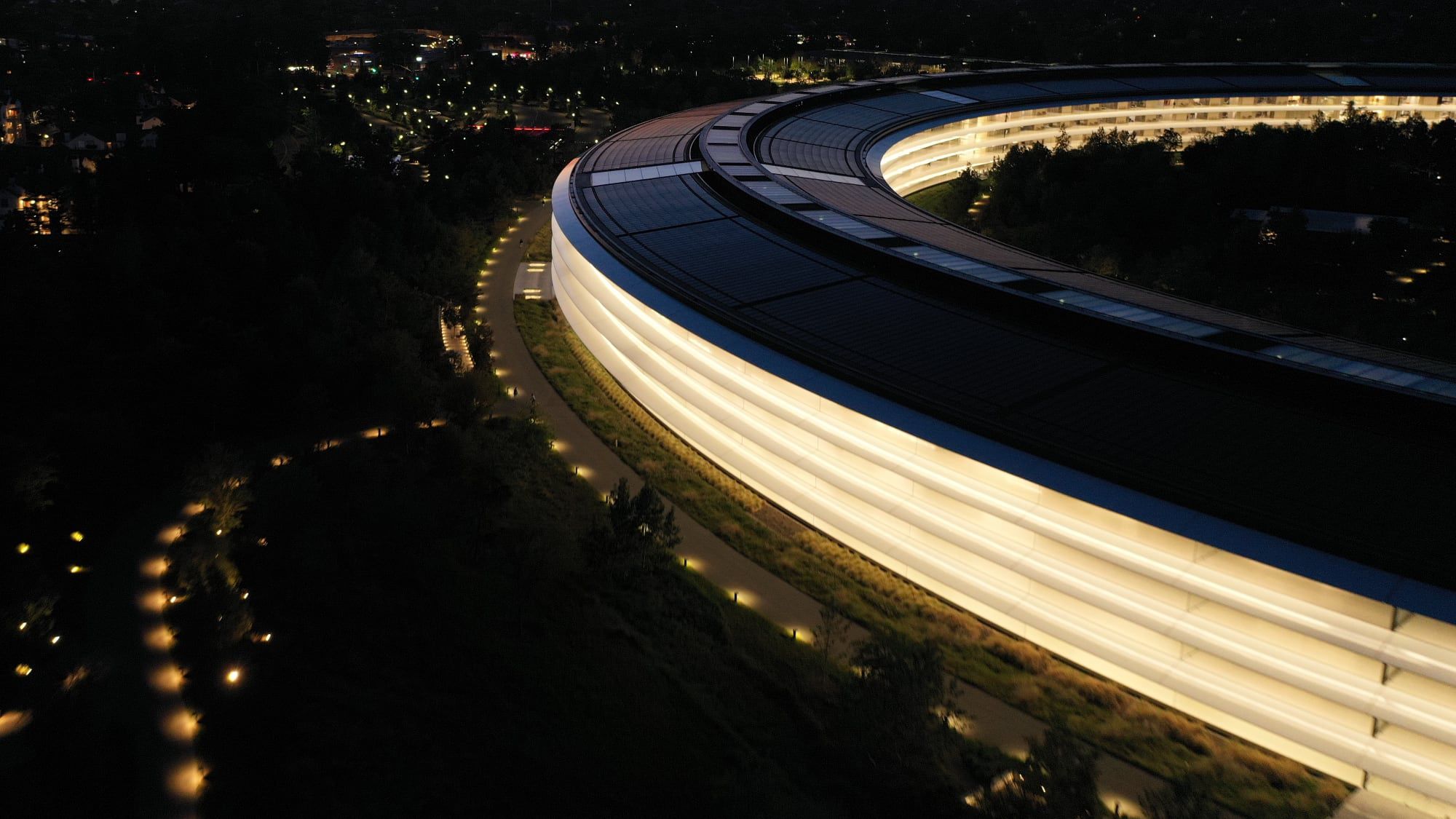
Which of course raises the questions, why did spend Apple 5 billion on that fancy new headquarter and didn't put emphasis onto making this a place people want to go to? In the contrary, it was designed with open office spaces, which especially software engineers just hate. It was unpopular even before the pandemic. Instead, they should have asked groups and single employees how an office attractive for their line of work should look. It couldn't possibly have been a problem of the budget :).
I personally want to know what's going on in far-flung corners of the company, because I'm fundamentally a generalist who wants to understand the big picture. I don't just want to put in my 8 hours and clock out, although I can see why people just trying to put their kids through school might want to do that.
Personality types and home situations matter a great deal in these situations.
After they marry and get kids, they become willing to go great lengths to work from the office.
This.
I've recently switched officially to a de-facto full remote position after years of full remote due to COVID, as did most of my team, and I also see this pattern among the coworkers who decided to go to the office. The return-to-office cases boiled down to:
* Rented a tiny apartment to maximize disposable income but it's very unpleasant to live in, let alone work,
* Share a 3-bedroom flat with 3 or 4 newly-graduated and yet-to-graduate buddies,
* A young upwardly-mobile professional who wants to maximize his presence around the senior manager to fulfill his career-growth plans.
I dare say that in two dozen team members, only 5 or 6 want to return to the office, and about half of them need it because they can't afford a decent apartment.
For example - some people don't like work bleeding into their home life, which is a lot harder when you WFH.
Why is that a bad thing? We have a problem and this is a solution.
I'd like to have some professional connections that carry over from my current company.
I genuinely believe many people who prefer working at home are very young and have not developed social awareness and/or don't feel the need to separate life and work, because their life is their work and vice versa.
Most people that do not want to return to office are still in that phase of their life where they need to rebel to authority to feel alive and will end up being those "middle managers" that they critique today.
Also: WFH as the only possible option is not different from office as the only option.
I don't like going to the office when it rains, but I enjoy going out of my house when the Sun shines or meet my colleagues to have an informal chat on how to progress with some project, it makes everything smoother and a lot of the underground tensions generated by only communicating through video and voice disappear.
The truth is the majority of the workplaces are not "for coders only" and trying to find a balance with other people's needs, for example those people that have to work in presence, it's sign of and good willing and maturity.
You can decide to quit to WFH, IMO that doesn't mean you're standing up for yourself, it only means you're not willing to change your habits.
Spending the family income on cars and gas and paying an extra million for a house in order to make commuting even feasible is "mature".
Destroying the environment, wasting precious resources and spewing out poisonous particles that enter the lungs and bloodstream of other human beings is "mature".
And engaging in office maneuvering and chit-chatting instead of producing great value for my employer is "mature".
I'd rather be immature then.
I spend 15 minutes walking in a park.
Yes, spending hours in a car is not the best choice.
One should ask themselves why they chose to sign a contract with a company hours away by car in the first place.
If that isn't ok, why did you accept?
> instead of producing great value
I think you're giving yourself too much importance and too little to your co-workers who took a break.
That's immature, yes.
And not spending time in the same place will only reinforce the idea that someone is working to " create great value" while others are slacking at coffee machines stealing a salary and being unproductive, only that in the case of WFH it has become "they are home all day doing nothing. it's basically like being on holiday for them."
Which shouldn't be any employer concern, since they're not the ones paying their salaries (and it's probably very false)
In other words: why should WFH be considered more important than chit-chatting at work?
Aren't they two ways for people to enjoy their job more and maybe be more productive or more satisfied?
Why one should be better than the other?
Only because you personally benefit from it?
or you can chose to work for a company whose offices are not two hours away.
coworking, cafes, etc are not really suited to actually work, especially of your work requires some kind of concentration or secrecy (an NDA for example)
Personal office in house is the worst combination of them all IMO.
Not that I do not work from home, I did it for good part of my life, it's just not for everybody.
You have also to consider that having their parents around all day could be the worst possible way to live for teenagers, it makes more sense only when they are small kids, but in my country we have parental leaves and specific holidays to take care of that.
1) WFH is now limited to 1 day per week, and a 3 month probationary period where new hires don't even get that.
2) Salary. It's still a job seeker's market and my workplace is not keeping pace. It's spec'ed for 3 years of experience but salary is about the median for a new graduate w/o professional experience. I'm happy to train someone but if I rework the job class to allow for new grads then HR will lower the starting salary. So, I'm hoping to find someone who's a new grad but had a part time job or internship or any other non-coursework experience the could be even the least bit argued as adding up to the required experience. (the position is basically a data wrangler / sql jockey / light analysis position, but it directly supports the main revenue-generating operations of the organization so there is real $$$ lost by having this position empty. ::Grrrrr:: end rant.)
How companies consider that a cost center is beyond me. But I’ve seen them do it.
> How companies consider that a cost center is beyond me. But I’ve seen them do it.
I may have an answer: Because of our fetish with metrics. It is possible to measure the cost of an engineer or computer programmer. This can be assigned a cost which is arbitrarily precise. Calculating teh benefit is usually not so easy. So the decision makers (rational beings, just mislead by an intellectually bankrupt management philosophy) concentrate on what they can count.
This is McNamara's fallacy
She's fighting that battle now to make the chief boss understand that too, but it's a slog.
Regarding your 2nd statement: “Other companies are cutting staff”; you mean in big tech already? Who?
The work environment is laid back, 40 hour weeks & rarely any expectation of going over that so there can be a very good work/life balance. Benefits are pretty good too: very good retirement plan matching contributions, above average health insurance, 37 days PTO each year. So I need to find the right candidate that appreciates those things even if they could easily get 30%+ salary somewhere else. TCP where I work isn't to far off from other opportunities if the candidate considers & values those other benefits.
And again I am very upfront about that, and even explain these factors to them before interviews. I want people who know what they're signing up for, and not waste each other's time. It's a position that will give them lots of hands on experience to easily get the next step up in their career after doing this job for 3 years or so. They can grown from a basic analyst as described above into creating more sophisticated predictive modeling, bringing them up closer to my level. I view my role as managing someone as 1) to keep away from them as much as possible so they can do their work and I can do mine instead of sitting in meetings. And 2) to prepare them for their next job, their next step in their career. Because that's what a good manager does, and because by preparing them that way it means their last year working for me will be at a very high level of productivity, making my life easier as well.
But the candidate really has to be the right sort of person at the right stage in their life, someone looking for these things. And if my organization would ease up & recognize the job market requires at least a 15% increase in base salary I'd probably not have so much difficulty finding such a person.
There are quite some countries where Jo Average would see 40h working week as monsterous. Or were 40h workweek might even be outlawed.
How does the company's revenue per employee compare to the offered salary?
I'm not familiar with thinking about salaries in these terms though, how is this relevant?
Yes, there are variations and management can go a bit on the higher side of that number - though also note that that is revenue and doesn't take into account operational costs, taxes, and the like.
In many cases, the company just can't reasonably pay what the "market" suggests the role should get. In these cases, it is a question of trying to point out that the value that the role brings is much more than what they're paying and that the company, upon recognizing that, should offer more.
The other alternative for the company is that they aren't losing money compared to the current set of accounting books. They may be leaving money on the table that they could get from expanding, but that's a risk.
Speaking of risk, there are a lot of risky candidates out there. It is far too easy to hire a person who fails to perform at the expected level or to train the person up for a few months in the tech stack and domain only for them to leave for a different company.
As it is, an unfilled role that has what is perceived as low compensation, to the company, is the less risky than a role filled with someone who is paid more but may not be performing - or even if they are performing aren't bringing the value to the organization compared to the revenue that is needed to justify that role.
At one point, returning to the office wasn’t mandatory but “good for our promotions etc”.
When I’m in office few if any people actually give me marching orders… and when they do, I push back, correct them, and continue what I was doing. (We aren’t great at project management and my position luckily allows for this)
Ultimately, markets (including job market) is all about equilibrium. Either companies are going to increase the salary to come back [or reduce if you are staying back at home].
The thing which matters the most is picking up the best option for yourself. [and don't _always_ wait for your company to catch up]
If nothing else, cubes help with simple, human space being inadequate.
I’m sure you have some nitpick but I don’t think it matters
I like working remote fine I guess but all else being equal I'd consider an office for the right job.
All else isn't equal though and the reason we went remote is still in play. A company I left a few years ago went back into the office in january. My old manager who was still working there just died of covid a few weeks ago. Vaccinated, boosted etc.
The risk might be lower now but it's not gone. I never fully recovered from my first round with covid almost two years ago. I'm not looking for another go.
The balance of risk/benefit might favor companies choosing to have workers back. We really might be more productive in there, and hey probably only a handful will die. There's a little more going on than my personal choices though.
I am not. We are in trouble as a tech business and have a very large piece of tech debt that we need to get over, this year. (We also have an amazing product and smart people invested in our growth. It’s one of those good problems to have, but it’s still a problem.)
We experimented (a long time ago, before I joined) with an “open source model” of siloed teams who made internal releases to each other. This had the unfortunate side effect of hampering our release process and also, far worse, embedding a really unproductive them-vs-us culture that holds back our ability to ship on time.
On a technical level, it’s kind of like the bad old days of when people all had their own branches, and all tried to merge at once in the week of the release. If you’re familiar with this anti-pattern then we are in a similar situation but with individual repositories instead of branches.
Our team has a lot of veterans, many with the title architect, and all of whom are emotionally invested in the status quo being the right approach. There’s a lot of friction between us. Frankly this might not be the right team for me in the long run, but there are so many awesome people here as well that I want to make it work.
We objectively have a problem shipping our product, and because most of the old guard work remotely it is nigh on impossible to effectively build consensus around making any kind of big change. It is very a hard ship sail.
The saving grace? My manager and I go in three days a week. So does our VP Eng and the manager and tech lead of a couple of other important teams. We have whiteboard diagrams, 1:1 walks in the park, and chats in the kitchen. When we meet with the old guard, we sit together in a meeting room while they are on individual calls. I feel like we are getting somewhere, slowly, but an unsettling amount of time has been spent on how to effectively do staff-level persuasive tech-leadership, in the face of a highly talented but highly conservative cadre of senior engineers who keep themselves at arm’s length over Zoom.
Communication, the overarching priorities and alignment are super important. I work for a German insurance company and we rolled out crazy amounts of stuff over the last two years and started a re-org that is actually going well.
Also, emotional investment can be quite problematic. All the teams need to work on the overall goal. Having people fixated on their golden toy is a good way to crash into a hard wall.
I honestly think almost everyone should be required to code themselves, at least part time. That would clear out the parasitic office-politics talkers and bring power back where it belongs: to the people who actually know something, but don't have time for scheming because they actually work.
I’m sort-of-an-SRE at a large enterprise and I see many developers gravitate towards this pattern. There’s a Dev1 branch for the first developer and a Dev2 for the second, etc…
And as you said, a huge merge the day before production rollout.
I’m trying to steer them in the right direction but it’s hard to find a good source that covers everything.
E.g.: this this the bad way, here’s how it goes wrong, this is the good way, this is how it fixes it.
Got any good references I can use?
We hired an in-town workforce and cut the old guard out completely. Worked in person everyday until lockdown but had flexibility as well.
We were all pretty close (10ish people including execs) so remote work was fine and we shut down the office… I’m a much bigger remote work fan now because of how well it went.
The people on the same page will be on the same page whether they’re waking through the park or not. It may be time for the others to move along.
I see some people in the macrumors comments saying “good riddance” like he’s being ungrateful or something. He’s a manager who’s standing up for what he believes is best for his team, and when he was overruled he did the only thing he could do to protest - quit. Good for him, and hopefully others follow suite. And as someone who works in the same field, he is absolutely right. ML teams right now are absolutely starved for good talent. Apple should be doing everything it can to hire and retain these people, including letting them live where they want.
I guess I can give a bit of perspective. I don't think people should be "forced" into 100% office work, but I can say that as a junior engineer, I am wildly more productive when I'm in the office with my co-workers compared to at home alone.
I graduated into the pandemic and my first job out of school was full-remote. My company had no idea how to effectively manage remote workers and after two years I knew barely anything about my coworkers except their names, and I could feel my career stagnating. WFH was lonely, inefficient, and since my home was my office, I had no escape from the stress of work. Whenever I was at home I felt guilty for not working.
I recently quit that job and started a new one. The first thing I asked prospective employers was whether they had office space I could work from. I'm much, much happier working from the office and benefit greatly from my other coworkers who choose to commute.
Part of the problem is that the benefits of in-office work are long-term and asymmetrical. You might not benefit from being in the office, but other people might benefit greatly from having you there. Senior engineers should consider passing down knowledge as part of their responsibilities -- there might be ways to accomplish that remotely, but a lot of that transfer happens organically when colleagues share meals, walk outside together, etc..
Being in the office also gives me a chance to interact with people at the same company who I don't directly work with -- sales people, office managers, etc.. For me, WFH takes all the enjoyment out of work, leaving only the bad stuff.
I get next to nothing done during a whole day in the office. Over 2 1/2 hours commute a day, and then I have to sit there with (my own) ANC headphones on because people talk all day. Then there's coordinating where and when to go eat which can take up to half an hour. People come around to talk. I'm basically at 10-20% of productivity compared to WFH.
Other than the commute, I think those are all things that a cohesive team should be able to resolve. It's definitely important to set boundaries in a shared space. I don't agree that the answer is to entirely retreat from the office though, as much as I do understand that inclination.
Also, just a thought: your colleagues might find the discussions they have with you to be really valuable to their own productivity / job satisfaction.
The team failed to adjust to WFH because intrinsically team building, knowledge sharing, mentoring, etc. is more difficult when working remotely.
1. Is anyone suggesting this? Or do you mean “ones” as in companies mandating a return-to-office?
2. I mean isn’t that what work is? Being told what to do by somebody else in exchange for money and deciding if you’re going to do it or not?
3. Personally, I don’t get the people on here who pop off with “remote work is just a no-brained for everyone.”
2) Of course, but I’d hope most companies would be smart enough to be paying for productive output, not for bodily location.
3) Agreed. I personally prefer remote work, but I know many people who prefer going in - either to better structure their day, or to see others, and they should be able to do that. And I believe a competent company structure can support both of those work patterns. (At companies large enough for that sort of complexity)
I think on this point, you’re seeing companies who value control, consistency, and predictability over maximum productivity. They just think that they’d rather get less done overall and have more control over the people they hire because they know not everyone will be more productive in a remote environment. There’s nothing wrong w/ that. It’s not a decision everyone will agree w/ but that’s why resignation letters exist.
https://stats.stackexchange.com/a/301280
https://www.reddit.com/r/MachineLearning/comments/bnqm0p/d_g...
I don't get it. Things are simple. The employer sets the terms, where you work and how the work is paid. The employee either accepts the terms or walks away. Sometimes the sides engage in negotiations, where the side with more leverage receives an advantage (like a valuable hire can get a pay raise our rights to work remote in an office-first company, for example). Why make so much drama out of it? If you don't like to work in office, find a remote job, end of story.
Collective action being used to bargain a better deal for workers is a simple enough concept.
Btw speaking as a full time remote employee.
And employers can go on setting the terms of where people work; they are just going to have to do it facing the prospect they are going to lose a LOT of employees now that we've gotten the chance to work from home, made it work, and have spent considerable personal money optimizing our home offices and family lives around this WFH reality we've had.
If you don't like to work in office, find a remote job, end of story.
That's exactly what Apple's director did. He resigned to find a remote job. There is no drama in that, other than it being reported and people talking about it. Many workers (myself included) simply refuse to go back into the office. It's quickly becoming an archaic social norm that you have to have your butt in an office chair to be productive. That simply isn't true. The employer has the right to set their work terms, just as the worker has the rights to set their work terms too.
Well, lets see duckduckgo search the largest tech companies back to office dates...
> Google tells employees to return to offices in April
> Apple sets April 11 date for return to in-person work for corporate ...
> Microsoft Returning to the Office on Feb. 28 as Covid Cases Decline
I doubt they decided independently on a back to office date in the same ~1 month timeframe, remember these same folks had an anti poaching agreement and set limits on engineer salaries. They colluded to control engineers and they'll collude to force them back to the office if they feel it's best* for their industry.
Unless employees have a similar level of coordination and control, for example a cross industry union, they will continue to be pushed around. If people don't make a big deal of these moves the company can withstand the few hold outs quitting.
*I doubt best for "the industry" is best for the consumer. Best for them is probably most controllable pliable workforce.
https://en.m.wikipedia.org/wiki/High-Tech_Employee_Antitrust...
Given the reason for office closures was covid, I'd guess that companies in the same geographical area would make similar decisions about when it was appropriate to return to office work. It would be more surprising to me if large companies with similar decision-making throughout the pandemic, in the same geographical area, had drastically different timelines.
In fact I am grateful to him for doing so because I am not in a position to do so myself but would certainly like to reap the benefits of such actions.
Doing it from the office is far more difficult.
The employer makes an offer. Every job should be one where all parties see it as a fair exchange of value.
For a majority in software engineering, offers are not that hard to come by. There is an onus on both employer and employee to ensure the exchange of value continues to remain fair.
Things are not simple though, because people are messy. We’re all different. We need slightly different things. We have different challenges we’re working with.
Remote work has been a dream for some, and a reality for a small group. The pandemic forced a trial under less than ideal circumstances and productivity generally didn’t suffer (sometimes it went up).
The desire to work in an office or remote is something I keep finding differs person to person. If you mandate either all remote or all in an office you’re going to annoy someone.
We’re human. We need different things.
If your employer is refusing, in this industry you have options.
“Don’t be trapped by dogma—which is living with the results of other people’s thinking.”
I have a number of colleagues who have resigned because they don't want to go back to the office. Nothing about any sort of inalienable right BS. They just prefer remote work now after doing it for 2 years and they're no longer content with having to work at the office anymore. And honestly, my company is losing out far more than they are with them leaving.
That's exactly what's happening (in the linked story).
I think the drama comes because there's a cost to quitting your job and finding a new one. It's annoying to say the least, and if the only reason you have to do it is because the company is making what will undoubtedly be seen in a few years as a huge, obvious, frankly stupid mistake about their remote work policy, it rises to the level of a pain in the ass worth arguing about.
https://finance.yahoo.com/m/6017a433-bf69-48cc-9aa0-70034b2e...
https://www.businessinsider.com/google-exec-urs-holzle-buyin...
Honestly, I think it's a bit much to call that "endorsing slavery" since the intention isn't to say that buying and selling people is good.
The work, more than likely, gets done just the same, but it's all about appearances.
Think of the commuting costs, living near/far from the office, the different types of day care options, etc etc that have shifted in the last two years. Imagine being told you’re going to get a 10% cut in pay due to the need to go in the office? That’s what RTO probably feels like to peoples pocket books.
Even if you put in 10 hours at the office it’s still 20% lost time in the commute. 20% is a lot of your “working time” to be non-productive. And that is not quality time - that is stressful time that leads to burn out over time.
A RTO concept should factor this in. RTO for many people means working more and the employer getting less of your brains best output. It is a loss/loss. Why would either side of the equation wants this?
My team is fully WFH - 700 people globally - and the only time anyone is required to come into the office is when a job task can not be done remotely.
We’ve also reduced our office footprint 70% in the process; with the savings going to a WFH monthly stipend. We also arrange two social events a month to keep the in person connections alive; with numerous smaller groups having TGIF’s or other sorts of activity clubs.
Regus membership has given all the WFH folks a place to grab an office if they need to get out of the house for whatever reason.
To get over the “are my employees slacking off?” We’ve put in a simple peer review system that is working well:
1) If you are assembling a team for a very challenging and demanding project who are your top 5 choices?
2) If you could give out a spot bonus who would you give it to and why?
3) Is there anyone you feel should be reduced from your team and why (optional)?
This was bumpy as hell to get rolling but now working well. And yes, Q2 does drive quarterly spot bonuses based on responses.
It's pretty frustrating.
We should pretty much just replace the workplace with a water cooler called Serendipity and a lunchroom called Impromptu.
That would be the next evolution of workspaces after open plan. One giant cesspool err .. watercooler where everyone can sysnergize and regurgitate err... ideate.
I’m not an engineer who can work anywhere I want. And I’m confident that working at Apple would have an incredible positive effect on my career.
Still not worth it. I’d rather find a local job outside of tech than get back on the office space hamster wheel.
Goodfellow was hired right at the peak of ML hype, so I have to assume his salary/total compensation was extraordinarily high, so he was very expensive to keep around.
Apple would’ve made an exemption for exceptional talent. They didn’t make the exception for him.
I would for one would really appreciate it if Apple photos had a decent search function.
Maybe these don’t move the needle as much as Wall Street analysts hope but these marginal improvements add up in a highly competitive space and I can’t see a world where mobile manufacturers turn their backs on ML.
What? Siri, text completion, all the health- and activity-tracking features of Apple Watch, computational photography, Photos app, Face ID, and many, many more depend on machine learning. And let's not forget the Neural Engine in M1.
Mmm. Don’t count on it. Apple will bend a lot for you, but stuff like office location was never very flexible even before the pandemic. If your team switched offices to an inconvenient location, tough luck. Ultimately it was on you to adapt.
If you were a top performer and threatened to quit over it… well, Apple has a deep bench.
I am not a ML specialist. Watching from the sidelines.
I still think if the commute wasn't a factor then working from home wouldn't remotely be a thing. Eliminating the commute is a pretty huge benefit though (unless you happen to live really close to work, which some people do).
Apple, Google, etc are going to learn quickly and change to all remote soon too I bet. Weighing their prestige vs. the improved quality of life remote brings to most workers can not compete. Especially with company's like Air BnB which pays same very high salaries who says work anywhere in the world.
Overall a raise of 50 to 100k in salary would not get me back into any office and I live alone in a small town in south central PA. The pandemic forced me to find a new social life with new friends that Im equally enjoying as I did with friends I had at work (they are still around some socially but the connection isnt as strong).
Money can be saved on all the accomodations necessary for office workers, so it would seem like a win-win if remote work arrangements are viable for a position.
I see other jobs at amazon that are remote, but this particular department worked with hardware that they weren't interested in leaving the office. Again, I've worked remotely with similar hardware from the company that pioneered this type of hardware and have done so since 2008. We figured out security, remote testing, local development, software simulations, etc. and haven't had a single leak, hack, etc.
IMO Enough is best.
If you’re considering an offer from Amazon I suggest you make it very clear from the start to your hiring manager your expectations on remote work and working hours. Theres some teams at Amazon that are taking a strong return to office stance and others like mine that allow for fully remote.
You could have potentially moved within the company if that was only decision factor.
“It’s WFH today, but that’ll probably change. And you can always take our bus from your local AWS office to the office where the rest of the team may or may not be because we don’t know what our policy will be.”
I’d expect a company of Amazon’s size and stature to have a better plan than “whatever your VP wants this week.”
Oh, that and I doubled my comp leaving ;)
I think it makes more sense to be non-committal than to make promises and then have to renege on them later. The latter makes people much more justifiably upset.
That is interesting. I like that idea, in theory.
In practise I find the promise I have made to an employer to work/be available certain hours very useful. My time off is off, on is on.
When I was there, Apple had 1 director for about 50 engineers (though certain people like Jordan Hubbard were director just because). 12,000 engineers gives us 240 directors of engineering. I'd say given the breadth of the software and hardware needed at Apple, maybe five of these are in ML.
(per this https://www.macrumors.com/2017/08/09/apple-park-employees-op...)
guessing goodfellow has specific reasons for this move (like everyone), but feels increasingly like wfh has exposed gaps in our ability to manage or even measure the productivity of knowledge workers
> And they built his team their own building, off to the side on the campus …
in the article to:
> and built them a trailer or something in the parking lot
in your comment?
No doubt there is a huge challenge for companies how to organize their work as they are reopening their offices. In general, I think they should allow for more time. No one likes to be forced back to the offices, but as more and more people return to the office, they might gain more attraction as a place to meet people again. The 3 day in-office work week might happen on its own quickly enough, forcing people might be quite counter-productive.
The big elephant in the room in the case of Apple surely is their shiny new headquarter. They spent like 5 billion on it, and from what I read it wasn't even popular before the pandemic. Because it was designed by upper management, but somehow the people who should work there were not asked. With that amount of budget, it should be possible to design offices that people desparately want to work in. Hint: open offices aren't this :p
- remote work, for jobs eligible to such model, does need a paradigm shift, it's not sustainable trying mimicking the in-office model in a "virtual" world. I see almost no discussion about that, especially in work division, outcome measuring, hw&sw vs hosted platforms etc terms. IMVHO that's a hyper central point to mainstream WFH for all eligible jobs;
- remote work administrative aspects from beyond-borders (different tax systems, rules, TZs, ...) and "global wages" vs "local wages". Again that's HYPER important because before arriving to something established and well-run on scale enough to stabilize a new model we must expect tremendous backfires in revenues terms;
- hybrid mess handling where companies have offices, with gears etc and have to move stuff back&forth AS WORKERS to handle less people, but still some, in the office and some from remote;
- where to live, considering local services since we do not eat from remote do not have "virtual remote connections" etc, and how such areas can evolve in a reasonably short and mean timeframe because if we choose to relocate we choose typically with a certain care. Personally I choose few years before covid to leave a big city for a mountain area, served enough, near enough to the "civility" etc, I'm VERY happy of the choice even if I miss a significant slice of local in-person acculturated environment for discussions, interactions, surely social life is better here, but at a low cultural level, just parties, not much real technical, political, philosophical discussions aside are possible since simply there aren't enough mass of acculturated people nearby to do them. That's another central aspect: how can our demography can evolve if we are not all together at scale like before?
- how a remote-first society can be organized, at least a general idea.
Just see sabre rattling and crushing between two party, one for one against, is spectacle, but of no help.
Do you know of another good place for that aside from HN?
Talking in person with tea or coffee, decide to go out for a common dinner it's a thing, having a call just for acculturate discussion is another... Let's say I feel a bit of lack of "groups stimulus", while I have more time to think myself, draw new ideas, potential projects etc, it's not a net loss but still a certain loss, well compensated by other aspects of the sparse life in the nature. A thing still to be considered depending of age, career, family etc at personal level and another thing to be considered in general social terms to draw a new distributed society, we still need aggregation points, only perhaps not big nor generic as cities, like small poles who will be abandoned/redone from scratch at a certain point in time, but small enough and centered enough to been able to redo and abandon them at sustainable time and costs.
So far I here exactly ZERO serious talks about a future society where WFH became mainstream for eligible jobs even on HN, just to say.
Over the short term there are arbitrage opportunities for tech workers moving out of high-cost and high-pay regions, but the equilibrium could be quite different.
While technically true, you’re overlooking the tax, legal, and other issues this causes. A non-hurdle for Google, but a huge one for smaller businesses.
It also speaks to the fact that no one is irreplaceable.
You can argument all day and night about how great WFH is, but if the management is seeing a drop in productivity, they will want you back at the office. THAT is why Apple (and others) is doing that. If you have a measurable productivity levels in your company (i.e. you're not Twitter), you should expect to be returning back to the office sooner or later because even if YOU are more productive, on average the productivity suffers with entire teams working from home.
And it just makes sense. It really does. Even if you don't want it to.
You can try to work hard and be focused, but not everyone can do that. I don't see people here talking about this often, but office isn't just a place for the employer to take advantage of you... it's a place where you're away from HOME on PURPOSE. You're supposed to get into a different head space, temporarily forget about your home life and issues and focus on work. How can you do that at home unless you have anything but a completely 100% supportive partner, no kids, no pets, no obligations or chores and an iron will? Most people don't have that... and for these people, working at the office will be more productive.
If he is indeed that important, just think how much his wasted time commuting to the office is worth and what it costs the field.
It made me curious how to redistrict things. If those buildings turned into apartments the business would have a much better time and that area could be even more walkable
The more that stand up for this, the more businesses will consider its importance.
Full vest. Time to go.
I've had WFH people around for more than 20 years at all the places I worked over that time. Mostly they were doing their job, yet there were always limits felt to what they can do and how much they can do.
However, I still see problems that are difficult or even impossible to resolve. Even though I was able to maintain team velocity comparable to a fully in-person team there are significant downsides. First off, I have always overworked myself, but I don't think it's healthy and I discourage others from doing so. Leading a fully remote team required me to work more hours even when we were in the same time zone. Yes, you get back time from not having to commute, but on average my hours increased by more than my commute time when my teams were fully remote. I will summarize the root causes of this problem as I have been able to identify them.
First, remote meetings are dramatically less productive regardless of their length the second there are more than 3 people involved. Someone will attempt to multi-task if any topic they are not heavily involved in gets brought up. In short, getting organized and ensuring everyone involved has received and retained important information becomes far more difficult and time concuming. Anything I tell a group larger than 3 will ultimately result in my having to repeat that information for at least 1 person, and the larger the group the more times I end up repeating that information. This increases the time I spend organizing my team to keep them productive from maybe 1/6th of my time to easily half. Given that I also need to train lower level developers to become higher level developers, this tends to reduce the time I have to develop by 1/2 to 2/3rds.
Second, not having clear start and stop times makes it far more difficult for developers to manage their time effectively. I've seen senior devs that would normally have developed for 5 hours (plus meetings) and been done for the day jumpt to 10 hours and burn out. I've also seen a lot more junior devs try to work on a problem for 2-3 hours, feeling they can't interrupt seniors or mid level devs because of our online status, and then give up for the day. In either case, the odds that they quit and look for a different job shoots through the roof. This means developers that would otherwise have productive enjoyable careers are more frequently leaving the industry because they aren't in the upper 10% of people when it comes to self-management.
I'm not saying remote work is a bad thing, but it's really important we understand their are trade offs, and that these trade offs either reduce the number of people we can work with, or may require us to work more hours than are healthy.
To be completely clear, I don't advocate requiring people to come in, but when choosing an employer if everything else is equal I'm more likely to pick the company where everyone lives in the same city and we have the option to come into the office or not. I will especially choose them if I'm able to require that some people come in on certain days if I've identified them as someone that doesn't pay attention during meetings or has time management issues like overworking or giving up because they can't figure it out on their own.
1. case sensitivity in Nim
2. 0 vs 1 based indexing
1. Defending pseudoscience (as long as it’s related to nutrition and exercise)
2. Disgust with “marketing people” and anyone with an MBA
3. Hating “woke” culture
4. Justifying piracy
6. The general decline of macOS with every new release. It’ll be locked down and turned into iOS any day now, just you wait.
While the opposite, dumbing down and minimalism for it's own sake is a way more common occurrence (think: not showing MB/s when copying/downloading files, etc)
...as long as it's done from the office.
Why not though?
They already do. It requires SVP approval.
[1] https://www.forbes.com/sites/onmarketing/2011/12/14/the-real...
"If you're going to try, go all the way. Otherwise, don't even start. This could mean losing girlfriends, wives, relatives and maybe even your mind. It could mean not eating for three or four days. It could mean freezing on a park bench. It could mean jail. It could mean derision. It could mean mockery--isolation. Isolation is the gift. All the others are a test of your endurance, of how much you really want to do it. And, you'll do it, despite rejection and the worst odds. And it will be better than anything else you can imagine. If you're going to try, go all the way. There is no other feeling like that. You will be alone with the gods, and the nights will flame with fire. You will ride life straight to perfect laughter. It's the only good fight there is."
- Charles Bukowski
- hn_throwaway_99
But to live like him? No thank you
I've never been hungry by choice and I've always had a roof over my head, and I'm grateful for both of those things, but let's look at something I do know: "..could mean losing ... maybe even your mind"
Yeah, BTDT. A lifetime of mental health problems culminating in a complete ... I dunno, breakdown? ... where I was barely able to function for 2 years and became a risk to others (should have been hospitalised but wasn't), and another 2 years recovering. 4 years of my life wasted. Any projected glamour of mental illness is purely done by those who've never had it. Mental illness is fucking shit and has no redeeming value.
Edit: oh yes, and "Isolation is the gift" - Never is loneliness a gift, ever.
For at least parts of Apple engineering, very expensive equipment and prototypes are under lockdown and too expensive to duplicate for WFH.
(at least that's how it was during my several years there.)
I understand the idea that hardware WFH is going to be a no-go, but software? We already had the revolutionary moment where the internet is everywhere.
In my case it is hobby fun rapidly turning professional. The way to fund hobby / new work is to get your investment at home to pay for itself. Free tools and gear essentially.
Early on, as I picked up skills and scored deals on equipment, I ended up able to take side gigs and or take on special projects. Sometimes I would do these on a "keep the gear" basis. No money changes hands. Recommended.
Pros:
Picking up new skills
Research on ones interest and terms
Flex time working is possible
Reduced commute
Work when ideation is high tide, so to speak
Cons:
It can be expected to work more
Personal / company boundaries are less clear (IP and overwork)
Can be expensive
Need space
Summary:
Personally, I have always had a lab at home, and I rarely take company gear home. Sometimes I have, but I try to buy my own, or the gear from the company.
I have had to make a few career jumps and the next one has pretty much been made possible by what I had at home and what I could do with it.
Be very careful about IP. The reward for that caution can be a real opportunity for you.
It can be the place where you show young people stuff they would never see otherwise and or, until much later. This happened for me as a teen and it was a huge boost! And it was where home lab started for me. My bedroom was my shop.
Of course, you gotta sort this for your scene too. The CEO letting people take gear home is nice and maybe a non issue for people. Depends on what one is doing and or plans to do.
Overall though, I deffo recommend doing it.
I know right. I mean to be able to test his his AI algorithms, instead of just walking into the supercomputer room with a briefcase full of punchcards he would either have to make a long distance trip or else FedEx in his punchcards(and expose Apple to the risk of losing them or having them leak).
Sorry, this is 2022 and we have high speed Internet and networked computers. And we don’t have to physically load punchcard into then supercomputer.
“If the director isn’t coming in then why should I?”
Btw that quote is describing the potential customers of Apple, not employees: https://www.youtube.com/watch?v=5sMBhDv4sik
Why does that matter? Does Apple not want the most talented, world-changing people working on their products? If your marketing sounds good for customers but dumb for employees, particularly in knowledge-driven work, then maybe your marketing is just hypocritical?
My guess is that people who work for Apple do it more because of the giant FAANG salary and the social cachet than because of the product marketing.
Corollary: all you conformists who like rules and structure, you are the useless peasantry.
Not the same company anymore... not even close.
Jarheads are smarter than all of you? Suck it up and get it done.
Honestly such people are extremely rare. The quote doesn't apply to the vast majority of employees at Apple. There are always going to be other talented people willing to take their spot.
He probably had to think differently when he got in charge of a big corporation...
A quarter century later, Apple is a very different company. As it should be.
Tim Cook is so wise to save Apple with this move.
People who would (or do) slack off without direct oversight think everyone is that way. They don't understand that the people in these positions are highly motivated, driven people.
These people aren't Homer Simpson.
If you wanted to hear non-BS truth from me. Otherwise, we can all continue to pretend.
I really doubt that most people would give up a job in a satisfying office environment with people they truly enjoy working with on a product/project they are excited to work on everyday simply because of they are told they have to go in and meet those people they really groove with three times a week.
Is it worth considering that the self-reported productivity gains which dominate these comments are not objective and are colored by employees acting in their own interest? That maybe Apple managers know what they’re doing?
It is interesting that the employees seem to realize that before technology allowed for people to work remotely, it was more an issue of individual merit that determined who had which jobs. They'd probably not admit it, but that is consistent with their claims given the circumstances.
Furthermore, it is NOT healhty to sit at home. It causes "cabin fever" and that's a well known and documented fact. It causes unhealthy habits. It IS healthy, however, to leave your home and get out into the world.
This whole issue tells me how incredibly ridiculous people have become not to realize the small businesses they are literally killing off with their "i've got to stay home" attidude. How selfish of people to not realize that businesses around workplaces depend on the commerce. So basically it's just OK to say, "hey who cares about you small business owner, I am too lazy to commute and I've made a millione excuses to need to stay home and supposedly work."
I can go into an office and get 50 times more productive things done interacting with real humans and working together. It's also fulfilling to socialize and if you are an introvert then it helps you that much more.
It's just plain sad to see so many people whining on and on when they are literally damaging themselves from isolation....and video is NOT a replacement and never will be.
Note also that the United States' productivity is going down....wonder why.