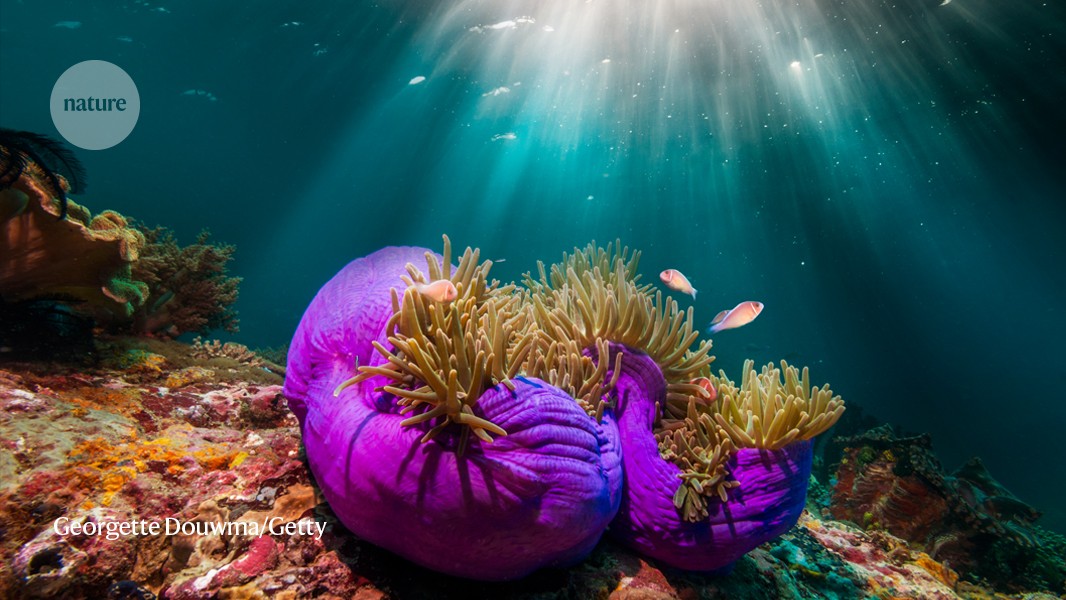
A common sunscreen ingredient turns toxic in the sea — anemones suggest why
Oxybenzone — a chemical linked to coral bleaching — transforms from a UV-blocking agent into one that damages cells when exposed to light.
nature.com
191 points · by gmays · 4y ago · 140 comments
> The study lacks “ecological realism”, agrees Terry Hughes, a marine biologist at James Cook University in Townsville, Australia. Coral-bleaching events on Australia’s Great Barrier Reef, for example, have been linked more closely to trends in water temperature than to shifts in tourist activity. “Mass bleaching happens regardless of where the tourists are,” Hughes says. “Even the most remote, most pristine reefs are bleaching because water temperatures are killing them.”
And this gem as a final note:
> Hughes emphasizes that the greatest threats to reefs remain rising temperatures, coastal pollution and overfishing. Changing sunscreens might not do much to protect coral reefs, Hughes says. “It’s ironic that people will change their sunscreens and fly from New York to Miami to go to the beach,” he says. “Most tourists are happy to use a different brand of sunscreen, but not to fly less and reduce carbon emissions.”
Exactly. I have quite a few friends who regularly fly/travel to these scenic ocean/river systems, but will absolve themselves of concern because they're using some 'reef safe' sunscreen when they dip in to the water. Greenhouse gas emissions are always someone else's fault. Industry, diesel trucks, etc etc.
They're also the same folks that attack Airbnb and gentrification at home, but are the first to jump on to the Airbnb moneyed expat lifestyle when traveling.
At this point, it's not even worth the time to debate.
There are a thousand examples of companies evaporating for exactly that reason.
'Systemic change' doesn't mean anything in reality. You can't destroy a national economic model and just replace it any more than you can make people spend money where they aren't going. Economies rely on travel and so travel has subsidy.
During 2020 no one flew anywhere and the airlines were smashed with losses. That's not sustainable for any real length of time. If individuals cared to stop flying, they would and airlines would be bankrupt in 2-3 years. No amount of subsidy can maintain those organizations without broad customer support. The soviet infrastructure decline of the 80s is a perfect example of that process in action
Are you sure they're the same people?
It is a classic mistake to lump everyone you've ever disagreed with into a single group and then lampoon the group for its contradictions.
Especially since greenhosue gas emissions for the airline industry is about 3% of all greenhouse gas emissions.
So... Why is a problem that a few less anemones don't die?. Conservation is not like zapping a magic wand and all is good again.
Even little steps helps and every little problem solved is one less problem that we have.
The 21/22 bleaching event has finally killed the reef I think.
https://www.reddit.com/r/australia/comments/ulmgcb/leaked_dr...
Found this today too. https://www.theguardian.com/environment/2022/may/10/devastat...
Not saying that it's inherently a bad idea, but there are no silver bullets on that issue. I'd like to see more work done on point source capture of carbon/methane. https://netl.doe.gov/carbon-management/carbon-capture
Sure, it doesn't fix industries which can offshore, but it's a good place to start. Commercial air is a major source of carbon emissions.
But it doesn't work if some of the most powerful countries think climate change does not even exist.
Investigate a little deeper. You will find that the entire world must agree to participate for something like carbon tax to work... the world is not on board with hobbling industry
https://www.ewg.org/sunscreen/
They rate most products found in North America. It is my go-to resource for sunscreens
https://www.consumerlab.com/answers/cancer-causing-compounds...
I’ve been trying to find one for months.
https://www.consumerlab.com/answers/cancer-causing-compounds...
warning: it is expensive but worth it
Personally I'm the kind that turns from ghastly pale into red-like-a-boiled-crab at the flick of a switch, so I tend to wear long-sleeved shirts and a wide-brimmed hat as much as possible in the summer.
It was the first time I realized sunscreen doesn’t need to be greasy and/or a thick paste that never absorbs. And my Mexican girlfriend pointed out that state of sunscreen tech is much better than what we have in the US.
It blew my mind to use sunscreen that spreads like a watery cream that instantly absorbs and leaves behind no residue. I finally became a daily user.
It might be greasy for the first 5 minutes while it dries/cures but after that you don't know it's there. We usually reapply every 3-4 hours as we're in direct sun for 5-8 hours typically
For example:
https://www.stylevana.com/en_US/kao-biore-uv-aqua-rich-water...
The watery gel stuff isn't approved by the FDA, but it feels a million times better than anything we can get here. Absorbs nearly instantly, doesn't feel greasy, and over SPF 50.
Seems OK based on https://incidecoder.com/products/isntree-hyaluronic-acid-wat...
They also say "Skin irritation test completed: Proven to be hypoallergenic with skin irritation index of 0.00"
Their black cotton shirt blocked >99% of both UVA and UVB and the white one roughly 90%.
If this is indeed a major cause of the coral reef issues, I would expect that there is some entity dumping large amounts of the stuff directly into the ocean. Intuitively it seems very unlikely that the amount that will wash off swimmer's skin would be a major contributor, at least for anything that is not living right next to the beach side.
A whole tube of sunscreen has a few hundred grams, of which you only wear a fraction, which you then slowly dilute in many tens or hundreds of thousands of kilograms of water close to the shore. I'd doubt you get more than a few molecules ever reaching any particular organism.
Making it seem like you're doing something for the environment while not doing anything hard can win plenty of points.
TLDR: oxybenzone from sunblock gets glucose attached, which turns oxybenzone into a UV light driven catalyst. The catalyst doesn’t degrade, and the UV light catalyses biological molecules of the coral, damaging or killing the coral, particularly bleached coral lacking protective symbiotes.
https://www.cosmeticsandtoiletries.com/regulations/spf-sun/n...
So if you live outside the US, you probably see very different ingredient lists.
https://www.amazon.com/Neutrogena-Ultra-Dry-Touch-Sunscreen-...
If you look at one of Amazon's "best sellers" in the category, https://www.amazon.com/Sun-Bum-Moisturizing-SPF-Hypoallergen..., you see the description says both Oxybenzone and Octinoxate free, but that the image of the ingredient list shows Octinoxate. They clearly updated the product, but not the images.
If I search for the particular sunscreen you link and go to Neutrogena's website, I get https://www.neutrogena.com/products/sun/ultra-sheer-dry-touc..., which is, as you'll note from the URL, Oxybenzone free (and Octinoxate as well). Searching more broadly, I can't find -any- reference to the 70 SPF ultra sheer dry touch with Oxybenzone on Neutrogena's site; I can find the 100 SPF at https://www.neutrogena.com/products/sun/ultra-sheer-dry-touc... (via Google), but as you'll note, that's discontinued.
I can also comment, in Target, I looked at every Neutrogena product. I can't say for certain I saw the 70 SPF, but I can say I definitely checked out the ultra sheer dry touch line. No Oxybenzone.
So my expectation is that either that item on Amazon is old stock, or they haven't updated the product details (I don't see an indicator it's being filled by a third party else I'd also suggest it might be a formulation for another country that doesn't have regulations/awareness around oxybenzone). It's not actually being sold by Neutrogena in the US any more.
Check on https://www.cosdna.com/ a distributed effort to document what is being sold where at different times.
If you look that site, any big brand (and neutrogena, which is just a front for J&J today, is the biggest you can get) will show dozens of variations for each product. All around the same geographic region and time frame.
I’m trying to figure out what messed-up melanin strategy freckles are, spot protection?
All this said, sunburns are symptomatic for skin damage that can result in melanoma, and yes, dark skin can burn too, etc…
Sunscreens are relatively recent as far as products go, but mud and mineral skin protection is ancient. Many tribal hunter gatherers use such protection against a variety of threats including sunburn and insect bites.
Have you ever seen someone with a sunburn? It's painful, the skin is red, hot to the touch, and the person feels generally unwell (flu-like symptoms). The skin hurts for days and the it will blister and then peel. The blister/peel stage is extremely itchy.
Wouldn't you want to avoid that if possible? Even ignoring the risk of long term harm.
I prefer wearing long sleeves and a wide brim hat to chemical sunblocks but that is not possible when swimming.
[0]: https://www.weatheronline.co.uk/reports/wxfacts/The-UV-Index...
The risks of sunscreen chemicals to coral has been known for years in reef communities like Cancun and Hawaii, but it isn't widely known elsewhere. Of course, many tourists still use these chemicals when they swim in the reef.
I don't know if the *-benzones or the other ingredients actually pose any health risks to humans and I doubt the risk is greater than the risk of melanoma after sunburn. But it doesn't cost us much extra to stick to a single ingredient, it's something we already smear on our kids all the time (as Desitin), and it's only slightly more inconvenient to apply without looking like a spooky ghost, so why not?
The article subhead, copied above, suggests that oxybenzone, once exposed to seawater, could damage cells. Without qualification, human cells. That was my initial takeaway.
It turns out that anemones convert oxybenzone to a molecule that could damage coral. That’s very different.
If you're implying this is somehow enforced at the airport, this is not even remotely true.
Source: Brought my own sunscreen from outside of Hawaii and used it all last week while visiting.
And also that there is a horrifying amount of broken coral washing ashore at Waikiki.
Best I can find is that Hawaii prohibits the sale of sunscreens containing oxybenzone or octinoxate, which took effect in 2021.
https://www.capitol.hawaii.gov/Archives/measure_indiv_Archiv...
If one is spending a ton of time in the sun, then yeah, use sunscreen. Since I'm indoors most of the time, I rarely find sunscreen that helpful. Anecdotally, I think I became more sun tolerant after changing my diet. In short, I highly limit eating processed foods and stick to meat and some plants that are low in natural defense chemicals. Since that's a low-inflammatory diet, maybe that explains it. But I'm purely speculating.
Like, taking aspirin won’t keep you from getting sunburnt. Same way it won't prevent you from getting burned if you touch a hot stove. It makes no sense.
Second, yeah, of course aspirin won't stop sunburns. Sunburns, being inflammatory, are caused by damage. In particular, the inflammation is responding to damage from UV radiation. Aspirin can only somewhat reduce inflammation after the damage has taken place, but it can do nothing to prevent the damage itself.
As inflammation is a response to damage, and nothing (known) about any diet can stop UV damage, so yeah, you are right that my diet won't prevent sunburn. It's not like I actually said that it would in the first place. The idea is that if one doesn't already have a level of inflammation then something like a sunburn won't get as aggravated or aggravated as quickly. As I said in my original comment, it's speculation. I just don't think it's as farfetched as you seem to believe per your aspirin-stove analogy.
---
"Sunburn" (Encyclopedia Britannica)
https://www.britannica.com/science/sunburn
> sunburn, acute cutaneous inflammation caused by overexposure to ultraviolet (UV) radiation of the so-called UVB wavelength band
"Sunburn" (National Library of Medicine)
https://www.ncbi.nlm.nih.gov/books/NBK534837/#_article-29684...
> UVA and UVB rays both play a role in sunburn, though UVB rays are responsible for directly damaging DNA by inducing the formation of thymine-thymine cyclobutane dimers.[6] When these dimers are formed, the body generates a DNA repair response, which includes the induction of apoptosis of cells and the release of inflammatory markers such as prostaglandins, reactive oxygen species, and bradykinin. This leads to vasodilation, edema, and pain which translates into the classically red, painful skin seen in a sunburn. Additionally, skin exposure to UVB causes an increase in chemokines such as CXCL5 and activates peripheral nociceptors, which results in over-activation of the pain receptors of the skin.
"What Inflammation Is And Why Is It Dangerous?" (Harvard Medical Publishing)
https://www.health.harvard.edu/staying-healthy/what-is-infla...
> But sometimes this immune response occurs when it shouldn't. It can be triggered, for example, when you are exposed to toxins, and by other causes such as chronic stress, obesity, and autoimmune disorders. In these cases, instead of moving in, healing the problem, and then returning to normal, the inflammation persists over time. It's thought that this chronic state of inflammation can lead to numerous health problems, including heart disease, arthritis, depression, Alzheimer's disease, and even cancer.
Again, it's like thinking taking asprin (an anti-inflammatory!) is going to prevent the sunburn itself. The mechanism of a sunburn is like touching a hot pan, not an allergic reaction or a bruise. It'll make it feel less painful, sure! But you're still sunburnt.