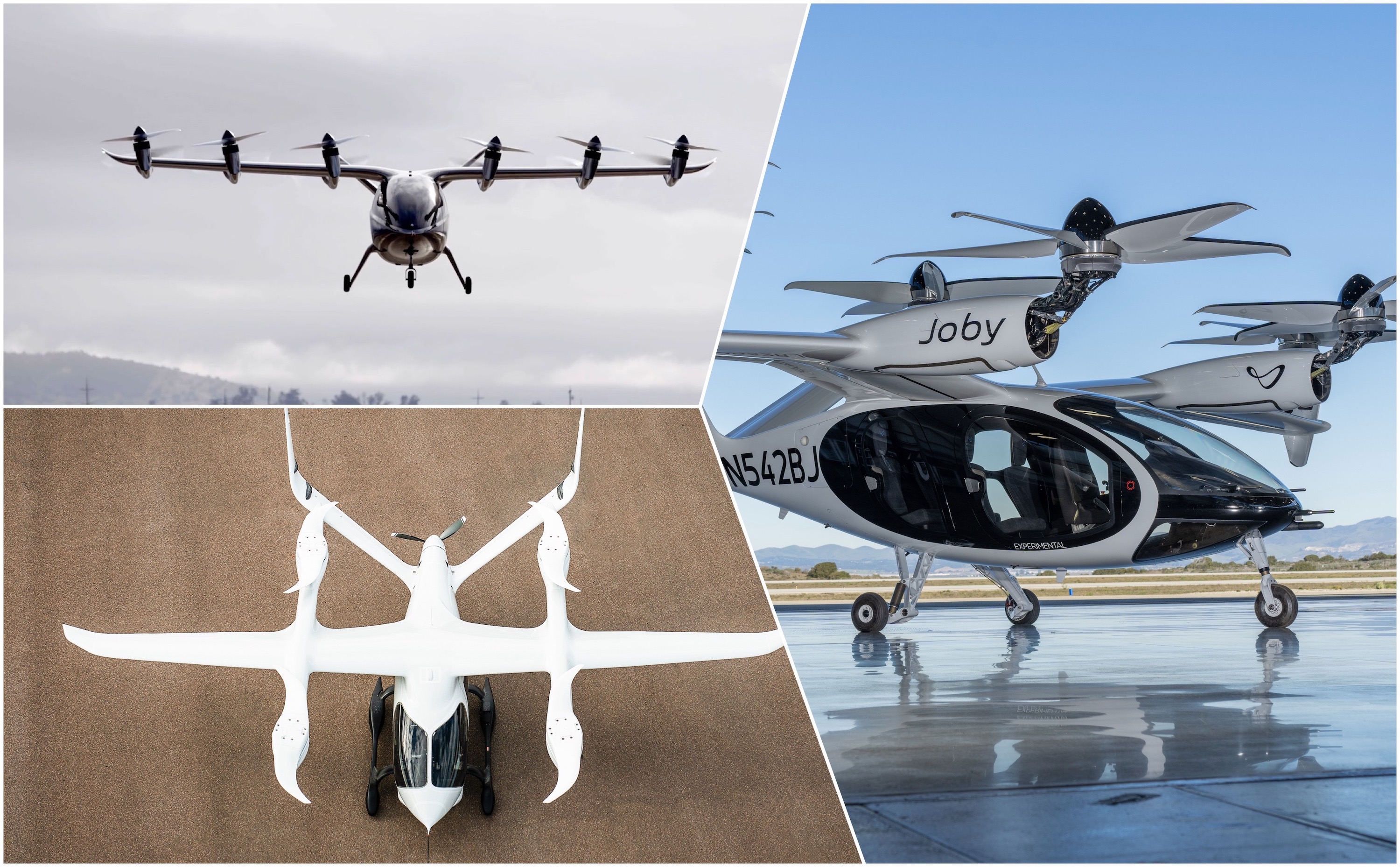
FAA changes course on eVTOL certification
Electric air taxi startups in the U.S. stare down massive regulatory shift from FAA.
The Air Current
65 points · by jeffreyrogers · 4y ago · 90 comments
“Be indiscriminately more strict” obviously isn’t the thing to do. But I don’t think it’s too much to ask that a federal oversight organization be actually-effective at overseeing the industry it’s tasked with overseeing. Be strict enough in smart ways to catch real problems before they happen, might be one way to think of the ideal mandate.
I think this is basically what you're saying, too
There is an orthogonal dimension that comprises the quality of regulation (good and poor).
Would that more understand this idea.
The correct approach is to reward new things, reward changes and innovation, and punish massively anything that causes an accident putting lives at risk.
For example, make a fund that any aircraft manufacturer pays fines into. Fines for engine failures. Fines for oxygen mask deployments. Fines for crash landings. Massive fines for deaths. Aim to fine about 50% of the value of all aircraft sold.
Then give the pot of those fines back to aircraft designers and operators per passenger mile safely flown.
Overall, the industry gets the same amount of cash. But manufacturers and operators who manage to do it more safely will end up more profitable.
You also need a system of watchdogs who try to find 'coverups' - ie. times where a safety procedure is skipped to avoid the fine. A combination of whistleblower rewards and automatic data reporting from the plane should help with that issue.
Not everything needs to have an economy created out of it.
The real question should be why they were initially going to certify eVTOLs as light aircraft. That just seems like the entirely wrong category for them.
> developers of winged eVTOL aircraft including Joby Aviation, Archer and Beta Technologies have been proceeding on the assumption that their aircraft would be certified under the FAA’s overhaul of small airplane certification rules that took effect in 2017.
"developers...have been proceeding under the assumption" is doing an awful lot of work in that sentence...
The USAF should instruct the FAA to pound sand. USAF has the primary spectrum allocation, and is the owner/operator for both systems.
(Aviation Week 2/7/2022 pg. 16)
No one serious would ask what was wrong with tetraethyllead in gasoline fueling automobiles in urban areas, but aviation is a completely different context.
https://www.youtube.com/watch?v=3m5qxZm_JqM
"What do you do to protect the environment in this case?"
"The planes fly outside the environment."
"Into another environment?"
"No, no, they fly beyond the environment. They're not in an environment."
"But it must be somewhere. What's out there?"
"Nothing's out there."
"There must be something out there."
"There's nothing out there. All there is is air, and clouds, and birds."
"And?"
"Twenty thousand tons of tetraethyllead."
"What else?"
"CO2 emissions, CFCs, and about seven hundred 737 Max's. The environment's perfectly safe."
https://en.wikipedia.org/wiki/Avgas#Phase-out_of_leaded_avia...
> 70% of 100LL aviation fuel is used by the 30% of the aircraft in the general aviation fleet that cannot use any of the existing alternatives
On the second point: lead is specifically added to help increase the lifetime of components like spark plugs, since it decreases knocking.
The FAA has become increasing bureaucratic and in many cases it is causing safety issues. Take the recent case where they deemed it illegal to do a low-pass over a private airstrip to assess safety prior to landing.
I'd like to see the FAA do a pass over existing and new regulations to see if they can generalize any of the rules. IE if the concern for safety is due to momentum/potential energy, codify that rather than separate limitations on weight and speed.
I am a big fan of Trent Palmer as well, so I tend to take his side of the story as more likely. However I believe the FAA is arguing that he never intended to land and was just planning to buzz his friend's house. I wasn't there so I don't know what really happened. However I agree, claiming that his landing was "not necessary" so the pre-landing pass was not protected seems very short-sighted.
Here's Trent's video on this if you want to hear his side for yourself:
1) Pilot thinks there may be damage/malfunction and does a low pass so that the Tower/Ground Ops staff can have a look. This was evident in a recent one I saw where the pilot had a nose gear fault. It took two passes, but they were able to confirm that the nose gear was NOT down and were still able to have a successful landing.
2) Student pilot either has mechanical issue or in-plane pilot becomes incapacitated. Tower/remote instructor tells student to do multiple low, slow passes at increasingly lower altitudes and speeds to get used to taking the proper heading and control inputs until the final pass is so low/slow that the landing essentially happens naturally.
I'd be flabbergasted if the FAA bans this type of thing, in both of these cases I personally saw (and I'm sure many others), this procedure saved lives. Why would they ban this?
The majority of pilots are initially rated for the Airplane category with Airplane, Single Engine, Land as the most common class. Powered lift is a completely different category, and so pilots rated for the Airplane category would have to qualify separately, including a certain minimum number of hours with a flight instructor, a certain number of solo hours, cross-country flight distance and a check ride.
This would significantly raise the bar to fly these aircraft. I also don't even know for these eVTOLs whether it'd be credible to do e.g. the cross country flight which requires at least 150 nautical miles of travel, including three full-stop landings, due to the battery lifetime.
A helicopter license only requires a 50 mile cross country flight so I expect the FAA would set a requirement closer to that for powered lift.
I'm sure there are lots of countries around the world that would bend their aviation rules to whatever whim a company wanted. I'm assuming they don't take advantage of that because of the lack of infrastructure, talent, funding, and a viable commercial market.
"The airplane must be controllable and maneuverable, without requiring exceptional piloting skill, alertness, or strength, within the operating envelope ... (despite) flight control or propulsion system failure"
"Continued safe flight and landing means an airplane is capable of continued controlled flight and landing, possibly using emergency procedures, without requiring exceptional pilot skill or strength. Upon landing, some airplane damage may occur as a result of a failure condition."
So you must be able to glide to a landing, or at least a controlled crash, if you lose engine power.
The FAA is correct here. The "eVTOL" class of aircraft based on quadrotor drone technology will fall out of the sky on either a power or control failure. It's worse than a helicopter, which can usually autorotate.
[1] https://www.ecfr.gov/current/title-14/chapter-I/subchapter-C...
Here is the exact definition:
> (425) Powered-lift. A heavier-than-air aircraft capable of vertical take-off, vertical landing, and low-speed flight that depends principally on engine-driven lift devices or engine thrust for lift during these flight regimes and on non-rotating aerofoil(s) for lift during horizontal flight.
I would expect most of these "scaled up quadcopter" companies to incorporate an emergency parachute system to handle similar to a Cirrus CAPS.
Side note: why does this website restrict copying text, or even middle-button scrolling?
I've had limited dealings with the FAA but my overall impression is they struggle to deal with change.
They don't handle medical certifications well—God help you if you take an antidepressant and want to fly a plane, they failed on the 5G-radio altimeter issue, they can't approve a leadless fuel despite having one that passes all their tests and meets their standards, and now this.
Having ever been diagnosed with ADHD is disqualifying, as is taking any ADHD/psychotropic medication to mitigate the condition. All you can do is take a day-long battery of psych tests to demonstrate that you never had ADHD in the first place.
By classifying them as the relatively rare "Powered-lift" category they have created a huge bureaucratic hurdle to overcome. You've gone from thousands of approved airframes to a handful of approved airframes. You can still work through it but there isn't a precedent for them to easily point to for fast approval.
User-hostile moronity like this is pervasive and infuriating. If you're an Apple user get Stop The Madness -- I never see this crap.
https://evtol.com/news/eve-goes-public-nyse-zanite-sharehold...
A lifesaver for Boeing and Airbus to have such a restrictive regulator in the biggest market.
The electric aviation (generally, not just eVTOL) over-regulation is the one that really gets me. The FAA will happily reinforce the status quo of fossil fuel aviation (including the leaded gas fiasco!) than take one iota of risk. Every 4500 tons of CO2 (just ten 777 flights) results in an excess death due to climate change[0], but that’s not the FAA’s problem!
[0]https://news.climate.columbia.edu/2021/07/29/more-carbon-emi...
I think this is supposed to be sarcastic, but that's exactly how the FAA sees it. Their job is to prevent people from dying in or because of aircraft and that's it. Environmental concerns are the EPA's domain.
Once the alternative fuels are available and the FAA has determined that they are safe to use it should be EPA pressuring pilots to make the switch.
I do however agree that the FAA is outrageously slow to react to change. They are risk adverse to a excessive degree, but at the same time air travel is the safest way to get around on a per-mile basis, so their approach is working.
My final note is that slow development in eletric aircraft is not entirely the fault of the regulatory environment. There is also the issue of battery technology being a bit insufficient for most uses currently and having bad failure conditions.
https://www.flyingmag.com/faa-modifying-approach-to-evtol-ce...
- copy the text via eyeballs->keyboard
- copy the text from the dev console
- take a screenshot and extract the text with Google Photos or something
  The Federal Aviation Administration is dramatically revising its approach to certifying electric vertical take-off and landing aircraft, injecting new uncertainty into the certification programs of the United States’ leading eVTOL developers.

  Although the shift comes as the FAA has been broadly rebalancing its relations with industry since the 737 Max crashes exposed its insufficient oversight of Boeing’s certification programs, this recent move appears more geared toward bureaucracy than safety. Specifically, it is driven by a decision to establish operational rules for eVTOLs as “powered-lift” aircraft — a definition that was originally introduced into federal regulations to cover conventionally powered tiltrotors like the Leonardo AW609, in development for the last two decades.

  Related: Approaching first flight, Eviation’s Alice readies to test FAA

  Until now, developers of winged eVTOL aircraft including Joby Aviation, Archer and Beta Technologies have been proceeding on the assumption that their aircraft would be certified under the FAA’s overhaul of small airplane certification rules that took effect in 2017. Those performance-based regulations were created out of collaboration with industry and kicked off a wave of new entrants emboldened by the opportunities they created to certify innovative technologies.

  Now, the FAA under new Acting Administrator Billy Nolen is reversing course, the agency confirmed to The Air Current, a stunning development that appears to have largely caught the industry off guard.

While the full implications of the shift are unclear, it is likely to rattle investors who had believed that the FAA was working in harmony with industry to provide eVTOL aircraft with a clear route to certification — an impression that Nolen himself bolstered in a recent appearance on 60 Minutes.[0]https://news.climate.columbia.edu/2021/07/29/more-carbon-emi...
No crashing in my backyard?
The "move fast and break things" approach seems to work better.
My back yard, and anyone elses.