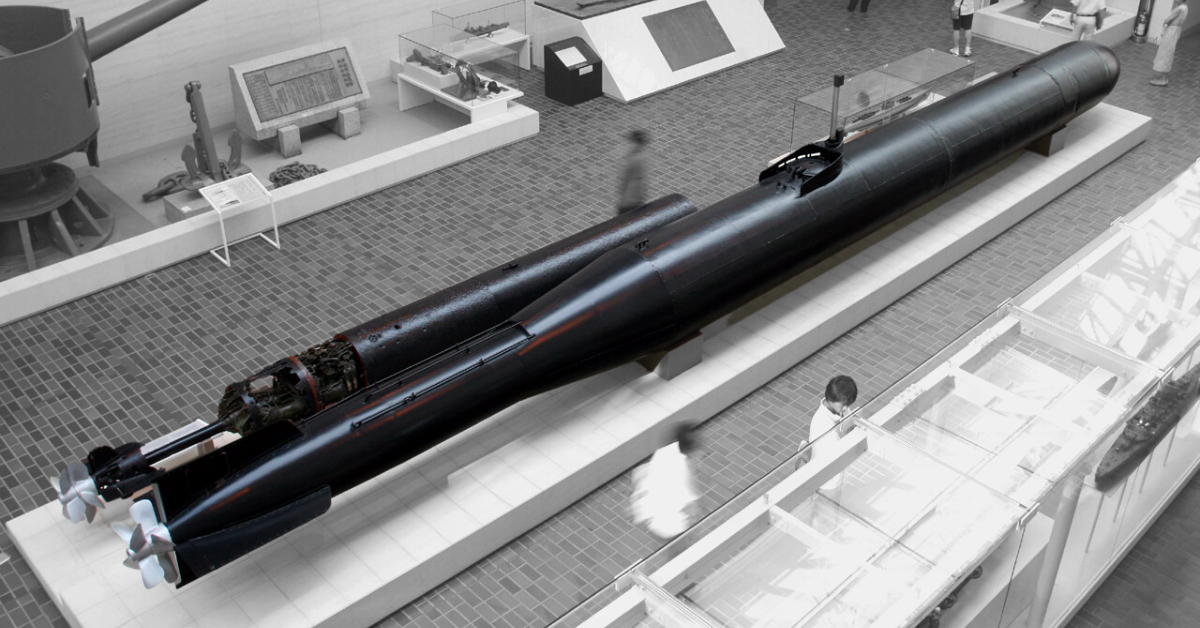
The Underwater Kamikaze That Either Blew Up Its Target or Sank to the Bottom of the Ocean with Its Occupant Still Inside
The Japanese heavily relied on Kamikaze attacks toward the end of the war.
warhistoryonline
86 points · by metabagel · 4y ago · 59 comments
It depicts the commander of a kaiten-bearing submarine as lying to his superiors and reporting that each of the kaiten launched from his submarine sunk US ships, when in fact none of them hit their targets. It is implied that reporting anything but success was unacceptable, and the Japanese military leadership expanded this program because of being misled by such false or exaggerated reports.
Here's one I found particularly interesting in light of current events and reports of looting:
"How German Soldiers Used Lentil Soup as an Effective Defense Mechanism Against the Soviets"
https://www.warhistoryonline.com/war-articles/lentil.html
To gain time for a retreat they cooked soup for the attacking underfed Russian soldiers. The ruse was successful.
> The Soviets were hot on their heels at first, but once they reached the steaming pots of soup the scent was simply too much to resist. The hungry Soviet troops clambered over each other to grab some of the soup, inadvertently giving the Germans more time.
The only way it would work would be to just put the pot over the fire and run. Without someone watchin it, the window of time between soup getting hot and soup burning/boiling into nothing would be slim. A more likely version might be that starving Russian troops were so hungry that, upon finding ingredients left out, they stopped to make soup themselves.
Funny that.
As you scroll, and each story comes into focus, the URL changes to identify that story. This is good if the reader wants to share a story she is currently reading, and needs to copy the URL.
But when you press the "Back" button, instead of just changing the URL to that of previous story's, and scroll to the previous story, it takes you through your whole history on the website, all the way back to where you came from; back to HN, in my case.
Interesting, to say the least.
I'd love for it to _not_ bother cycling/scrolling through previous stories, as it's taking me back to where I came from.
I wonder if it could've been more successful with more warhead
Even in the article the success they noted was against an anchored ship, something you are much more likely to be able to hit with a conventional unguided torpedo.
There is also the environment of the war itself and logistical problems with these devices. The article notes that they can't be carried in a regular torpedo tube, so they had to be attached as a parasite on the top of the sub. But this prevented the sub from doing crash dives, which were vital to staying alive when allied fighters and bombers appeared overhead, which was a constant threat by the time these were available. They were just underdeveloped and then the war was over. Shortly after that people started working out self-guidance systems for torpedoes and the the book was forever closed on these man guided systems.
https://en.wikipedia.org/wiki/Human_torpedo
which also includes some other countries' versions (it seems like the Italian SLC might have been the most-used of these).
Formalized suicide attack programs with purpose-built hardware are chilling to think about, but there is also a broader class of suicide attacks that include impromptu decisions and last resorts which seem easier to understand. On both sides of WW2, there are cases of pilots trying to crash into the enemy after realizing their fate was sealed anyway. This may have happened with an American B-26 at the Battle of Midway, and one of the Japanese pilots who attacked Pearl Harbor apparently announced his intention to do this before the battle (in both cases they missed their target.)
In USSR/Russia such attacks by Soviet soldiers (using say your body to close the machine gun embrasure) have been widely celebrated. Where is similar behavior by Ukrainian soldiers against Russian forces in today's war is blamed by Russian propaganda on "Ukrainian nationalists being pumped full of drugs".
What set the Japanese apart is the fanatical culture that resulted in people volunteering for this. The modern equivalent would be suicide bombers.
This was depicted in the film Enemy at the Gates (2001)—and probably other, earlier films, I'd expect—and then strikingly similarly (i.e. they likely deliberately modeled their version on the scene from the film) in the first Call of Duty game (2003), back when that series was all WWII shooters.
I understand there is a serious and dire aspect to this, not specific to the polish.
Still recruiting for this is too close to exploiting vulnerable devastated individuals
The Japanese had an almost unbelievable fire and intensity.
http://www.dancarlin.com/product/hardcore-history-62-Superno...
(Looks like something you'd see in Tatooine.)
This topic is so complex and Japanese culture (especially pre-WW2 culture) is so complex that I hesitate even to comment on it. Ever since the war ended scholars have been trying to make sense of the unique cultural stew that led to the atrocities, mass suicides (civilian and military), and organized Japanese units continuing to fight into the 1950s and individuals as late as the '70s.
Shintoism, Bushido, Zen Buddhism, the imperial system with a living-deity emperor, and anti-western colonialism (just to name a few) all played into it.
Btw Shinto wasn’t even made into an official religion until the Meiji restoration, really it should be thought of as Kami worship, and depending on the Kami it involves very different things. Buddhism and Shinto were also heavily syncretised until the Meiji restoration. The Buddhist bodhisattvas and Buddhas were even made into kami iirc
There is nothing special about Buddhism. Any ideology can be used to justify atrocities and none of them should be considered unimpeachable. Just ask the Rohingya.