Starlink
Starlink delivers fast, reliable internet at home and on the go. Seamlessly stream, video call, game and more with high-speed connectivity even in the most rural and remote places.
starlink.com
533 points · by kristianpaul · 4y ago · 515 comments
[1] https://vt.tiktok.com/ZSdXwqGrP/?k=1
[2] https://vt.tiktok.com/ZSdXwbq2b/?k=1
Happy to answer any questions.
Also, does it need to have a completely unobstructed view (i.e. can it be set up right beside the RV if the area is a little sketchy?) How much do overhead trees interfere?
Costs are not even worth discussing. It’s how I earn income. As such portions are tax deductible and loss of a days productivity due to bad internet (let’s say you are only using 4g) at a campsite you haven’t been to before is disastrous in comparison to cost of multi homed internet.
Price wise, the kit is now about 700 EUR and service is 100 EUR a month.
So yes, it's answered.
> Deposit Due Today $99.00
Looking for my parents to get it in FNQ daintree. Should be no surprises.
Whats wrong the the DSL out that way ( IIRC most of central queensland has DSL2+ ) ?
Nothing, other than we're never going to be in one place for long, and being reliant on whatever Wifi happens to be wherever we are staying is a bit of a pain. And LTE chokes and dies with the sort of bandwidth I need from it for work, sadly
In my experience in New Zealand, a doof is a private party in a rural location that you need an invite to or contacts, usually with music DJs and drugs involved. I wouldn’t call large festivals Doofs, as the Wikipedia article does, although perhaps the word has been co-opted by larger events, or has a different meaning from the little I have used the word. I would guess the word derives from doof doof music, named after a heavy bassline sound.
Rhymes with boofhead, or poofter, or woof in NZ (sorry, I couldn’t think of better words with the correct sound, Aussie & NZ English have some unique vowels, and English dialects have wayyyy too many different vowel sounds to easily cross reference). Someone says doof in this Aussie vid, which has the right atmosphere to me: https://www.youtube.com/watch?v=iavVc_23-NM
I.e. If my area is in waitlist , I shouldn’t be able to go and buy in an easy location and then just use it in roaming in mine .
So my question to Starlink would be, what’s the difference? If I want to get an RV and work remotely using Starlink, why wouldn’t I just get the standard service, and avoid these restrictions on the RV service? I suppose the more flexible monthly billing & the ability to pause service on demand are the killer features?
The language of that TOS is quite concerning to someone thinking of using this in a professional setting.
People talking about using it while roaming currently also say they are switching their service address in their account for each new location.
I’m not sure how it ties in with roaming capability but they do have a Business offering for those needing higher reliability and allocated bandwidth.
Price.
Fairly expensive, but it will allow me to work remotely from a very beautiful, remote location, and I intend to take full advantage of that.
So, even getting it doesn't necessarily fix things.
Do you plan on using generators? Setting up solar farms (assuming you're the first one to pull into that spot and can claim the sunny area)?
Most tech-job setups seem fairly electricity intensive.
I have found I use 60-90watts AC to power my starlink.
I can easily go all day even with 2-3 laptops and external monitors (150 watts or so). The solar keeps up and even does a little charging during the day.
Every other day when it’s cloudy or rainy I will need to top up with the small generator but that is easy to do with lithium batteries since they charge at the full 120amps unlike lead acid that taper the current significantly.
I mean some people will be using the RV for work, so will be present a lot but for the folks that park and go hiking or fishing a lot, what then? Some folks will handwave this away but we've had a lot of break ins at local boat landings. I can only assume the primitive camp sites are similarly vulnerable
That said, yea - no second monitor, I close a lot of apps when i'm not using them (looking at you docker and chrome), and have a setup where I ssh onto a machine or use ci-cd agents to do a lot of my work.
edit: that said, this is a lot easier in sunnier places (you don't need to use electricity for heat) which I tend to prefer. I got close to needing a campground after a week or two in WY/MT near winter.
Just a 1kW battery should easily be enough to power an M1 Macbook for a week's worth of work.
And hey, if your tech job is just typing along on your Macbook, you're actually not pretty high in energy usage! They're machines that can run on tiny batteries, after all. Same as a fridge, basically.
Dunno how much you can get out of RV solar panels on a good day though.
As much as any other solar really, it just depends on how many panels you can put up there.
Starlink does add a lot of draw (~100w)
Combining a few backpack solar panels does the trick for me
As long as you're nowhere near a tree.
But even if it weren't that way for me, I don't think I'd worry that much about someone accusing me of skipping out on taxes I should pay because I parked my RV in another state. It's not a permanent address.
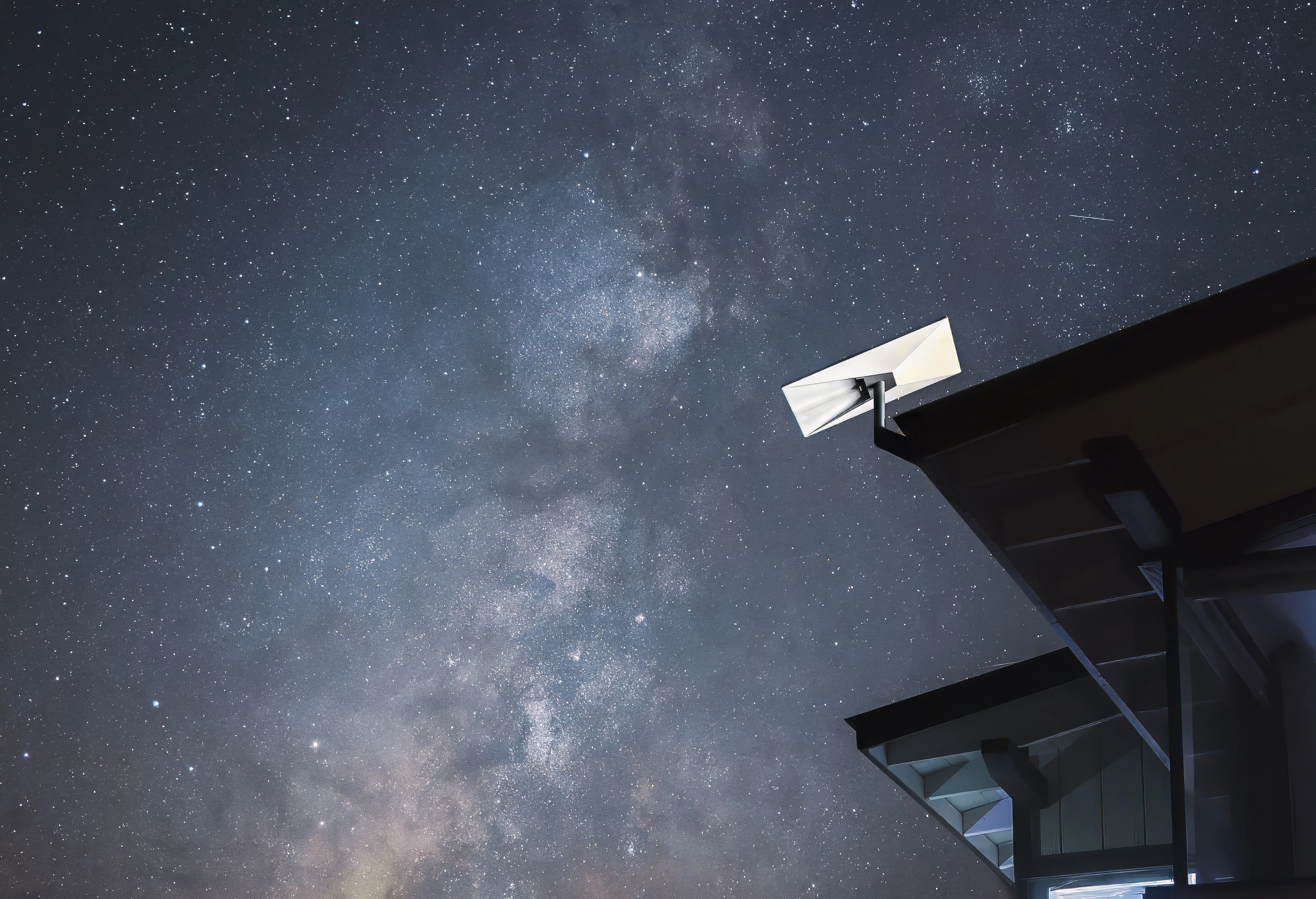
I know the system is fairly complex (tons of TI frontends building a big steerable phased array antenna), but the current hardware is awful for RV and really any use. There's a motor-oriented rectangular "dish" with a mandatory 1+ foot mounting arm, which stows in only one vertical orientation. Then, there are proprietary micro-HDMI esque connectors on both ends of a vendor provided fixed-length CAT5e from the dish to the router. For RVs, all of these are awful - the dish can't lie flat and must be brought inside for transit, and wiring is an unnecessary hassle.
As a Starlink user, my take is pretty much that the core technology is revolutionary in specific areas, but the product itself is mediocre in both cost and implementation. I wish they'd "unchain" the system with less bizarre hardware.
Go compare it to what you will get for $150 per month from consumer grade geostationary based highly oversubscribed services. Viasat/Hughesnet/wild blue/etc.
I could pull out my checkbook right now and start a contract for $6,000 per month on a 36mo term of dedicated SCPC geostationary capacity (requiring about $8500 of equipment at my site with a 1.8 meter dish, moderately powerful BUC and new modem) and not be able to come anywhere near matching the speeds and capability of my starlink terminal.
Aside from "it's not a good deal just because it's cheaper than a bad deal" - your point is completely irrelevant to terrible design choices that have little to do with cost.
A permanently-attached cable on a very expensive outdoor device is mind-boggling levels of asinine, to the point that it seems done purposefully to help subsidize the service by making money off returned units with damaged cables.
Or guarantee that units will eventually die; it sounds like Musk wants to shift to being a satellite backbone, not providing interwebs for plebs - and one great way to shift to that is to simply stop selling dishes to consumers and wait for the existing units to die of cable failure.
(And before you jump all over me: yeeeeees, I'm aware that implementing a connector for the cable has costs. Starlink chose to cut those costs.)
It's completely up Musk's alley to pull this sort of blatantly anti-consumer nonsense. His entire life he's been profiting off exploiting his customers. For example, in the case of paypal, blatantly stealing money from people's accounts for "suspicious" activity, and getting away with it because "paypal isn't a bank, neener neener."
Musk and his network team are not that dumb. They know about the Shannon limit in rf microwave and millimeter wave and the multi terahertz channel width capacity of basic 9/125 SM fiber.
Anything RF based has incredibly tiny capacity compared to modern 100/200/400GbE 40/80 channel dwdm systems. The capacity of two strands of fiber on a long haul path is incredible.
Internet backbone links carry far too much traffic to handle through even the most optimistic starlink sat to sat laser links.
I 100% concur with you on the foolishness of the cable. It should be some kind of ip68 rated twist lock Ethernet connector.
I think this must have been done due to either weatherproofing (RJ45 is awful for this, you can make it waterproof with weird enclosures but it's painful) or some kind of issue with the excessive power requirements from the dish. The cable is just CAT5e. I cut it and put RJ45 in the middle (through a gas discharge surge arrestor) to avoid needing to drill another hole in my house, and my system works fine even in snow melt mode, so... shrug.
The weirdest part about the rectangular Dishy system is that the router doesn't have an Ethernet port, and, to add one you have to buy a proprietary dongle because there's no Ethernet PHY for an additional port in the router itself. Plus, there's no official way to eliminate the router hardware - you can put it in passthrough mode and eliminate the actual routing part, but the proprietary PoE injector is fully integrated into the router hardware.
Things are improving slowly, though - at least there's now a "remote management" function in the Starlink app, so passthrough mode users have (proprietary) access to their connection's vitals. Previously, enabling passthrough mode eliminated all telemetry from the connection, so you couldn't see if the link was obstructed, for example.
Whatever the means he has used, he kickstarted (in the minds of consumers) at least three industries.
Would I willingly give him money? No. Unless I had an RV :)
Getting a phased array antenna with a gain enough to get range of more than 500km for $500 is mediocre in cost? I've got curious and googled Starlink antenna teardown - man, that looks like a fighter radar hardware, may be not of a 5G fighter, yet definitely not every 4G fighter has such a radar. There is no way it costs $500 even in BOM. The BOM itself must be several thousands at least. Starlink is basically giving away its hardware in order to get customers.
2) As a customer I don't care if the product has a $5000 COGS to the provider or has unicorn blood in it, I care what it does. Compared to most WISPs, LTE/5G, or using the Internet access provided by a commercial campground or RV park, it's extremely expensive and really inconvenient. For example, my parents chose not to redeem their Starlink invitation as at home, they'd get similar performance to their existing WISP for over 2x the price and a really inconvenient installation process, and for the road, the cost just didn't justify the rare occasion they were at a campsite without LTE or commercially available Internet nearby.
Compared to geostationary and existing constellation satellite solutions, Starlink is a massive winner, and competes well. But, those markets were already shrinking and IMO Starlink will eventually have to compete with terrestrial wireless solutions as well. To do that, they'll need a better cost and CPE model.
The units that exist right now are meant to be relatively low cost and compete with consumer geostationary vsat terminals.
they're not interested in competing on cost, because they have no real competition.
implementation will improve I'm sure.
This is really their current service, but not strictly limited to only one location cell. So, you can use it whenever you reach your destination, but it isn’t designed to be used while you’re in motion.
Though I did see one clever installation under a cover on a spare tire on the roof (for the round Dishy). You could leave it up there and pull it down as needed to avoid obstructions when parked. The cable would even coil up nicely in the tire.
What SpaceX shared is that they plan to be "fiber cable" except via space. They'll carry a backbone traffic e.g. between Australia and U.S. via laser links.
Companies that currently pay for undersea fiber cable to carry traffic will pay Starlink for the same service.
Also, a backhaul for 5G operators (see https://www.telecompetitor.com/starlink-update-musk-sees-mob..., https://www.zdnet.com/article/japanese-telco-kddi-to-use-spa...).
Also airlines.
Offshore oil and gas, cargo ships, Cruise ships, coastal vessels, medium-distance ferries such as in Greece, business jets, airliners, portable military applications, data links to offshore scientific applications for buoys and weather, all sorts of stuff.
Big ass yagi uda antennas in certain locations with totally custom rf chains and modems.
> The consequences for SpaceX if we can’t get enough reliable Raptors made is that we then can’t fly Starship, which means we then can’t fly Starlink Satellite V2 (Falcon has neither the volume nor the mass to orbit needed for satellite V2). Satellite V1 by itself is financially weak, whereas V2 is strong.
I very much hope they both do work but let's be clear there's still a lot of risk to get through before that's clear.
https://www.theverge.com/2021/11/30/22809720/elon-musk-space...
Additionally the US and NATO would see an act like that as barely one step below declaring nuclear war.
If anyone in NATO considers blowing up satellites to be one step below killing hundreds of millions of people, I want that person fired. Because they have completely lost touch with reality, and should not be allowed anywhere near a weapon, or a job where they manage people with weapons.
I'm sure people are wargaming this.
Is it, though?
Can you share the pricing details of managing 4G towers vs. Starlink's small sats.
And yes, I fully expect that you have no idea what either of those costs.
4G serves an entire nation of cell phones, using generally similar wireless technology and limitations LEO satellite comms have. 4G towers are closer to the users than LEO satellites, meaning the power requirements are lower, this is a desirable thing for the people in terms of both battery life and radiation power levels.
5G takes it even further in this direction using more towers; shorter distances and lower power levels, AIUI.
Unless I'm utterly mistaken, LEO satellites are at a severe disadvantage when it comes to competing with the cell network for handheld mobile customers.
Satellite connectivity has its place, and it's basically where you won't have cell service, since that's obviously the preferable option if it's available.
I worked for a Telco installing 4G (and 3G) towers in some of the most remote locations on Earth (the Arctic).
I can assure you, they ARE that expensive to manage.
I have a pretty rural property and there are areas nearby that get 5G UW with speeds in excess of 1Gbps. Most of the area is covered by 4G with download speeds of over 40Mbps.
5G is already replacing wired home internet for many people. Give it a few more years to expand coverage and I bet 5G will make Starlink obsolete for most of its US users.
This is wrong. Years before they have a full constellation they will already have started needing to replace previously launched satellites. It's not like they just launch them once and they're done and those satellites last forever. Just to maintain a constellation they'll need to be replacing something like 20% every year.
Anyway, for spacex to make bank off of this they need customers. Extreme rural living areas are not that common, and when they do become common more cost effective methods such as cell towers make more sense than starlink.
The satellite is like a piece of debris/wreckage which someone pointed out it would have deorbited anyway at some point.
What's special about satellites (and how much caching are they gonna do) and why are you worried about data you have chosen to send in the clear over a network you don't own?
Don't worry I'm not an Elon hater
The videos "has an agenda" but it seems a bit easy to accept the idea that constantly launching satelites into space is pretty expensive. Infrastructure on the ground is expensive, but most people tend to not move around so at one point just building out lots of wires everywhere can work pretty well.
Having great coverage across the globe is great! But especially after seeing that (super crappy!) satelite internet providers getting the same shit done with 3 satelites.... you're looking at the intersection of people needing access to fast internet who can't somehow take advantage of existing infra, _and_ who won't eventually get covered by ground infra (and I guess don't have trees around their house).
Basically, cost calculations assuming traditional launch economics are incorrect. That's pretty much the whole point of SpaceX as a company - their business proposition is massive reduction in kg-to-space costs.
If I were to state my actual opinion on him on Hacker News, I would be downvoted. If I were to try and express how I feel about someone else finding him at all reasonable, I would be downvoted. So in the kindest possible way let me direct your attention to the kind of techniques he uses.
At 7:16 in that video he posts a screen capture of an article headline. It is a screen capture? Honest right? Great data. Not so fast. The screengrab was photoshopped. He edited out part of the title. In particular, he edited out the price for SpaceX to launch a satellite to orbit. Why, you might wonder, would he do something like that? Well... he was lying about the price just before that, so it would be kind of inconvenient to let people see the truth, wouldn't it? Here is the article whose title he photoshopped: https://www.nextbigfuture.com/2019/12/spacex-starlink-satell...
This isn't an uncommon thing for this liar. He regularly and willfully does things like this all throughout the video. You should be taking every number he gives with an enormous amount of salt. Dump the entire fucking salt container on this meal. He lies about the cost for SpaceX to launch, a material fact, but he also double counts the number of rockets they will need to launch, another material fact. He lies about the speed test results for SpaceX (by using numbers from months before the video, rather than the actual numbers). Since he lied about that, his reported numbers didn't agree with, ya know, reality. In particular they didn't agree with the reality of SpaceX qualifying for various government funding initiatives for rural internet. So if you want to believe him you're going to need choke down a helping of "enormous conspiracy" in order to get onboard his hate train. He also lies about the cost of competitors. And... it's bad. It is so bad that I have 0% confidence that he operates in good faith and I assume anyone who trusts this person is truly lazy, because he isn't trustworthy. Not even close to it, at all, whatsoever.
https://littlebluena.substack.com/p/common-sense-skeptic-deb...
Viasat offers 30mb/s download for $199/mo with a 150GB data cap. HughesNet offers 25mb/s download for $159/mo with a 75GB data cap. Starlink offers ~100mb/s download for $110/mo with no data cap.
Viasat/HughesNet have geostationary satellites which results in almost unusable ping (300-600ms), compared to the 50ms ping from Starlink.
But, hilariously, despite the channel being called "Common Sense Skeptic" (thought it might be a science-y channel), every video is an Elon Musk takedown.
"Has an agenda" indeed, haha!!
- Starship will further reduce SpaceX's already low launch costs.
- Economies of scale by producing 10,000+ satellite.
- Industries willing to pay a lot for truly global coverage (maritime, aviation, oil, military)
- With the laser network, high frequency traders willing to pay a massive premium for the lowest latency connections between financial hubs.
- A "fully and rapidly reusable" Starship, if achieved, will change the economics even more. Not only will it further reduce the initial launch cost, but you could imagine potentially servicing/refueling or recovering aging Starlink satellites.
- Starlink (plus increasing work-from-home opportunities) has the potential to (slightly) redistribute where humans are willing to live to more sparsely populated areas.
The idea is to use starship which should be really cheap.
Ground infra can suck. It will probably be stuck at 6Mbps down forever since it is not economical to upgrade it. I would literally cut down trees by hand if it meant I could have fast internet.
Having competition changes the economics, at least somewhat. Look how fast AT&T rolled out fibers to all the cities Google announced they were going to do fiber in. It's still expensive to do new runs everywhere, but it may be worthwhile to keep some business. In some areas, as some customers leave, staying customers may be able to have better access to bonded lines. In other areas, the carrier just needs a kick in the pants to use more flexible/generous profiles to let customers use the speed that's available.
The videos produced as a general rule will cherry pick information and also use outdated pieces of information and then mash them together to produce the illusion of something being much worse than it is.
You don't need to worry. Every angle for making the comparison unflattering to SpaceX, including taking screen grabs of Elon Musk with funny faces and making character attacks on him on the basis of his face looking funny, are more then covered in that cesspit designed to radicalize and monetize the gullible.
This looks like it's just $25/mo more than normal service? Is that it, or is there a difference in the hardware?
There is a limit per cell how many customers can be serviced. Satellites can only handle so many connections .
However humans tend to concentrate in few areas and those areas will have higher demand.
If they allow us to buy in a light demand area and use in roaming in a heavy demand area constantly with same network quality, it would become a problem, people would do that to bypass waitlists
To solve that they are allowing roaming but giving traffic/QoS preference to local users over roaming users
https://www.pcmag.com/news/starlink-becomes-movable-with-new...
So this seems like basically just that, branded as "for RVs"
Obstructions should be limited. But this requires overlapping sats in-view.
without laser links communication between satellites becoming active the amount of coverage of satellites won’t help as there is no downlink for the satellite to talk to from you.
The best they could in theory without laser links today is intermittent connection (due to switching) WAN . Basically a very expensive LAN party with your friend’s boat say 100 miles away.
https://www.aviationtoday.com/2022/04/22/spacex-signs-jsx-fi...
https://newsroom.hawaiianairlines.com/releases/hawaiian-airl...
The satellites they are launching now do have satellite to satellite laser links, but this is not been implemented in production yet, and there are nowhere near enough polar orbit highly inclined orbit satellites in operation. 95% of what's orbiting is in about a 53.2 degree inclination.
The satellites certainly are not full featured routers such as the capability you'd find in a modern 1U height ISP carrier router with enough CPU/RAM/FIB/RIB for full BGP tables.
https://sync.cobham.com/media/1299/71-127967-sailor-500-flee...
The better solution to keep a small flat panel phased array stable may be some sort of mass produced low cost weatherproof Stewart platform.
Unfortunately it's quite expensive for a backup internet plan. Being able to cancel and activate it at will with this new RV plan would help a lot with that. And while Starlink speeds are nice for what it is, I'd prefer to use my 1Gbps cable modem most of the time.
Sadly for me, I tried putting the Starlink dish in several spots on my roof and deck, but I just have too many trees around my house. 100 foot tall jeffry pines all around the house. Starlink was always reporting about 12% obstructed, so it expected a drop out every 45 seconds or so. It was usable, but packet loss here and there.
I don't think that was going to work well for any kind of video calls, etc.
So I ended up returning the Starlink dish. It really needs too much view of the sky for heavily wooded areas. They aren't kidding when they say that.
My fall back plan is to use a 5G/LTE hotspot with an outdoor antenna to make up for my usable but fairly week cell service in the area, and use that for my backup internet.
Although the EU now has 'no roaming charges' there are no providers that let you freely roam to other countries and use your plan exactly as you would at home without restrictions. At home I can get a plan with unlimited calls, texts and data for 15€/mo, but I can only use 10GB of data in other EU countries. After that I need to pay 3€/GB - which will get expensive quickly with the number of Zoom calls I need to be on.
Buying a prepay local SIM is often still a smart choice, but in some countries that's difficult (to actually get the SIM) and prepay plans don't always have unlimited data options. If you need to travel a lot between countries where that's the case, or just want less hassle, the price of Starlink starts to seem a lot more affordable.
So in rural areas, you'd be more interested in range/penetration, but there's only so much you can do with trees, hills, etc. in between you and the transmitter. Starlink has no obstacles between you and the satellite, and it runs at 10+Ghz giving more bandwidth.
Meanwhile T-mobile purchased the 600 Mhz band that used to be used for broadcast TV for their 'extended range LTE/5G'.
Starlink requires 100 degree cone free from any obstacles, 25 degrees up from the horizon.
Yeah, but that's not really a tall order, particularly in the kinds of places where 4G/5G coverage is bad or nonexistent. Maybe not where you're deep in a gorge or under a tree canopy, but lots of the wilderness is open space, or at least has open space accessible.
If you have 4G or better, I'm not sure. Here's a map of 5G from ATT in Colorado: https://www.cellmapper.net/map?MCC=310&MNC=410&type=NR&latit...
Much of Australia has great 4G LTE, but when there's no signal, there's really no signal.
So there are two obvious key advantages to StarLink:
1. Full coverage in the Outback
2. No Data Caps
Despite having a great 4G LTE / 5G network in Australia we still have data caps on mobile plans. Home Mobile Broadband plans without data caps do exist, but usage policies prevent use outside of registered premises!
Also, our NBN has been a disaster in many places, and unusably bad.
I always forget about that! :-)
Be interesting to see which way and how fast the NBN updates to FTTP happen now Labour is back in power!
kinda stupid question: (not meaning to sound as an asshole question) Isn't the mmWave part of 5G itself ? Or what would you define as 5G ?
I live in Toronto, where I have solid 5g for maybe 30km in any given direction (except probablyLake Ontario, lol…though I do still get 5G on Toronto Island…) - but I travel out to Palmerston, Ontario, and in some places along the way I’m shocked to see the ‘E’ for EDGE or 2G status on my iPhone. My grandparents still have dial-up with no option for Cable…in southern Ontario…
I used to farm in rural Illinois. Same deal. I don’t think people in less agricultural areas really get it.
Consider Yosemite. It's visited by plenty of tech people, but Highway 120 through the park has almost to cell coverage from Groveland to Lee Vining.
Honestly if your serious about reliable access you want multiple ways online so Starlink + Cellular + WiFi wan would be a good way to go, maybe even two cellular carriers.
For those of you outside Silicon Valley, yes, that Sand Hill Road. Interstate 280 is the best access (driving through/around Stanford is a pain).
That said, dead-zones can be convenient excuses.
https://www.starlink.com/map?source=rv
My first guess would be military and/or science, but I don't think this holds true.
Theoretically though, it should continue to work while in motion right? Perhaps with a bit more latency than if the unit was stationary?
It probably won't work great. The Starlink unit has a phased array forming narrow beams of reception and transmission to the satellite, and assumes it's on a stable platform.
It's possible to build a system that is robust to bounces and yaws, but that doesn't mean that they have.
They are already selling commercial service for airlines.
So yeah, it'll work at the speed of a van.
https://www.tesmanian.com/blogs/tesmanian-blog/starlink-x
https://www.cnbc.com/2022/04/25/spacex-signs-hawaiian-airlin...
Actual recordings in motion of normal end-user terminal in motion. It works OK-ish. But a lot of packet loss (completely lost packets) and latency spikes (from retransmits).
Of course, with ground hardware built for in-motion, you could do significantly better.
Source: https://www.tuckstruck.net/truck-and-kit/geekery/starlink-mo...
I'm guessing utilization is rather high with retransmits, etc-- which is probably a driving factor of Starlink prohibiting in-motion use in EULA.
Note it's not really the speed that matters. It's suddenly having a much different bearing to the satellite because you have begun a turn or hit a dip in the road that matters.
I know a few airlines contracted with them to provide in-flight internet. My assumption is that different hardware would be needed given both the vehicle and the satellite are moving simultaneously. I could be wrong.
I love this typo.
Any word on whether or not they'll come out with a roof mountable dish or at least a radome to cover the dish?|
They may have gone GA with the RV dish today, I've been waitlisted for over a year for a home dish, and got the RV dish email today.
This service has been out for weeks - not sure why it's only getting publicity today.
Do you have a link to the DIY permanent installation? All the Youtube videos and other guides I've seen mount it on the roof while parked, and take it down while driving.
Well, for one, I'm not a satellite communications engineer. I don't know how to source or fabricate the materials to create a custom radome that's transparent at the frequencies needed, nor do I know the thermal emissions of the dish and whether or not any of it needs to be heat sinked or fan cooled.
Plus, I'd feel better with a commercial radome at 70mph on the roof than some home made enclosure I glued together myself.
You don't really need to be. You just plop it down anywhere with a big section of the sky clear and it figures out the rest. As long as however you DIY it, it's sitting roughly flat, then it figures out the rest.
No one's talking about building a radome.
As someone that grew up on the internet of yesteryear it is really frustrating when, e.g., some google site is once again buffer overflowing all over my browser or some website of low content quality is a bloated 100-200 MB disaster. Does AirBnB really need to be 200MB just to load the homepage (note saying airbnb is the disaster)? I'm just saying.
There is always this lamenting about climate change, while very many types who lament that issue, are often heavily in one way or another involved in an extremely wasteful and inefficient sector ... the internet. What is the energy cost of a 100MB website over a 10MB website? How about GB of wasteful and unnecessary data being served up every single month. I suspect a lot at scale.
To pick on AirBnB again; sure, offer the 200MB site, but how about also making a big deal about offering a low power consumption version for repeat visitors. We are trying to save the planet and such, aren't we? Or is that just for those without private jets?
Just my two cent.
The worst case estimates seem to be 7kWh/GiG (2012) (the best case much less than a 0.1 kWh/Gig, but only including network), which is ~60 km in electrical cars or 15 km in petrol cars. (The latter two only including the incremental energy usage).
The additionally induced trips by AirBnB (especially flying) are going to be so much worse than their website could ever be.
Energy usage data is from https://onlinelibrary.wiley.com/doi/pdf/10.1111/jiec.12630 (with very old & high estimates disregarded). In 2022 the internet will probably be more efficient, the study estimates a halving every 2 years. So naively (very naively) extrapolating the 7kWh/Gig figure from 2012 to now is less than half a kWh/Gig.
You also used to be able to interact with Twitter solely through SMS. I think there are two big reasons why this sort of design philosophy is uncommon:
* Addiction to heavy JS frameworks and libraries.
* More bandwidth = more ads.
Thinking of RVs reminds me of the cruise ship I was just on. I actually liked the cruise much more than I had guessed but even the premium service was terrible. I would think the cruise ship would be happy to shell out for better internet - could actually see remote working from a cruise if so.
I had Starlink for a short time but had to send it back for a refund. I desperately wanted it to replace my 20Mbit DSL, but I could not place the dish anywhere that was not blocked by trees. Even with a small portion of the sky blocked, I was getting constant drops that made me unwilling to make the further investment of switching over all of my infrastructure to use it.
Ultimately, my issues stemmed from the required field of view being oriented in a northerly direction, whereas my southerly view from the same location is completely clear of obstructions. I occasionally pull out the app to check whether they have removed that limitation, but it still looks to the north as of this writing.
Will starlink ever have a competitor or will they be free to slowly crank up prices as being become "hooked"? Even a duopoly may not keep prices in check.
Wondering when we might see global coverage including the open ocean… I guess you’d need a gimballed antenna for boat use maybe ?
Stats here: https://planet4589.org/space/stats/star/starstats.html
It's good for rural areas it seems.
> Users can expect high speed, low latency internet in areas marked "Available", and notably slower speeds during hours of peak usage in areas marked as "Waitlist" or during events with many collocated users.
* There's no waitlist for Starlink for RVs service (jump the line)
* Costs as much as Residential + Portability add-on ($135/mo)
* After the first month, you can suspend/restore service at will (unclear if it's prorated or if you pay for a full month when you need any service; I'm betting the latter)
* You're always in deprioritized mode (in congested areas during peak time, your service is degraded compared to Residential customers)
I'm leaving next month for 3-4 months cross-country and then returning to a place with decent Comcast (a rental where I have no choice but to pay for Comcast), so this is perfect for me. I'll suspend service when I get home, and maybe pay for it if I do any short winter trips.
https://support.starlink.com/?topic=76371e8a-d994-e9d1-f96d-...
They just recently finished construction of an earth station in ketchikan, which is quite public and obvious. Almost certainly there will be something for more Northern latitudes, when there is a sufficient number of satellites to actually make it usable without significant gaps.
Tourists: stop coming to Alaska. The mosquitoes will eat you.
This wiki section has info about each section. The "inclination" section basically sets the maximum northern latitude that the service will work to (plus a little bit as the signal goes further north than the satellites are). https://en.wikipedia.org/wiki/Starlink#Constellation_design_...
George Bush: Sorry I killed 500,000 people for absurd reason in Iraq. "hahahaha".
Russia: we dont want missiles on our door step and we will invade.
"russia hur durr, putin eats babies, has cancer , rabid shriekings"
And no it's not designed to work at high speeds. People keep confusing "designed to work at" with "possible to use outside of recommended conditions".
The system being deployed on airplanes is somewhat different than the one being sold to consumers.