How fast are Linux pipes anyway?
Pipes are ubiquitous in Unix --- but how fast can they go on Linux? In this post we
mazzo.li
698 points · by rostayob · 4y ago · 200 comments
However, none of the variants using vmsplice (i.e., all but the slowest) are safe. When you gift [1] pages to the kernel there is no reliable general purpose way to know when the pages are safe to reuse again.
This post (and the earlier FizzBuzz variant) try to get around this by assuming the pages are available again after "pipe size" bytes have been written after the gift, _but this is not true in general_. For example, the read side may also use splice-like calls to move the pages to another pipe or IO queue in zero-copy way so the lifetime of the page can extend beyond the original pipe.
This will show up as race conditions and spontaneously changing data where a downstream consumer sees the page suddenly change as it it overwritten by the original process.
The author of these splice methods, Jens Axboe, had proposed a mechanism which enabled you to determine when it was safe to reuse the page, but as far as I know nothing was ever merged. So the scenarios where you can use this are limited to those where you control both ends of the pipe and can be sure of the exact page lifetime.
---
[1] Specifically, using SPLICE_F_GIFT.
I haven't digested this comment fully yet, but just to be clear, I am _not_ using SPLICE_F_GIFT (and I don't think the fizzbuzz program is either). However I think what you're saying makes sense in general, SPLICE_F_GIFT or not.
Are you sure this unsafety depends on SPLICE_F_GIFT?
Also, do you have a reference to the discussions regarding this (presumably on LKML)?
If you don't use gift, you never know when the pages are free to use again, so in principle you need to keep writing to new buffers indefinitely. One "solution" to this problem is to gift the pages, in which case the kernel does the GC for you, but you need to churn through new pages constantly because you've gifted the old ones. Gift is especially useful when the page gifted can be used directly in the page cache (i.e., writing a file, not a pipe).
Without gift some consumption patterns may be safe but I think they are exactly those which involve a copy (not using gift means that a copy will occur for additional read-side scenarios). Ultimately the problem is that if some downstream process is able to get a zero-copy view of a page from an upstream writer, how can this be safe to concurrently modification? The pipe size trick is one way it could work, but it doesn't pan out because the pages may live beyond the immediately pipe (this is actually alluded in the FizzBuzz article where they mentioned things blew up if more than one pipe was involved).
I still think the man page of vmsplice is quite misleading! Specifically:
       SPLICE_F_GIFT
              The  user pages are a gift to the kernel.  The application may not modify
              this memory ever, otherwise the page cache and on-disk data  may  differ.
              Gifting   pages   to   the  kernel  means  that  a  subsequent  splice(2)
              SPLICE_F_MOVE can successfully move the pages; if this flag is not speci‐
              fied,  then  a  subsequent  splice(2)  SPLICE_F_MOVE must copy the pages.
              Data must also be properly page aligned, both in memory and length.
I wonder if io_uring handles this (yet). io_uring is a newer async IO mechanism by the same author which tells you when your IOs have completed. So you might think it would:
* But from a quick look, I think its vmsplice equivalent operation just tells you when the syscall would have returned, so maybe not. [edit: actually, looks like there's not even an IORING_OP_VMSPLICE operation in the latest mainline tree yet, just drafts on lkml. Maybe if/when the vmsplice op is added, it will wait to return for the right time.]
* And in this case (no other syscalls or work to perform while waiting) I don't see any advantage in io_uring's read/write operations over just plain synchronous read/write.
---
[1] https://twitter.com/trav_downs/status/1532491167077572608
https://mazzo.li/posts/fast-pipes.html#what-are-pipes-made-o...
I think the diagram near the start of this section has "head" and "tail" swapped.
Edit: Nevermind, I didn't read far enough.
But from what I know about how vmsplice is implemented, gifting or not, it sounds like it should be unsafe anyhow.
That sounds like a security issue - the ability of an upstream generator process to write into the memory of a downstream reader process, or more perverser vice versa is even worser. I presume that the Linux kernel only lets this happen (zero copy) when the two processes are running as the same user?
But also, if you are sending data, why would you later read/process that send buffer?
The only attack vector I could imagine would be if one sender was splicing the same memory to two or more receivers. A malicious receiver with write access to the spliced memory could compromise other readers.
None of those would impact the same physical page mapped into another process with its own V->P mapping.
But that was way off and `seq` turned out to be ridiculously slow. I dug down a little and made a faster version of `seq`, that kind of got me what I wanted. But then noticed at the end that the point was moot anyway, because just piping it to the next program over the command line was going to be the slow point, so it didn't matter anyway.
  @elysium pipetest % pipetest | pv > /dev/null
   102GiB 0:00:13 [8.00GiB/s]

  @elysium ~ % pv < /dev/zero > /dev/null
   143GiB 0:00:04 [36.4GiB/s]
(And as an aside, the combination of that font with the hand-drawn diagrams is really cool)
Here is the source: https://www.ibm.com/plex/
Hope that helps!
I was worried when I saw zfs send/receive used pipes for instance because of performance worries - but using it in reality I had no problems pushing 800MB/s+. It seemed limited by iop/s on my local disk arrays, not any limits in pipe performance.
PHP comes in at about 900KiB/s:
php -r 'while (1) echo 1;' | pv > /dev/null
python3 -c 'while (1): print (1, end="")' | pv > /dev/null
node -e 'while (1) process.stdout.write("1");' | pv > /dev/null
    FATAL ERROR: Ineffective mark-compacts
    near heap limit Allocation failed -
    JavaScript heap out of memory
Update:
Checking with strace shows that Python caches the output:
strace python3 -c 'while (1): print (1, end="")' | pv > /dev/null
write(1, "11111111111111111111111111111111"..., 8193) = 8193
So the Python equivalent would be:
python3 -c 'while (1): print (1, end="", flush=True)' | pv > /dev/null
Interesting, that PHP is over 4x faster than the Python and JS.
I get around 1.56MiB/s with that code. PHP gets 4.04MiB/s. Python gets 4.35MiB/s.
> What's also interesting is that node crashes after about a minute
I believe this is because `while(1)` runs so fast that there is no "idle" time for V8 to actually run GC. V8 is a strange beast, and this is just a guess of mine.
The following code shouldn't crash, give it a try:
node -e 'function write() {process.stdout.write("1"); process.nextTick(write)} write()' | pv > /dev/null
More examples with Babashka and Clojure:
bb -e "(while true (print \"1\"))" | pv > /dev/null
clj -e "(while true (print \"1\"))" | pv > /dev/null
clj -e "(require '[clojure.java.io :refer [copy]]) (while true (copy \"1\" *out*))" | pv > /dev/null
clj -e "(while true (.println System/out \"1\"))" | pv > /dev/null
Versions: PHP 8.1.6, Python 3.10.4, NodeJS v18.3.0, Babashka v0.8.1, Clojure 1.11.1.1105
> I believe this is because `while(1)` runs so fast that there is no "idle" time for V8 to actually run GC. V8 is a strange beast, and this is just a guess of mine.
Not exactly: the GC is still running; it’s live memory that’s growing unbounded.
What’s going on here is that WritableStream is non-blocking; it has advisory backpressure, but if you ignore that it will do its best to accept writes anyway and keep them in a buffer until it can actually write them out. Since you’re not giving it any breathing room, that buffer just keeps growing until there’s no more memory left. `process.nextTick()` is presumably slowing things down enough on your system to give it a chance to drain the buffer. (I see there’s some discussion below about this changing by version; I’d guess that’s an artifact of other optimizations and such.)
To do this properly, you need to listen to the return value from `.write()` and, if it returns false, back off until the stream drains and there’s room in the buffer again.
Here’s the (not particularly optimized) function I use to do that:
  async function writestream(chunks, stream) {
      for await (const chunk of chunks) {
          if (!stream.write(chunk)) {
              // When write returns null, stream is starting to buffer and we need to wait for it to drain
              // (otherwise we'll run out of memory!)
              await new Promise(resolve => stream.once('drain', () => resolve()))
          }
      }
  }
ETA: I should probably note that transform streams, `readable.pipe()`, `stream.pipeline()`, and the like all handle this stuff automatically. Here’s a one-liner, though it’s not especially fast:
node -e 'const {Readable} = require("stream"); Readable.from(function*(){while(1) yield "1"}()).pipe(process.stdout)' | pv > /dev/nullBut using a longer string crashed after 23s here:
node -e 'function write() {process.stdout.write("1111111111222222222233333333334444444444555555555566666666667777777777888888888899999999990000000000"); process.nextTick(write)} write()' | pv > /dev/nullAlso, what NodeJS version are you on?
Java has (had) weird idiosyncrasies like this as well, well it doesn't crash, but depending on the construct you can get performance degradations depending on how the language inserts safepoints (where the VM is at a knowable state and a thread can be safely paused for GC or whatever).
I don't know if this holds today, but I know there was a time where you basically wanted to avoid looping over long-type variables, as they had different semantics. The details are a bit fuzzy to me right now.
yes | pv > /dev/null
Not sure about how yes(1) compares to the techniques presented in the linked post. Perhaps there's still room for improvement.
[1] Previous HN discussion: https://news.ycombinator.com/item?id=14542938
pv < /dev/zero > /dev/nullyes lets you specify which character to output. 'yes n' for example to output n.
Honest question: what are the practical use cases of this?
Repeatedly typing the 'y' character into a Linux pipe is surely not that common, especially at that bit rate. Also seems like the bottleneck would always be the consuming program...
It also allows you to script otherwise interactive command line operations with the correct answer. Many come like tools now days provide specific options to override queries. But there are still a couple hold outs which might not.
At that rate no but I definitely use it once in a while. For example if a copy quite a few files and then get repeatedly asked if I want to overwrite the destination (when it's already present). Sure, I could get my commmand back and use the proper flag to "cp" or whatever to overwrite, but it's usually much quicker to just get back the previous line, go at the beginning (C-a), then type "yes | " and be done with it.
Note that you can pass a parameter to "yes" and then it repeats what you passed instead of 'y'.
It's not made to be fast; it's just fast by nature, because there's no other computation it needs to do than to just output the string.
- Node (no buffering): 1.2 MiB/s
- Go (no buffering): 2.4 MiB/s
- Python (8 KiB buffer): 2.7 MiB/s
- Go (8 KiB buffer): 218 MiB/s
Go program:
    f := bufio.NewWriterSize(os.Stdout, 8192)
    for {
       f.WriteRune('1')
}More than a few old backup or transfer scripts had extra dd or similar tools in the pipeline to create larger and semi-asynchronous buffers, or to re-size blocks on output to something handled better by the receiver, which was a big deal on high speed tape drives back in the day. I suspect most modern hardware devices have large enough static RAM and fast processors to make that mostly irrelevant.
Rust: 21.9MiB/s
Bash: 282KiB/s
PHP: 2.35MiB/s
Python: 2.30MiB/s
Node: 943KiB/s
In my case, node did not crash after about two minutes. I find it interesting that PHP and Python are comparable for me but not you, but I'm sure there's a plethora of reasons to explain that. I'm not surprised rust is vastly faster and bash vastly slower, I just thought it interesting to compare since I use those languages a lot.
Rust:
  fn main() {
      loop {
          print!("1");
      }
  }
while :; do printf "1"; done | pv > /dev/null $ ./a.out 1000000 2000 | cat >/dev/null
buffer size: 1000000, num syscalls: 2000, perf:1578.779593 MiB/s
$ ./a.out 1 2000000 | cat >/dev/null
buffer size: 1, num syscalls: 2000000, perf:0.832587 MiB/s
    #include <cstddef>
    #include <random>
    #include <chrono>
    #include <cassert>
    #include <array>
    #include <cstdio>
    #include <unistd.h>
    #include <cstring>
    #include <cstdlib>

    int main(int argc, char **argv) {

        int rv;

        assert(argc == 3);
        const unsigned int n = std::atoi(argv[1]);
        char *buf = new char[n];
        std::memset(buf, '1', n);

        const unsigned int k = std::atoi(argv[2]);

        auto start = std::chrono::high_resolution_clock::now();
        for (size_t i = 0; i < k; i++) {
            rv = write(1, buf, n);
            assert(rv == int(n));
        }
        auto stop = std::chrono::high_resolution_clock::now();

        auto duration = stop - start;
        std::chrono::duration<double> secs = duration;

        std::fprintf(stderr, "buffer size: %d, num syscalls: %d, perf:%f MiB/s\n", n, k, (double(n)*k)/(1024*1024)/secs.count());
    }
EDIT 2: Also, it appears that the kernel is smart enough to not copy anything when it's clear that there is no need. When I don't go through cat, I get rates that are well above memory bandwidth, implying that it's not doing any actual work:
    $ ./a.out 1000000 1000 >/dev/null
buffer size: 1000000, num syscalls: 1000, perf: 1827368.373827 MiB/sI may be wrong, though. Check with lsof or similar.
Interestingly, Go is very fast with a 8 KiB buffer (same as Python's), I get 218 MiB/s.
You could probably answer this by replacing printf with /bin/echo and comparing the results. I'm not in front of a Linux box, or I'd try.
[0] https://www.gnu.org/software/bash/manual/html_node/Bash-Buil...
python actually buffers its writes with print only flushing to stdout occasionally, you may want to try:
python3 -c 'while (1): print (1, end="", flush=True)' | pv > /dev/null
LuaJIT 2.1.0-beta3
luajit -e "while true do print('x') end" | pv > /dev/null
luajit -e "while true do io.write('x') end" | pv > /dev/nullPython cheats, and it's still slow as heck even while cheating (buffers the output at 8192 chunks instead of issuing 1 byte writes).
write(1, "1", 1) loop in C pushes 6.38MiB/s on my PC. :)
It's not language "cheating" of course. It's just OP "measuring the wrong thing".
Using OP's code for following
    php 1.8mb/sec
    python 3.8 Mb/sec
    node 1.0 Mb/sec
echo 'class Code {public static void main(String[] args) {while (true){System.out.print("1");}}}' >Code.java; javac Code.java ; java Code | pv>/dev/null
echo 'import java.io.*;class Code2 {public static void main(String[] args) throws IOException {BufferedWriter log = new BufferedWriter(new OutputStreamWriter(System.out));while(true){log.write("1");}}}' > Code2.java ; javac Code2.java ; java Code2 | pv >/dev/nullThat manages about 7 GiB/s reusing the same buffer, or about 300 MiB/s with clearing and refilling the buffer every time
(the magic is in using java’s APIs for writing to files/sockets, which are designed for high performance, instead of using the APIs which are designed for writing to stdout)
    node -e '
        const stdoutWrite = util.promisify(process.stdout.write).bind(process.stdout);
        (async () => {
            while (true) {
                await stdoutWrite("1");
            }
        })();
' | pv > /dev/nullPerl 5.18.0 gives me 3.5 MiB per second. Perl 5.28.3, 5.30.3, and 5.34.0 gives 4 MiB per second.
perl5.34.0 -e 'while (){ print 1 }' | pv > /dev/null
python3 -c 'while (1): print (1)' | pv > /dev/null
perl5.34.0 -e 'while (){ print "1\n" }' | pv > /dev/null
perl5.34.0 -E 'while (1) {say 1}' | pv > /dev/null
    package main

    import "fmt"

    func main() {
            for ;; {
                    fmt.Println("1")
            }
    }
Python3: 3 MiB/s
Node: 350 KiB/s
Lua: 12 MiB/s
lua -e 'while true do io.write("1") end' | pv > /dev/null
  loop = do
    putStr "1"
    loop

  main = loop
yes | awk '{printf("1")}' | pv > /dev/null while true do
io.write "1"
end
PUC-Rio 5.4: 25 MiB/s
LuaJIT 2.1.0-beta3: 550 MiB/s <--- WOW
They all go slightly faster if you localize the reference to `io.write`
    local write = io.write
    while true do
      write "1"
endNo noticeable difference for LuaJIT, which makes sense, since JIT should figure it out without help.
main = putStr (repeat '1')
Strings are printed one character at a time in Haskell. This choice is justified by unpredictability of the interaction between laziness and buffering; I am uncertain it's the correct choice, but the proper response is to use Text where performance is relevant.
  poll([{fd=1, events=POLLOUT}], 1, 0)    = 1 ([{fd=1, revents=POLLOUT}])
  write(1, "11111111111111111111111111111111"..., 8192) = 8192
  poll([{fd=1, events=POLLOUT}], 1, 0)    = 1 ([{fd=1, revents=POLLOUT}])
  write(1, "11111111111111111111111111111111"..., 8192) = 8192
  poll([{fd=1, events=POLLOUT}], 1, 0)    = 1 ([{fd=1, revents=POLLOUT}])
  write(1, "11111111111111111111111111111111"..., 8192) = 8192
  rt_sigprocmask(SIG_BLOCK, [INT], [], 8) = 0
  clock_gettime(CLOCK_PROCESS_CPUTIME_ID, {tv_sec=0, tv_nsec=920390843}) = 0
  rt_sigprocmask(SIG_SETMASK, [], NULL, 8) = 0
  rt_sigprocmask(SIG_BLOCK, [INT], [], 8) = 0
  clock_gettime(CLOCK_PROCESS_CPUTIME_ID, {tv_sec=0, tv_nsec=920666397}) = 0
  ...
  rt_sigprocmask(SIG_SETMASK, [], NULL, 8) = 0
  poll([{fd=1, events=POLLOUT}], 1, 0)    = 1 ([{fd=1, revents=POLLOUT}])
write(1, "11111111111111111111111111111111"..., 8192) = 8192Bash:
    while :; do printf "1"; done  | ./pv > /dev/null
    [ 156KiB/s]
    python3 -c 'while (1): print (1, end="")' | ./pv > /dev/null
    [1,02MiB/s]
    perl -e 'while (true) {print 1}'  | ./pv > /dev/null
    [3,03MiB/s]
    node -e 'while (1) process.stdout.write("1");' | ./pv > /dev/null
[ 482KiB/s]To do a proper synchronous write, you'd do something like:
node -e 'const { writeSync } = require("fs"); while (1) writeSync(1, "1");' | pv > /dev/null
Edit: I've found this consistently building multiple data processing applications over multiple years and multiple companies
I'm reminded of this StackOverflow question, Why is reading lines from stdin much slower in C++ than Python?
   python3 -c 'import sys
while (1): sys.stdout.write("1")'| pv>/dev/null python3 -u -c 'import sys
while (1): sys.stdout.write("1")'| pv>/dev/null
    python3 -c 'import sys
      while (1): sys.stdout.write("1")'| pv>/dev/null
Using python 3.9.7 on macOS Monterey.
Binder comes from Palm actually (OpenBinder)
What's that?
A lot of programs store sockets in /run which is typically implemented by `tmpfs`.
Edit: it’s actually “yes” that I’ve used before for generating load. I remember reading somewhere “yes” was optimized differently than the original Unix command as part of the unix certification lawsuit(s).
Long night.
"tr '\0' 1 </dev/zero | pv >/dev/null" reports 1.38GiB/s.
"yes | pv >/dev/null" reports 7.26GiB/s.
So "/dev/urandom" may not be the best source when testing performance.
UPDATE: If you mean that you want to test how fast pipes are when there is other load in the system, then I'd suggest just running a lot of stuff in the background. But I wouldn't put the process dedicated for doing something else into the pipeline you're measuring. As a matter of fact, the numbers I gave were taken with plenty of heavy processes running in the background, such as Firefox, Thunderbird, a VM with another instance of Firefox, OpenVPN, etc. etc. :)
:)
I just had 25Gb/s internet installed (https://www.init7.net/en/internet/fiber7/), and at those speeds Chrome and Firefox (which is Chrome-based) pretty much die when using speedtest.net at around 10-12Gbps.
The symptoms are that the whole tab freezes, and the shown speed drops from those 10-12Gbps to <1Gbps and the page starts updating itself only every second or so.
IIRC Chrome-based browsers use some form of IPC with a separate networking process, which actually handles networking, I wonder if this might be the case that the local speed limit for socketpair/pipe under Linux was reached and that's why I'm seeing this.
AFAIK, Firefox is not Chrome-based anywhere.
On iOS it uses whatever iOS provides for webview - as does Chrome on iOS.
Firefox and Safari is now the only supported mainstream browsers that has their own rendering engines. Firefox is the only that has their own rendering engine and is cross platform. It is also open source.
Interestingly safaris rendering engine is open source and cross platform, but the browser is not. Lots of linux-focused browsers (konquerer, gnome web, surf) and most embedded browsers (nintendo ds & switch, playstation) use webkit. Also some user interfaces (like WebOS, which is running all of LG's TVs and smart refrigerators) use webkit as their renderer.
Not technically "Chrome-based", but Firefox draws graphics using Chrome's Skia graphics engine.
Firefox is not completely independent from Chrome.
In any case, i thought chrome used libnss which is a mozilla library, so you could say the reverse as well.
(Which is similar to how K8S abuses ip-tables and makes it useless for other ends, and makes you install a dedicated firewall in front of your ingress path, but let's not digress).
On the other hand, Firefox is neither chromium based, nor is a cousin of it. It's a completely different codebase, inherited from Netscape days and evolved up to this point.
As another test point, Firefox doesn't even blink at a symmetric gigabit connection going at full speed (my network is capped by my NIC, the pipe is way fatter).
Unfortunately the security industry has proven the why threads are a bad ideas for applications when security is a top concern.
Same applies to dynamically loaded code as plugins, where the host application takes the blame for all instabilty and exploits they introduce.
If you need security, you need isolation. If you want hardware-level isolation, you need processes. That's normal.
My disagreement with Google's applications are how they're behaving like they're the only running processes on the system itself. I'm pretty aware that some of the most performant or secure things doesn't have the prettiest implementation on paper.
FWIW Firefox under Linux (Firefox Browser 100.0.2 (64-bit)) behaves pretty much the same as Chrome. The speed raises quickly to 5-8Gb/s, then the UI starts choking, and the shown speed drops to 500Mb/s. It could be that there's some scheduling limit or other bottleneck hit in the OS itself, assuming these are different codebases (are they?).
However, you can test the limits of Linux by installing CLI version of Speedtest and hitting a nearby server.
The bottleneck maybe in the browser itself, or in your graphics stack, too.
Linux can do pretty amazing things in the network department, otherwise 100Gbps Infiniband cards wouldn't be possible at Linux servers, yet we have them on our systems.
And yes, Chrome and Firefox are way different browsers. I can confidently say this, because I'm using Firefox since it's called Netscape 6.0 (and Mozilla in Knoppix).
> In March 1998, Netscape released most of the code base for its popular Netscape Communicator suite under an open source license. The name of the application developed from this would be Mozilla, coordinated by the newly created Mozilla Organization https://en.wikipedia.org/wiki/Mozilla_Application_Suite#Hist...
Netscape Communicator (or Netscape 4) was released in 1997, so If we are tracing lineage, I'd say Firefox has a 2 year head start.
Optics: To ISP: Flexoptics (https://www.flexoptix.net/de/p-b1625g-10-ad.html?co10426=972...), Router-PC: https://mikrotik.com/product/S-3553LC20D
Router: Mikrotik CCR-2004 - https://mikrotik.com/product/ccr2004_1g_12s_2xs - warning: it's good to up to ~20Gb/s one way. It can handle ~25Gb/s down, but only ~18Gb/s up, and with IPv6 the max seems to be ~10Gb/s any direction.
If Mikrotik is something you're comfortable using you can also take a look at https://mikrotik.com/product/ccr2216_1g_12xs_2xq - it's more expensive (~2500EUR), but should handle 25Gb/s easily.
With it in the way I get ~15-20Gb/s
  $ iperf3 -l 1M --window 64M -P10 -c speedtest.init7.net
  ..
  [SUM]   0.00-1.00   sec  1.87 GBytes  16.0 Gbits/sec  181406

  $ iperf3 -R -l 1M --window 64M -P10 -c speedtest.init7.net
  ..
[SUM] 0.00-1.00 sec 2.29 GBytes 19.6 Gbits/secTurned out windows 7 or the NICs needed a lot of tuning to work well. There was alot of freezing and other fail.
But alas, they do not, lol. They just use no-cache on the query which will not prevent the browser from storing the data.
Firefox only uses Webkit on iOS, due to Apple requirements. It uses Gecko everywhere else. And I don't think it's ever been Safari-based anywhere.
"The gigabit has the unit symbol Gbit or Gb."
25GB/s would translate to 200Gbit/s and also 200Gb/s.
Oh yes, Linux pipes were invented by Douglas McIlroy while working for Bell Labs on Research UNIX and first described in the man pages of Version 3 Unix, Feb. 1974, just a couple months after Linus Torvald's 4th birthday.
Where and how and when will the unjust and blatent plagiarism of Linux cease? The software was made free by BSD, so feel free to use it, roll it all into GNU/Linux, have at it, but please stop incorrectly describing these things as Linux things. Because the only software that I am certain actually belongs to Linux is systemd. So let's start calling that "Linux systemd," and stop calling anything else Linux anything.
Seems to me like this post is pretty specifically about Unix pipes on Linux (i.e. Linux pipes), as opposed to Unix pipes in general.
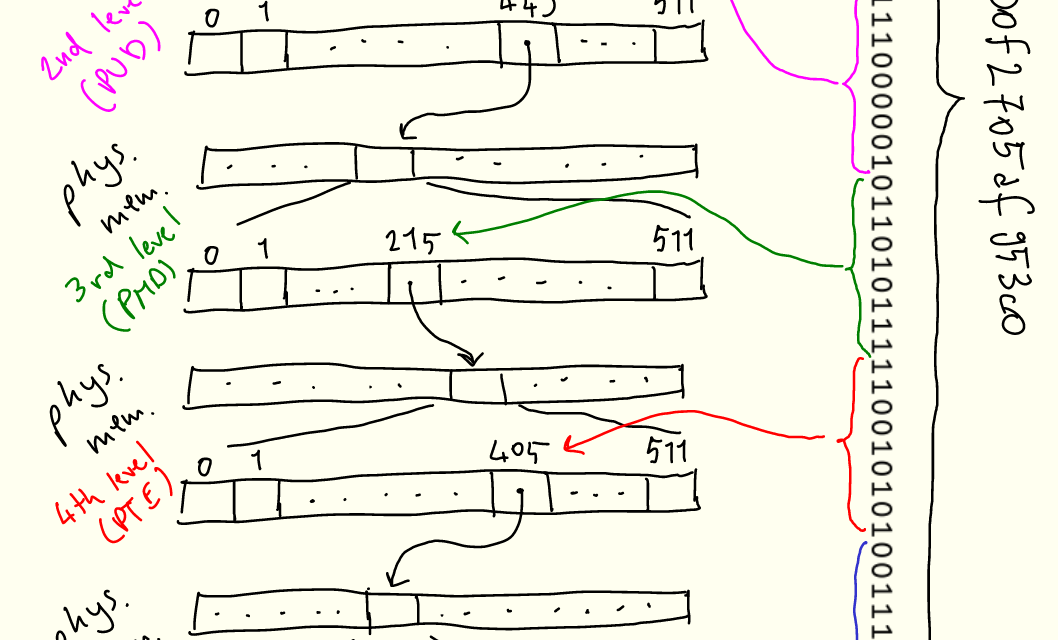
The article also talks about “Linux paging”, again clearly referring to the implementation and usage of virtual memory on Linux, rather than…whatever ancient architecture first invented the page table.
So I'm not sure it is not analogous to, "today, we're going to talk about Linux electricity, specifically the way electricity is utilized in Linux."