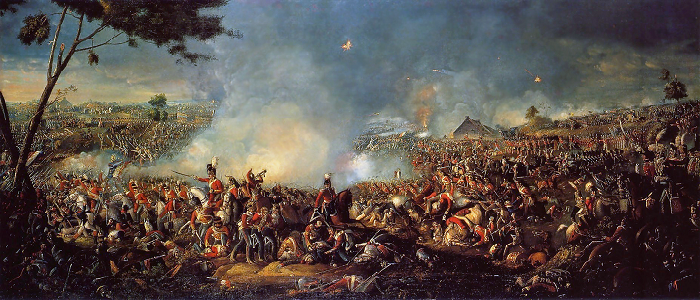
New study suggests mystery still surrounds what happened to the bodies of Waterloo militaries
Now a new study by UofG
gla.ac.uk
73 points · by Manheim · 4y ago · 61 comments
So quickly we forget. By weight, most of those bones would have been animal bones. Horses and mules were everywhere around armies until the middle of the 20th century. And, pre-refrigeration, armies did not move food around in boxes. It walked behind the army on hooves. The combination of dead horses/mules in combat, plus all the cattle being eaten, means that the vast majority of bones around a battle would not have been be human.
Don't forget that canning was invented in response to a prize issued by the Napoleonic army.
However it doesn't look like it was ready for use by the time of the battle at Waterloo.
I read the title, skimmed the article, now I’m listening to ABBAs Waterloo on repeat.
Also interesting to think of names that have become "things" - Waterloo "To be decisively defeated by an encounter with a powerful opponent or a problem that is too difficult" or Hindeberg, Titanic, etc.
I smell the blood of an Englishman,
Be he alive, or be he dead
I'll grind his bones to make my bread.
But apparently not limited to the English, and for fertilizer, which grew the grain, but surprisingly accurate otherwise.
2. "not much different than today"? Is this just some wild rhetoric or do you actually postulate that armies today are using the bodies of their dead for fertilizer/etc?
The soldiers have been either abandoned (a lot in Kiev fighting) or put into number-only graves in Belarus and near Rostov. A few are sent home to have those public funerals.
Also sure sounds a lot like the rumors back during Covid about secret mass cremations to hide how many were dying.
The existence of a portable system to "respectfully" dispose of the bodies is very different from profiting from the crushed bones of the deceased.
I think western militaries go to pretty extraordinary lengths to recover and repatriate bodies these days.
In the Falklands in the 1980s there were still some battlefield burials, as that was still the accepted practice, but most of these were dug up after public outcry and I don't think we'd do that anymore, short of a full-scale war of national survival.