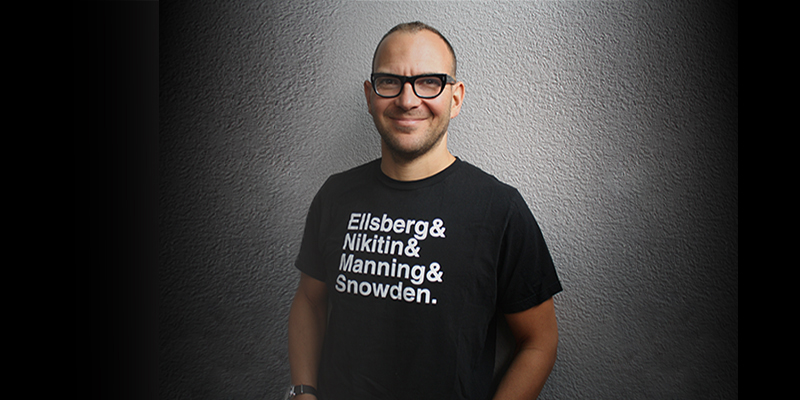
Cory Doctorow: The Swerve
We’re all trapped on a bus. The bus is barreling towards a cliff. Beyond the cliff is a canyon plunge any of us will be lucky to survive. Even if we survive, none of us know how we’ll climb out of …
Locus
170 points · by todsacerdoti · 4y ago · 195 comments
I think I get the main theme, but I don't think "climate cliff" is a useful analogy. It makes one picture a scene of relative calm until suddenly (and abruptly) the shit hits the fan, when the reality is going to be far more messy. (Just look at all those historians who could never agree on exactly what year the Roman Empire fell.)
If anything, it will make people argue "Well, we haven't hit the cliff yet, which means we still have time," or, worse, "They've preached that we will hit the cliff by 2020, a bunch of liars!"
I think the fictional "denialist" in the sentence is actually half right. Instead of a cliff, we will have a smooth ride... to hell. We will never have one glorious catastrophe where we get to say "I told you so" five seconds before dying. Instead, half of the passengers will still be arguing that we're fine while we're slowly dying.
The cliff is civilizational collapse, which will happen very fast once a threshold is crossed. Which threshold it will be is uncertain. Ocean ecosystem collapse and mass starvation? Refugees from uninhabitable places exceed 200M, bringing fascists to power, hence war?
Civilizational collapse has happened many, many times. Just not worldwide, before. We have seen how it goes: the rich try to cushion it for themselves, hastening the crash.
Oh, wait, no, it is literally that.
We have to wind the engine down while shifting the work over to a parallel electric motor that we’re in the process of building.
A radical program to move all power generation, transport, and home heating to renewables would result in radically cheaper energy and transport for all.
But the people enriched by scarce energy would not be anymore.
If Doctorow wanted a perfect analogy for our attitudes towards climate change, then he wouldn't use any analogy at all, he would talk directly about our attitudes to climate change.
The point of an analogy is to highlight a particular dynamic that both the analogy and the thing being analogised have in common.
The point isn't to find the most apt metaphore.
The point is that there's a looming crisis, humanity is hurtling toward it at breakneck speed, and there's little if any time left to act.
I've had discussions myself with friends and family over this. One response has been that "the people who need to know about this know what the problem is and how to respond". That particular response came before a novel coronavirus emerged in a land far away and spread across the globe in days and weeks.
Pandemics are an emergency we've seen before, that we have contingencies and plans for, whose dynamics we understand, etc., etc., etc. And yet the world, as a whole failed miserably, through the mechanism of individual countries, regions (state, provinces, counties, etc.) and cities failing to act effectively.
With a very few exceptions. Taiwan, New Zealand, Australia, South Korea, Japan, and somewhat improbably the poorer south-east Asian countries of Vietnam, Cambodia, Thailand, and Laos, seem to have responded highly effectively, at least initially. As has mainland China, for the most part.
But as a dress-rehersal for a far more challenging crisis, I'm both underwhelmed and terrified of what else lies in store.
Contracting anyway. The collapse of industrial activity due to covid cooled things off. Enough humans die off, humanity could ultimately survive in a more bucolic but tech stabilized system to help manage logistics, intentionally leave out all the military industrial complex and disposable crap production.
Religion wanted cheap manual labor; breed, breed, breed! We still rely on memes like Protestant work ethic despite the awareness there’s probably no “higher power” in the traditional sense. Less militant political leadership not grown of WWs but of managing a global ecological problem would wisely find value in the idea “doing less is more”.
Carter told people to wear a sweater and the American people flipped out and elected a ghoulish union-busting zombie. Twice.
There will be no change until it is forced upon us when the treats stop flowing. And even then you just have to hope that the populace has an accurate story in their heads as to why.
I think you’re underestimating how much of Reagan’s appeal was _optimism_.
I agree much of Reagan’s popularity was due to his willingness to lie and flatter.
also, it's not a literal train, some people will be able to say there's no crash even as they fly out
> “As the lockdown to stop the spread of coronavirus in India continues, pollution levels across much of the country have dropped sharply. Now some residents in northern India say they can see the snow-capped Himalayas 200 kilometres away for the first time in 30 years.” [1]
If we had a global deflationary economic system, the incentive to invest in capital and engage in consumerism would dissipate. People would work less, because there would be less reason to work. Without work, people would have less reason to travel. Pollution would drop accordingly.
Under a deflationary economic system, a touch over $480,000 in savings would yield an effective “UBI” of $1000/mo [2].
Once adopted by the entire world, a global currency of fixed supply controlled by computer algorithms could achieve this. Humans would voluntarily work less and pollute less.
[1] https://www.sbs.com.au/language/english/audio/himalayas-visi...
Deflation, with its disincentives to investment or economic growth, would reduce employment and real wages. Most Americans would lose their jobs or see their wages cut as the economy ground to a halt. Anyone with debt would likely be trapped working for the rest of their life at subsistence wages, never making enough to pay their debts off.
At that point, you'd need an entire overhaul of the economy, not just an algorithmic monetary system
If the only way to cure the climate crisis is to prevent people from flying having tchotchkes, how naive is Corey to think that the rich will somehow stop those things before the middle class and poor do?
But it's dangerous and flawed to mix climate targets with social justice targets for this very reason. Hinging the swerve on a social/economic revolution means it will never happen.
Once in the deflationary environment, the cost of borrowing would be higher, and there would be less reason to work, consume and invest. Hence, there would be less incentive to take on debt.
Many things are preferable to having 0 savings and a planet on fire.
If you have a properly tuned money system you would expect it to stabilize at some level. Cycles should be the exception and full employment the rule as says law implies. If you want to discourage consumption you should introduce consumption taxes for natural resources, co2 and other forms of pollution.
Really, the answer is so obvious. You need to let the interest rate on cash be negative like -4% and then give the central bank the task to do price level targeting. The problem with deflation is that the optimal real interest rate is 0% but if the nominal interest rate is at 0% then the real interest becomes positive. A positive interest on money effectively acts as a competitor for labor. Anything that uses labor must earn at least this interest rate hence the economy must grow. If the economy stands still there isn't enough money to service existing debt. You will get an inevitable currency collapse because you didn't consider for the case where the economy stops growing even for just a few years.
If that doesn't convince you let me tell you that a negative interest rate makes deflation palatable to the public by maintaining full employment. High interest debt is prone to default which results in an increased risk of losing your investment which lowers the effective yield of the debt. A borrower that can only pay back $10000 will only pay back that amount regardless of the interest rate, so increasing the interest rate increases the risk of default without increasing the overall return on investment. If the interest rate is cut low enough that it asks for only $10000 then you will get the same $10000 back with almost no risk, but from the perspective of the borrower his life wasn't negatively disrupted by the process of defaulting. Hence once you adjust for risk, high interest and low interest debt can have the same yield. However, in the high interest case, the borrower may be fooled into believing that he can pay his debt back, so he is strongly encouraged to work more and convince others to consume more, in short he will advocate for higher economic growth.
Won't lowering interest rates lead to stimulating the economy and more debt? Actually, no. If you have negative interest rates you can abandon QE and raise the reserve ratio, in fact, you can do price level targeting (no inflation/deflation) to control the money supply according to monetarist theories which assume a constant velocity of money. Saved money is dead money, hence the need to force ever greater quantities of money into the economy to keep it alive, if you control the velocity directly, you don't need to keep adding new money. The miracle of Wörgl currency circulated 200 times faster than the national Austrian currency and therefore didn't need any deficit spending whatsoever, the money supply was somewhere around 10 per person, the local government ran all social spending programmes against unemployment on a balanced budget which is absurd considering that it was a poor indebted classic deficit spending town with 30% unemployment before Unterguggenberger became mayor.
You mean most of the work will be piled up on a handful of full time employees which leaves a huge percentage of the population unemployed and destitue and ready to rebel against the system.
https://m.youtube.com/watch?v=EKd6WURBqOY
>Under a deflationary economic system, a touch over $480,000 in savings would yield an effective “UBI” of $1000/mo [2].
What if people decide to have less children to protect them from the rent seeking conducted by the rich families that inherited wealth over centuries? What if the above unemployed people die from starvation and are no longer there to guarantee the value of your money?
>Once adopted by the entire world, a global currency of fixed supply controlled by computer algorithms could achieve this. Humans would voluntarily work less and pollute less.
Voluntarily? Are you sure about that? Aren't you just trying to make some transactions illegal by forcing a less effective medium of exchange? Also we already tried this and it failed not only with the gold standard but also with Bitcoin.
If it were that simple the Roman empire wouldn't have collapsed. No currency in history would have collapsed.
You are also discounting the fact that deflation encourages corruption as gaining money through war, crime, trafficking, environmental destruction, political bribes becomes highly profitable as once you are locked in and got a lucrative 10 million dollars you will earn more from those savings than you can earn from being an upstanding politician. Hence there is an intensive pressure to destroy physical and social capital for a share of the fixed supply currency.
20+ million people in 2020:
https://www.internal-displacement.org/global-report/grid2021...
I don’t think he would disagree that many will see it that way.
It's actually really simple: this level of comfort is not sustainable without a major re-tooling of the way we interact with the eco-system, and if we don't adapt we will be adapted, quite likely by 'downsizing'.
The other options are sucking oligarchs, amusing children, selling off your body parts, living in a cardboard box and the vast frontier of crime.
if we are doomed anyway I might as well have my time on a yacht too.
Only if you insist on legal means of doing so.
What about strategies designed to set the stage for that, but do not define it as a direct goal?
For instance: a massive re-tooling towards solar and wind has its own climate impact as well as effects on available resources, pollution and lots of other side effects.
Globally, classism has become so pronounced that, to preserve the metaphor, if anyone tries to swerve the bus the first class passengers will just kill them and won't stop killing until the bus is light enough to jump the gorge. They don't see the need to now, because nobody is making any serious notions to grab the wheel. But the 1% can pay another 5% or so to leverage the asymmetric warfare tools available against the remaining 94%.
There are approximately 8 billion human beings on the planet right now. Cory is proposing a solution that saves 6 billion of them, maybe, if we play our cards right. But we already have weapons that can atomize cities. Removing a few key, highly populated cities from the planet would crater the number of people that our resources need to sustain, which is to say the number of people generating the sort of pollution that is threatening the biosphere, into the one to two billion range. And hey, bonus effect, overuse of those weapons results in a global cooling phenomenon. Win-win.
I wish those grabbing the wheel luck, because they're going to have to grab it faster than the first class passengers can reach for their knives.
The really, really big problem is that people seem to think that they personally are going to be exempt from this, that it will happen to others, but not to them. Waking up from that will be pretty harsh. But if COVID denialism is any indication of how well humanity deals with complex problems on a planetary scale I'm not too optimistic about climate change countermeasures, the problem is much more complex and would require cooperation on a far more massive scale than anything COVID related.
And now looking at outcomes across different states (e.g. Florida vs. California)--and considering ALL outcomes (public health, homelessness, unemployment, substance abuse, mental health, truancy, graduation rates, violent crime)--it's indeed unclear that draconian policies in the name of public health were a net positive.
I am extremely concerned about climate change. But there seems to be little introspection from those who propose sweeping policy change about the need to consider second-order effects on those whose lives and livelihoods will be upturned. The general disdain for people in places like West Virginia gives me little hope that will change.
All that whining is something that my grandmothers' generation would have scoffed at: you have it relatively easy, stop complaining. 5 years of war, occupation, hunger and brutal death is the kind of thing that generation lived through - or not, in many cases - and they came through to rebuild their world without bitching about it. COVID was - compared to that, sorry - a walk in the park and we should have shouldered it collectively and dealt with it. Instead we ended up with a large fraction simply denying objective reality in the hope that it would go away. That's not how you deal with problems as an adult. In toddlers I find that acceptable, but not in grown ups.
And the ease with which demagogues used it to bend people to their will shows clearly that we have not learned anything from the very recent past, which in a way is even more worrying: apparently we are structurally incapable of retaining very hard won knowledge over a stretch longer than a human life-span leading to endless repeats.
But this time, with climate change, the stakes are a lot higher than 'the usual' price of a few million people dead, we're talking about changes on a scale that humanity has never had to deal with before.
So if we aren't going to get our act together the next 100 years or so will not at all be pleasant, to put it very mildly, and going on the assumption that it isn't way too late already.
And those places did not emerge with a significantly better COVID outcome.
Without an answer for addressing the second-order effects of green policy, there will be no consensus.
If you want to fight against demagogues, you should engage with people, recognize that issues are nuanced and that most people are not the caricatures that you'd paint them as.
Finally, telling people they're being whiny after a 2 year long pandemic that saw many people lose their loved ones, be unable to even see their bodies, the near collapse of our national health systems (that was not caused solely by the strain of Covid but specifically by the preventative measures put into place) and the great suffering that resulted from it is very insensitive and uncaring. I doubt my great-grandmother would have said anything of the sort were she still alive, and I know for a fact if you asked many elderly people how they've lived these past few years (those who survived) they would not be so dismissive of the complaints of others.
If you had fallen victim to this phenomenon yourself, would you necessarily know? Might there be some materially important imperfections in your model of reality that you're describing here?
As Doctorow writes, the policy changes didn’t have to be sweeping if we’d started in 1977. But we didn’t. Now all the remaining options will upturn someone’s lives. It’s just a question of balancing the effects to achieve something better than the current path which means sweeping catastrophe for our children.
The disdain is for ignoring the science, the health of other people, and negative externalities… it is not likely to change, nor are the minds of those who are dug in and feel as though their entitlement to the status quo will outdo entropy.
The anchor is sad about being dragged?
This, to me, summarizes the problem. Comparing an entire group of people to a heavy metal object at the bottom of the sea. It’s a tempting dismissal, sure, but will never help someone stuck in their ideology see beyond it.
> nor are the minds of those who are dug in
And is it any wonder that those minds will not change when we hold nothing but disdain and shout at each other?
I am convinced that we will not solve these issues without focusing on the tribalism and identity politics that sit at the core of it all.
I don’t see an anchor being dragged. I see people who see their way of life threatened, and are willing to fight against that.
This doesn’t excuse the behavior, or make it valid. But it’s also not terribly surprising when you look at how conversations about this across ideologies usually go.
My experience is that the most vocal proponents of proper strategies to address climate change are also the most vocal supporters of social justice.
I don’t actually owe giving up my agency to do so in deference to people thousands of miles away, whose lack of movement away from toxic industry is instigating the agency I have to take in the first place.
Stow your bucolic imagery of simple WVians. Those simpletons are having a dramatic impact on my life. Yet it’s unconscionable if I push back?
That’s a lopsided, abusive scenario. The people of WV do not rule the world.
The proud people of WV need to take their advice and pull themselves up by their boot straps; looks like they benefit from big government communism, to me: https://wallethub.com/edu/states-most-least-dependent-on-the...
Sorry, but that's historical revisionism, and I'm not going to let you get away with it.
"Covid is a liberal hoax" was the starting point in the US. That was neither nuanced nor deep. That was pure denialism.
> it's indeed unclear that draconian policies in the name of public health were a net positive.
I believe that the data we have from Sweden vs other Nordic countries (which did real lockdowns) contradicts that narrative. Both Norway and Denmark have around half the deaths normalized per capita of Sweden (Denmark a little above--Norway a little below half).
That seems like basic conservatism, which has been systematically forced to the sidelines over the past 50 years.
I love the people of West Virginia, but it keeps getting harder and harder to pretend that they don't vote their beliefs.
That is a possible approach, but once you start on that path there is no more negotiation. Only the force, us vs them. Then most folks on the sidelines who are somewhat supportive but not thrilled about swerving of the bus they ride in become active adversaries. I would not underestimate that factor. My 2c.
> And now looking at outcomes across different states (e.g. Florida vs. California)--and considering ALL outcomes (public health, homelessness, unemployment, substance abuse, mental health, truancy, graduation rates, violent crime)--it's indeed unclear that draconian policies in the name of public health were a net positive.
Why are we drawing conclusions about the effectiveness of Covid safety protocols based on the failed half-measures taken by America? We have a plethora of working examples to study from the Asia-Pacific region: Australia, New Zealand, Hong Kong, Taiwan, Vietnam and China all eradicated Covid pre-Omicron.
> But there seems to be little introspection from those who propose sweeping policy change about the need to consider second-order effects on those whose lives and livelihoods will be upturned.
Equally, there seems to be little introspection amongst American libertarians about the role their own society’s dysfunction might be playing in shaping their personal beliefs.
I really encourage you to read more deeply on this, as I think you're painting climate advocates with the same broad brush you decry others for using. It is extremely common for climate people to insist that a just transition is the only transition worth making - which includes both gigantic structural changes around how we interact with the climate & also structural changes to society to change the material conditions of marginalized & adversely impacted groups. These recommendations are included in basically every climate change document produced by international efforts.
The inclusion of these considerations is also routinely mocked by US conservatives. Lots of people think that "climate is about climate" and the inclusion of social safety net reforms or serious retraining is a bad-faith inclusion from the left who are just using climate change as a cudgel.
If you're interested in a pretty up to date holistic (though to the left of many of the IPCC recs) take on climate recommendations, I would point you at the latest season of scene on radio[1]. It links together the chain of reasoning about why it is essential to address climate with other sources of marginalization and victimization.
The understanding of "what climate change activists want" that you're taking about in your post is frequently brought up by people who would like to obstruct action.
Take a look at the stringency index in this article.
https://www.bloomberg.com/opinion/articles/2022-05-07/califo...
Florida locked down just as fast and just as hard as California for the first 6 months of the pandemic. After that stringency measures diverged, but Florida still maintained a range of significant pandemic control measures. Their measures in early 2021 were about as strict as California's in late 2021. Overall they were more similar than different.
It also seems that the high number of elderly people in Florida, as a group, took the pandemic very seriously. They were in fact more likely to get themselves vaccinated than elderly people in California, despite the lack of mandates.
In the end it's actual behaviour of the population that makes the difference, whether that behaviour was mandated or not. One interesting stat is that in the most pro-Trump counties (60%+ support) death rates were 2.7x higher than in the most Pro-Biden counties. In the top 10% of counties for each camp the death rate differential was 6x. At the peak of the wave in 2021 about a thousand more Republicans were dying per day than Democrats.
In Australia, police would patrol the streets to ensure people were staying within a 5 km radius of their residence, and to ensure they were only out for a reason deemed essential by the government.
This was accompanied by international, interstate and intrastate border closures, i.e. you couldn’t enter Australia, and couldn’t enter another state within Australia if already in Australia, nor could you in some cases even drive from one part of the state to another, without a special exemption.
I hesitate to ask what Florida did to enforce the lockdowns, because I’m fairly certain what passed for a “lockdown” outside of Asia-Pacific was a joke by comparison. I strongly doubt any of the above measures were done by any state in the US at any point in the pandemic.
1: The numbers coming out of NYC are grossly exaggerated; probably only about 1/10th of those reported as "dying of COVID" actually died of COVID. Other people died from different causes but just happened to test positive for COVID.
2: A dialog between person A and person B:
A: If only 1% of people who get COVID die from it why are we still worried?
B: At a 1% fatality rate if half the population of the US gets COVID, that's over a million dead
A: Unlike you I'm not drinking the Kool-Aid
But fortunately with climate change it is that easy: you or your descendants will either die or you won't, and hopefully there will be a recognizable society left for the survivors. Enjoy the ride and make sure to snap pictures.
>Bernard: What if the Prime Minister insists we help them?
>Humphrey: Then we follow the four-stage strategy.
>Bernard: What's that?
>Richard: Standard Foreign Office response in a time of crisis. In stage one we say nothing is going to happen.
>Humphrey: Stage two, we say something may be about to happen, but we should do nothing about it.
>Richard: In stage three, we say that maybe we should do something about it, but there's nothing we can do.
>Humphrey: Stage four, we say maybe there was something we could have done, but it's too late now.
Sure, there are going to be hotter hot spells, and more extreme cold spells, but that's not seriously something that a New Yorker can't deal with.
What is going to happen is poor people, foreign people, are going to starve to death and drown trying to get to safety, and the problem won't be climate challenge, it'll be illegal immigrants.
It's not going to happen first to middle-america. It's going to happen to Mexico, North Africa, the Middle East. And we're not going to say "hey, this is a universal issue created by emissions that our countries benefitted from". It's going to be talk about economic migrants, or how we can't afford to help them because we have problems at home. Bold prediction: Shipping them to Rwanda isn't going to be sustainable.
The climate is a complex system into which more and more energy is being input. That's more likely to produce sudden, drastic and unpredictable changes. It's not just simply going to get hotter.
So it's entirely possible that huge swathes of the US become largely uninhabitable, due to, say, drastic increases in rain or violent weather. It's entirely possible that most current agriculture could become impractical in the US.
The politics of climate change has very likely made scientists too conservative in their predictions as to not seem hysterical, but looking at how quickly the climate is changing right now, extreme outcomes seem very likely.
It's going to get to the point where a poor person can't live in Mumbai - literally, you can't survive exposure to the temperatures that are going to happen. But when those people move north to escape the heat, their migration is going to be blamed on all the things we blame current migration on, rather than the reality that they'd likely die if they stayed where they were. Oh and guess how many poor people there are in Mumbai.
Telling them that they cannot get this (energy to bring water to the fields instead of hand-carrying it, tractors to work the fields) and, by the way, it is for their own benefit may not be very convincing. I think those poor people just got on the bus and think they are OK with where this bus is heading. And would club someone who tries to grab the wheel and put the bus in a ditch. My 2c.
Is that a bigger problem than people who seem to think that they personally are saving the planet by their own actions?
I honestly can't tell the difference between treating gun crimes with thoughts and prayers and stopping global warming by taking personal responsibility. Nether is effective. Both seem delusional. Oh, and those two activities belong to different parts of the political divide. The problem is not "those people" so much as it's humanity, all of us.
I'd say that it's more akin to trying to solve gun crime by refusing to own a gun: the only reason it won't work is that it needs everyone to do that, and if merely 0.1% of the population defect (in the game theory sense), that leads to the bad outcome.
What people fail to grasp is that costs can be absolutely enormous but look like a blip compared to the effect of GDP growth in the long run. World War II is an example. The millions of deaths barely show up on a graph of world population. The huge losses barely interrupt the smooth rise of GDP. Similarly, climate change could knock 5% off GDP permanently, this would be "the world's biggest collective action problem" as I think Nick Stern put it, but it wouldn't stop human society getting much richer.
Edit: a bit of backup: https://www.forbes.com/sites/michaelshellenberger/2019/11/25...
The very idea that human leadership has things under control overlooks multiple events in history - e.g. the Bronze Age Collapse we're still trying to explain - and suggests both amnesia and completely undue hubris. The idea also overlooks the potential for other kinds of simultaneous disaster being heaped on. (CME's for one.) We can anticipate them, but they are beyond our control - and may disable further options.
There was a mass extinction of hundreds of species of megafauna just before our known history begins. Can't agree on the cause - but nonetheless the Moving Hand moved on.
In the past two years, the fear and death created by one little invisible bug, which we declined to prepare for, has badly damaged economic stability. If we continue to overplay our weak hand, who will pay for the damage - and with what?
Actual proof that each extinction was actually directly caused will be harder to come by. E.g. maybe dire wolves died because their prey went extinct. And, we still don't know why bison survived.
I've read more than a couple of articles, linked to here on HN, of climate scientists claiming that this is indeed a civilization-ending cliff.
It's been mentioned like this in other media, for example in Cosmos 2. Yes, that's divulgation, but nonetheless, it means the scientists consulted for Cosmos 2 believe this.
edit: just googled Michael Shellenberger. He is not a subject matter expert on climate change, and Wikipedia describes him as "a controversial figure" among environmentalists, which means his position is not mainstream and probably shouldn't be used to state "no serious scientist believes...". Note: I'm not saying he is wrong, he could be right; it's just that his view is not mainstream for now.
But the analogy, which is that we are headed for a disaster and at this point we must take rapid drastic action to avoid it, I think is correct. Rapid action means making decisions now to commit to decades of repair work. It means immediately stopping new climate bomb projects. On the scale of a society, change that takes decades is akin to swerving a bus. And if we take no action, I think the analogy of crashing in to a canyon is appropriately bad. The only difference is that falling off a cliff happens in an instant, and no harm is done if you stop at the last minute, whereas with climate change the problem is slowly getting worse day by day. So yeah, it is not a perfect analogy, but I don't think we are meant to take the cliff as a direct analogy to climate change occurring all at once or not at all. Doctorow certainly knows that is not physically correct.
Now if you look at human activity on long timescales, the decisions we make this century can drop us off a cliff in to disaster, or change our trajectory to just some bumps and bruises. And I think on this time scale the cliff analogy is more literal. You just can't think on the year by year timescales we normally think.
It's not a literal cliff. Doctorow was using a metaphor. And they're never exact fits, they are loosely analogous.
He probably chose a bus in an attempt to make the trolley problem more current and approachable.
That means: deploying existing solutions to reduce carbon emissions at scale, and commercializing new methods of doing so in order to deploy them.
There are a lot of jobs in the field, and doing the work beats metaphors and speculation.
Check climatebase.org for climate jobs and get to work.
Seriously, I agree that this is the only choice, but what is the actual plan?
There’s going to be an S curve where a large portion of fossil fuel energy is replaced with solar and a large portion of internal combustion motors are going electric. Both of those because they are cheaper more than any other reason.
The climate is going to warm, the habitable zones of earth are going to move north, some equatorial regions are going to be uninhabitable, lots of people are going to have to move, lots of agriculture is going to have to move.
How bad it is just depends on how well we prepare for and adapt to change.
The people who just predict doom over and over and try to use that to promote some impossible change to “stop” climate change aren’t helpful.
Climate change may show up and get us is a few years, or it may take longer. Running out of oil is starting now, we're already in the middle of it.
What's the deal with nobody talking about running out of oil and instead the focus on climate change? With the climate change narrative we get to the same place as the running out of oil narrative, but the only solution is to work together on alternatives. With the running out of oil narrative, the focus is on solutions, but it also becomes a war between nations for the remaining resources. We're seeing Germany revert back to coal now, for which there is more spare supply than oil.
I don't really have a solution here. Maybe we would have better ones if there were more clarity around what the actual situation is.
Travel is the most inefficient, wasteful, and anti-climate activity I can think of because for many cases it is simply unnecessary or discretionary. Beyond having some 100,000 flights per day pumping greenhouse gases directly into the atmosphere think of the infrastructure and workforce involved in running airports, hotels, car rentals, shuttles, parking lots, restaurants, uber/taxis, etc.
I think air travel should be rare and expensive especially for business and vacations. Perhaps a heavy tax on business and pleasure travel would be good place to start.
While we are at it work should be done remotely whenever possible and empty office buildings should be renovated into affordable housing.
Until your green is everyone’s green, the planet is not getting saved. Safe nuclear and other helpful tech is where surplus money should be going.
Which makes sense. Because if you let up for a moment, your competition surely won't.
So to tell the princes, "hey, put that furious game aside for a sec. We have something more important to attend to" isn't gonna do it.
I think that the princes, these people who control the world, are psychologically incapable of quitting the prince-game.
In other words, the only hope I have left is that somebody invents a climate-fixing machine. Or a bunch of different climate-fixing machines, I don't care. But, I don't see a lot of other appropriately-scaled options at this point.
EVs and wind/solar energies are examples of technologies which are so much better than the alternatives that they're succeeding at reducing emissions faster than consumption can grow to catch up. We don't have the time to get enough people together to mandate that the front row drives a Tesla instead of a Ford, nor to mandate that they produce wind farms instead of coal plants, but they're doing so of their own accord - and demand for them exceeds production capacity by a large margin - because the electric car is better and the wind energy is cheaper. As you say, we now need parachute tech.
Funny thing: the only system that I'm aware of that could do this on this scale and cheap enough is called biology, and it operates on a timescale that is too slow to make it work in time.
Still these technologies are succeeding in the marketplace and if they can continue to improve we may solve many of those problems as we go.
Regardless, people aren't buying small cars with efficient gas engines. They're buying trucks and SUVs they don't need. Which will likely continue until it's clear gasoline isn't going to get financially cheaper.
"Let's carry on as-is until fusion works" is "don't worry, we'll put wings on the bus" in Doctorow's terms. By all means, let's continue fusion research. But we should also urgently work on some other angles just in case.
Sounds like something a PM would say in a roundabout fashion
He was amongst the first to write of the political dimension of addressing global catastrophic risks. Initially, that was largely focused on the concept of resource limits. Global warming isn't unrelated, though it's a sink limit: boundaries on the ability of the environment to absorb the consequences of human activity without making that human activity itself untenable.
What Ophuls realised, and what I'm increasingly convinced of, is that it's not the technical element, but rather the political, social, cultural, and economic (commerce, finance, trade, power) aspects which will prove the most challenging. And he seems to have been correct.
I strongly recommend all his work, though Ecology and the Politics of Scarcity (first published in 1977, revised ~1994) and Plato's Revenge (2011) are probably the best starting points.
https://www.worldcat.org/title/ecology-and-the-politics-of-s...
https://www.worldcat.org/title/ecology-and-the-politics-of-s...
https://www.worldcat.org/title/platos-revenge-politics-in-th...
Also available via Archive Org:
https://archive.org/search.php?query=william%20ophuls
Ophuls has a website with more recent writings:
https://web.archive.org/web/20190311104851/https://ophuls.or...
As he's on in years, I've looked for others who are carrying on his tradition. Canadian political scientist Thomas Homer-Dixon is referenced by Ophuls several times and seems closest:
And by "society at large" I mean everyone.
Game theorist should study this